
Paris motor show set to become a show of strength for Chinese car brands
 1/2
1/2
The exhibitor list for the 2026 Paris motor show reads like a snapshot of the competitive landscape facing Europe’s car industry. More than 60 carmakers will attend the Mondial de l’Auto, which opens on 12 October, including at least 20 brands originating in China or linked to Chinese groups. This is no longer an exotic sideshow, but a highly visible assault on the heart of the European market.
According to the Paris motor show’s official catalogue, this year’s event will feature more than 100 exhibitors across five halls, including more than 60 carmakers. The organiser’s list includes BYD, Denza, Xpeng, Chery, Omoda, Jaecoo, Zeekr, Geely, Lynk & Co, Changan, Li Auto, GAC, AITO, Forthing, Maxus, Linktour and 212. Leapmotor and Foton are also part of this group.
This means the 2026 Paris show is no longer about Chinese brands testing the waters in Europe. Several are already building sales networks, some are entering Europe with local production, and others are stepping directly on the toes of the established premium players.
BYD is no longer coming just to show an electric car
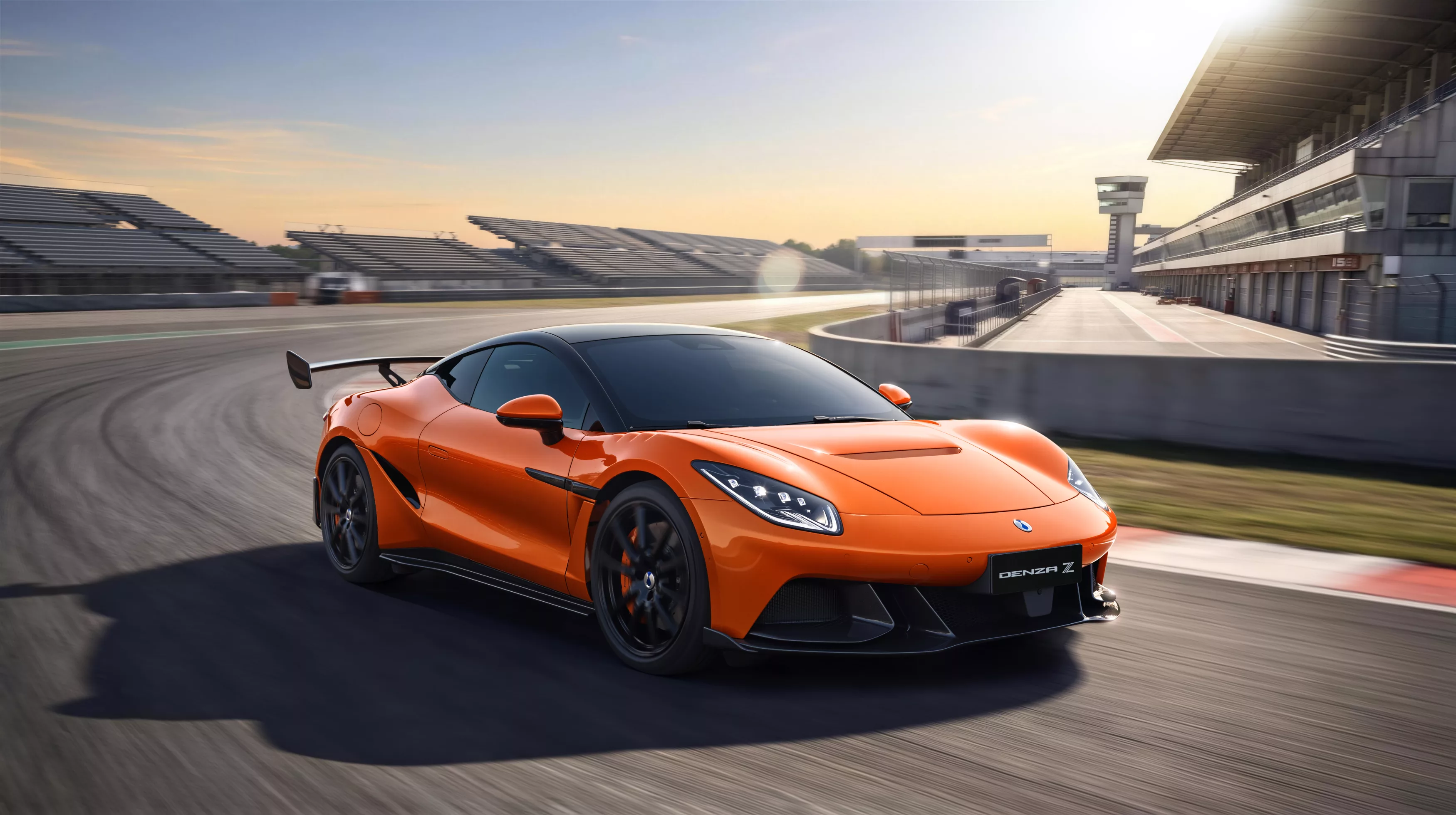
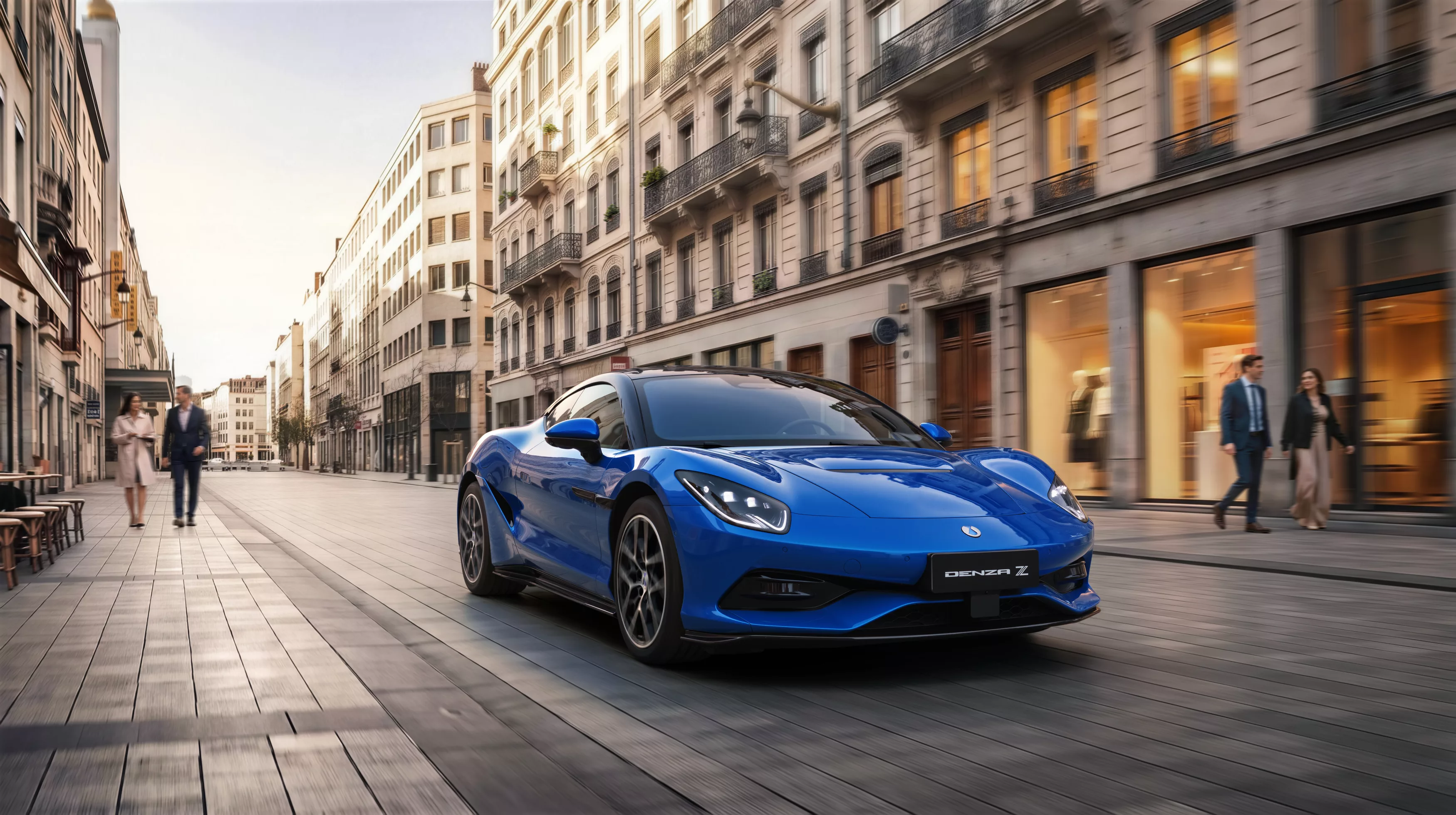
The most telling name on the list is BYD. Just a few years ago, European car buyers needed an explanation of what those three letters meant. Now the company has an entire large stand in Paris, with its premium brand Denza exhibiting separately alongside it.
Denza’s role is particularly important. BYD no longer wants to compete solely on price with electric cars from MG, Renault, Volkswagen or Stellantis; it is trying to move into the price bracket occupied by Mercedes-Benz, BMW and Audi. The Paris motor show provides an ideal stage, because customers of Europe’s premium brands will literally be walking through the same halls.
The next stage of development for Chinese manufacturers is no longer about lower prices. Competition is shifting towards charging speed, software, driver assistance systems, in-car electronics and electric drivetrain efficiency.
Geely is bringing virtually an entire family of car brands
Geely’s influence at the show looks even greater than a single brand logo might suggest. Geely itself, Zeekr and Lynk & Co will be present, while the group’s influence in the European market naturally extends much further.
Zeekr’s arrival deserves particular attention, because this is not a cheap Chinese electric car brand. It positions itself as a technology-focused premium manufacturer and draws on the Geely group’s extensive expertise in platforms, batteries and software.
This is an uncomfortable competitive model for European manufacturers. A large Chinese group can share electric vehicle platforms, electric motors, battery cells and software development across several brands, while tailoring their cars’ prices and character to different segments.
Chery is entering Europe under several names
Chery’s approach is even more aggressive. Omoda and Jaecoo will be in Paris alongside the parent company, and the group’s European operations are no longer limited to a handful of imported electric cars.
In France, Chery is preparing to establish a full sales network. Omoda and Jaecoo have also already reached local dealers, and the Paris show allows the company to cover several price brackets and buyer profiles at once.
For European manufacturers, this means a far more serious rival than an obscure export brand. Selling a few thousand cars in Europe is possible without a sales and service network, but achieving high volumes requires manufacturers to address warranties, spare parts, residual values and financing. That is precisely where China’s major manufacturers are now investing.
Xpeng, GAC and Changan have not come to see how Europeans make cars
European electric car enthusiasts already know Xpeng fairly well. GAC and Changan are much less familiar in Europe, but on a global scale they are not small newcomers.
GAC says it will present its European localisation strategy and new model range in Paris. Changan is also preparing for a broader European expansion. AITO, meanwhile, is playing the technology-led luxury car card, with its development supported by close ties to Huawei. The official Paris catalogue confirms that all of them will attend.
The most important change is that Chinese brands’ European strategies already differ considerably. Some are pushing prices down, others emphasise 800 V electrical systems and fast charging, others focus on hybrids, and still others on luxury.
It no longer makes sense to speak of a single, uniform “Chinese car”.
Leapmotor shows why tariff barriers alone will not stop competition
Leapmotor is a particularly instructive case on the Paris list. The Chinese carmaker works with Stellantis in Europe and uses its sales and service network.
This cooperation shows why the European Union’s additional import tariffs on electric cars made in China do not, by themselves, resolve the question of competition. Manufacturers can adapt their powertrain line-ups, establish production in Europe or join forces with a local group.
For Chinese manufacturers, Europe is therefore increasingly changing from an export market into a second home market.
Paris matters again, but not for the reason Europe had hoped
Here lies the most amusing irony of the whole story.
Just a few years ago, several major carmakers abandoned traditional motor shows, arguing that huge exhibitions were expensive and old-fashioned. Their Chinese competitors reached almost the opposite conclusion: if tens or hundreds of thousands of European buyers, journalists and dealers gather in one place, it is worth being there.
The Paris motor show attracted 508,007 visitors and featured 48 carmakers. For 2026, the organisers are promising more than 60 carmakers.
The Paris motor show’s revival is therefore not simply a sign of the exhibition format’s resilience. Chinese manufacturers are helping to make it relevant again at a time when they themselves are challenging the European car industry’s market position.
For Europe, far more is at stake than a single motor show
European manufacturers no longer compete with Chinese cars only in China.
That battle is now taking place across Europe. European manufacturers’ former advantage lay in their brands, their understanding of local customers and their well-developed sales networks. Chinese manufacturers are rapidly closing the latter two gaps, while Europeans have long had no reason to feel superior when it comes to the pace of technological development.
The electric car makes this competitive situation particularly painful. Expertise in internal combustion engines and gearboxes, honed over decades, offers far fewer advantages in a new-generation electric car. Battery costs, power electronics, software, thermal management and vertically integrated production carry increasing weight.
This time in Paris, that shift will be visible not in a table of statistics, but hall by hall.


