
Audi A6 e-tron drives 1,338 km on one charge, but one key figure tells the real story
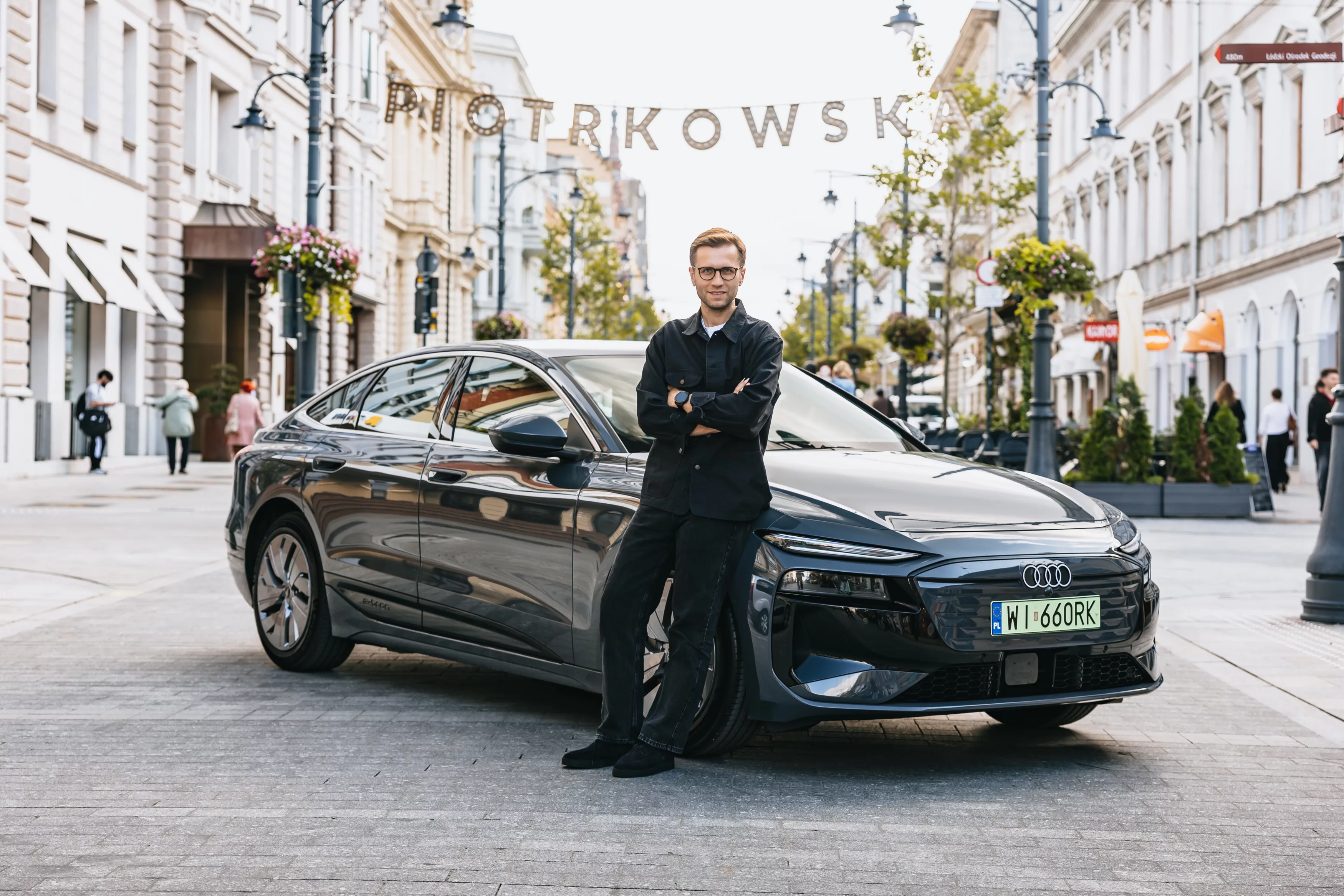
An Audi A6 Sportback e-tron performance covered 1,338 kilometres on a single charge and set a Guinness World Record. It sounds like another electric-car range triumph, until you look at the energy consumption: 7.09 kWh/100 km. That is almost half the car’s official WLTP figure and immediately shows this was far from an ordinary long-distance drive.
The record was set by 2025 European rally champion Miko Marczyk, who drove a production Audi across Poland. Guinness World Records confirmed the result in the category measuring the longest distance covered on a single charge by a production electric car. The previous record stood at 1,205 km, so Audi improved it by 133 km.
1,338 kilometres from a 94.9 kWh battery
The record car was not a prototype or a special eco model built in a laboratory. Marczyk used an Audi A6 Sportback e-tron performance, whose 100 kWh traction battery has 94.9 kWh of usable capacity.
The rear electric motor produces 270 kW and the car accelerates from 0 to 100 km/h in 5.4 seconds. In normal use, Audi claims a WLTP range of up to 777 km for this version and official energy consumption of 13.6–15.8 kWh/100 km. During the record attempt, actual average energy consumption fell to 7.09 kWh/100 km.
Simple arithmetic shows just how extreme the result was. Covering 1,338 km at 7.09 kWh/100 km would require approximately 94.9 kWh of energy. In other words, Audi’s published consumption figure matches the battery’s 94.9 kWh usable capacity almost exactly. Compared with the official maximum of 777 km, Marczyk drove about 72% farther.
The secret was not a larger battery, but low speed
The record began at 1:55am on 11 September and ended only more than 45 hours later. The route followed the Vistula River through Kraków, Sandomierz, Warsaw, Toruń and Grudziądz to Hel on the Baltic coast, and then back. The Audi eventually came to a halt between Toruń and Ciechocinek.
The drive took place in open public traffic, including during rush hour on part of the route. The average air temperature was 15°C, while the lowest measured temperature was 7°C.
The average speed needed to cover 1,338 km in more than 45 hours is below 30 km/h. That figure puts the record into its proper context.
An electric car’s energy consumption rises sharply at high speed because aerodynamic drag increases with the square of speed, while the power required to overcome it rises even faster. While aerodynamics become one of the dominant factors in energy consumption at 130 km/h on a motorway, at an average speed of around 30 km/h the A6’s streamlined body and efficient electric drivetrain can deliver a very different result.
This does not diminish the technical value of the record, but 1,338 km is not a figure an A6 e-tron owner should expect while driving on European motorways.
Audi’s 0.21 drag coefficient comes into play here
The A6 Sportback e-tron is exceptionally well suited to this kind of experiment. Its drag coefficient of just 0.21 makes the Sportback the most aerodynamic production car in Audi’s history.
According to Audi’s own calculations, aerodynamic drag accounts for around 40% of the Sportback’s energy consumption in the WLTP cycle. The longer and faster the drive, the more important the body’s ability to slip through the air becomes.
The A6 e-tron uses Volkswagen Group’s PPE, or Premium Platform Electric, architecture and an 800 V electrical system. Regenerative braking power reaches up to 220 kW and, according to Audi, around 95% of deceleration events in everyday traffic can be handled by the electric motors, feeding energy back into the battery.
During the record attempt, Marczyk used smooth driving and regenerative braking as efficiently as possible. Correct tyre pressures, anticipating traffic, and avoiding unnecessary acceleration and braking were equally important.
For the rally driver, this is already a second record at the opposite extreme
What makes the story slightly ironic is Marczyk’s main occupation. The 30-year-old Pole won the European rally title in 2025, where the objective is to complete a stage as quickly as possible. At the wheel of the Audi, he had to do essentially the opposite.
More interestingly, this was not his first eco-driving record. In 2025, Marczyk covered 2,831 km on a single tank of fuel in a fourth-generation Škoda Superb, achieving average diesel consumption of 2.6 l/100 km.
The record says more about efficiency than range
The 1,338 km figure is perfect for an advertising poster, but technically the more impressive number is 7.09 kWh/100 km.
The A6 Sportback e-tron performance has an official WLTP range of up to 777 km. That is already one of the electric A6’s stronger points, because a larger battery is not the only way to achieve long range. Audi relies on low aerodynamic drag, an efficient electric drivetrain and thermal management.
The record shows how far this technology can be taken when time is virtually removed from the equation.
For everyday European drivers, the wrong conclusion is that the A6 e-tron has become an electric car with 1,300 km of range. The more accurate conclusion is far more interesting: a production car with 94.9 kWh of usable energy was able to cover 1,338 km in a controlled eco-driving run without recharging the battery along the way.
It shows how much an electric car’s real-world range depends, in addition to battery capacity, on speed, aerodynamics and the driver’s right foot. Audi did not break the laws of physics. Marczyk simply used them to his advantage with exceptional skill.


