
Five Myths About Automatic Gearboxes That No Longer Hold Up
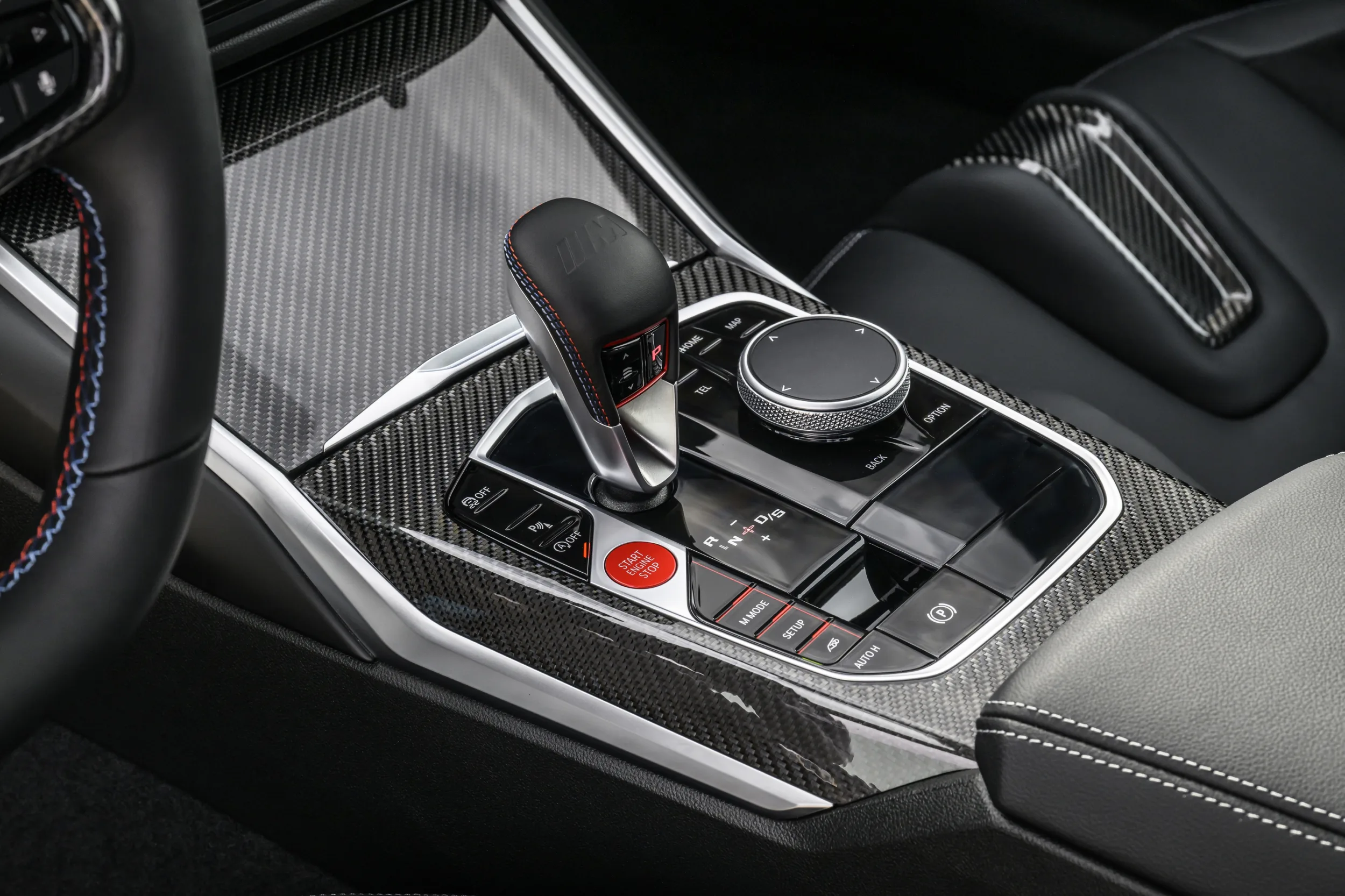
The rivalry between manual and automatic gearboxes largely dates back to an era when automatics had three or four gears, torque converters slipped excessively and drivers waited for a downshift during overtaking as though praying for divine intervention.
Today, the result depends less on the presence of a clutch pedal and more on the transmission’s design, control software, gear ratios and the engine calibration chosen by the manufacturer. An automatic may be quicker and more economical, while a manual can feel more direct, simpler and, in some cars, even more dynamic.
An Automatic Is Not a Single Type of Gearbox
Before examining the myths, one distinction matters: the word “automatic” covers several fundamentally different types of transmission.
A conventional automatic uses a torque converter when moving away from a standstill and changes gear through planetary gearsets and multi-plate clutches. Modern lock-up clutches establish a mechanical connection between the engine and transmission much earlier than older designs, reducing losses caused by slippage. Torsional dampers allow the lock-up clutch to close at lower engine speeds without sacrificing refinement. ual-clutch transmission divides its gears between two gearsets. One clutch normally handles the odd-numbered gears and the other the even-numbered ones. While one gear is transmitting power, the next can already be selected in the other half of the transmission, allowing rapid changes with little or no interruption to acceleration. automated manual uses mechanical components similar to those of a conventional manual gearbox, but actuators operate the clutch and select the gears. A continuously variable transmission, or CVT, changes its ratio without fixed steps, usually through a belt, chain or another type of variator mechanism.
The e-CVT used in many Toyota hybrids is not a conventional belt- or chain-driven CVT. Toyota’s system uses a planetary power-split device to connect the combustion engine, generator and electric drive motor. By controlling their rotational speeds, the system behaves like a continuously variable transmission without using the mechanical layout of a traditional CVT. Myth 1: An Automatic Always Uses More Fuel
Older torque-converter automatics lost energy through slippage, while their limited number of ratios did not always keep the engine in its most efficient operating range. A modern eight- or ten-speed automatic can use a much wider ratio spread, lock its torque converter early and select the most suitable gear for the load.
The BMW M2 demonstrates that a modern automatic can achieve lower official fuel consumption than the manual version. Its 353 kW straight-six consumes 9.6–9.8 l/100 km under the WLTP procedure with the eight-speed automatic, compared with 10.0–10.2 l/100 km with the six-speed manual.
The automatic version also receives the full 600 Nm of torque, while BMW limits the manual model to 550 Nm. The difference therefore does not result solely from faster gear changes: the manufacturer also uses different drivetrain calibrations. Toyota GR86 produces a different result. Its 2.4-litre boxer engine develops 172 kW and 250 Nm with either the six-speed manual or six-speed automatic. Toyota gives a combined WLTP figure of approximately 8.7–8.8 l/100 km for the European model range, so the difference between the two transmissions is small rather than decisive. manual GR86 accelerates from 0 to 100 km/h in 6.3 seconds, while the automatic requires 6.9 seconds. Their respective top speeds are 226 and 216 km/h. In this particular car, the manual provides better performance without a significant official fuel-consumption disadvantage. re is therefore no universal winner. Fuel consumption depends on the number and spread of ratios, the final-drive ratio, vehicle weight, engine management, transmission losses and the manufacturer’s homologation calibration.
Myth 2: An Automatic Is Always Slower
A quick dual-clutch transmission or performance-oriented planetary automatic can change gear without the pause required for a human driver to operate the clutch.
The BMW M2 reaches 100 km/h in 4.0 seconds with the eight-speed automatic and 4.2 seconds with the manual. It reaches 200 km/h in 12.9 seconds with the automatic, compared with 13.7 seconds for the manual. Porsche 718 Cayman GT4 and 718 Spyder accelerate from 0 to 100 km/h in 3.9 seconds when equipped with the seven-speed PDK and launch control. The same models require 4.4 seconds with the six-speed manual.
That half-second advantage does not come from the dual-clutch mechanism alone. Porsche also used shorter ratios for the first five gears, faster shifts and launch control. manual nevertheless retains one practical advantage: the driver can select a lower gear before overtaking or entering a corner. In its normal mode, an automatic may first have to interpret the accelerator input, choose a suitable gear and adjust engine speed. Sport modes, steering-wheel paddles and predictive control software reduce that delay but do not eliminate it in every situation.
A fast automatic will usually win against an otherwise comparable manual on a circuit. A manual may still deliver a more involving experience because the driver directly controls the clutch, engine speed and loading of the drivetrain. The stopwatch measures speed, not involvement.
Myth 3: An Automatic Cannot Provide Proper Engine Braking
The claim that only a manual gearbox can provide effective engine braking is wrong. A conventional automatic with its torque converter locked, a dual-clutch transmission and even a CVT can establish the connection between the wheels and engine needed to slow the vehicle.
The six-speed automatic used in the Toyota Hilux has an expanded torque-converter lock-up range in fourth, fifth and sixth gears. When the vehicle slows, the control system can select a lower gear to increase engine braking.
During suitable engine-braking conditions, fuel injection is cut off. It resumes when engine speed approaches the threshold at which the engine could stall. Toyota’s control system can therefore downshift to maintain engine speed and extend the period during which fuel injection remains disabled. automatic left in D may not always produce engine braking that feels as strong or predictable as that of a manual. Some transmissions select a higher ratio or disengage parts of the drivetrain when the accelerator is released so that the car can coast more efficiently. Others hold a lower gear on winding roads or descents.
The driver can usually influence this behaviour through a sport mode, steering-wheel paddles, a manual-selection gate or a dedicated downhill mode.
Hybrid vehicles add regenerative braking. In this case, the electric drive motor initially slows the vehicle while operating as a generator and returning energy to the battery. The driver feels deceleration even though the combustion engine may not be providing it.
Myth 4: A Manual Is Always Better for Towing and Off-Road Driving
A torque converter allows a heavily loaded vehicle to move away smoothly without requiring the driver to slip a friction clutch for an extended period. Its fluid coupling can also soften shocks through the drivetrain when a spinning wheel suddenly regains traction.
That does not make every torque-converter automatic indestructible. Prolonged low-speed driving, deep sand, a heavy trailer or a steep climb can generate considerable heat. Durability depends on cooling capacity, permitted loads, oil condition and control software, not merely on the presence of a torque converter.
The Toyota Hilux’s 2.8-litre diesel produces 500 Nm with the six-speed automatic and 420 Nm with the manual. Both versions can tow a braked trailer weighing up to 3,500 kg. The difference in engine torque results from the drivetrain calibration chosen by Toyota; it does not prove that every automatic can handle more load than every manual. orque converter also makes precise low-speed crawling easier off-road. A manual can work equally well when the vehicle has a sufficiently low first gear, low-range gearing and a durable clutch.
A dual-clutch transmission or single-clutch automated manual may have to slip its friction clutches during very slow manoeuvring. Its suitability for towing or difficult terrain therefore depends heavily on clutch design, cooling and control software.
Choosing the right transmission requires comparing the specific vehicle’s permitted towing weight, transmission cooling, gear ratios and manufacturer instructions. The label “manual” or “automatic” is not enough.
Myth 5: Automatics Are Inherently Unreliable and All Need the Same Maintenance
The claim that every automatic gearbox needs an oil change every 50,000 km is an oversimplification. It is equally misleading to assume that the phrase “lifetime oil” means the fluid will remain in perfect condition for the entire life of the vehicle.
ZF’s current maintenance recommendation covers its five-, six-, eight- and nine-speed automatic transmissions, as well as the 4HP20. Although these units may be described as maintenance-free in normal service, ZF recommends changing the oil after 150,000 km. High temperatures, heavy loads or an unknown service history may justify a shorter interval. ZF also instructs owners and workshops to follow the vehicle manufacturer’s requirements. t is not a universal interval for every automatic transmission. Dual-clutch gearboxes, CVTs and automatics made by other manufacturers may require different fluids, filters and service schedules.
The correct servicing procedure matters just as much as the interval. ZF specifies different oil-temperature windows for different transmissions and applications. A 6HP service procedure may require checking the level at 30–35°C, while current instructions for many 8HP versions specify a broader 30–50°C range, with further exceptions for certain applications. ng the wrong fluid, filling the transmission to the wrong level or ignoring the specified temperature and shifting procedure can cause poor operation or mechanical damage.
Nor can a complete or so-called dynamic fluid change be universally prohibited or demanded. The workshop must follow the procedure specified for that particular transmission.
Routine servicing of a manual gearbox is usually cheaper because it contains less oil and has simpler controls. However, replacing its clutch, release bearing and dual-mass flywheel can erase that advantage in a single major repair.
Complexity does not automatically make an automatic unreliable, just as simplicity does not make a manual immune to expensive failures.
The European Market Is Pushing the Manual into a Niche
Battery-electric cars accounted for 20.7 per cent of new passenger-car registrations in the European Union during the first half of 2026. Hybrid-electric cars represented 37.3 per cent and plug-in hybrids 9.8 per cent. The combined share of petrol and diesel cars fell to 29.7 per cent. attery-electric car does not normally need a conventional multi-speed manual gearbox. Full hybrids and plug-in hybrids generally rely on electronically controlled transmissions to combine the combustion engine with one or more electric motors.
Electrification therefore reduces the potential market for manual gearboxes regardless of which transmission an individual driver prefers.
Driver-assistance systems also tend to favour automatics, although adaptive cruise control can work with a manual gearbox. An automatic makes it easier to provide full Stop & Go operation, automatic restarting from a standstill and precise control at very low speeds.
The manual will retain a place in cheaper cars, some commercial vehicles and sports cars focused on driver involvement. Most powertrain-development investment, however, is moving towards automatic transmissions, hybrid systems and electric drive.
The Right Answer Depends on the Individual Car
A modern automatic is not necessarily thirstier, slower or worse at engine braking. Nor is a manual automatically the better choice for towing or off-road use.
A well-designed automatic can change gear quickly, keep the engine within an efficient operating range and withstand substantial torque. A poorly calibrated or badly maintained automatic can still be slow, uncomfortable and expensive.
A manual offers relatively simple construction, direct control and greater driver involvement. An automatic provides convenience, rapid shifts and better compatibility with electrified powertrains and advanced driver-assistance systems.
It therefore no longer makes sense to ask whether an automatic or manual is universally better. The correct comparison is between the actual transmissions, engines and calibrations offered in the specific car.
Acceleration, official fuel consumption and everyday convenience increasingly favour the automatic. The manual retains its strongest argument elsewhere: it gives the driver greater involvement and more direct control.
That is why the manual gearbox will not disappear immediately, even though technical development and the market are clearly moving towards automatic and electrified powertrains.
An Automatic Is Not a Single Type of Gearbox
Before examining the myths, one distinction matters: the word “automatic” covers several fundamentally different types of transmission.
A conventional automatic uses a torque converter when moving away from a standstill and changes gear through planetary gearsets and multi-plate clutches. Modern lock-up clutches establish a mechanical connection between the engine and transmission much earlier than older designs, reducing losses caused by slippage. Torsional dampers allow the lock-up clutch to close at lower engine speeds without sacrificing refinement. ual-clutch transmission divides its gears between two gearsets. One clutch normally handles the odd-numbered gears and the other the even-numbered ones. While one gear is transmitting power, the next can already be selected in the other half of the transmission, allowing rapid changes with little or no interruption to acceleration. automated manual uses mechanical components similar to those of a conventional manual gearbox, but actuators operate the clutch and select the gears. A continuously variable transmission, or CVT, changes its ratio without fixed steps, usually through a belt, chain or another type of variator mechanism.
The e-CVT used in many Toyota hybrids is not a conventional belt- or chain-driven CVT. Toyota’s system uses a planetary power-split device to connect the combustion engine, generator and electric drive motor. By controlling their rotational speeds, the system behaves like a continuously variable transmission without using the mechanical layout of a traditional CVT. Myth 1: An Automatic Always Uses More Fuel
Older torque-converter automatics lost energy through slippage, while their limited number of ratios did not always keep the engine in its most efficient operating range. A modern eight- or ten-speed automatic can use a much wider ratio spread, lock its torque converter early and select the most suitable gear for the load.
The BMW M2 demonstrates that a modern automatic can achieve lower official fuel consumption than the manual version. Its 353 kW straight-six consumes 9.6–9.8 l/100 km under the WLTP procedure with the eight-speed automatic, compared with 10.0–10.2 l/100 km with the six-speed manual.
The automatic version also receives the full 600 Nm of torque, while BMW limits the manual model to 550 Nm. The difference therefore does not result solely from faster gear changes: the manufacturer also uses different drivetrain calibrations. Toyota GR86 produces a different result. Its 2.4-litre boxer engine develops 172 kW and 250 Nm with either the six-speed manual or six-speed automatic. Toyota gives a combined WLTP figure of approximately 8.7–8.8 l/100 km for the European model range, so the difference between the two transmissions is small rather than decisive. manual GR86 accelerates from 0 to 100 km/h in 6.3 seconds, while the automatic requires 6.9 seconds. Their respective top speeds are 226 and 216 km/h. In this particular car, the manual provides better performance without a significant official fuel-consumption disadvantage. re is therefore no universal winner. Fuel consumption depends on the number and spread of ratios, the final-drive ratio, vehicle weight, engine management, transmission losses and the manufacturer’s homologation calibration.
Myth 2: An Automatic Is Always Slower
A quick dual-clutch transmission or performance-oriented planetary automatic can change gear without the pause required for a human driver to operate the clutch.
The BMW M2 reaches 100 km/h in 4.0 seconds with the eight-speed automatic and 4.2 seconds with the manual. It reaches 200 km/h in 12.9 seconds with the automatic, compared with 13.7 seconds for the manual. Porsche 718 Cayman GT4 and 718 Spyder accelerate from 0 to 100 km/h in 3.9 seconds when equipped with the seven-speed PDK and launch control. The same models require 4.4 seconds with the six-speed manual.
That half-second advantage does not come from the dual-clutch mechanism alone. Porsche also used shorter ratios for the first five gears, faster shifts and launch control. manual nevertheless retains one practical advantage: the driver can select a lower gear before overtaking or entering a corner. In its normal mode, an automatic may first have to interpret the accelerator input, choose a suitable gear and adjust engine speed. Sport modes, steering-wheel paddles and predictive control software reduce that delay but do not eliminate it in every situation.
A fast automatic will usually win against an otherwise comparable manual on a circuit. A manual may still deliver a more involving experience because the driver directly controls the clutch, engine speed and loading of the drivetrain. The stopwatch measures speed, not involvement.
Myth 3: An Automatic Cannot Provide Proper Engine Braking
The claim that only a manual gearbox can provide effective engine braking is wrong. A conventional automatic with its torque converter locked, a dual-clutch transmission and even a CVT can establish the connection between the wheels and engine needed to slow the vehicle.
The six-speed automatic used in the Toyota Hilux has an expanded torque-converter lock-up range in fourth, fifth and sixth gears. When the vehicle slows, the control system can select a lower gear to increase engine braking.
During suitable engine-braking conditions, fuel injection is cut off. It resumes when engine speed approaches the threshold at which the engine could stall. Toyota’s control system can therefore downshift to maintain engine speed and extend the period during which fuel injection remains disabled. automatic left in D may not always produce engine braking that feels as strong or predictable as that of a manual. Some transmissions select a higher ratio or disengage parts of the drivetrain when the accelerator is released so that the car can coast more efficiently. Others hold a lower gear on winding roads or descents.
The driver can usually influence this behaviour through a sport mode, steering-wheel paddles, a manual-selection gate or a dedicated downhill mode.
Hybrid vehicles add regenerative braking. In this case, the electric drive motor initially slows the vehicle while operating as a generator and returning energy to the battery. The driver feels deceleration even though the combustion engine may not be providing it.
Myth 4: A Manual Is Always Better for Towing and Off-Road Driving
A torque converter allows a heavily loaded vehicle to move away smoothly without requiring the driver to slip a friction clutch for an extended period. Its fluid coupling can also soften shocks through the drivetrain when a spinning wheel suddenly regains traction.
That does not make every torque-converter automatic indestructible. Prolonged low-speed driving, deep sand, a heavy trailer or a steep climb can generate considerable heat. Durability depends on cooling capacity, permitted loads, oil condition and control software, not merely on the presence of a torque converter.
The Toyota Hilux’s 2.8-litre diesel produces 500 Nm with the six-speed automatic and 420 Nm with the manual. Both versions can tow a braked trailer weighing up to 3,500 kg. The difference in engine torque results from the drivetrain calibration chosen by Toyota; it does not prove that every automatic can handle more load than every manual. orque converter also makes precise low-speed crawling easier off-road. A manual can work equally well when the vehicle has a sufficiently low first gear, low-range gearing and a durable clutch.
A dual-clutch transmission or single-clutch automated manual may have to slip its friction clutches during very slow manoeuvring. Its suitability for towing or difficult terrain therefore depends heavily on clutch design, cooling and control software.
Choosing the right transmission requires comparing the specific vehicle’s permitted towing weight, transmission cooling, gear ratios and manufacturer instructions. The label “manual” or “automatic” is not enough.
Myth 5: Automatics Are Inherently Unreliable and All Need the Same Maintenance
The claim that every automatic gearbox needs an oil change every 50,000 km is an oversimplification. It is equally misleading to assume that the phrase “lifetime oil” means the fluid will remain in perfect condition for the entire life of the vehicle.
ZF’s current maintenance recommendation covers its five-, six-, eight- and nine-speed automatic transmissions, as well as the 4HP20. Although these units may be described as maintenance-free in normal service, ZF recommends changing the oil after 150,000 km. High temperatures, heavy loads or an unknown service history may justify a shorter interval. ZF also instructs owners and workshops to follow the vehicle manufacturer’s requirements. t is not a universal interval for every automatic transmission. Dual-clutch gearboxes, CVTs and automatics made by other manufacturers may require different fluids, filters and service schedules.
The correct servicing procedure matters just as much as the interval. ZF specifies different oil-temperature windows for different transmissions and applications. A 6HP service procedure may require checking the level at 30–35°C, while current instructions for many 8HP versions specify a broader 30–50°C range, with further exceptions for certain applications. ng the wrong fluid, filling the transmission to the wrong level or ignoring the specified temperature and shifting procedure can cause poor operation or mechanical damage.
Nor can a complete or so-called dynamic fluid change be universally prohibited or demanded. The workshop must follow the procedure specified for that particular transmission.
Routine servicing of a manual gearbox is usually cheaper because it contains less oil and has simpler controls. However, replacing its clutch, release bearing and dual-mass flywheel can erase that advantage in a single major repair.
Complexity does not automatically make an automatic unreliable, just as simplicity does not make a manual immune to expensive failures.
The European Market Is Pushing the Manual into a Niche
Battery-electric cars accounted for 20.7 per cent of new passenger-car registrations in the European Union during the first half of 2026. Hybrid-electric cars represented 37.3 per cent and plug-in hybrids 9.8 per cent. The combined share of petrol and diesel cars fell to 29.7 per cent. attery-electric car does not normally need a conventional multi-speed manual gearbox. Full hybrids and plug-in hybrids generally rely on electronically controlled transmissions to combine the combustion engine with one or more electric motors.
Electrification therefore reduces the potential market for manual gearboxes regardless of which transmission an individual driver prefers.
Driver-assistance systems also tend to favour automatics, although adaptive cruise control can work with a manual gearbox. An automatic makes it easier to provide full Stop & Go operation, automatic restarting from a standstill and precise control at very low speeds.
The manual will retain a place in cheaper cars, some commercial vehicles and sports cars focused on driver involvement. Most powertrain-development investment, however, is moving towards automatic transmissions, hybrid systems and electric drive.
The Right Answer Depends on the Individual Car
A modern automatic is not necessarily thirstier, slower or worse at engine braking. Nor is a manual automatically the better choice for towing or off-road use.
A well-designed automatic can change gear quickly, keep the engine within an efficient operating range and withstand substantial torque. A poorly calibrated or badly maintained automatic can still be slow, uncomfortable and expensive.
A manual offers relatively simple construction, direct control and greater driver involvement. An automatic provides convenience, rapid shifts and better compatibility with electrified powertrains and advanced driver-assistance systems.
It therefore no longer makes sense to ask whether an automatic or manual is universally better. The correct comparison is between the actual transmissions, engines and calibrations offered in the specific car.
Acceleration, official fuel consumption and everyday convenience increasingly favour the automatic. The manual retains its strongest argument elsewhere: it gives the driver greater involvement and more direct control.
That is why the manual gearbox will not disappear immediately, even though technical development and the market are clearly moving towards automatic and electrified powertrains.


