
Bell’s X76 moves from drawing board to the sky
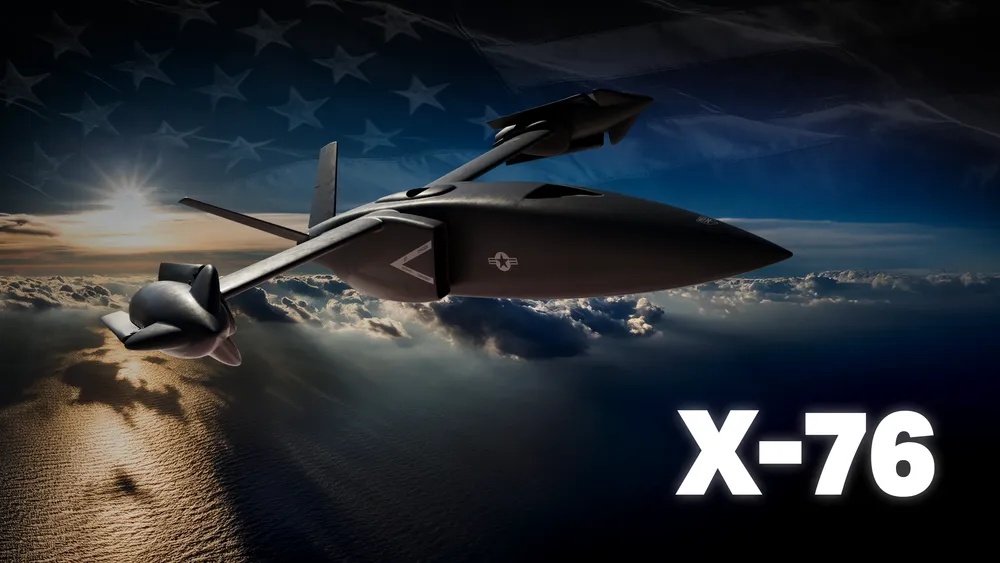
Imagine a machine that can lift off from your back garden like a helicopter, then a minute later charge along the cloud line at the sort of speed more commonly associated with a jet fighter. That sounds like the sort of idea Hollywood would pitch after a long lunch, yet Bell Textron is trying to turn it into something real. Its ambitious X76 project, developed under DARPA’s SPRINT programme, recently cleared a crucial milestone with a successful Critical Design Review. In plain English, the theory now looks solid enough for the metal bending to begin.
When a helicopter turns into a jet
The X76 is a technological chameleon. DARPA, the US defence agency with a taste for difficult questions, asked engineers to create an aircraft that would not need a runway yet could still fly at up to 830 km/h.
Bell’s answer is as clever as it is complicated. During take off and landing, the X76 uses rotors integrated into its wings, not unlike the systems seen on drones or helicopters. Then comes the party trick. Once the aircraft reaches sufficient altitude, its jet engines take over. At that point the rotors fold away into the wing to reduce drag, shedding the clumsy silhouette of a rotorcraft and pressing on under pure jet thrust.
That is the promise at the heart of the whole programme. Vertical lift when the ground is messy, speed when the mission cannot wait.
Why the X76 exists at all
Aircraft like this are not being built for the sake of engineering theatre, tempting though that may be. The point is mobility in places where infrastructure is broken, absent or simply too risky to rely on. In military terms, that could mean landing in areas with damaged facilities, evacuating casualties or moving special forces at a pace conventional helicopters cannot match.
Think of it as the aerial equivalent of a machine that can claw its way across rough terrain, then embarrass sports cars once the road opens up. That sort of flexibility is what DARPA wants, and what Bell is now trying to prove in hardware.
Passing the Critical Design Review matters because it is the point where ambition meets scrutiny. Engineers examine everything, from structure and propulsion to control software and safety logic, to establish whether the aircraft is genuinely ready to move into physical testing. It is less a box ticking exercise than a very expensive way of asking whether the sums still work once reality turns up.
A digital brain for a shape shifting aircraft
This is where the X76 becomes especially interesting. Flying fast is one thing. Transitioning from rotor borne flight to wing borne jet flight is quite another. Managing that shift at speeds beyond 700 km/h demands the sort of precision no human pilot could handle alone.
The aircraft’s control systems must respond instantly to changing airflow, balance and thrust as the vehicle alters its configuration. Rotors disappear, engines take over, aerodynamic loads shift and stability has to remain intact throughout. If that sounds like conducting an orchestra while the instruments keep changing shape, that is because it more or less is.
For Bell, the X76 is more than a one off experiment. It points towards an era in which designers no longer need to choose between vertical mobility and serious speed. For decades, aircraft makers accepted that compromise as a law of nature. Bell would quite like to prove it was merely a bad habit.
A new chapter in aviation
The X76 has now received an official X plane designation, placing it in the same broad lineage as some of history’s most famous experimental aircraft. That does not guarantee success, of course. Aviation history is littered with brilliant concepts that looked magnificent on paper and much less convincing once the air started pushing back.
Still, Bell’s project suggests that the next big shift in aircraft design may not come from making familiar machines slightly better. It may come from building aircraft that refuse to stay in one category at all. The sky is not getting any bigger, but machines like this may yet make it feel smaller.
The X76 is a technological chameleon. DARPA, the US defence agency with a taste for difficult questions, asked engineers to create an aircraft that would not need a runway yet could still fly at up to 830 km/h.
Bell’s answer is as clever as it is complicated. During take off and landing, the X76 uses rotors integrated into its wings, not unlike the systems seen on drones or helicopters. Then comes the party trick. Once the aircraft reaches sufficient altitude, its jet engines take over. At that point the rotors fold away into the wing to reduce drag, shedding the clumsy silhouette of a rotorcraft and pressing on under pure jet thrust.
That is the promise at the heart of the whole programme. Vertical lift when the ground is messy, speed when the mission cannot wait.
Why the X76 exists at all
Aircraft like this are not being built for the sake of engineering theatre, tempting though that may be. The point is mobility in places where infrastructure is broken, absent or simply too risky to rely on. In military terms, that could mean landing in areas with damaged facilities, evacuating casualties or moving special forces at a pace conventional helicopters cannot match.
Think of it as the aerial equivalent of a machine that can claw its way across rough terrain, then embarrass sports cars once the road opens up. That sort of flexibility is what DARPA wants, and what Bell is now trying to prove in hardware.
Passing the Critical Design Review matters because it is the point where ambition meets scrutiny. Engineers examine everything, from structure and propulsion to control software and safety logic, to establish whether the aircraft is genuinely ready to move into physical testing. It is less a box ticking exercise than a very expensive way of asking whether the sums still work once reality turns up.
A digital brain for a shape shifting aircraft
This is where the X76 becomes especially interesting. Flying fast is one thing. Transitioning from rotor borne flight to wing borne jet flight is quite another. Managing that shift at speeds beyond 700 km/h demands the sort of precision no human pilot could handle alone.
The aircraft’s control systems must respond instantly to changing airflow, balance and thrust as the vehicle alters its configuration. Rotors disappear, engines take over, aerodynamic loads shift and stability has to remain intact throughout. If that sounds like conducting an orchestra while the instruments keep changing shape, that is because it more or less is.
For Bell, the X76 is more than a one off experiment. It points towards an era in which designers no longer need to choose between vertical mobility and serious speed. For decades, aircraft makers accepted that compromise as a law of nature. Bell would quite like to prove it was merely a bad habit.
A new chapter in aviation
The X76 has now received an official X plane designation, placing it in the same broad lineage as some of history’s most famous experimental aircraft. That does not guarantee success, of course. Aviation history is littered with brilliant concepts that looked magnificent on paper and much less convincing once the air started pushing back.
Still, Bell’s project suggests that the next big shift in aircraft design may not come from making familiar machines slightly better. It may come from building aircraft that refuse to stay in one category at all. The sky is not getting any bigger, but machines like this may yet make it feel smaller.


