
The Great Cull: Has the Golden Era of Chinese Automakers Finally Imploded?
For the better part of a decade, a sense of quiet apocalypse has haunted the traditional automotive landscape. The narrative was simple and terrifying: a tidal wave of Chinese manufacturers would inevitably sweep across the globe, erasing legacy brands from existence. Just a few short years ago, it felt as though a new billionaire backed marque emerged every week from Beijing or Guangzhou, each promising more screens, faster charging, and a price tag that defied logic. However, as we move through the early stages of 2026, those rose tinted glasses have not just been removed; they have been shattered. The industry is witnessing a brutal cleansing where Eastern technological optimism has finally collided with the cold, hard walls of economic reality.
What once looked like an unstoppable success story now more closely resembles an overcrowded fishpond where the oxygen has finally run out. In China, the "hunger games" of the domestic market are in full swing, and the list of casualties is growing by the day. Lifan, once a household name with massive scale, is now little more than a fading footnote in history, despite Geely’s repeated attempts at resuscitation. WM Motors followed a similar path. Their chosen name, Weltmeister, was intended to evoke German engineering prowess, yet the venture proved to be an exercise in vanity that ended in insolvency and derelict factory halls. There is a certain tragic art to creating a brand, launching production within three years, and folding even faster, leaving behind nothing but creditors and disillusioned fans.
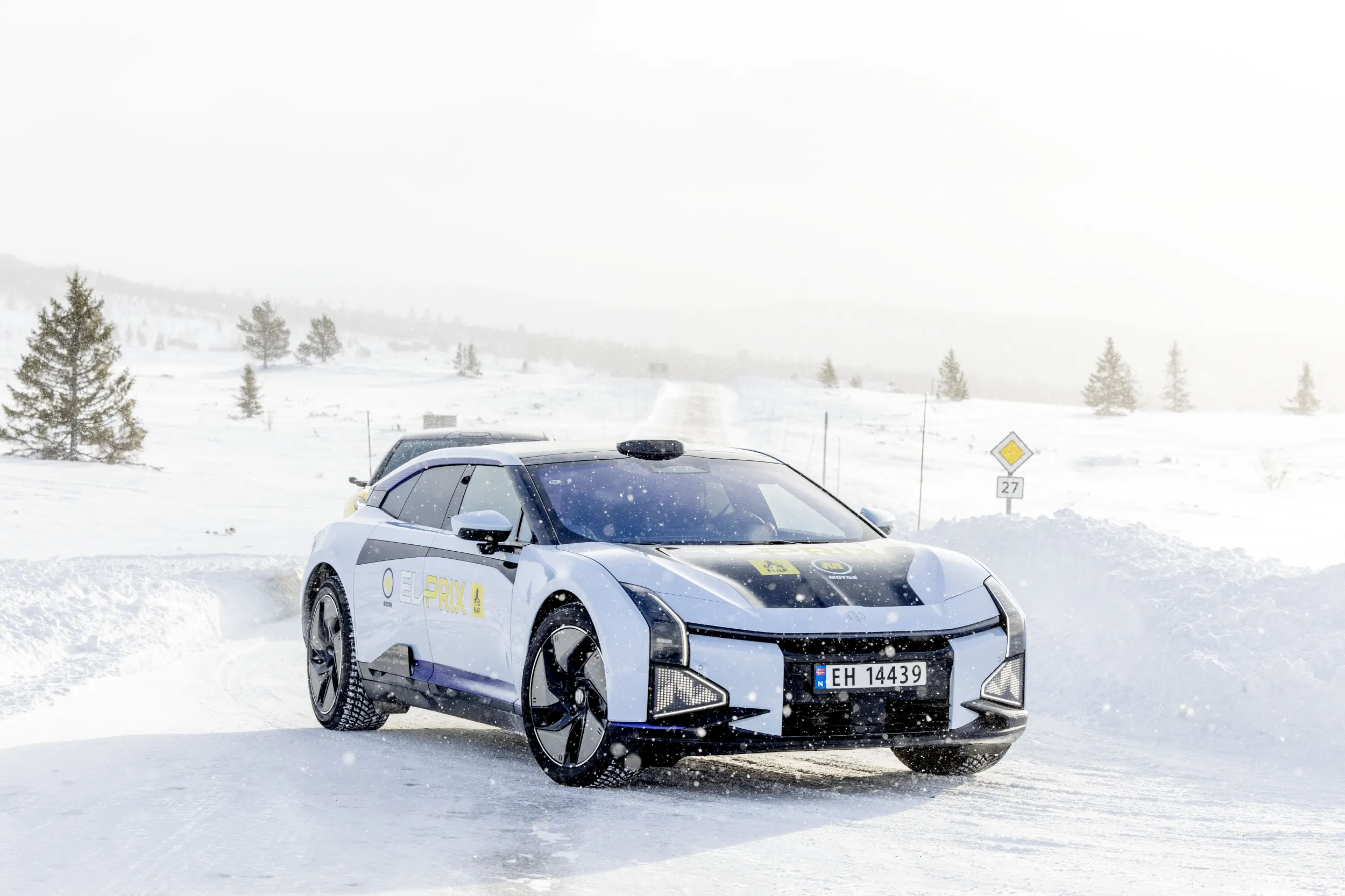
The situation is perhaps even bleaker for those who banked entirely on visual gimmicks. HiPhi attempted to prove that if a car featured enough gullwing doors and interactive displays, technical mediocrity wouldn't matter. The market responded with a deafening silence, and production has since ground to a halt. Meanwhile, Neta has inadvertently created a new visual landscape across the Chinese provinces: vast, silent fields of rotting electric vehicles waiting for buyers who simply do not exist. It turns out the world can produce far more cars than there are people willing to sign the financing papers.
The European Conquest Becomes a Costly Retreat
The much hyped Chinese invasion of Europe has morphed into a war of attrition where the casualties are no longer confined to the East. Many ambitious newcomers have learned a painful lesson: the European consumer remains aristocratically demanding and fiercely loyal to heritage. While HiPhi once dreamed of dominating the streets of Munich and Oslo, their ambitions have been replaced by a quiet disappearance. It is a harsh reminder that when your car costs as much as a Porsche but your brand name sounds like a trendy new cereal, getting a foot in the door is a near impossible task.
Aiways, which briefly appeared to be a credible contender on European roads, is facing a similar reckoning. Today, their headquarters echo with emptiness, and for current owners, sourcing spare parts has become a high stakes scavenger hunt where the grand prize is a functional vehicle. When the home factory goes bust, your "smart" electric car transforms overnight into a very heavy, very expensive smartphone that cannot even make a phone call, let alone drive.
We should not be fooled into thinking this carnage is exclusive to China. European startups that attempted to mimic the Chinese model—rapid expansion fueled by venture capital and state subsidies—have also been humbled. Projects like Sono Motors and Lightyear proved that while driving on solar power is a romantic theoretical concept, it is economically about as viable as shoveling snow in the Sahara.
Amidst this wreckage, only a few giants like BYD remain standing, seemingly mocking their failing competitors while demonstrating that survival belongs to those with deep financial reserves and robust logistical backbones. The Chinese automotive market is currently in a state of purgatory, watching the state sponsored bubble burst with spectacular force. It is a clear signal that there is no such thing as a free lunch, even if it is electric and wrapped in futuristic glass. For those who hoped for a cheap and high quality Chinese miracle, they are left only with a gallery of bankrupt stars and the realization that buying a car is still an act of long term trust rather than a fleeting digital trend.
The situation is perhaps even bleaker for those who banked entirely on visual gimmicks. HiPhi attempted to prove that if a car featured enough gullwing doors and interactive displays, technical mediocrity wouldn't matter. The market responded with a deafening silence, and production has since ground to a halt. Meanwhile, Neta has inadvertently created a new visual landscape across the Chinese provinces: vast, silent fields of rotting electric vehicles waiting for buyers who simply do not exist. It turns out the world can produce far more cars than there are people willing to sign the financing papers.
The European Conquest Becomes a Costly Retreat
The much hyped Chinese invasion of Europe has morphed into a war of attrition where the casualties are no longer confined to the East. Many ambitious newcomers have learned a painful lesson: the European consumer remains aristocratically demanding and fiercely loyal to heritage. While HiPhi once dreamed of dominating the streets of Munich and Oslo, their ambitions have been replaced by a quiet disappearance. It is a harsh reminder that when your car costs as much as a Porsche but your brand name sounds like a trendy new cereal, getting a foot in the door is a near impossible task.
Aiways, which briefly appeared to be a credible contender on European roads, is facing a similar reckoning. Today, their headquarters echo with emptiness, and for current owners, sourcing spare parts has become a high stakes scavenger hunt where the grand prize is a functional vehicle. When the home factory goes bust, your "smart" electric car transforms overnight into a very heavy, very expensive smartphone that cannot even make a phone call, let alone drive.
We should not be fooled into thinking this carnage is exclusive to China. European startups that attempted to mimic the Chinese model—rapid expansion fueled by venture capital and state subsidies—have also been humbled. Projects like Sono Motors and Lightyear proved that while driving on solar power is a romantic theoretical concept, it is economically about as viable as shoveling snow in the Sahara.
Amidst this wreckage, only a few giants like BYD remain standing, seemingly mocking their failing competitors while demonstrating that survival belongs to those with deep financial reserves and robust logistical backbones. The Chinese automotive market is currently in a state of purgatory, watching the state sponsored bubble burst with spectacular force. It is a clear signal that there is no such thing as a free lunch, even if it is electric and wrapped in futuristic glass. For those who hoped for a cheap and high quality Chinese miracle, they are left only with a gallery of bankrupt stars and the realization that buying a car is still an act of long term trust rather than a fleeting digital trend.


