
Risks of buying an electric car: who pays for future depreciation?
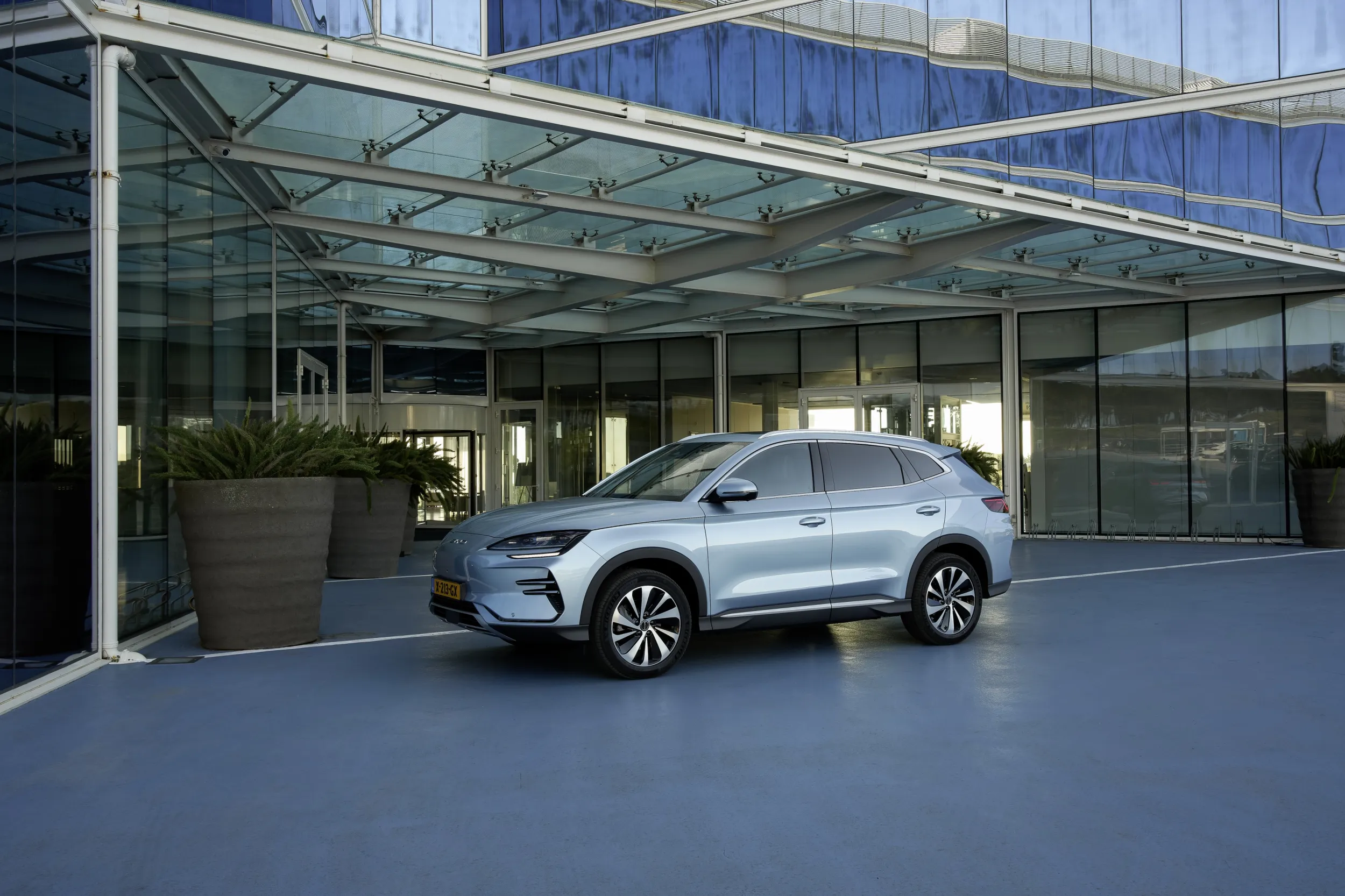
The purchase of a new electric car is encouraged through state support, tax incentives or cheaper leasing. But for the buyer, the decisive figure is how much they recoup when they sell the car a few years later. Electric-car values have fallen faster than those of combustion-engine cars in several markets. This raises questions about purchase incentives that show buyers a saving today while leaving them to bear the later loss on resale.
In the UK in June 2026, the average residual value of a three-year-old car with 60,000 kilometres on the odometer was 46.8% of its original list price. For a fully electric car, it was 33.8%. The difference was 13 percentage points. These are averages for one market, not a forecast for every individual car. Moreover, the first owner may have bought the car new for less than its list price.
A larger US study covering five-year-old cars points in the same direction. iSeeCars analysed sales of more than 950,000 cars between March 2025 and February 2026. Electric cars had lost an average of 57.2% of their value over five years, compared with 41.8% for all cars and 35.4% for hybrids. The US results cannot be directly converted into Northern European prices, but the model comparison in the same study shows which cars face greater difficulty retaining their value.
ID.4 loses value quickly, Model 3 slightly more slowly
Among electric SUVs that have entered the used-car market over roughly the past five years, the Volkswagen ID.4 and Ford Mustang Mach-E stand out for substantial depreciation. The Tesla Model Y has also lost more than half of its original value. The Tesla Model 3 and Hyundai Kona Electric have held up better than the electric-car average, although their first owners have still had to absorb a substantial loss.
Electric car | Average five-year depreciation in the US study |
|---|---|
Volkswagen ID.4 | 62.1% |
Ford Mustang Mach-E | 60.8% |
Tesla Model Y | 57.8% |
Kia Niro EV | 57.3% |
Hyundai Kona Electric | 56.5% |
Porsche Taycan | 54.7% |
Tesla Model 3 | 54.6% |
Electric-car average | 57.2% |
Source: iSeeCars. The figures describe model averages in the US market, rather than each battery or equipment version separately. A model name appearing in the table does not mean that every generation of that model went on sale exactly five years ago.
An electric car should also be compared with a combustion-engine car. In the same data company's model-based five-year estimates, depreciation is 45.9% for the petrol-powered Volkswagen Tiguan, 48.9% for the Ford Escape, 50.5% for the BMW X3 and 55.1% for the Audi Q5. Not every petrol car retains its value well, either. It is particularly important to compare vehicles with the same purchase price, size and period of use. The Ford Escape example applies only to a comparison in the US market, as this model is not a typical choice for Northern European buyers.
Why do electric-car prices fall faster?
A price cut for a new car reduces the value of an old one. If a manufacturer makes a new model cheaper or offers a large discount, the seller of a car that is a few years old must adjust their asking price. A purchase subsidy available only for a new car can have the same effect. The person most likely to lose out is someone who bought the vehicle before the price cut and now wants to sell it.
Technology is advancing quickly. A newer model may offer longer range, faster charging or better winter usability. As a result, the previous-generation car may appear outdated to buyers even if it functions properly. Residual-value assessors regard technological progress as one reason for downward pressure on electric-car prices.
Leased cars arrive on the market at the same time. When large numbers of similar cars from company fleets and leases are offered for sale, sellers must compete for a limited number of buyers. This can sharply affect the price of a single model. J.D. Power has drawn attention to the risk of oversupply even in more mature electric-car markets.
There may not be enough information on battery condition. A used electric-car buyer wants to know how much battery capacity remains. If there is no independent inspection or reliable history, they may make a lower offer. This does not mean that used electric-car batteries are generally faulty: prices are also affected by uncertainty about the extent of the potential risk.
Not everyone has access to affordable charging. For a driver who charges at home, a used electric car may offer low energy costs. The calculation may be very different for someone who depends mainly on public chargers. As a result, the same car has a different value to different buyers.
These factors explain earlier price declines, but do not mean that electric-car prices will continue falling every month. European market data in 2026 have also shown a recovery in demand and residual values for used electric cars.
How large would a purchase incentive need to be to cover the additional loss?
If a state's aim were to compensate only for an electric car's greater depreciation, it would be necessary to calculate the difference between the expected resale prices of two comparable cars. The simplified formula is:
Purchase incentive for equally priced cars = purchase price × difference in depreciation rates.
Assume that both the electric car and the petrol car cost €50,000 when purchased. Using the US model-based percentages above, the difference in five-year depreciation would be as follows:
Illustrative pair | Electric-car depreciation | Petrol-car depreciation | Additional loss on a €50,000 purchase price |
|---|---|---|---|
VW ID.4 and Tiguan | 62.1% | 45.9% | €8,100 |
Ford Mustang Mach-E and Escape | 60.8% | 48.9% | €5,950 |
These are not recommended subsidy amounts for Northern Europe. The actual cars may not be priced the same, and their insurance, energy and maintenance costs differ. Moreover, the calculation should use the actual purchase price rather than the list price where possible. The table percentages also come from iSeeCars data for different models and should be treated as an illustration of the order of magnitude.
Applying the UK three-year average difference of 13 percentage points to a €50,000 car would produce €6,500. However, the basis of comparison for that calculation is the average across the entire car market, rather than a petrol model in precisely the same price class. A fair incentive may be lower or higher for a particular model and buyer. If an electric car saves money on energy and maintenance during its period of use, that total cost must also be included in the comparison.
Pay upfront or leave the depreciation risk with the leasing provider?
Buyers have another option: an operating lease with a contractually fixed residual value and a right of return. If the car's market price at the end of the contract falls below the agreed residual value, the customer can return a car that meets the requirements. The depreciation risk then remains with the buyback party or leasing provider, depending on the contract. A finance lease with a large balloon payment does not offer such protection: the residual value must be paid even if the car is worth less on the market.
For example, if an electric car purchased for €50,000 has an agreed residual value of €25,000 after four years, but a market value of only €18,000, the difference would be €7,000. In an operating lease with a right of return, the customer would not normally have to cover this difference in market value by selling the car at the end of the contract. In a finance lease, the €25,000 balloon payment would remain their obligation. Interest is still paid on an operating lease, while additional charges may apply on return for excess mileage or a condition that does not comply with the contract terms.
There is a trap here, too: the highest possible residual value produces a lower monthly payment, but does not make the car cheaper. A higher outstanding amount generally means higher interest costs. Nor may a fixed-term right of return protect someone who wants to leave the contract early.
Paying cash avoids leasing interest but leaves the owner with all the resale-price risk. For a driver intending to replace their car after three to four years, an operating lease with a clear right of return may be a sensible way of limiting that risk. For someone who plans to keep the same car for a long time, buying it outright may prove cheaper. The decision requires comparing the down payment, all monthly payments, interest, insurance, possible return fees and the car's expected resale price.
For European markets, the central question is simple: when buying an electric car, it is not enough to know how much the state or seller reduces the price today. It is necessary to know who bears the risk if the car is worth less than expected in three or five years' time. This is precisely the question that both the calculation of a purchase subsidy and a leasing contract should answer.


