
Electric Defender pushed into the next decade
 1/29
1/29 
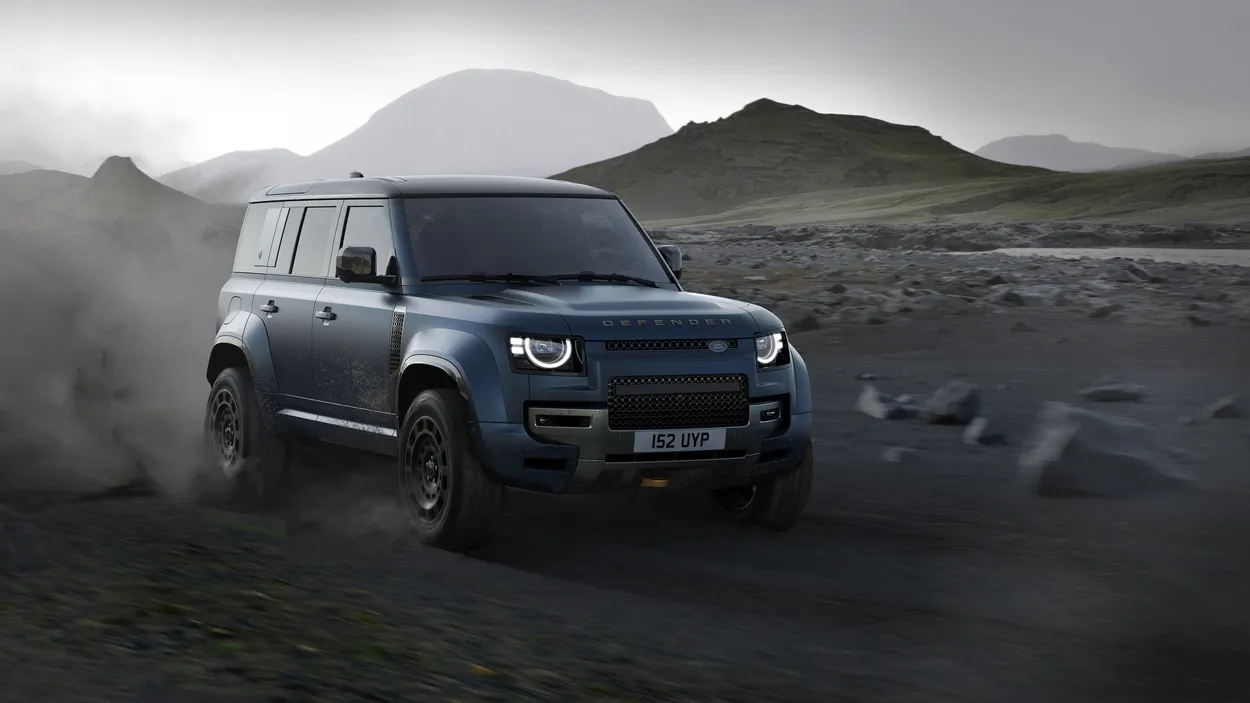
The fully electric Land Rover Defender is taking longer to arrive than expected. JLR has pushed the Defender’s next major generational overhaul back by at least two years, and the launch of a full-size electric Defender is moving with it. On current indications, it is unlikely to appear until the early 2030s.
The current Defender is not well suited to a large battery
The issue is not simply demand for electric vehicles. The current Defender’s architecture makes it difficult to package a fully electric powertrain with a large traction battery.
JLR has acknowledged this before. In 2025, company executives told Autocar that the existing Defender’s structure places significant constraints on battery packaging. The axle layout and the need to preserve the Defender’s trademark off-road ability make the challenge even harder.
With an electric off-roader, it is not enough simply to place a battery beneath the floor. The Defender still needs substantial ground clearance, suitable approach and departure angles, generous suspension travel and the ability to cope with serious off-road terrain. At the same time, a large battery adds hundreds of kilograms and requires robust protection against both crash loads and impacts from below.
Developing an electric version of the current model would therefore be an expensive exercise in compromise — one that could weaken precisely the qualities buyers choose a Defender for in the first place.
Next-generation Defender slips into the 2030s
According to The Times, a major redesign of the Defender had originally been expected around 2028 or 2029, although JLR had never announced an official launch date. The company has now pushed the project back by roughly two years, moving both the next-generation model and the electric version associated with it into the 2030s.
JLR’s reasoning includes the strong sales performance of the current Defender. That reduces the pressure to rush into an expensive replacement programme. The Defender has become one of the company’s most important and profitable model families.
Money also matters. JLR is having to invest in several electric-vehicle programmes at the same time, while changes in international trade and rising costs are adding further pressure. Replacing the full-size Defender while the current model continues to sell strongly is therefore not the investment most likely to deliver a quick return.
Smaller electric Defender remains on the cards
That does not mean JLR is abandoning plans to electrify the Defender nameplate. Development is continuing on a smaller model, unofficially referred to as the “baby Defender”. It could become the first fully electric vehicle to wear the Defender badge.
The strategy makes sense. A more compact SUV consumes less energy, allowing a useful driving range to be achieved with a smaller, lighter battery. That in turn reduces both weight and production costs.
The equation is far more difficult for the full-size Defender. If a multi-tonne, four-wheel-drive off-roader has to combine long motorway range with genuine off-road capability, battery capacity quickly becomes substantial. As it grows, so do both cost and weight.
Rivals are not standing still
The delay means the Defender could be absent from the electric luxury off-roader segment for some time. Mercedes-Benz has already launched an electric G-Class, while the choice of large electric SUVs continues to expand.
JLR does, however, have one important advantage. Defender buyers do not choose the vehicle solely on the basis of its powertrain. Much of its appeal lies in its distinctive design, off-road ability and brand identity, so bringing an electric version to market as quickly as possible is not necessarily the smartest course.
Electrifying the current Defender at the cost of major compromises could prove an even greater risk than waiting. If JLR uses the extra time to develop an architecture designed around electric propulsion from the outset, the Defender of the next decade could offer a much more convincing balance of range, weight and off-road capability.
A two-year delay therefore does not spell the end of the electric Defender. Instead, it underlines just how difficult it is to electrify a vehicle expected to do far more than simply provide quiet, rapid progress on the road.


