
Fuyao solar roof generates electricity directly on the car
 1/29
1/29 
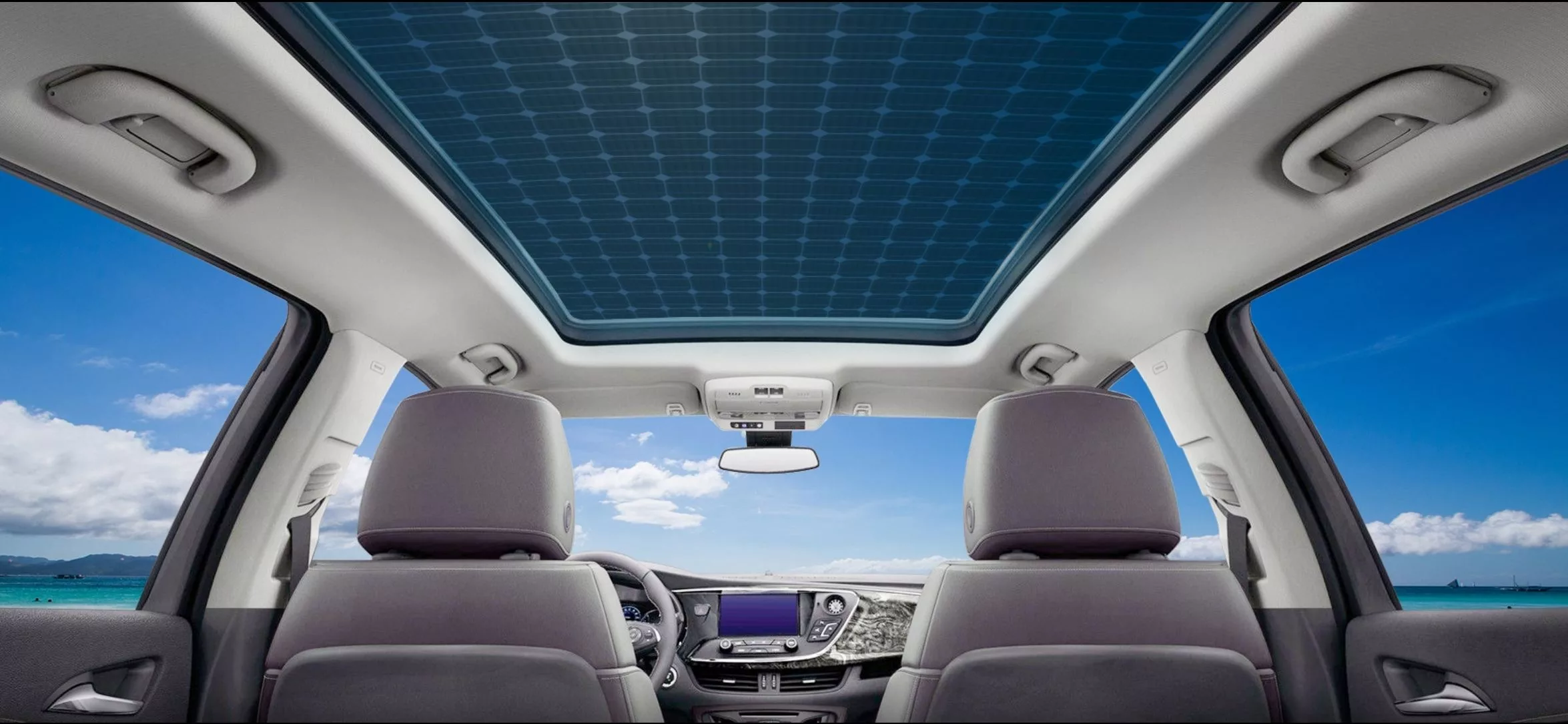
Chinese supplier Fuyao Glass has developed a panoramic roof with photovoltaic cells integrated directly into the glass, allowing it to generate electricity for the vehicle’s electrical systems. According to the company, the system can deliver up to 150 W per square metre and the technology has reached mass-production readiness.
The solar cells are built directly into the glass
At the heart of Fuyao’s solution are photovoltaic cells integrated into the glazing itself. Sunlight generates an electrical current in the cells, which the vehicle can then use to power various electrical systems.
Fuyao lists cabin ventilation, vehicle connectivity and the onboard camera among the potential applications. The aim is therefore not to replace charging of an EV’s main traction battery, but to reduce the amount of energy auxiliary systems would otherwise draw from the car’s own electrical network.
According to figures published by Fuyao, the system can generate up to 150 W of electrical power per square metre. The company said as early as March 2026 that it had achieved a practical breakthrough in solar automotive glazing and had the capability required for mass production.
150 W/m² does not mean hundreds of kilometres of free range
With a solar roof, it is important to distinguish between power and energy. A figure of 150 W/m² describes maximum instantaneous output under suitable lighting conditions, not how much energy the car will necessarily generate over the course of a day.
If, for example, the active solar area covered two square metres, the system could produce around 300 W of instantaneous power in ideal conditions. With three square metres, the theoretical maximum would be roughly 450 W.
Actual daily energy yield depends on solar irradiance, temperature, the car’s orientation, shading and the size of the active photovoltaic area.
Chinese media reports have also linked Fuyao’s technology with BYD and cited significantly higher power-output and efficiency figures. Fuyao’s publicly verifiable product information, however, gives a figure of up to 150 W/m². The company has not named a specific production car already using the new solar roof, nor has it identified BYD, Tesla or any other carmaker as a customer for the system.
Limited roof area imposes a physical ceiling
Using solar power on a car runs into one simple problem: a passenger car has very little surface area.
A building roof can accommodate tens of square metres of solar panels. A car, by contrast, has only a few square metres of horizontal roof area, and not all of it will necessarily be covered with photovoltaic cells. That means even a highly efficient solar roof cannot, under normal conditions, replace conventional EV charging.
Fuyao’s solution becomes more interesting when energy consumption is viewed as a whole. Ventilation, telematics, security functions and onboard cameras all consume power even while the car is parked. If the solar roof can cover at least part of that demand, it reduces the load on the main battery.
In a combustion-engined car, the same principle could reduce alternator load and, to a very small extent, fuel consumption.
Solar roofs are not new — mass production matters more
Cars with solar cells are not a new idea in themselves. Carmakers have experimented with such systems for decades, and Toyota, for example, offered a solar roof on the Prius long before the current EV boom.
The significance of Fuyao’s project lies elsewhere. The company is one of the world’s largest automotive-glass manufacturers and can integrate solar cells into a component carmakers are already using increasingly often: a large glass panoramic roof.
If the manufacturing cost, durability and electrical efficiency of such glazing prove viable in mass production, carmakers would no longer need to mount separate solar panels onto the body.
According to Fuyao, the surface area of its conventional panoramic roofs can approach 3 m². That does not mean the entire area would necessarily be active in a solar-roof application, but it illustrates the scale available within automotive glazing.
In Europe, the benefit depends heavily on climate
The value of a solar roof would vary significantly across Europe. A car in Spain or southern Italy spends far more time each year under strong sunlight than one in Estonia, Finland or Sweden.
Warm climates bring another advantage. If solar power can keep a parked car’s ventilation running, the cabin may heat up less, reducing the amount of energy the air-conditioning system needs when the journey begins.
In northern Europe, annual energy production would be lower, while snow could completely cover the solar cells in winter. In those markets, the economics of the system would depend even more heavily on price. If Fuyao can integrate photovoltaic cells into a panoramic roof with only a small increase in cost and weight, the concept could become far more compelling than the expensive dedicated solar-roof solutions seen so far.


