
Lamborghini drops Lanzador EV plan - and customers approve
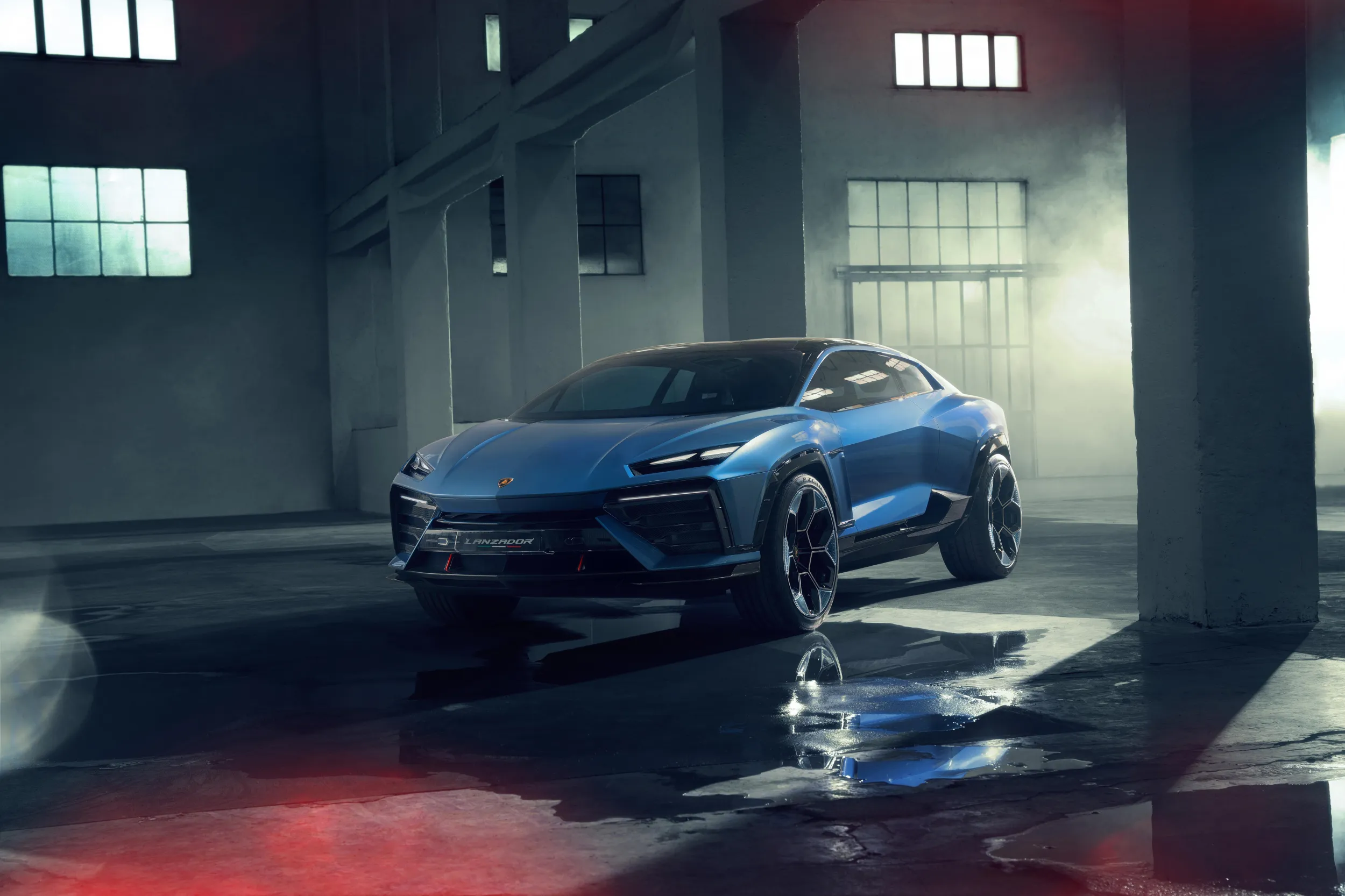 1/29
1/29 
Lamborghini’s first fully electric production car will have to wait a little longer. Unveiled in 2023 as an electric Ultra GT with more than 1 MW of power, the Lanzador is now heading for production as a plug-in hybrid. According to CEO Stephan Winkelmann, customer reaction confirms that Lamborghini made the right call.
From electric flagship to plug-in hybrid
Lamborghini unveiled the Lanzador concept at Monterey Car Week in 2023. At the time, the four-seat 2+2 Gran Turismo was presented as the beginning of the company’s electric era, with Lamborghini planning to launch a fourth model line based on the concept towards the end of the decade.
The original technical brief was ambitious. Lamborghini fitted one electric motor to each axle, giving the car all-wheel drive, and promised peak system output of more than 1 MW, or over 1,000 kW. Active aerodynamics and a new generation of LDVI vehicle-dynamics control were also part of the package. Lamborghini even coined a new category for the car: Ultra GT.
That part of the plan has now been substantially rewritten. Speaking to CarBuzz at this year’s Monterey Car Week, Winkelmann confirmed that switching the Lanzador from a fully electric powertrain to a plug-in hybrid was the right move, adding that customers had responded very positively. That matters because Lamborghini has explicitly linked its retreat from a pure-EV Lanzador to weak demand among its own buyers.
Lamborghini buyers are not ready for an electric supercar
The Lanzador’s change of direction did not happen overnight. According to Winkelmann, Lamborghini kept a close eye on the market and concluded that customer acceptance of fully electric models was not improving. Back in February, he said interest in electric Lamborghinis was effectively approaching zero.
That makes the Lanzador one of the clearest examples of how the electrification strategies of Europe’s exotic-car makers have shifted in recent years. Lamborghini’s problem is not electric-motor output. The 2023 Lanzador already showed that producing more than 1,000 kW is not an insurmountable technical challenge. The harder task is delivering the qualities Lamborghini customers actually pay for: engine sound, mechanical character, emotional appeal and the way the powertrain responds.
At this price level, buying decisions work very differently from the mainstream EV market. A car costing several hundred thousand euros cannot simply be quick in a straight line. Lamborghini has to give the driver a reason to choose it over another exotic car that is just as fast.
Plug-in hybrids are already a proven formula for Lamborghini
Technically, the Lanzador’s new direction is hardly unfamiliar territory for Lamborghini. The current line-up is already heavily electrified, with the Revuelto, Temerario and Urus SE demonstrating three different approaches to combining combustion engines with electric propulsion.
The Urus SE provides an especially interesting reference point. Its 4.0-litre twin-turbo V8 works in conjunction with an electric motor, while the more powerful Urus SE Performante takes combined output to 597 kW and torque to 1,000 Nm.
Lamborghini has not yet revealed the exact powertrain layout of the production Lanzador. It would therefore be premature to assume that it will necessarily use a V8-based system derived from the Urus. For a four-seat, high-performance GT, however, such a setup would provide a logical technical starting point — particularly if Lamborghini wants to retain the performance of the electric concept while adding the character of a combustion engine.
The Lanzador will also need to serve a different purpose from the Revuelto or Temerario. This is not a conventional mid-engined supercar. Its higher ground clearance, four seats and GT concept place it somewhere between a sports car and the Urus. Lamborghini has continued to describe the original Lanzador in 2026 as a higher-riding, all-wheel-drive 2+2 GT with more than 1 MW of power.
An electric Lamborghini is not dead for good
Changing the Lanzador’s powertrain does not necessarily mean Sant’Agata Bolognese has ruled out fully electric cars altogether. Winkelmann has said the company will continue developing EV technology, but does not believe the current market is ready for Lamborghini to put such a model on sale. A fully electric Lamborghini could therefore still arrive after 2030, once customer demand and the technology are better aligned.
Even so, the shift is significant. In Lamborghini’s 2024 environmental report, the company was still describing the fourth model line based on the Lanzador as a fully electric 2+2 GT. That same model is now moving towards production as a plug-in hybrid.
From a European perspective, the decision shows that even with emissions regulations becoming stricter, the move to electric propulsion is far from straightforward for low-volume luxury and sports-car manufacturers. A plug-in hybrid allows Lamborghini to reduce its official CO2 figures and offer electric driving, while still retaining the combustion engine that customers see as an important part of the brand’s identity.
The Lanzador is therefore shaping up to be more than simply Lamborghini’s fourth model line. It is a test case for the company’s wider strategy. If the plug-in-hybrid four-seat GT proves successful, Lamborghini can afford to wait until customers genuinely want a fully electric model rather than launching one simply to satisfy an electrification timetable.
The latest information in this story comes from comments Stephan Winkelmann made to CarBuzz at Monterey Car Week. For the Lanzador’s technical and historical background, we cross-checked Lamborghini’s official materials and Winkelmann’s earlier statements.


