
European electric-car tariffs opened a new door for China — and now Brussels is trying to close it
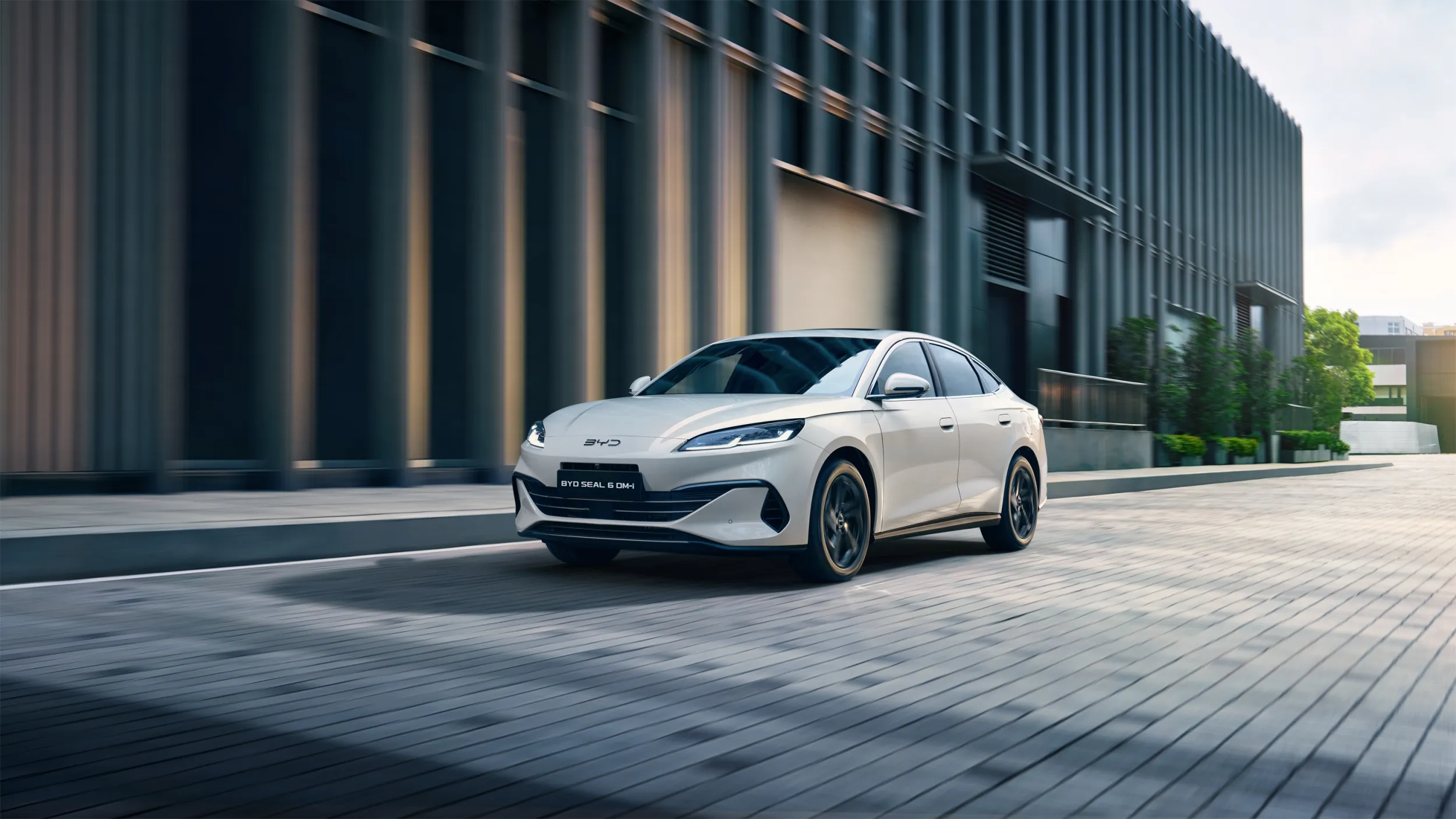
The European Union wants China to voluntarily limit its exports of hybrid cars to Europe. According to the Financial Times, Brussels plans to push the share of China-made hybrids in Europe’s hybrid market down to around 15%. It currently exceeds one-third. If no agreement is reached, pressure to introduce new trade measures will grow.
On the surface, this is another chapter in the trade dispute between Europe and China. From the automotive industry’s perspective, however, the situation points to something far more significant: the electric-car tariffs introduced in 2024 did not solve Europe’s competitiveness problem. They simply changed the tactics of Chinese carmakers.
Hybrids replaced electric cars
The European Commission’s 2024 anti-subsidy investigation concerned fully electric cars made in China. As a result, they are now subject to anti-subsidy duties ranging from 7.8% to 35.3%, depending on the manufacturer.
Hybrids were excluded from the measure.
Chinese manufacturers were quick to exploit this loophole. According to Financial Times reporting, imports of Chinese hybrids rose from around 3,800 vehicles in October 2024 to approximately 50,000 by July 2026.
That is no surprise. If bringing a fully electric car to Europe becomes more expensive, while the same additional duty does not apply to a plug-in hybrid, the latter powertrain becomes more attractive to manufacturers. China’s industry already has the models, batteries, motors and production capacity needed for this.
Europe closed one door, and China came in through a side entrance.
Hybrids are an even more dangerous competitor in Europe
For European carmakers, the rapid growth of Chinese plug-in hybrids may be even more uncomfortable than an influx of cheap electric cars.
The purchase of fully electric cars is still constrained by charging availability, range anxiety and fluctuating subsidy policies in some countries. A plug-in hybrid removes many of these arguments. Buyers can drive on electricity in cities while retaining an internal-combustion engine for longer journeys. This is precisely the type of car that a substantial part of the European market currently needs.
Chinese manufacturers, meanwhile, have built a vast electric and hybrid vehicle industry in their domestic market. Reuters described as early as 2024 how electric cars and plug-in hybrids accounted for more than half of new-car sales in China. This gives manufacturers a scale that European rivals find difficult to replicate quickly.
The influx of hybrids is therefore not a side effect, but the next logical stage in Chinese cars’ advance into Europe.
Tariffs do not fix European cars
A tariff can make a Chinese car more expensive, but it does not automatically make a Volkswagen, Stellantis or Renault cheaper. European manufacturers are simultaneously battling high production costs, weak profitability and rapidly advancing Chinese competition. Reuters Breakingviews noted this week that Chinese brands’ share of EU car sales had already reached 9% in the first half of 2026.
Import restrictions therefore primarily buy time for Europe’s industry. That time becomes valuable only if European manufacturers use it to develop cheaper electric cars, better batteries, competitive hybrids and more efficient production. If structural problems remain unresolved, another tariff wall will have to be erected in a few years.
China’s response is already ready: produce in Europe
An even bigger problem is that the effect of import tariffs diminishes as soon as Chinese manufacturers start making cars in Europe.
This process is already under way. According to Reuters, Chinese carmakers are actively looking for factories in Europe. BYD is starting production in Hungary and considering further plants, while Chery, Leapmotor, Dongfeng and Geely have moved towards local production or European partnerships. That makes the next stage much more complicated.
When a Chinese-brand car is made by European workers in a European factory and uses an increasing share of local components, the issue is no longer simply one of protecting European industry from Chinese imports. Car manufacturers of different origins are then competing on European soil for the same workers, suppliers and customers. This is precisely why the EU is also discussing stricter local-origin requirements. This week, German Finance Minister Lars Klingbeil called not only for tariffs on plug-in hybrids but also for stronger local-content rules.
Europe must decide what it is actually protecting
Restricting hybrid imports may slow the growth of Chinese cars’ market share. On its own, however, it will not save the long-term competitiveness of Europe’s automotive industry.
Brussels therefore faces a more difficult question than the tariff rate.
If the aim is to protect European car brands, the policy becomes increasingly difficult to justify once a Chinese company starts producing cars in Europe. If the aim is to protect European jobs, production and technological capability, a BYD or Leapmotor made in Europe may instead be part of the solution.
Chinese manufacturers’ strategy is already moving in that direction. Import tariffs can be circumvented through local production, but technological competition cannot be eliminated with tariffs. The most important conclusion of the current hybrid dispute is therefore quite stark: Europe can buy itself time through restrictions, but it must still build competitiveness itself.


