
Genesis and the Magma GT, Korea storms the supercar sanctuary
 1/4
1/4
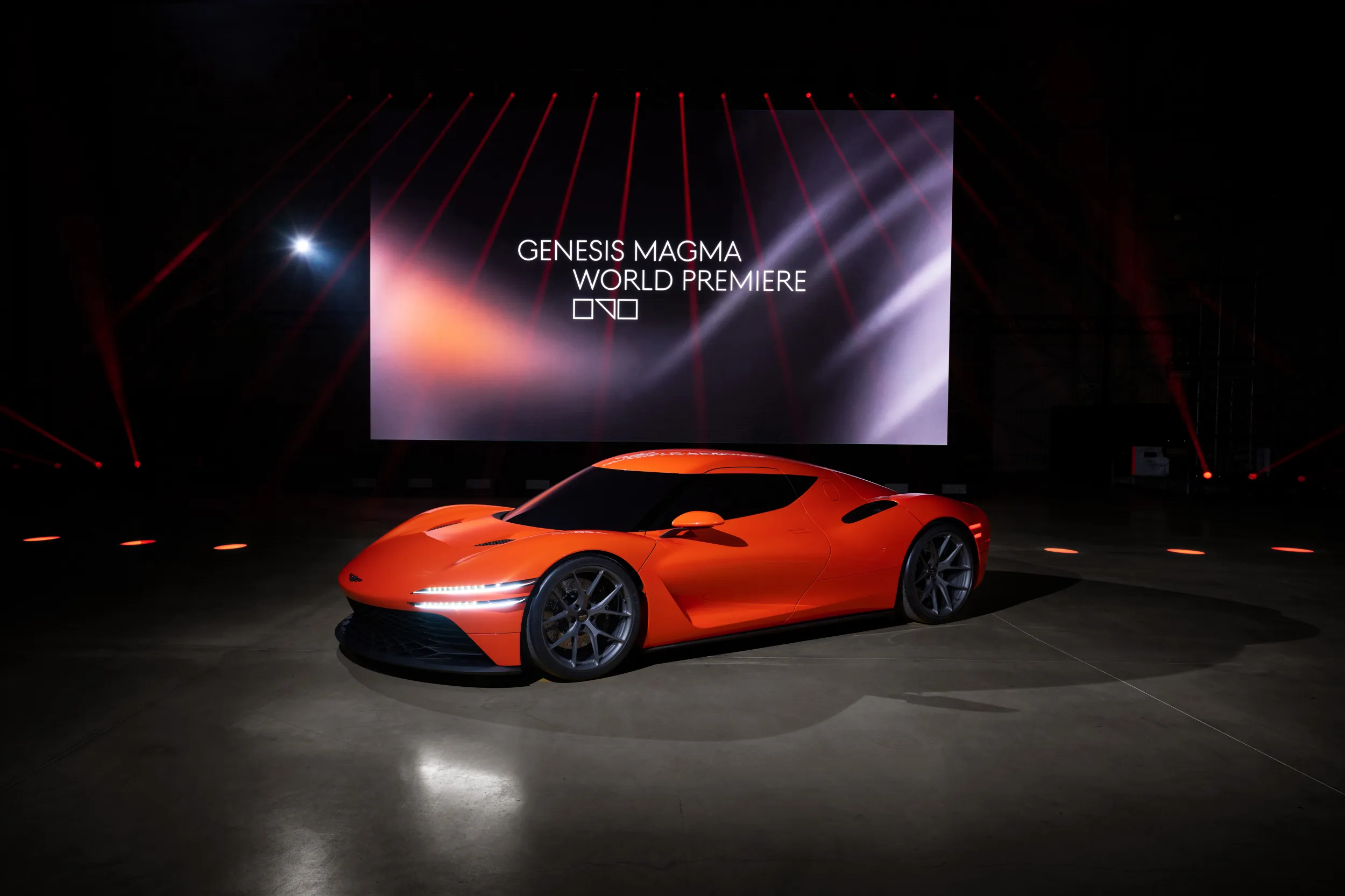
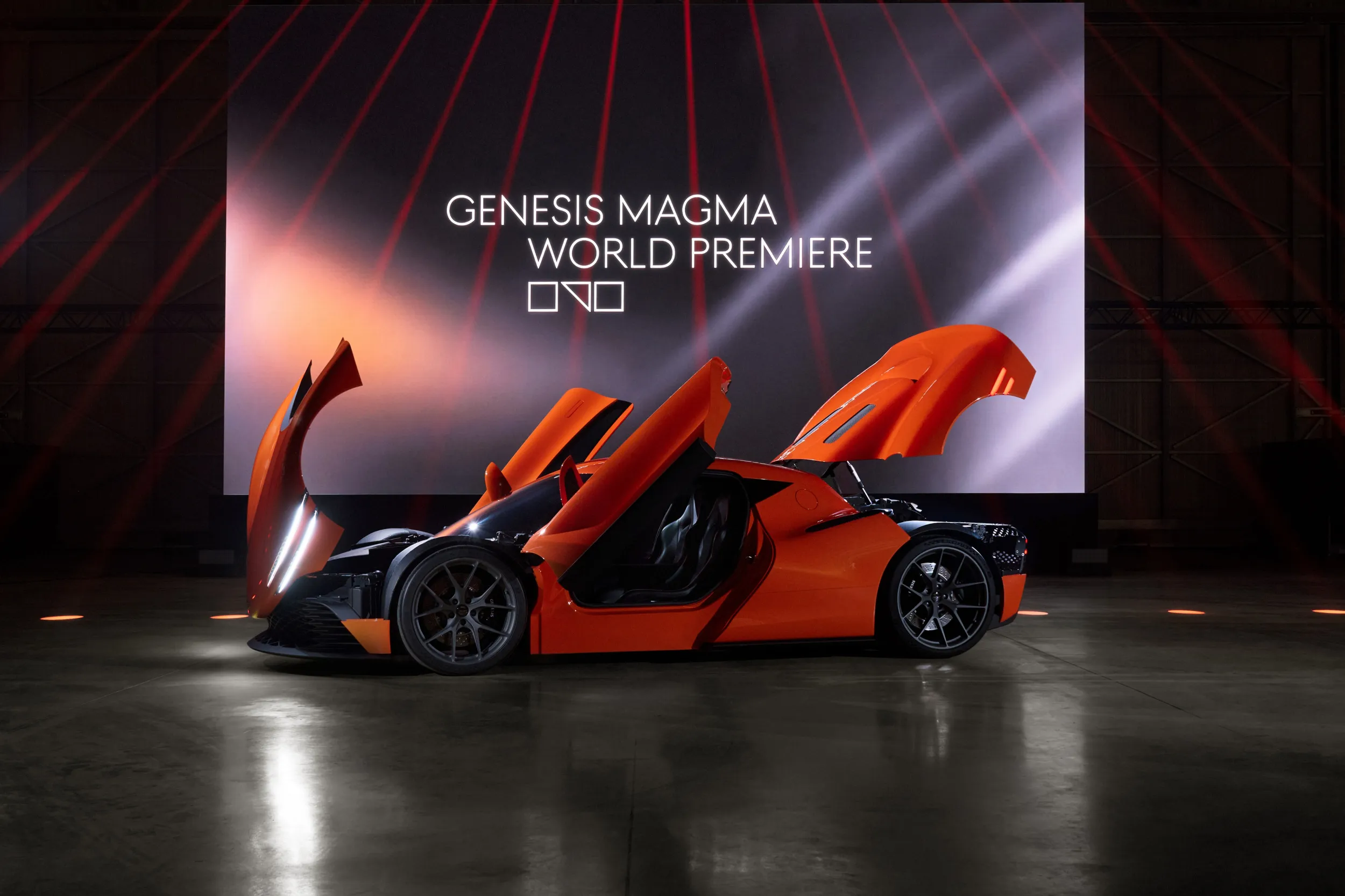
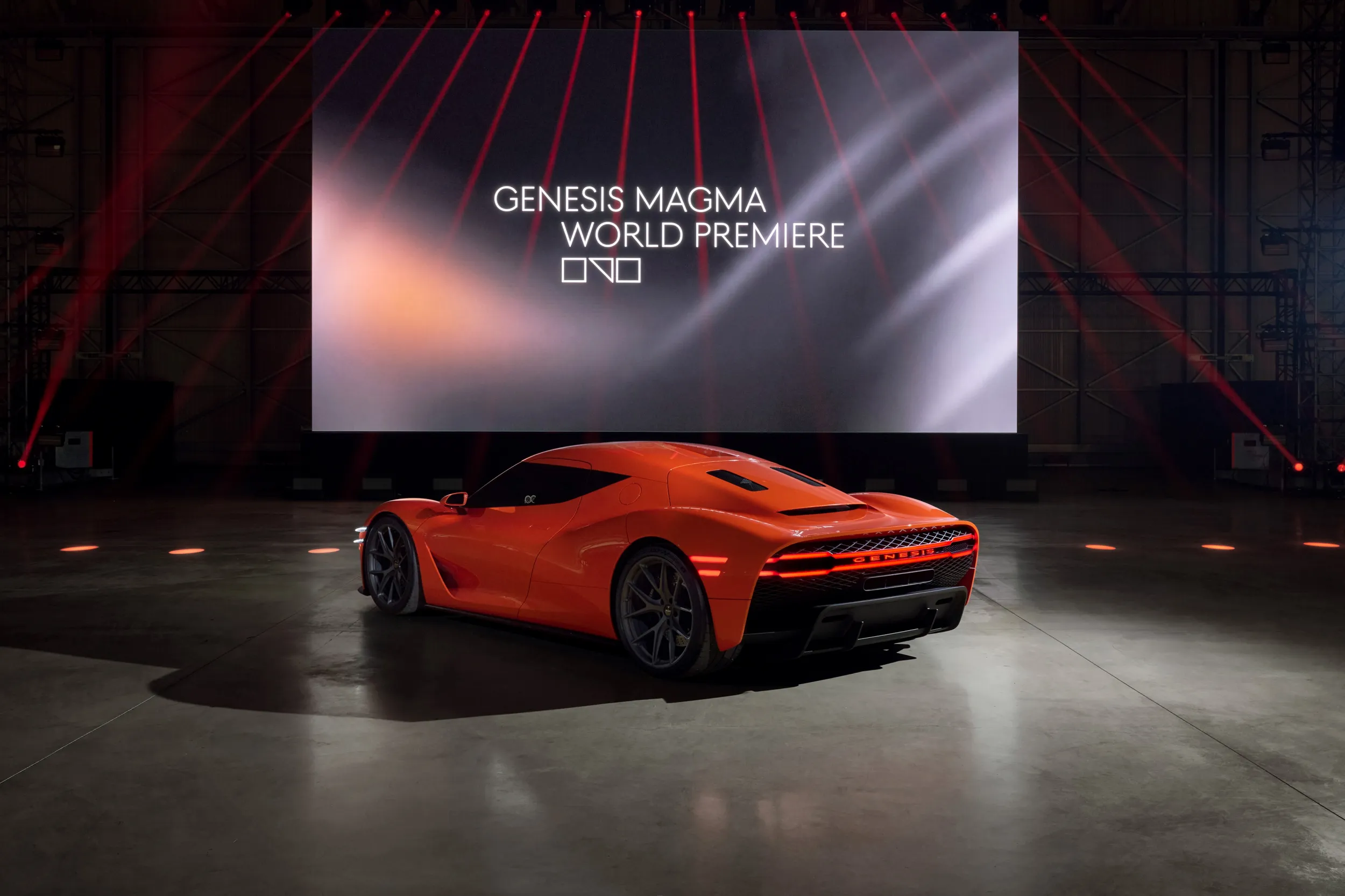
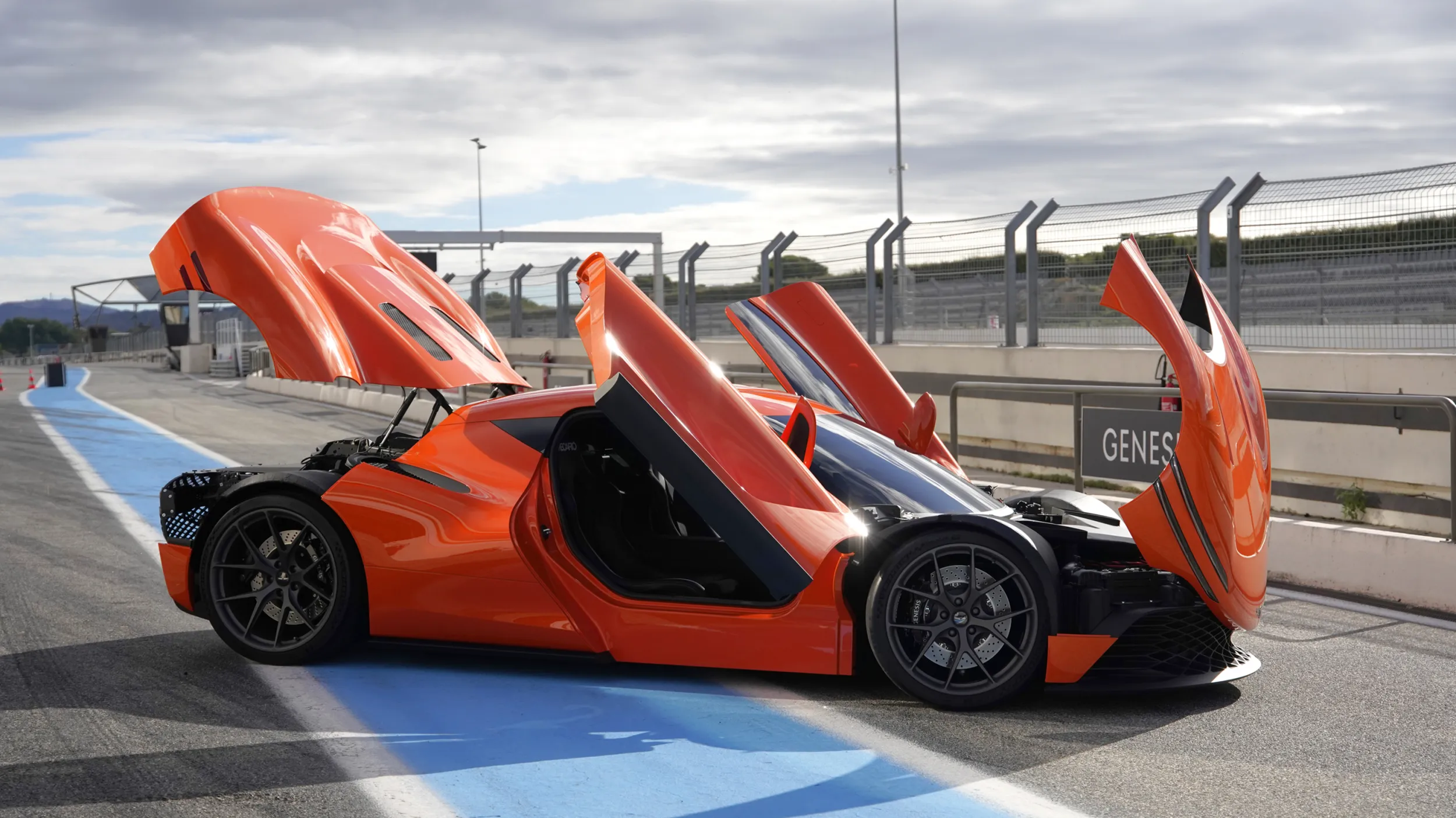
Genesis has grown tired of being cast as the sensible alternative to German prestige. Under the direction of Luc Donckerwolke, the man who once shaped the Lamborghini Murciélago and Lamborghini Gallardo, the Korean marque is preparing something far more provocative.
The Magma programme is not about building a single halo car. It is about replicating the business logic perfected in Maranello and Sant’Agata. Create a base model, follow it with lighter S versions, track focused derivatives and open roof variants. Sell not just a car, but an ecosystem.
It is a calculated assault where Korea’s pali pali urgency meets European aristocratic confidence.
A V8 that refuses to whisper
While much of the industry plugs into charging stations, Genesis chose a different opening statement. The Magma GT will not arrive as a silent electric experiment. It will arrive roaring.
Engineers developed a new 3.2 litre twin turbo V8 by effectively combining two 1.6 litre four cylinder units derived from Hyundai’s World Rally Championship programme. In road trim, and likely paired with hybrid assistance, output is expected to land somewhere between 700 and 800 hp.
This is not a design exercise dressed up for a motor show. It is an engineering declaration of intent.
Building a family, not a one off
Unlike limited vanity projects, Genesis plans an entire product hierarchy. Donckerwolke outlined a simple structure. A base Magma GT, followed by a harder S variant, then a GT3 homologation model and finally a roadster.
It mirrors the layered strategy long associated with the Porsche 911, only transposed into a mid engined exotic format. The goal is recurring revenue and sustained desirability rather than a brief flash of attention.
Genesis also intends to underpin its ambitions with motorsport credibility. Later this year, the brand plans to attack the 24 Hours of Le Mans with its Genesis GMR-001 hypercar. Beyond trophies, the programme functions as a rolling laboratory, feeding data and experience directly into future road cars.
Strategy over romance
Genesis does not hide its influences. The objective is not to reinvent the wheel but to optimise the margins around it. The refresh, special edition and limited run formula keeps Italian supercar manufacturers profitable year after year. Genesis believes its vertically integrated structure, with the ability to control everything from materials to software within the wider Hyundai group, grants it speed that traditional European brands struggle to match.
The challenge is heritage. Ferrari and Lamborghini trade on decades of mythology. Genesis has none. It must replace history with technical overachievement and relentless execution.
If the Magma GT delivers on its promised performance and builds a credible motorsport narrative, it may force Europe’s old guard to glance nervously east. If not, it risks becoming an ambitious footnote in a segment that rarely forgives newcomers.
It is a calculated assault where Korea’s pali pali urgency meets European aristocratic confidence.
A V8 that refuses to whisper
While much of the industry plugs into charging stations, Genesis chose a different opening statement. The Magma GT will not arrive as a silent electric experiment. It will arrive roaring.
Engineers developed a new 3.2 litre twin turbo V8 by effectively combining two 1.6 litre four cylinder units derived from Hyundai’s World Rally Championship programme. In road trim, and likely paired with hybrid assistance, output is expected to land somewhere between 700 and 800 hp.
This is not a design exercise dressed up for a motor show. It is an engineering declaration of intent.
Building a family, not a one off
Unlike limited vanity projects, Genesis plans an entire product hierarchy. Donckerwolke outlined a simple structure. A base Magma GT, followed by a harder S variant, then a GT3 homologation model and finally a roadster.
It mirrors the layered strategy long associated with the Porsche 911, only transposed into a mid engined exotic format. The goal is recurring revenue and sustained desirability rather than a brief flash of attention.
Genesis also intends to underpin its ambitions with motorsport credibility. Later this year, the brand plans to attack the 24 Hours of Le Mans with its Genesis GMR-001 hypercar. Beyond trophies, the programme functions as a rolling laboratory, feeding data and experience directly into future road cars.
Strategy over romance
Genesis does not hide its influences. The objective is not to reinvent the wheel but to optimise the margins around it. The refresh, special edition and limited run formula keeps Italian supercar manufacturers profitable year after year. Genesis believes its vertically integrated structure, with the ability to control everything from materials to software within the wider Hyundai group, grants it speed that traditional European brands struggle to match.
The challenge is heritage. Ferrari and Lamborghini trade on decades of mythology. Genesis has none. It must replace history with technical overachievement and relentless execution.
If the Magma GT delivers on its promised performance and builds a credible motorsport narrative, it may force Europe’s old guard to glance nervously east. If not, it risks becoming an ambitious footnote in a segment that rarely forgives newcomers.


