
Hyundai turns XRT into an off-road brand and promises genuinely more capable SUVs
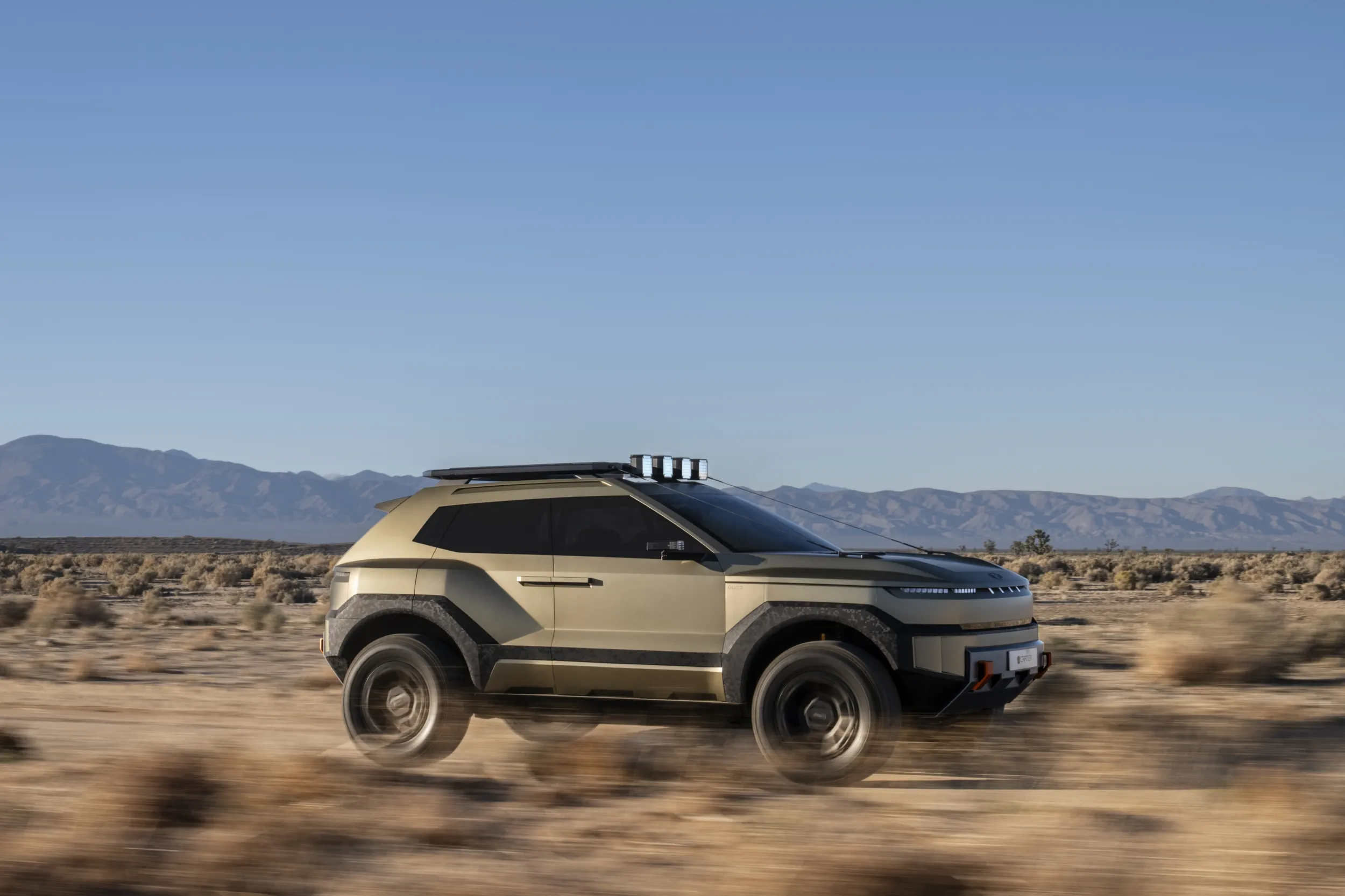
Hyundai wants to repeat the success of its N models in a very different environment. The manufacturer plans to expand the XRT and XRT Pro badges across more of its range, with XRT remaining primarily a tougher-looking trim while XRT Pro gains hardware that genuinely improves off-road ability. The first serious example is the Palisade XRT Pro, whose ground clearance, rear differential, all-terrain tyres and drive modes are no longer just hiking boots from the marketing department.
XRT wants to do off-road what N-Line did on asphalt
Hyundai Motor Company Australia product planning chief Jonathan Lam confirmed to Australian publication WhichCar that the manufacturer is considering factory-built XRT and XRT Pro versions across virtually its entire model range.
Hyundai Australia product and strategy director Rodolfo Stopa was even more direct in comments to GoAuto, saying more XRT and XRT Pro models are coming in future and that the broader line-up should help establish XRT as a recognisable sub-brand.
The logic closely mirrors Hyundai's N strategy.
N-Line gives a regular model a sportier appearance and, in some cases, modest technical changes. A full-fat N, meanwhile, means extensively reworked suspension, powertrain, cooling and electronics.
The XRT hierarchy will work similarly. XRT will focus primarily on off-road-inspired design, while XRT Pro is intended to add genuine capability.
The distinction matters, because the automotive industry is currently full of “adventure models” with plastic cladding and black wheels, whose greatest off-road challenge is a kerb in a shopping-centre car park.
Palisade XRT Pro shows what Pro means
Hyundai's first XRT Pro model is the Palisade. The manufacturer introduced it for the US market in 2025, and the model reached Australia in 2026.
The changes are not merely cosmetic. The Palisade XRT Pro has 213 mm of ground clearance, around 25 mm more than the standard Palisade. It uses 255/60 R18 all-terrain tyres, HTRAC all-wheel drive and an electronically controlled rear limited-slip differential.
The driver can also select Mud, Sand and Snow modes. The vehicle displays body angles, altitude and a compass on its screen, and uses dedicated speed control when descending.
Its geometry also improves. Approach angle is 20.5 degrees, departure angle is 22.4 degrees and breakover angle is 18.3 degrees. These are not Toyota Land Cruiser figures, but they give a large unibody family vehicle a worthwhile margin for venturing beyond gravel roads.
This is where the line between XRT and XRT Pro is drawn. Hyundai can give a regular XRT a more aggressive bumper, dark trim and more suitable wheels. The Pro must justify its badge once the asphalt ends, too.
Tucson is the logical next candidate
Hyundai has not yet published a full list of models that will receive an XRT Pro version. Claims that the entire range will soon change should therefore be treated as a plan rather than a confirmed product programme.
The most obvious next step is the Tucson. Hyundai already showed an XRT version in the launch materials for the new-generation Tucson, and Australian executives have also hinted at it.
In North America, XRT itself is nothing new. Hyundai has used the badge on the Tucson, Santa Fe, Santa Cruz and other models. EVs have not been left untouched either, as Hyundai has applied the XRT concept to the Ioniq 5, and the same direction also suits the larger Ioniq 9.
That makes the strategy interesting. XRT is not tied to an internal-combustion engine or a single specific platform. Hyundai can use the same branding on petrol, hybrid and electric models.
An electric XRT could be even more technically interesting
An EV offers some genuinely good opportunities for off-road adaptation. In dual-motor all-wheel-drive vehicles, front- and rear-axle torque can be adjusted quickly and precisely, without mechanical connections or a traditional gearbox.
The challenges lie elsewhere. The battery adds mass, an underfloor battery pack needs protection from impacts, and the rolling resistance of large all-terrain tyres reduces driving range.
Hyundai must therefore do more with an XRT Pro EV than simply put “Mud” on the screen.
In this context, Hyundai's Crater and Boulder concept cars become particularly interesting, as the manufacturer has used them to show a possible longer-term evolution of XRT design. They suggest the Koreans may not limit themselves to simply raising existing SUVs.
It is not yet going after Jeep and Land Cruiser
Looking at the XRT Pro name and red recovery hooks, it is tempting to declare Hyundai the next rival to Jeep. Technically, it is not there yet.
The Palisade uses a unibody construction, and its fundamental architecture was developed with the needs of a large, comfortable family vehicle rather than demanding off-road driving in mind. Car and Driver's off-road test also found that the XRT Pro substantially improves the Palisade's capability, but does not turn it into a Toyota 4Runner-style specialist.
That is not necessarily a drawback.
For European buyers, a vehicle that retains an SUV's handling and comfort on the road but can cope with deep snow, a muddy forest track or a steep gravel incline would probably be more useful. A ladder frame, low-range gearing and huge suspension travel are excellent when they are genuinely needed. For most customers, they mean additional weight and compromises the rest of the time.
XRT Pro could therefore sit between two worlds: more capable than a conventional SUV, but more civilised than a traditional off-roader.
Availability remains the major question mark for Europe
Hyundai's current XRT push is heavily focused on North America and Australia. The manufacturer originally developed the Palisade XRT Pro directly with the needs of US customers in mind.
Europe is different. CO2 requirements, narrower roads, higher fuel prices and a preference for smaller vehicles play a greater role here. The Palisade itself is not part of Hyundai's core range in most European markets.
As a result, XRT models in the Tucson and Kona size classes, along with electric variants, could prove far more significant for Europe.
If Hyundai brings only black plastic, 18-inch wheels and a couple of XRT logos here, there is nothing new about it. Volkswagen, Škoda, Ford and virtually everyone else already have plenty of similar packages.
But if Europe receives XRT Pro models with greater ground clearance, suitable tyres, tougher suspension and well-considered all-wheel drive, things become much more interesting.
Hyundai N has already proved that the Korean manufacturer can take a sub-brand created for the marketing department and fill it with real engineering. XRT Pro's task now is to do the same in the mud.


