
Koenigsegg CCGT1 brings racing spirit back to the road
 1/18
1/18 


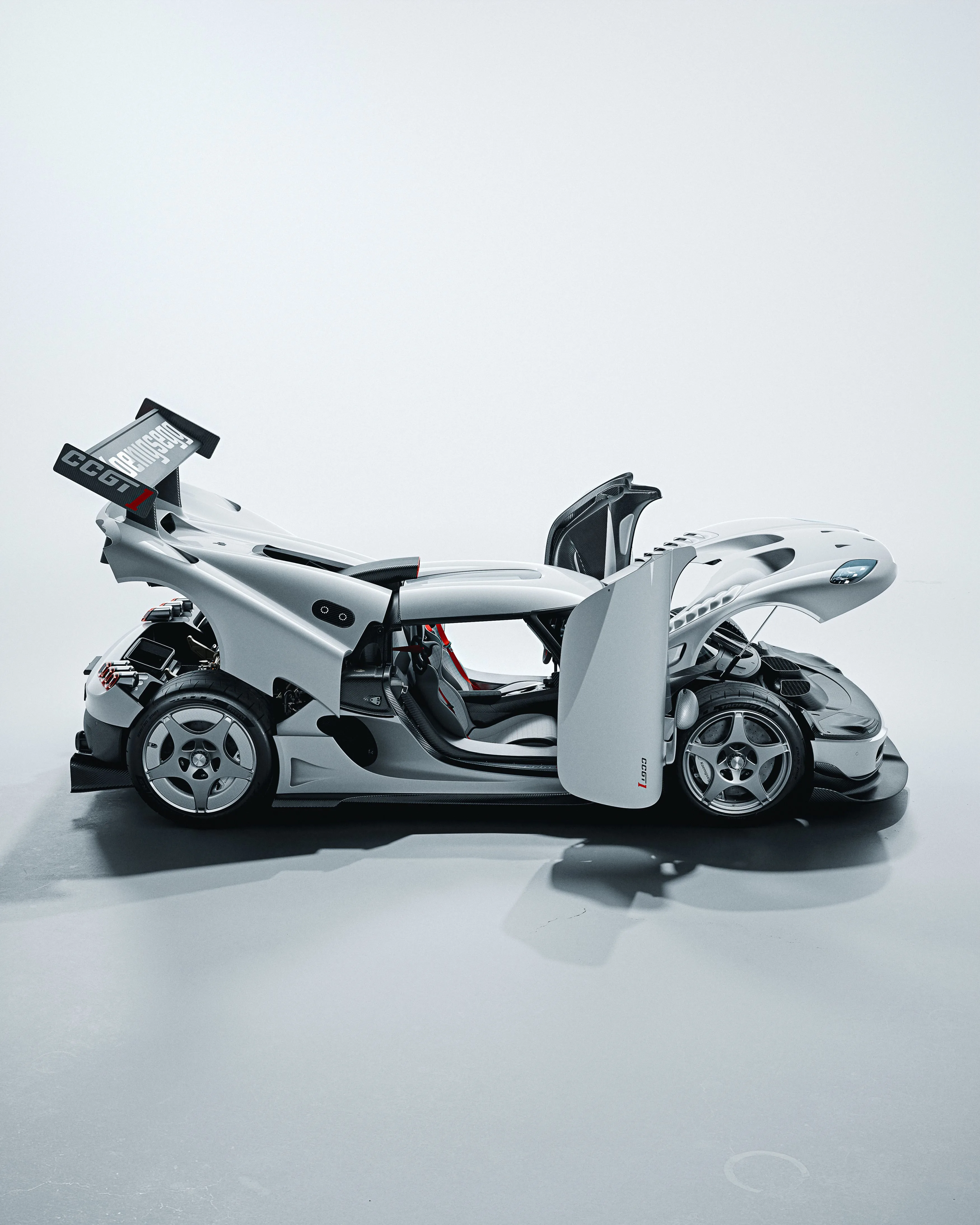
Koenigsegg unveiled the CCGT1 at Monterey Car Week, combining the technical foundations of the CC850 with the spirit of its stillborn 2007 CCGT race car. Its twin-turbo V8 produces 1,193 kW on E85, while the aerodynamic package generates around 7.8 kN of downforce at 250 km/h. All 70 cars in the planned production run had already been allocated before the public debut.
The CCGT1 is not mechanically based on the original CCGT racer. Instead, it uses the CC850 as its starting point, with the 2007 competition car providing the name, inspiration and overall philosophy. Compared with the CC850, Koenigsegg has redesigned almost every body panel; only the doors and removable roof panel remain.
V8 produces up to 1,193 kW
The CCGT1 uses Koenigsegg's 5.0-litre twin-turbo V8. It produces 954 kW, or 1,280 hp, on regular pump petrol and 1,193 kW, or 1,600 hp, on E85 biofuel. Maximum torque is 1,500 Nm, with power sent exclusively to the rear wheels.
A new roof scoop improves cooling for sustained circuit use, feeding both an enlarged engine-oil cooler and a dedicated cooling system for the dampers.
The nine-speed Light Speed Transmission comes as standard with Koenigsegg's new Sequential Shift system, or KSS. The driver uses a clutch pedal to pull away, after which gears are selected through a sequential lever using ignition-cut, clutchless shifts. Paddle shifting and automatic operation are also available.
Customers who prefer a more traditional manual experience can instead specify the Engage Shift System familiar from the CC850. ESS uses a six-speed gated H-pattern shifter and clutch pedal in manual mode, while retaining the LST's nine-speed automatic operation for everyday driving.
Aerodynamics generate around 7.8 kN of downforce
Aerodynamics are where the CCGT1 differs most dramatically from the CC850. Its active rear wing offers 30 degrees of automatic adjustment, moving between low-drag, high-downforce and air-brake settings without requiring driver input.
A large front splitter and active underbody flaps balance the load generated by the rear wing. They work with a heavily sculpted underfloor, vortex-generating strakes and a bespoke rear diffuser. At 250 km/h, total downforce reaches around 800 kg, equivalent to approximately 7.8 kN.
The carbon-fibre monocoque has a torsional rigidity of 65,000 Nm per degree. The CCGT1 measures 4,478 mm long, 2,058 mm wide and 1,160 mm tall, with a 2,700 mm wheelbase.
Track Package makes it even more extreme
In standard form, the CCGT1 is fully road legal, but Koenigsegg also offers its first factory-designed optional Track Package. It includes a full carbon-fibre roll cage, HANS-compatible racing seats, a fire-suppression system, race exhaust, air jacks, track-focused suspension and brake settings, enhanced aerodynamics and a second set of wheels fitted with track-optimised tyres.
The package can be installed or removed by a Koenigsegg Certified Dealer. With it fitted, Koenigsegg says the CCGT1 becomes the fastest-lapping car the company has ever produced.
The new model also pays tribute to the original CCGT of 2007. Developed for GT1 endurance racing, that car weighed under 1,000 kg before the ballast required to meet the class minimum and used a naturally aspirated 5.0-litre V8 producing 600 hp, the maximum allowed by the regulations at the time.
The project never reached competition. Two months after Koenigsegg began shakedown testing, the ACO and FIA changed the GT1 regulations, banning carbon-fibre monocoques and dramatically increasing the minimum production requirement. The changes made the CCGT ineligible before it could complete a single competitive lap. Only one example was built.
Nearly two decades later, the CCGT1 brings the same idea back in road-legal form. Production is limited to 70 cars, and every build slot had already been allocated before the model was shown publicly.
V8 produces up to 1,193 kW
The CCGT1 uses Koenigsegg's 5.0-litre twin-turbo V8. It produces 954 kW, or 1,280 hp, on regular pump petrol and 1,193 kW, or 1,600 hp, on E85 biofuel. Maximum torque is 1,500 Nm, with power sent exclusively to the rear wheels.
A new roof scoop improves cooling for sustained circuit use, feeding both an enlarged engine-oil cooler and a dedicated cooling system for the dampers.
The nine-speed Light Speed Transmission comes as standard with Koenigsegg's new Sequential Shift system, or KSS. The driver uses a clutch pedal to pull away, after which gears are selected through a sequential lever using ignition-cut, clutchless shifts. Paddle shifting and automatic operation are also available.
Customers who prefer a more traditional manual experience can instead specify the Engage Shift System familiar from the CC850. ESS uses a six-speed gated H-pattern shifter and clutch pedal in manual mode, while retaining the LST's nine-speed automatic operation for everyday driving.
Aerodynamics generate around 7.8 kN of downforce
Aerodynamics are where the CCGT1 differs most dramatically from the CC850. Its active rear wing offers 30 degrees of automatic adjustment, moving between low-drag, high-downforce and air-brake settings without requiring driver input.
A large front splitter and active underbody flaps balance the load generated by the rear wing. They work with a heavily sculpted underfloor, vortex-generating strakes and a bespoke rear diffuser. At 250 km/h, total downforce reaches around 800 kg, equivalent to approximately 7.8 kN.
The carbon-fibre monocoque has a torsional rigidity of 65,000 Nm per degree. The CCGT1 measures 4,478 mm long, 2,058 mm wide and 1,160 mm tall, with a 2,700 mm wheelbase.
Track Package makes it even more extreme
In standard form, the CCGT1 is fully road legal, but Koenigsegg also offers its first factory-designed optional Track Package. It includes a full carbon-fibre roll cage, HANS-compatible racing seats, a fire-suppression system, race exhaust, air jacks, track-focused suspension and brake settings, enhanced aerodynamics and a second set of wheels fitted with track-optimised tyres.
The package can be installed or removed by a Koenigsegg Certified Dealer. With it fitted, Koenigsegg says the CCGT1 becomes the fastest-lapping car the company has ever produced.
The new model also pays tribute to the original CCGT of 2007. Developed for GT1 endurance racing, that car weighed under 1,000 kg before the ballast required to meet the class minimum and used a naturally aspirated 5.0-litre V8 producing 600 hp, the maximum allowed by the regulations at the time.
The project never reached competition. Two months after Koenigsegg began shakedown testing, the ACO and FIA changed the GT1 regulations, banning carbon-fibre monocoques and dramatically increasing the minimum production requirement. The changes made the CCGT ineligible before it could complete a single competitive lap. Only one example was built.
Nearly two decades later, the CCGT1 brings the same idea back in road-legal form. Production is limited to 70 cars, and every build slot had already been allocated before the model was shown publicly.


