
Land Rover to end Discovery Sport production with no direct replacement confirmed
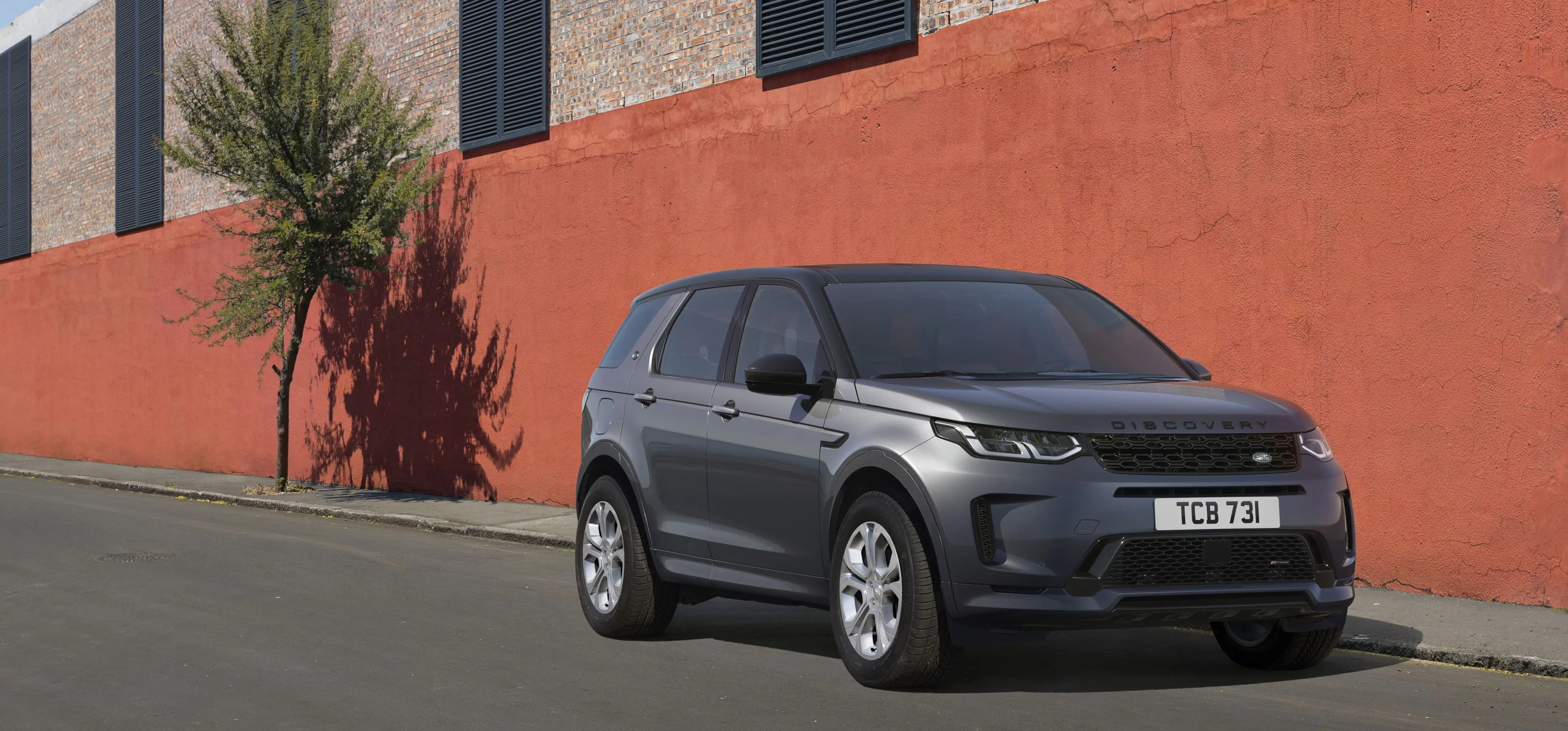
JLR will end Discovery Sport production in December 2026. The compact SUV will bow out after almost 12 years on sale as the Halewood plant prepares to build the EMA-based Range Rover GT, with a smaller Defender expected to follow. No direct replacement for the Discovery Sport has been confirmed.
## Production ends in December
A JLR spokesperson confirmed to Autocar that Discovery Sport production will end in December 2026 as part of the normal product lifecycle. Factory orders are already closing earlier in some European markets. Customers in France, Germany and Spain can no longer order a new car from the factory, while the model remains on the UK price list for now.
The timing coincides with the next phase of the European Union’s General Safety Regulation 2, or GSR2. From 7 July 2026, a further set of requirements applies to all newly registered passenger cars and light commercial vehicles in the EU. Autocar suggests that the cost of bringing the ageing Discovery Sport into compliance was probably one reason JLR chose not to update and recertify it again. The manufacturer itself has not cited GSR2 as the official reason for ending production.
## JLR’s bestseller became its slowest-selling model
The Discovery Sport went on sale in February 2015. In 2016, JLR sold more than 122,000 examples worldwide, making it the company’s most popular model. By 2025, sales had fallen to less than one tenth of that level, leaving the Discovery Sport as JLR’s slowest-selling model.
Age alone does not explain the decline. The Discovery Sport was competing with much newer SUVs at a time when buyers increasingly expected longer electric range, more responsive software and more advanced driver-assistance systems. Keeping it on sale in core EU markets would probably have required another substantial engineering and homologation programme for a model whose volumes were already shrinking.
## The 2019 overhaul brought a genuinely new body structure
JLR did more in 2019 than replace screens and bumpers. It moved the Discovery Sport onto the new Premium Transverse Architecture, or PTA. The mixed-metal body structure was 13% stiffer than its predecessor, while the platform enabled 48 V mild-hybrid powertrains and, later, a plug-in hybrid. JLR also revised the suspension mounting points, cabin and electronics.
The current Discovery Sport still traces its origins to the 2015 model, but technically the 2019 version was more than another routine facelift.
JLR added Landmark and Metropolitan editions to the range in 2025. They brought extra standard equipment, new trim materials and a selection of accessory packages, but left the underlying engineering unchanged.
## A sub-4.6-metre SUV could carry seven people
The Discovery Sport’s main advantage was never its screen size or acceleration. It combined a 4,597 mm body, a 2,741 mm wheelbase and, on the diesel versions, a 5+2-seat cabin.
With all three rows in use, VDA-measured luggage capacity is 115 litres. Folding the third row increases that to 657 litres, while the figure behind the front seats is 1,451 litres. The third row is best suited to children or shorter journeys, but fitting it into a premium SUV less than 4.6 metres long was an achievement in itself.
The current D165 and D200 use a 2.0-litre four-cylinder diesel engine. The D165 produces 120 kW and 380 Nm, while the D200 develops 150 kW and 430 Nm. Both come with an automatic transmission, all-wheel drive and a choice of five- or seven-seat layouts.
## The plug-in hybrid sacrifices the third row
The P270e plug-in hybrid combines a 1.5-litre three-cylinder petrol engine with an electric motor. The system produces 198 kW and 540 Nm, taking the car from 0–100 km/h in 7.4 seconds.
Its battery has 11.975 kWh of usable capacity and provides a WLTP electric range of 58–61 km. JLR quotes a 0–80% charge in as little as 30 minutes using a DC rapid charger rated at up to 32 kW. The 10–80% claim in an earlier version was therefore not supported by the manufacturer’s published data.
The battery, electric motor and high-voltage components occupy the space otherwise used by the third row. The P270e seats only five and has an EU unladen weight of 2,168 kg. With a fully charged battery, the official test cycle gives a fuel-consumption figure of 1.5–1.6 l/100 km, but achieving anything close to that in real use depends on regular charging.
## Off-road ability set it apart from an ordinary family SUV
Every current Discovery Sport version comes with all-wheel drive and a 600 mm wading depth. JLR lists the standard ride height at 172 mm and the off-road ride height at 210 mm. An earlier description of 210 mm as the normal ground-clearance figure was therefore too broad.
The five-seat D200 can tow a braked trailer weighing up to 2,500 kg. The seven-seat D200 is rated at 2,200 kg, while the P270e plug-in hybrid can tow up to 1,600 kg. Those figures gave the Discovery Sport a broader range of practical abilities than most premium SUVs of a similar size.
A JLR spokesperson confirmed to Autocar that Discovery Sport production will end in December 2026 as part of the normal product lifecycle. Factory orders are already closing earlier in some European markets. Customers in France, Germany and Spain can no longer order a new car from the factory, while the model remains on the UK price list for now.
The timing coincides with the next phase of the European Union’s General Safety Regulation 2, or GSR2. From 7 July 2026, a further set of requirements applies to all newly registered passenger cars and light commercial vehicles in the EU. Autocar suggests that the cost of bringing the ageing Discovery Sport into compliance was probably one reason JLR chose not to update and recertify it again. The manufacturer itself has not cited GSR2 as the official reason for ending production.
## JLR’s bestseller became its slowest-selling model
The Discovery Sport went on sale in February 2015. In 2016, JLR sold more than 122,000 examples worldwide, making it the company’s most popular model. By 2025, sales had fallen to less than one tenth of that level, leaving the Discovery Sport as JLR’s slowest-selling model.
Age alone does not explain the decline. The Discovery Sport was competing with much newer SUVs at a time when buyers increasingly expected longer electric range, more responsive software and more advanced driver-assistance systems. Keeping it on sale in core EU markets would probably have required another substantial engineering and homologation programme for a model whose volumes were already shrinking.
## The 2019 overhaul brought a genuinely new body structure
JLR did more in 2019 than replace screens and bumpers. It moved the Discovery Sport onto the new Premium Transverse Architecture, or PTA. The mixed-metal body structure was 13% stiffer than its predecessor, while the platform enabled 48 V mild-hybrid powertrains and, later, a plug-in hybrid. JLR also revised the suspension mounting points, cabin and electronics.
The current Discovery Sport still traces its origins to the 2015 model, but technically the 2019 version was more than another routine facelift.
JLR added Landmark and Metropolitan editions to the range in 2025. They brought extra standard equipment, new trim materials and a selection of accessory packages, but left the underlying engineering unchanged.
## A sub-4.6-metre SUV could carry seven people
The Discovery Sport’s main advantage was never its screen size or acceleration. It combined a 4,597 mm body, a 2,741 mm wheelbase and, on the diesel versions, a 5+2-seat cabin.
With all three rows in use, VDA-measured luggage capacity is 115 litres. Folding the third row increases that to 657 litres, while the figure behind the front seats is 1,451 litres. The third row is best suited to children or shorter journeys, but fitting it into a premium SUV less than 4.6 metres long was an achievement in itself.
The current D165 and D200 use a 2.0-litre four-cylinder diesel engine. The D165 produces 120 kW and 380 Nm, while the D200 develops 150 kW and 430 Nm. Both come with an automatic transmission, all-wheel drive and a choice of five- or seven-seat layouts.
## The plug-in hybrid sacrifices the third row
The P270e plug-in hybrid combines a 1.5-litre three-cylinder petrol engine with an electric motor. The system produces 198 kW and 540 Nm, taking the car from 0–100 km/h in 7.4 seconds.
Its battery has 11.975 kWh of usable capacity and provides a WLTP electric range of 58–61 km. JLR quotes a 0–80% charge in as little as 30 minutes using a DC rapid charger rated at up to 32 kW. The 10–80% claim in an earlier version was therefore not supported by the manufacturer’s published data.
The battery, electric motor and high-voltage components occupy the space otherwise used by the third row. The P270e seats only five and has an EU unladen weight of 2,168 kg. With a fully charged battery, the official test cycle gives a fuel-consumption figure of 1.5–1.6 l/100 km, but achieving anything close to that in real use depends on regular charging.
## Off-road ability set it apart from an ordinary family SUV
Every current Discovery Sport version comes with all-wheel drive and a 600 mm wading depth. JLR lists the standard ride height at 172 mm and the off-road ride height at 210 mm. An earlier description of 210 mm as the normal ground-clearance figure was therefore too broad.
The five-seat D200 can tow a braked trailer weighing up to 2,500 kg. The seven-seat D200 is rated at 2,200 kg, while the P270e plug-in hybrid can tow up to 1,600 kg. Those figures gave the Discovery Sport a broader range of practical abilities than most premium SUVs of a similar size.


