
Marcos plots a British comeback
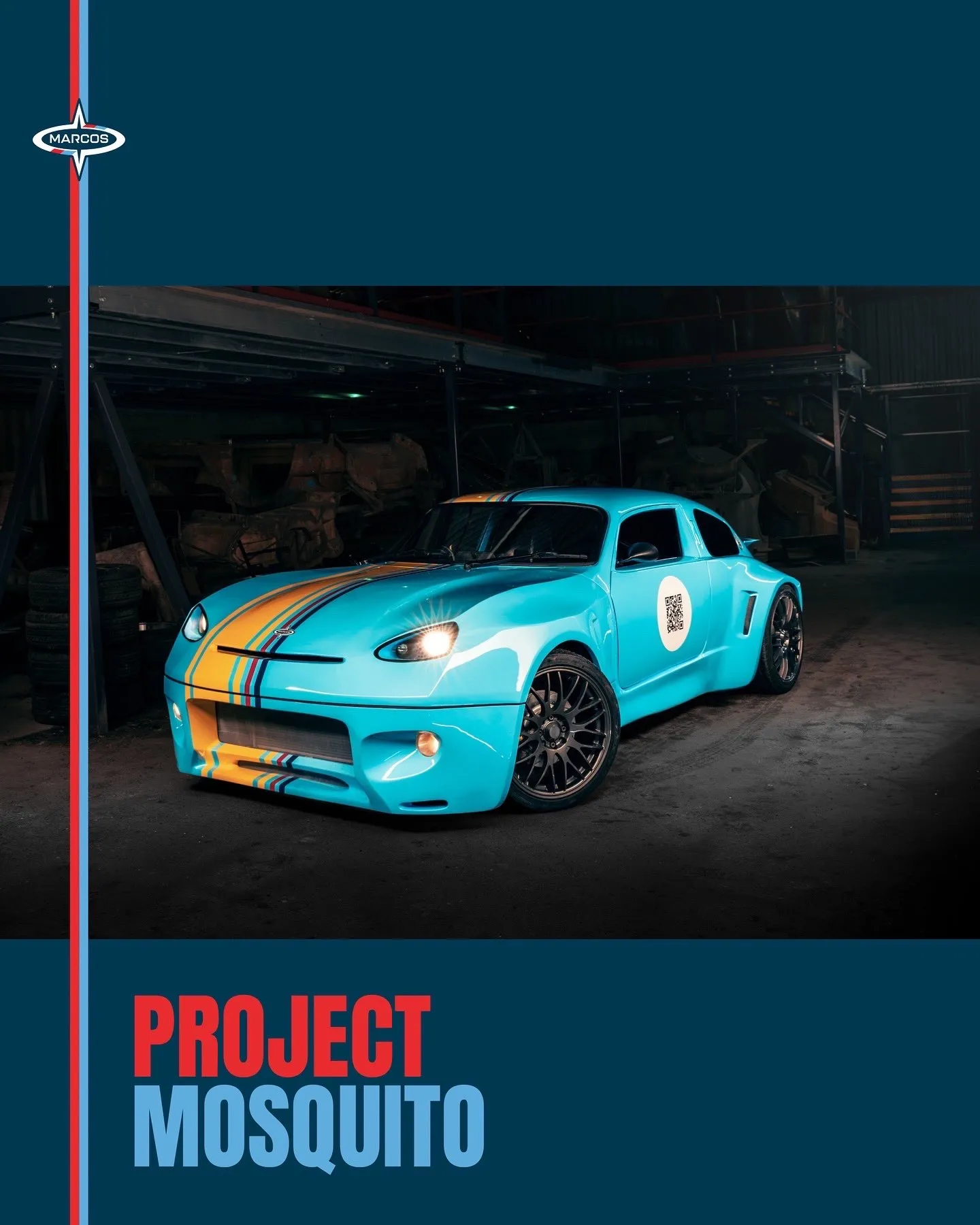
British sports car marque Marcos is trying to get back into production, and this time the plan stretches well beyond a nostalgic sketch and a few warm words about the good old days. Marcos Motor Company, led by Howard Nash, says it is pursuing three parallel programmes: a modern interpretation of a classic model, an all new sports car and a continuation series. By spring 2026, it had also brought a concept called Mosquito into public view.
Marcos does not need to invent a backstory. The brand was founded in 1959 by Jem Marsh and Frank Costin, built its reputation on lightweight and technically unusual sports cars, and tied its name to models such as the Mini Marcos, 1800 GT and later the Mantara, LM and TSO. According to the official model history, production ended in 2007, but the brand never quite disappeared. Its legacy lingered in motorsport, in the supply of parts and in the loyal world of Marcos enthusiasts.
What makes this latest attempt more interesting is how specific it sounds. The company’s official project page describes its first development car as a modern reinterpretation of a classic Marcos, one that keeps the original’s recognisable silhouette but grows by 10 to 15 per cent and uses a contemporary platform. The second project focuses on a completely new sports car for both road and track, with a chassis the engineers have already developed. The third strand draws on production rights, moulds and tooling to bring official continuation models to market.
That matters, because Marcos is not building this revival out of thin air. Companies House records show Marcos Motor Company Limited as an active business, with Howard Nash serving as director since 17 March 2022 and Automotive Vision Limited listed as the controlling shareholder. In June 2025, PistonHeads reported that Nash had also gathered the assets of Marcos Engineering, Marcos Sales and Marcos Heritage Spares under his wing. That gives this comeback more substance than many of the other revival stories that periodically drift through Britain’s niche car scene.
Still, the return of Marcos comes wrapped in a legal and reputational fog. Last year, Auto Express reported that Marcos Cars Limited, led by William Storey, claimed to be the lawful owner of the Marcos trademark. Marcos Motor Company rejected that forcefully and said it controlled the historic assets, production rights and trademark rights. Companies House shows that Marcos Cars Ltd also exists as a separate active company. For investors and potential buyers alike, that means the Marcos story is not just about engineering or heritage. It is also about who can most convincingly gather the brand’s authority under one roof.
The most intriguing detail, though, is that by 2026 Marcos had moved beyond talk. On its official X account, the company introduced Project Mosquito as a prototype used to test body structure, manufacturing capability and systems integration. Car magazine claims Nash had already driven the Mosquito, a machine said to offer around 300 hp and weigh about 680 kg, and was discussing the idea of turning it into a small series track model. At the same time, work on a new mid engined sports car continued. None of that guarantees full scale production, of course, but it does move Marcos out of the fantasy brand category and into the more serious company of firms actually developing cars.
That, in the end, is the real pitch. Marcos wants to fill the gap left by larger manufacturers: a light, simple, analogue and driver focused sports car, built in small numbers and sold on emotion and craftsmanship rather than platform scale. It is exactly the sort of strategy that could save Marcos, or expose just how hard it is to turn old British sports car romance into a viable business in the late 2020s.
What makes this latest attempt more interesting is how specific it sounds. The company’s official project page describes its first development car as a modern reinterpretation of a classic Marcos, one that keeps the original’s recognisable silhouette but grows by 10 to 15 per cent and uses a contemporary platform. The second project focuses on a completely new sports car for both road and track, with a chassis the engineers have already developed. The third strand draws on production rights, moulds and tooling to bring official continuation models to market.
That matters, because Marcos is not building this revival out of thin air. Companies House records show Marcos Motor Company Limited as an active business, with Howard Nash serving as director since 17 March 2022 and Automotive Vision Limited listed as the controlling shareholder. In June 2025, PistonHeads reported that Nash had also gathered the assets of Marcos Engineering, Marcos Sales and Marcos Heritage Spares under his wing. That gives this comeback more substance than many of the other revival stories that periodically drift through Britain’s niche car scene.
Still, the return of Marcos comes wrapped in a legal and reputational fog. Last year, Auto Express reported that Marcos Cars Limited, led by William Storey, claimed to be the lawful owner of the Marcos trademark. Marcos Motor Company rejected that forcefully and said it controlled the historic assets, production rights and trademark rights. Companies House shows that Marcos Cars Ltd also exists as a separate active company. For investors and potential buyers alike, that means the Marcos story is not just about engineering or heritage. It is also about who can most convincingly gather the brand’s authority under one roof.
The most intriguing detail, though, is that by 2026 Marcos had moved beyond talk. On its official X account, the company introduced Project Mosquito as a prototype used to test body structure, manufacturing capability and systems integration. Car magazine claims Nash had already driven the Mosquito, a machine said to offer around 300 hp and weigh about 680 kg, and was discussing the idea of turning it into a small series track model. At the same time, work on a new mid engined sports car continued. None of that guarantees full scale production, of course, but it does move Marcos out of the fantasy brand category and into the more serious company of firms actually developing cars.
That, in the end, is the real pitch. Marcos wants to fill the gap left by larger manufacturers: a light, simple, analogue and driver focused sports car, built in small numbers and sold on emotion and craftsmanship rather than platform scale. It is exactly the sort of strategy that could save Marcos, or expose just how hard it is to turn old British sports car romance into a viable business in the late 2020s.


