
The Biggest Quality Problem in New Cars Is No Longer the Engine, but the Screen
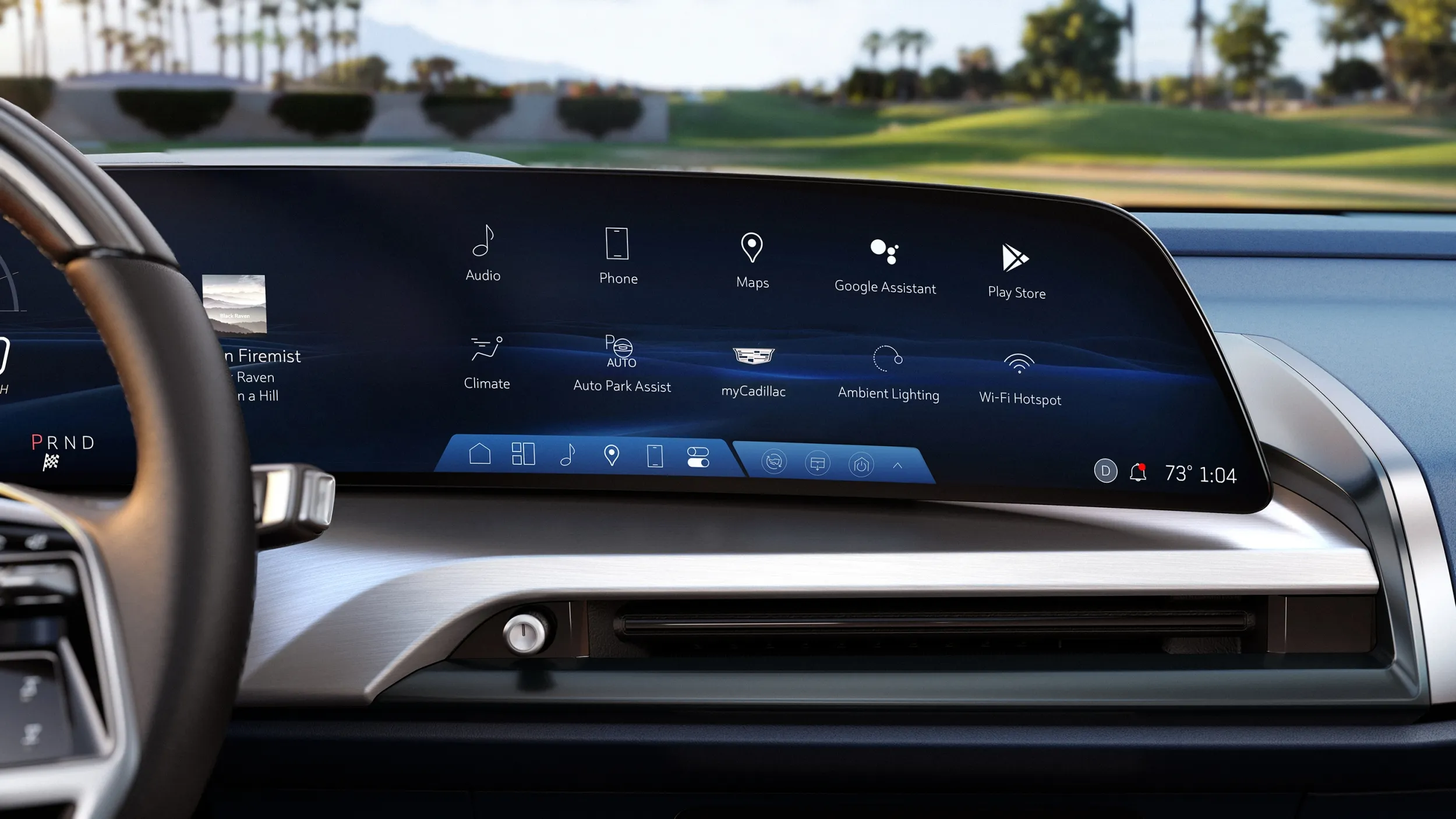
New cars are improving mechanically, but their multimedia systems are failing to keep pace. According to J.D. Power’s latest US study, multimedia-related faults now account for 25% of all new-car quality problems.
It is a telling shift. Engines, transmissions, suspension systems and even driver-assistance systems are becoming more reliable, yet ever-larger screens, wireless phone connectivity and software continue to cause headaches for owners.
The five most common problems come from multimedia systems
J.D. Power measures problem frequency using PP100, or the number of problems per 100 vehicles. Multimedia systems recorded 42.4 PP100 this year, showing virtually no improvement from last year.
Even more notably, the five most frequently reported problems across the entire vehicle now concern multimedia systems.
Android Auto and Apple CarPlay connections are generating particularly frequent complaints. J.D. Power’s Initial Quality Study, published in June, showed that connection problems with these systems were the single biggest reason multimedia quality deteriorated over the year.
The problem is not limited to dropped connections. Owners complain about complicated menus, touchscreen operating logic, phone integration and functions that do not behave consistently.
The car itself is improving at the same time
The paradox is that 2026 vehicles achieved a very strong result in J.D. Power’s Initial Quality Study. The average number of problems fell year on year from 192 to 175 per 100 vehicles. This was the largest annual improvement since 1997.
Nine of the 10 areas studied improved. The only category to deteriorate was multimedia.
This shows how much the meaning of vehicle quality has changed. A couple of decades ago, poor quality meant an oil leak, a creaky interior or a malfunctioning gearbox. Today, a car may work flawlessly mechanically, yet its owner may still consider it problematic because their phone will not connect or because they have to navigate screen menus to control the climate system.
A large touchscreen is not automatically an improvement
J.D. Power’s findings call into question the automotive industry’s years-long race towards ever-larger screens.
In the June study, 46% of drivers who reported a problem that distracted them while driving said it was caused by the multimedia system or touchscreen. By comparison, driver-assistance system warnings accounted for 18%.
The reason is simple. A driver quickly learns the location of a physical button and can use it without taking their eyes off the road. On a screen, the location of the same function changes depending on the software, while a multi-step menu requires more attention.
European manufacturers are gradually acknowledging this. Physical buttons are no longer necessarily an old-fashioned solution, but part of the user interface whose removal may make a car cheaper to produce, though not better to use.
Software has become a core part of vehicle quality
The problem does not disappear after the first 90 days, either. In J.D. Power’s 2026 Vehicle Dependability Study, multimedia was once again the most problematic category, with 56.7 problems per 100 vehicles. Android Auto and Apple CarPlay connectivity was the most frequently reported individual problem in the entire study for the third consecutive year.
This is an uncomfortable lesson for carmakers. They know how to build increasingly reliable engines and more precise bodies, but at the same time they are making cars dependent on software whose quality does not always match that of the mechanical components.
A modern car is no longer just a machine. It is a computer on wheels, where the most annoying fault may not be that the car will not start, but that the phone will not connect.


