
Next Lamborghini Urus Due in 2029 with V8 Plug-In Hybrid Power
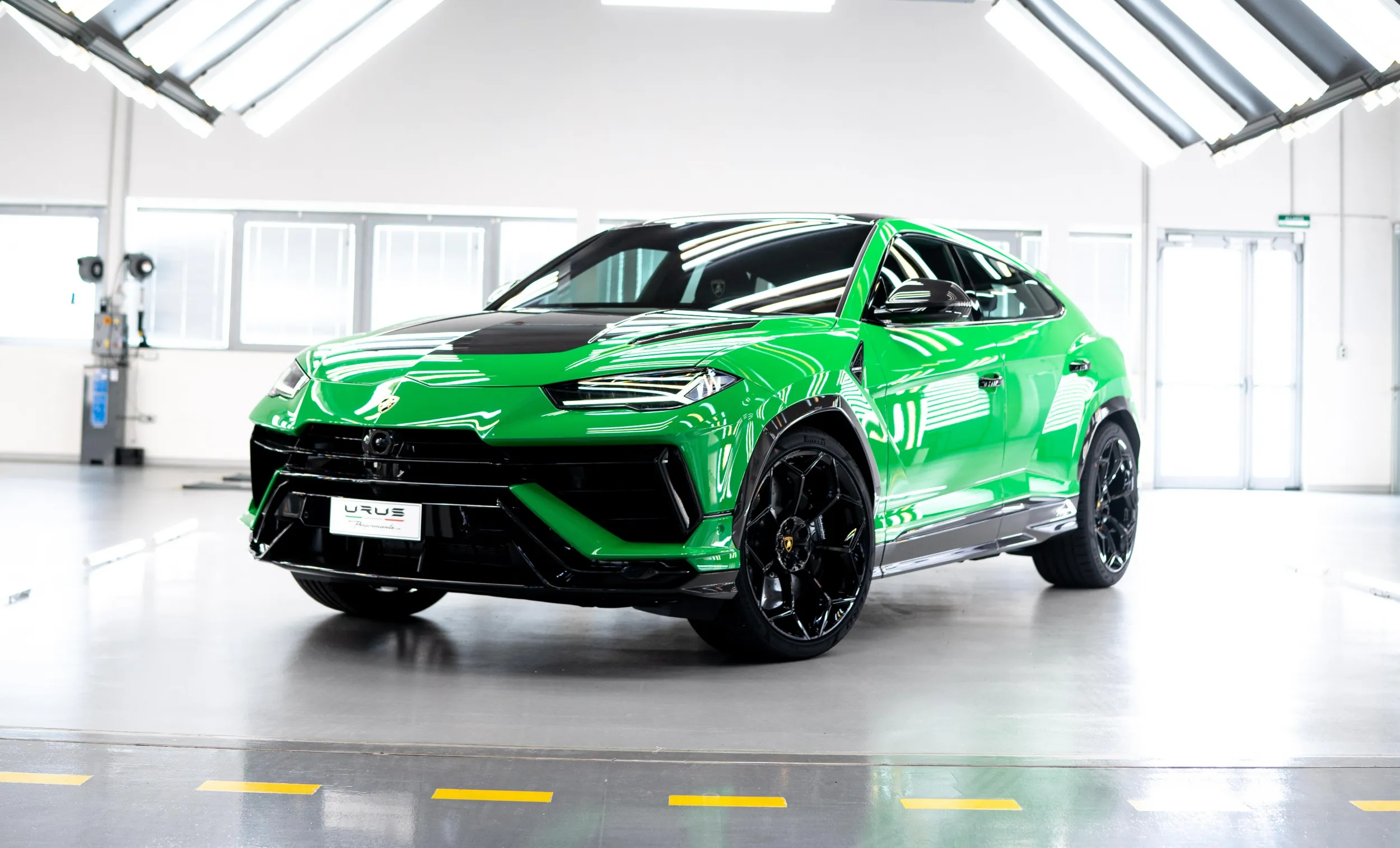
Lamborghini is developing the second-generation Urus, which is due to arrive in 2029. Instead of the fully electric powertrain once planned, the new super-SUV is set to retain a twin-turbo V8 plug-in hybrid system and use the Volkswagen Group’s next-generation platform technology.
Plans for an electric Urus are shelved for now
In 2023, Lamborghini CEO Stephan Winkelmann said the second-generation Urus would switch to an all-electric powertrain in 2029. The company has since changed course.
Winkelmann recently told Auto Express that, following further analysis, Lamborghini currently has no intention of making the next Urus a battery-electric vehicle.
Instead, the second-generation model is expected to retain a twin-turbo V8 plug-in hybrid powertrain. This should allow customers to cover shorter journeys on electric power while preserving the sound, response and character that Lamborghini buyers still expect.
The precise launch date has not been officially confirmed. Lamborghini has also released no details about the new model’s power output, battery capacity, electric range or acceleration.
The new Urus has a high bar to clear
Lamborghini has already set an uncomfortably high benchmark with the current Urus SE. Its 4.0-litre twin-turbo V8 works alongside a 141 kW electric motor and a 25.9 kWh battery. The system produces 588 kW (800 CV) and 950 Nm.
The Urus SE accelerates from 0–100 km/h in 3.4 seconds, reaches 312 km/h and has an official WLTP equivalent all-electric range of 66 kilometres. These figures are confirmed in Lamborghini’s official Urus SE specifications.
The even more focused Urus SE Performante produces 597 kW (812 CV) and 1,000 Nm, cutting the 0–100 km/h time to 3.3 seconds. Its top speed remains 312 km/h.
It is therefore reasonable to expect the next Urus to at least match those figures. More power and a longer electric range appear plausible, but Lamborghini has made no such promises. Any figures currently circulating without a named source should therefore be treated as speculation rather than confirmed specifications.
Audi builds the platform; Lamborghini adds the horns
The second-generation Urus will not receive an architecture entirely of its own. According to Auto Express, it will use a new version of Audi’s Premium Platform Combustion, or PPC. The same technical foundation is expected to underpin the next Audi Q7 and Bentley Bentayga, along with the forthcoming Audi Q9 and the next combustion-engined Porsche Cayenne.
PPC is effectively a heavily reworked evolution of the MLB Evo architecture used by the current Urus. Sharing the technology across several Volkswagen Group brands helps spread development costs and gives Lamborghini access to the group’s latest platform and component technology.
That does not mean the Urus will simply become an Audi with sharper creases. Stefano Cossalter, product director for the Urus, says Lamborghini is already helping to shape important components such as the dampers and working with suppliers from an early stage.
The marque’s own software will play an even more important role. Lamborghini is developing predictive control systems that anticipate what the vehicle will do next and use that information to improve its steering, cornering, braking and acceleration. This electronic conductor must make a large and heavy SUV behave as dynamically as the angry bull on its bonnet promises.
The Urus must keep bringing new customers to Lamborghini
The importance of the Urus to Lamborghini is difficult to overstate. The company delivered a record 10,747 cars in 2025, with the Revuelto and Urus SE identified by the manufacturer as key contributors.
According to Cossalter, around 80 per cent of early Urus buyers were completely new to Lamborghini. With the Urus SE, new customers account for approximately 60 per cent, while the remaining 40 per cent are repeat Lamborghini customers.
The Urus therefore acts as a gateway to the marque. Buyers arrive for the more practical five-door model, become accustomed to the bull badge and may then begin looking towards the Temerario or Revuelto. Turning such an effective sales engine into an EV before customers are ready could be a very expensive experiment.
European pricing and consumption figures will follow later
Lamborghini has not announced European pricing or WLTP consumption figures for the next Urus. For context, the current Urus SE’s official weighted combined figures are 5.7 l/100 km plus 21.4 kWh/100 km, with CO₂ emissions of 140 g/km. Whether its successor improves on those figures remains to be seen.
The Urus will not suddenly become affordable with the arrival of a new generation, of course. A shared group platform should nevertheless help keep development costs within reason, allowing Lamborghini to concentrate on what customers are actually buying: the styling, handling, soundtrack and sensation that even a family trip to the supermarket can feel like a minor launch-control event.
In 2023, Lamborghini CEO Stephan Winkelmann said the second-generation Urus would switch to an all-electric powertrain in 2029. The company has since changed course.
Winkelmann recently told Auto Express that, following further analysis, Lamborghini currently has no intention of making the next Urus a battery-electric vehicle.
Instead, the second-generation model is expected to retain a twin-turbo V8 plug-in hybrid powertrain. This should allow customers to cover shorter journeys on electric power while preserving the sound, response and character that Lamborghini buyers still expect.
The precise launch date has not been officially confirmed. Lamborghini has also released no details about the new model’s power output, battery capacity, electric range or acceleration.
The new Urus has a high bar to clear
Lamborghini has already set an uncomfortably high benchmark with the current Urus SE. Its 4.0-litre twin-turbo V8 works alongside a 141 kW electric motor and a 25.9 kWh battery. The system produces 588 kW (800 CV) and 950 Nm.
The Urus SE accelerates from 0–100 km/h in 3.4 seconds, reaches 312 km/h and has an official WLTP equivalent all-electric range of 66 kilometres. These figures are confirmed in Lamborghini’s official Urus SE specifications.
The even more focused Urus SE Performante produces 597 kW (812 CV) and 1,000 Nm, cutting the 0–100 km/h time to 3.3 seconds. Its top speed remains 312 km/h.
It is therefore reasonable to expect the next Urus to at least match those figures. More power and a longer electric range appear plausible, but Lamborghini has made no such promises. Any figures currently circulating without a named source should therefore be treated as speculation rather than confirmed specifications.
Audi builds the platform; Lamborghini adds the horns
The second-generation Urus will not receive an architecture entirely of its own. According to Auto Express, it will use a new version of Audi’s Premium Platform Combustion, or PPC. The same technical foundation is expected to underpin the next Audi Q7 and Bentley Bentayga, along with the forthcoming Audi Q9 and the next combustion-engined Porsche Cayenne.
PPC is effectively a heavily reworked evolution of the MLB Evo architecture used by the current Urus. Sharing the technology across several Volkswagen Group brands helps spread development costs and gives Lamborghini access to the group’s latest platform and component technology.
That does not mean the Urus will simply become an Audi with sharper creases. Stefano Cossalter, product director for the Urus, says Lamborghini is already helping to shape important components such as the dampers and working with suppliers from an early stage.
The marque’s own software will play an even more important role. Lamborghini is developing predictive control systems that anticipate what the vehicle will do next and use that information to improve its steering, cornering, braking and acceleration. This electronic conductor must make a large and heavy SUV behave as dynamically as the angry bull on its bonnet promises.
The Urus must keep bringing new customers to Lamborghini
The importance of the Urus to Lamborghini is difficult to overstate. The company delivered a record 10,747 cars in 2025, with the Revuelto and Urus SE identified by the manufacturer as key contributors.
According to Cossalter, around 80 per cent of early Urus buyers were completely new to Lamborghini. With the Urus SE, new customers account for approximately 60 per cent, while the remaining 40 per cent are repeat Lamborghini customers.
The Urus therefore acts as a gateway to the marque. Buyers arrive for the more practical five-door model, become accustomed to the bull badge and may then begin looking towards the Temerario or Revuelto. Turning such an effective sales engine into an EV before customers are ready could be a very expensive experiment.
European pricing and consumption figures will follow later
Lamborghini has not announced European pricing or WLTP consumption figures for the next Urus. For context, the current Urus SE’s official weighted combined figures are 5.7 l/100 km plus 21.4 kWh/100 km, with CO₂ emissions of 140 g/km. Whether its successor improves on those figures remains to be seen.
The Urus will not suddenly become affordable with the arrival of a new generation, of course. A shared group platform should nevertheless help keep development costs within reason, allowing Lamborghini to concentrate on what customers are actually buying: the styling, handling, soundtrack and sensation that even a family trip to the supermarket can feel like a minor launch-control event.


