
Nissan Pathfinder’s identity crisis puts two very different SUVs on sale at once
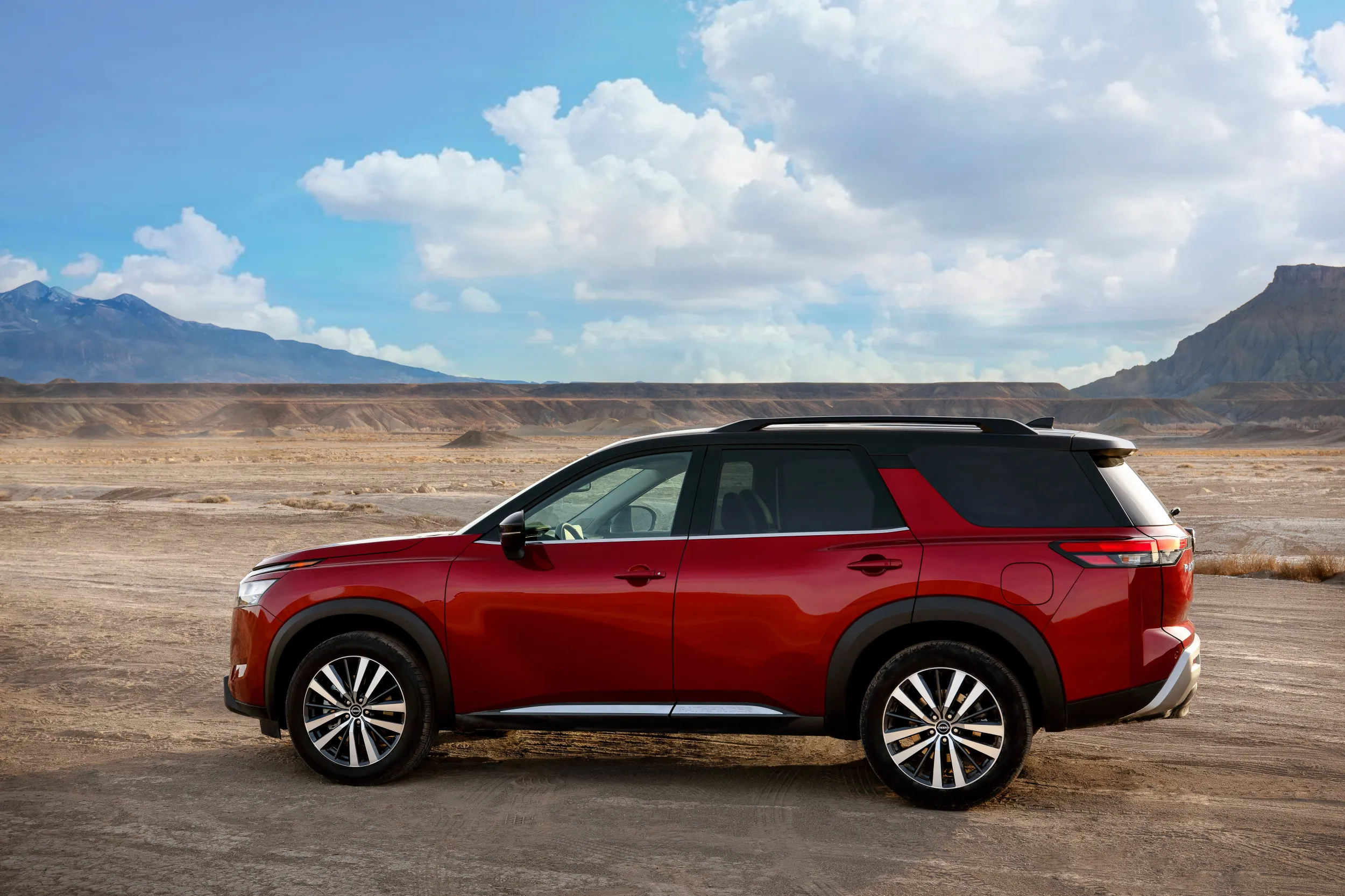
It is rare for a single model name to represent two entirely different technical worlds at the same time. Nissan decided convention was optional. The company now sells two distinct vehicles under the Pathfinder badge, one a soft edged American family SUV, the other a tougher machine shaped specifically for China.
They will not clash head on in the same showroom, as each targets a different region. Even so, the overlap is awkward. A name once tied to a clear identity now stretches across two philosophies.
Nissan did more than tweak the styling. These Pathfinders sit on fundamentally different foundations and share little beyond the lettering on the tailgate. One prioritises comfort and smooth highways. The other leans into the demands of the Chinese market, where presence and perceived toughness carry serious weight.
The American Pathfinder, comfort first
The US market Nissan Pathfinder rides on Nissan’s D platform with a unibody construction. In essence, it is a large passenger car in SUV form. The focus sits firmly on refinement, family space and long distance comfort.
Under the bonnet works a 3.5 litre naturally aspirated V6, paired with a nine speed automatic gearbox. It delivers smooth, predictable power rather than turbocharged theatrics. The cabin follows the same logic, physical controls remain, ergonomics feel conservative, and the digital elements support rather than dominate.
It is a pragmatic, suburb friendly machine designed for school runs, road trips and the occasional gravel driveway.
The Chinese Pathfinder, sharper and more imposing
The China market Nissan Pathfinder tells a different story. Although it draws from a related architectural base, the wheelbase and bodywork shift noticeably to create a more aggressive stance. In a market where size equals status, visual impact matters as much as engineering.
Here, a 2.0 litre turbocharged engine replaces the American V6, a nod to local taxation rules and efficiency targets. Step inside and the contrast sharpens further. Massive digital displays dominate the dashboard, signalling a technological leap that the global model approaches more cautiously.
The result feels less like a rugged trail companion and more like a high riding tech lounge built to impress in urban China.
One name, two strategies
Nissan’s leadership, under Makoto Uchida, understands that launching an entirely new model line costs billions. It is far cheaper to leverage an existing badge with four decades of history. Pathfinder has been around for more than 40 years, and that legacy carries weight.
Yet the strategy also exposes a dilemma. You cannot build a single vehicle that is simultaneously eco conscious in the city and genuinely hardcore off road without compromise, at least not at a sensible price point. So Nissan chose the simpler path. Use the same name, tailor the hardware to each market, and hope the geographical distance keeps the cognitive dissonance in check.
In a globalised industry, badges travel faster than ever. Whether Pathfinder can continue to mean two different things at once depends on how closely buyers look at what sits beneath the sheet metal.
Nissan did more than tweak the styling. These Pathfinders sit on fundamentally different foundations and share little beyond the lettering on the tailgate. One prioritises comfort and smooth highways. The other leans into the demands of the Chinese market, where presence and perceived toughness carry serious weight.
The American Pathfinder, comfort first
The US market Nissan Pathfinder rides on Nissan’s D platform with a unibody construction. In essence, it is a large passenger car in SUV form. The focus sits firmly on refinement, family space and long distance comfort.
Under the bonnet works a 3.5 litre naturally aspirated V6, paired with a nine speed automatic gearbox. It delivers smooth, predictable power rather than turbocharged theatrics. The cabin follows the same logic, physical controls remain, ergonomics feel conservative, and the digital elements support rather than dominate.
It is a pragmatic, suburb friendly machine designed for school runs, road trips and the occasional gravel driveway.
The Chinese Pathfinder, sharper and more imposing
The China market Nissan Pathfinder tells a different story. Although it draws from a related architectural base, the wheelbase and bodywork shift noticeably to create a more aggressive stance. In a market where size equals status, visual impact matters as much as engineering.
Here, a 2.0 litre turbocharged engine replaces the American V6, a nod to local taxation rules and efficiency targets. Step inside and the contrast sharpens further. Massive digital displays dominate the dashboard, signalling a technological leap that the global model approaches more cautiously.
The result feels less like a rugged trail companion and more like a high riding tech lounge built to impress in urban China.
One name, two strategies
Nissan’s leadership, under Makoto Uchida, understands that launching an entirely new model line costs billions. It is far cheaper to leverage an existing badge with four decades of history. Pathfinder has been around for more than 40 years, and that legacy carries weight.
Yet the strategy also exposes a dilemma. You cannot build a single vehicle that is simultaneously eco conscious in the city and genuinely hardcore off road without compromise, at least not at a sensible price point. So Nissan chose the simpler path. Use the same name, tailor the hardware to each market, and hope the geographical distance keeps the cognitive dissonance in check.
In a globalised industry, badges travel faster than ever. Whether Pathfinder can continue to mean two different things at once depends on how closely buyers look at what sits beneath the sheet metal.


