
Nissan promises the GT R will return, targets the end of the decade and leans towards hybrid power
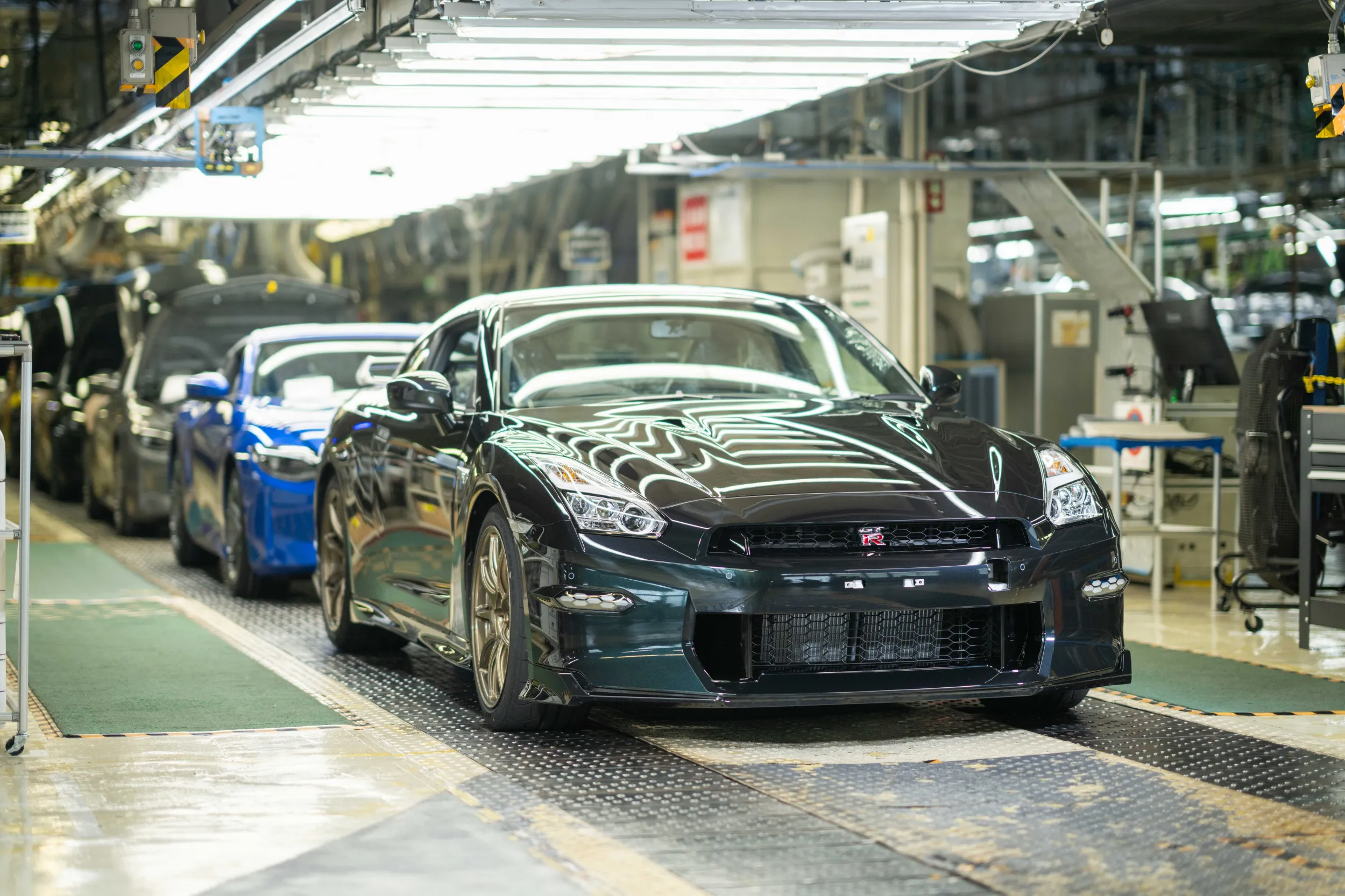
Nissan is keeping the GT R alive at a time when the company is cutting costs, shortening development cycles and searching for a fresh sense of identity. The message delivered at the New York Auto Show in early April was unusually clear. Nissan wants to launch the R36 GT R before the end of the decade, and this time executives are no longer speaking in vague future tense. They are talking about a new chassis, a partly new powertrain and electrification that must help the legend satisfy both emissions rules and the expectations attached to the GT R name.
Ponz Pandikuthira, Nissan North America’s head of product planning, told The Drive that firmer news could arrive by 2028 and that the R36 GT R should appear before the decade turns. According to him, Nissan is building the car on an entirely new base and planning a new powertrain to go with it. At the same time, he hinted quite plainly that the engineers do not want to throw the existing VR38 engine block in the bin, but may instead use it as the starting point for a new hybrid set up. That makes the latest promise noticeably more concrete than the company’s earlier hints.
It is only fair to note, though, that Nissan has promised a GT R rebirth more than once already. In spring 2024, the company said the GT R name would not disappear with the end of the R35 generation and that development work was continuing. In March last year, future chief executive Ivan Espinosa spoke about the need for image defining Nissan models, citing the Patrol, Z and Leaf as examples. In August that same year, Nissan officially ended R35 production after 18 years and nearly 48,000 cars, and Espinosa said directly that it was not a final farewell to the GT R. So this year’s statement feels less like a dramatic strategic turn and more like another, firmer reassurance that the car is still part of the plan.
Technically, Nissan’s direction now looks clearer. Pandikuthira said the next GT R needs some degree of electrification, but a fully electric solution still does not serve the model’s core purpose given current battery technology. He argued as far back as 2025 that an electric prototype could manage essentially one fast lap of the Nürburgring before needing a lengthy recharge. In his 2026 comments, he added that the new GT R must also comply with tighter emissions standards, including future Euro 7 rules, which is precisely why the project is moving towards a hybrid or plug in hybrid layout rather than pure electric power. Nissan is therefore trying to reconcile two rather awkward goals at once, preserving the GT R’s raw, repeatable track character while also making the car globally saleable.
That matters because Nissan is not operating from a position of comfort. The company is shortening development times across its line up, pushing through a painful restructuring and, in February 2026, forecast a net loss of 650 billion yen for the financial year. Yet the GT R was never a volume car or a quick route to profit. From the sound of it, the model is being treated as a halo project through which Espinosa wants to rebuild the brand’s confidence and remind people what Nissan is supposed to stand for. If the company let that symbol fade away, it would lose part of its identity at exactly the moment it needs a recognisable face more than ever.
That is why the next GT R does not look like a simple replacement model, but more like a new definition of what the badge can be. The appeal of the R35 era came from mechanical brutality, engineering swagger and the idea of a supercar offered at something close to a sensible price. The R36 now has to translate that formula into an era of tighter emissions rules, heavier batteries and a balance sheet that leaves little room for romantic excess. If Nissan can find the right balance between a new chassis, a hybrid powertrain and global compliance, the GT R may well return before the decade is out. If not, Godzilla will remain what it has increasingly become in recent years, a legend first and a model second.
It is only fair to note, though, that Nissan has promised a GT R rebirth more than once already. In spring 2024, the company said the GT R name would not disappear with the end of the R35 generation and that development work was continuing. In March last year, future chief executive Ivan Espinosa spoke about the need for image defining Nissan models, citing the Patrol, Z and Leaf as examples. In August that same year, Nissan officially ended R35 production after 18 years and nearly 48,000 cars, and Espinosa said directly that it was not a final farewell to the GT R. So this year’s statement feels less like a dramatic strategic turn and more like another, firmer reassurance that the car is still part of the plan.
Technically, Nissan’s direction now looks clearer. Pandikuthira said the next GT R needs some degree of electrification, but a fully electric solution still does not serve the model’s core purpose given current battery technology. He argued as far back as 2025 that an electric prototype could manage essentially one fast lap of the Nürburgring before needing a lengthy recharge. In his 2026 comments, he added that the new GT R must also comply with tighter emissions standards, including future Euro 7 rules, which is precisely why the project is moving towards a hybrid or plug in hybrid layout rather than pure electric power. Nissan is therefore trying to reconcile two rather awkward goals at once, preserving the GT R’s raw, repeatable track character while also making the car globally saleable.
That matters because Nissan is not operating from a position of comfort. The company is shortening development times across its line up, pushing through a painful restructuring and, in February 2026, forecast a net loss of 650 billion yen for the financial year. Yet the GT R was never a volume car or a quick route to profit. From the sound of it, the model is being treated as a halo project through which Espinosa wants to rebuild the brand’s confidence and remind people what Nissan is supposed to stand for. If the company let that symbol fade away, it would lose part of its identity at exactly the moment it needs a recognisable face more than ever.
That is why the next GT R does not look like a simple replacement model, but more like a new definition of what the badge can be. The appeal of the R35 era came from mechanical brutality, engineering swagger and the idea of a supercar offered at something close to a sensible price. The R36 now has to translate that formula into an era of tighter emissions rules, heavier batteries and a balance sheet that leaves little room for romantic excess. If Nissan can find the right balance between a new chassis, a hybrid powertrain and global compliance, the GT R may well return before the decade is out. If not, Godzilla will remain what it has increasingly become in recent years, a legend first and a model second.


