
Renault brings new E-Space Concept to Paris and rolls out LFP batteries across its electric range
 1/4
1/4
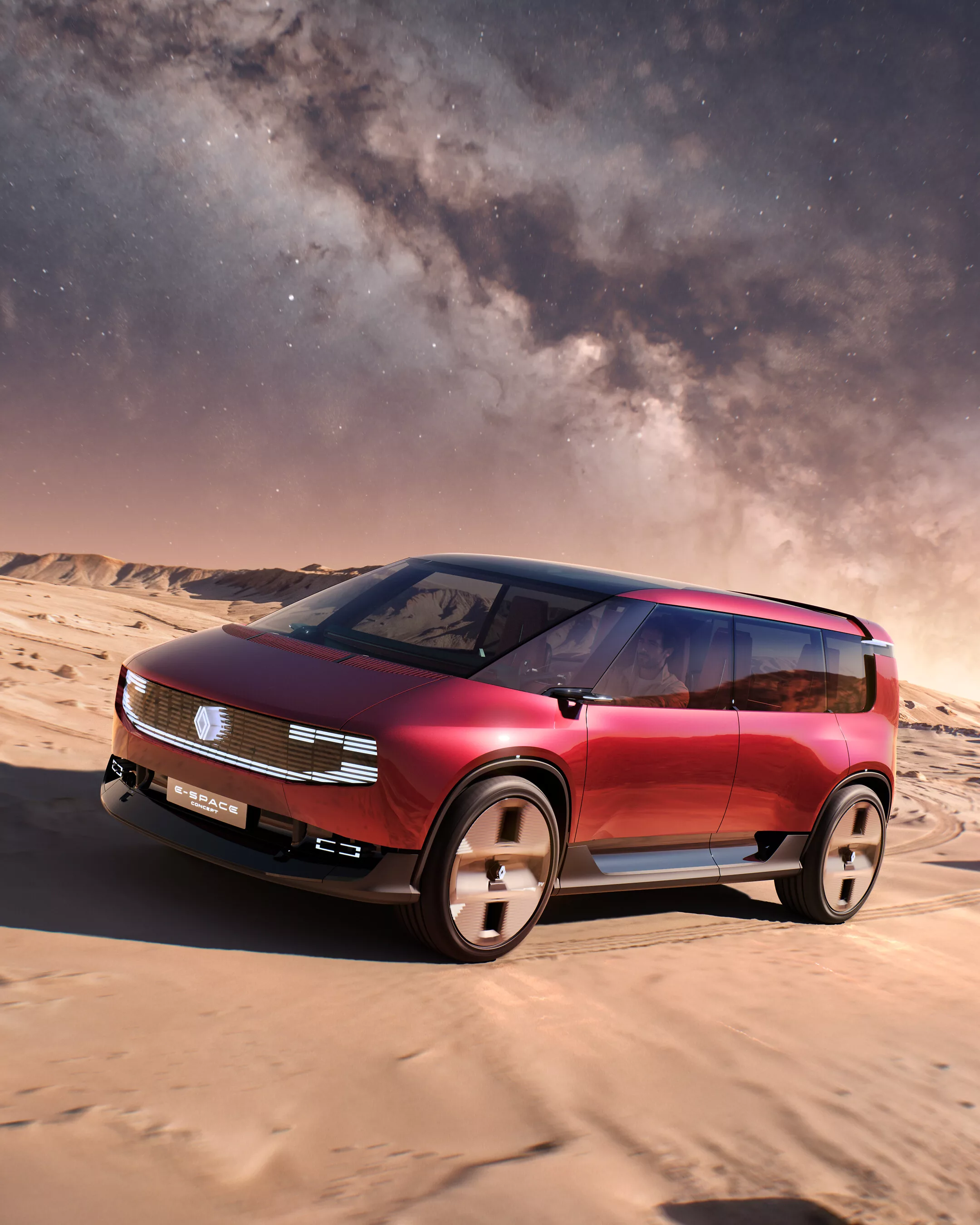
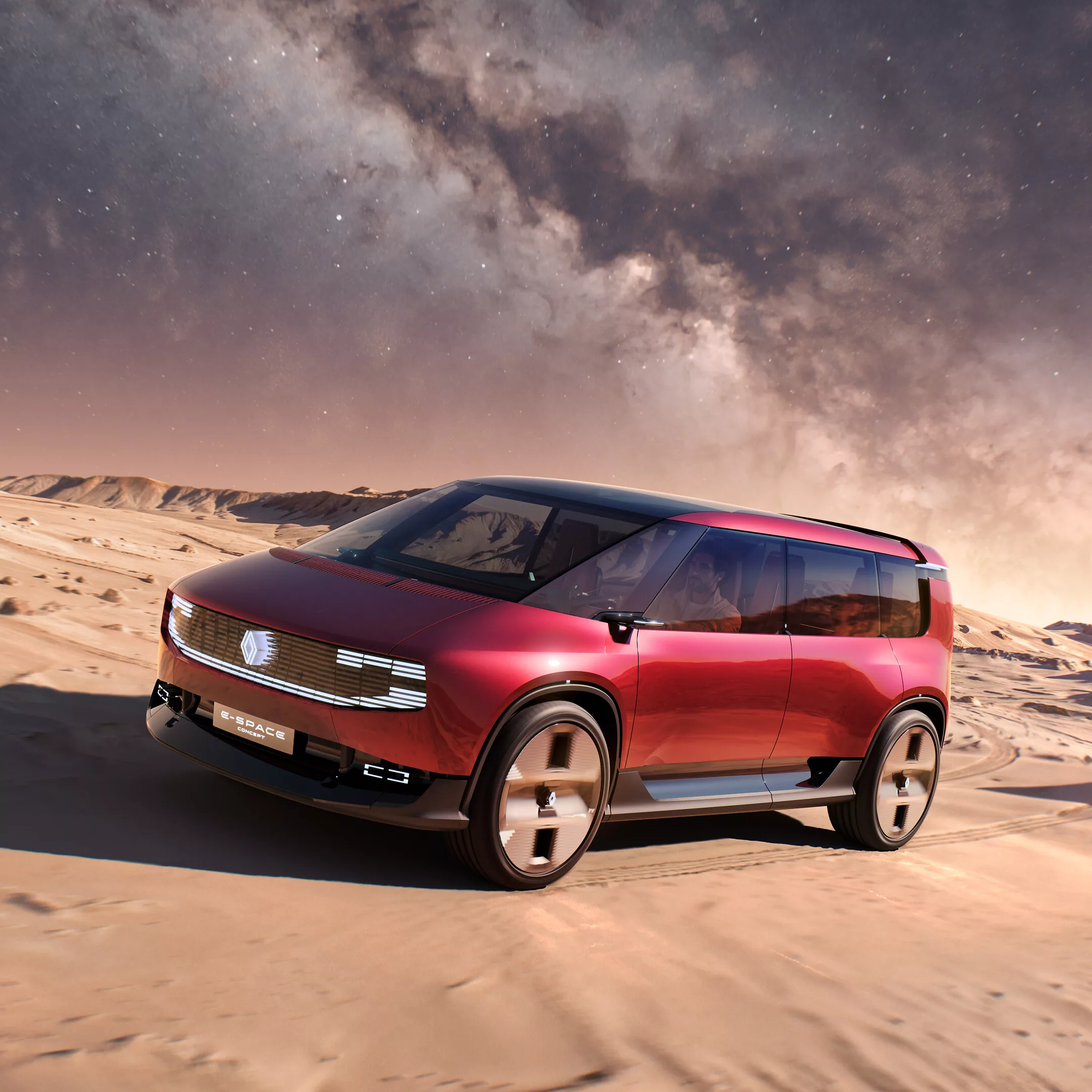
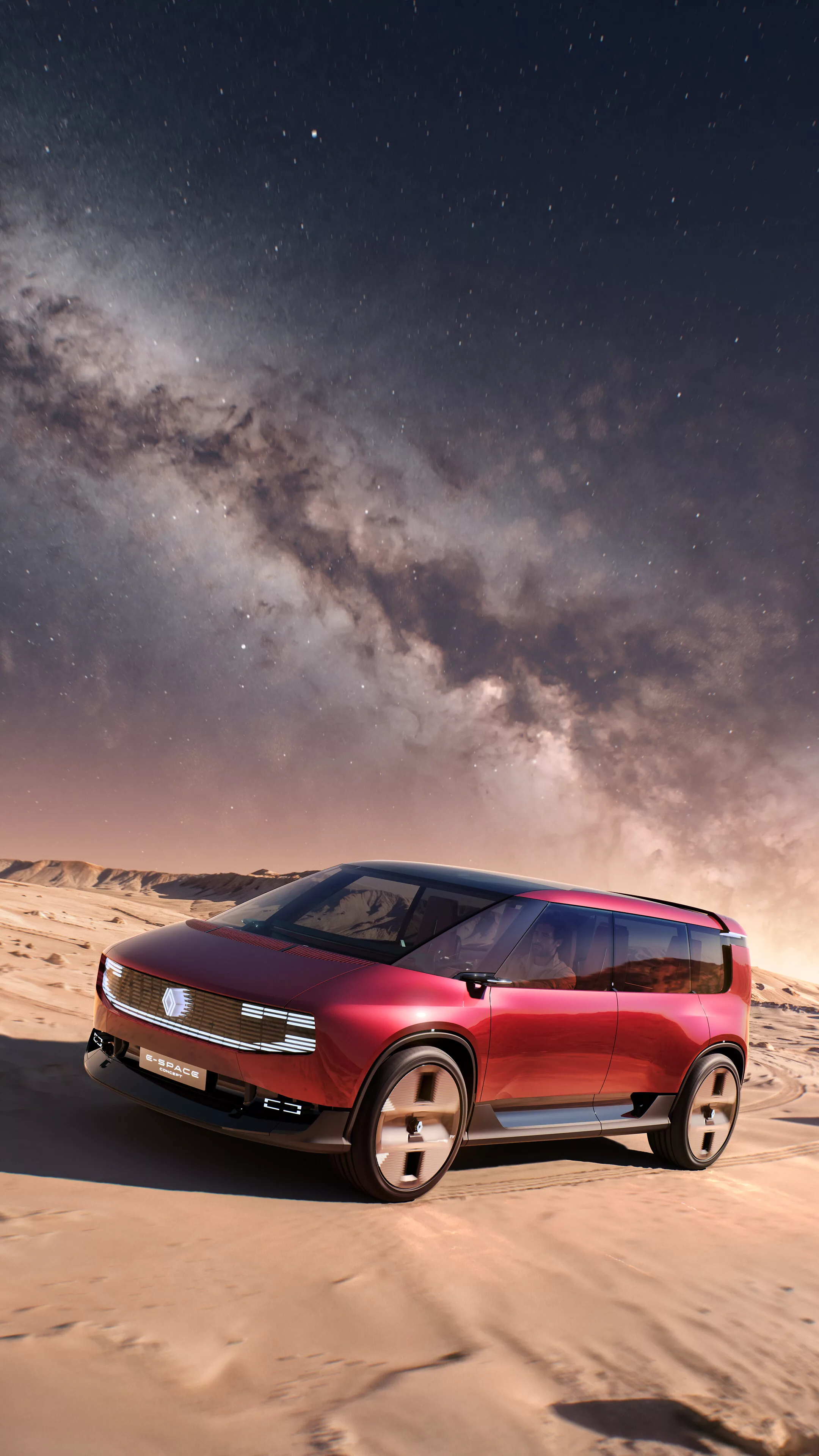
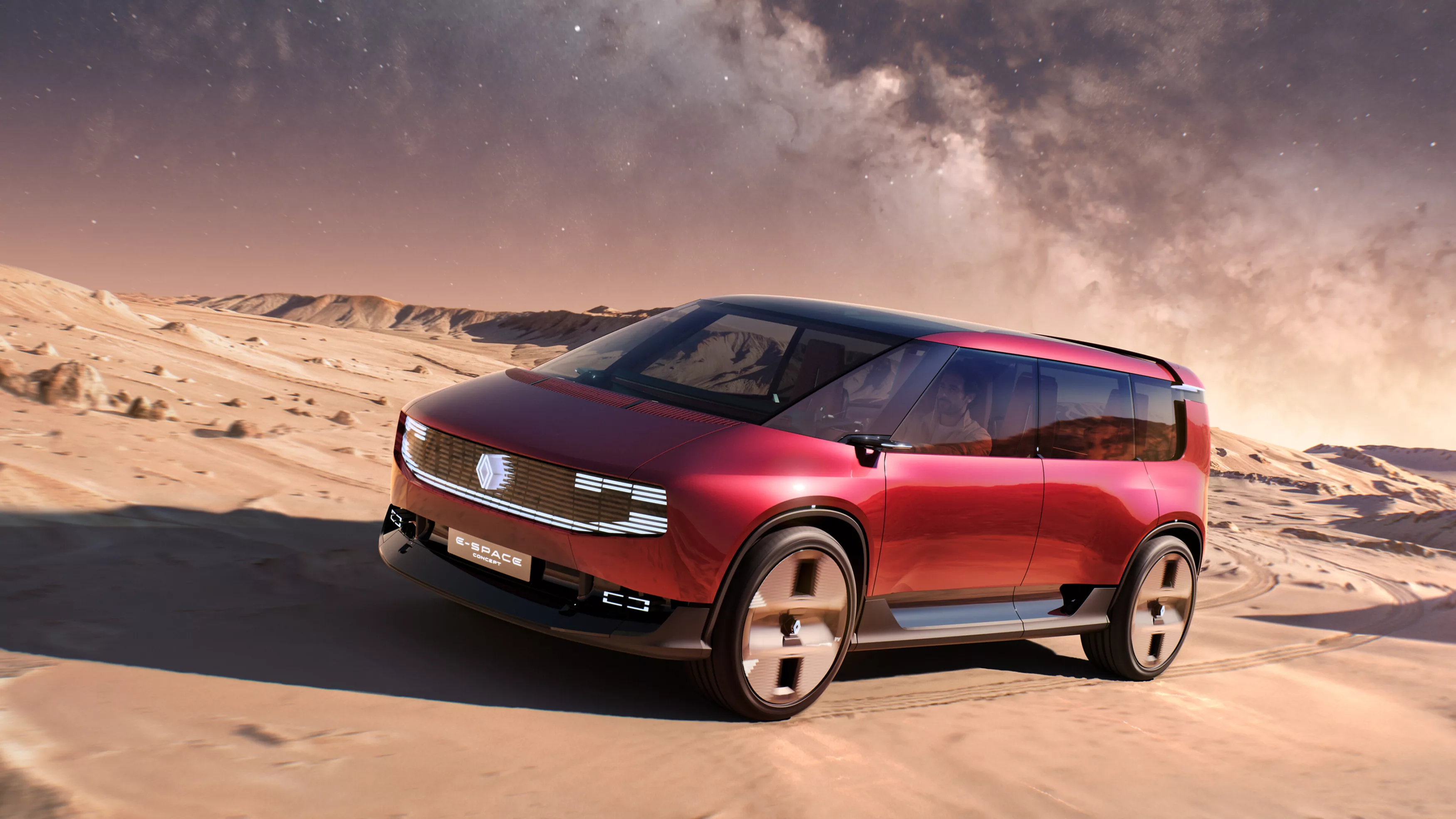
Renault is using the Paris Motor Show to showcase two major directions: its next-generation family car concept is called E-Space Concept, while its entire electric car range will gradually switch to LFP batteries. Meanwhile, the Megane E-Tech Electric gains a 67 kWh battery, a range of up to 500 km and faster charging.
E-Space Concept revisits the original Espace idea
Renault is unveiling the E-Space Concept in Paris, reinterpreting the core idea behind the Espace launched in 1984: a family car designed to maximise space and put passengers first.
The concept is 4.70 metres long, with Renault placing particular emphasis on the cabin, spaciousness and electric architecture. The E-Space name is no coincidence. “E” refers to E-Tech electrified powertrains, while “Space” refers to the roomy passenger compartment.
Renault has not yet released technical specifications for the battery, motor or production version. The E-Space should therefore be viewed primarily as a prototype showcasing design and space concepts for future family cars, rather than a preview of a finished production car.
Megane E-Tech gains a 67 kWh LFP battery
The more significant news in practical terms concerns the Megane E-Tech Electric.
The updated model gains a 67 kWh LFP battery and a WLTP range of up to 500 km. According to Renault, DC charging performance improves by 25%, and the battery can be charged from 15% to 80% in 24 minutes.
Additions include Smart Mode, Gemini artificial intelligence and new OpenR Link features.
The use of LFP chemistry points to Renault's clear cost strategy. LFP batteries are generally cheaper and less dependent on nickel and cobalt, although their energy density is usually lower than that of NMC batteries. Renault compensates for this with a cell-to-pack design, in which cells are installed directly in the battery pack without conventional modules.
LFP batteries are coming to Renault's entire electric range
Renault plans to gradually introduce LFP batteries across all E-Tech Electric models.
The known capacities are:
Twingo E-Tech Electric: 27.5 kWh Renault 5 E-Tech Electric: 37 kWh Megane E-Tech Electric: 67 kWh Scenic E-Tech Electric: 67 kWh
LFP technology will also come to the Renault 4 E-Tech Electric later.
All these batteries use a cell-to-pack design and Renault's Fireman Access system, which allows emergency responders to quickly direct water to the cells in the event of a battery fire.
For the European market, the switch to LFP is bigger news than another concept car. The battery is an electric car's most expensive component, and cheaper chemistry gives Renault the option of either lowering prices or improving margins.
Renault 5 Turbo 3E moves closer to production form
In Paris, Renault is also showing an engineering prototype of the Renault 5 Turbo 3E that is already quite close to the production version.
Its two electric motors, integrated into the rear wheels, have a combined output of 408 kW. Renault quotes torque of 4800 Nm, but this figure is calculated at the wheels through the in-wheel motors and is not comparable with conventional motor output-shaft torque.
This technical setup allows each rear wheel to be controlled independently and enables very rapid distribution of drive torque.
Twingo gains a glass roof, Rafale a special edition
The Twingo E-Tech Electric gains a 0.7 m² Twingobay panoramic glass roof. According to Renault, the multilayer glass filters out 99.9% of UV radiation and reduces the effects of infrared radiation, removing the need for a separate sunshade.
Meanwhile, the Rafale range gains a Hypnotic special edition based on the 221 kW Hyper Hybrid E-Tech 4x4 Atelier Alpine.
Renault is also showing the electric two-seat Renault 8 Gordini Concept and the all-wheel-drive Renault 4 JP4x4 Concept.
Paris marks a new stage in Renault's electric strategy
The most technically significant part of Renault's Paris display is not any single model, but its battery strategy.
Extending LFP chemistry to the Megane, Scenic, Renault 5, Renault 4 and Twingo model families allows Renault to reduce the cost of producing electric cars without falling into the short-range trap.
At the same time, the E-Space Concept shows the body style and use of space with which the next larger family car could make use of this technology.
If Renault can genuinely pass the lower cost of LFP batteries on to customers, it will have a much greater impact on Europe's electric car market than another 500 kW flagship model.


