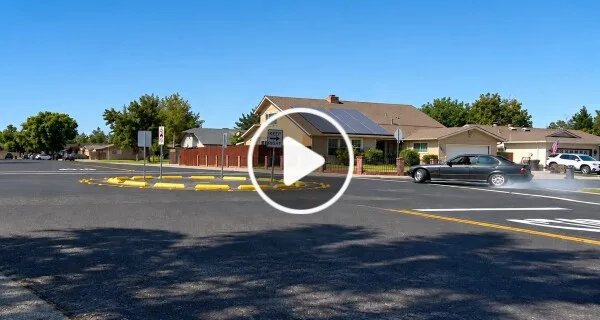
Authorities banned drifting at an intersection, but drifters took it as a challenge
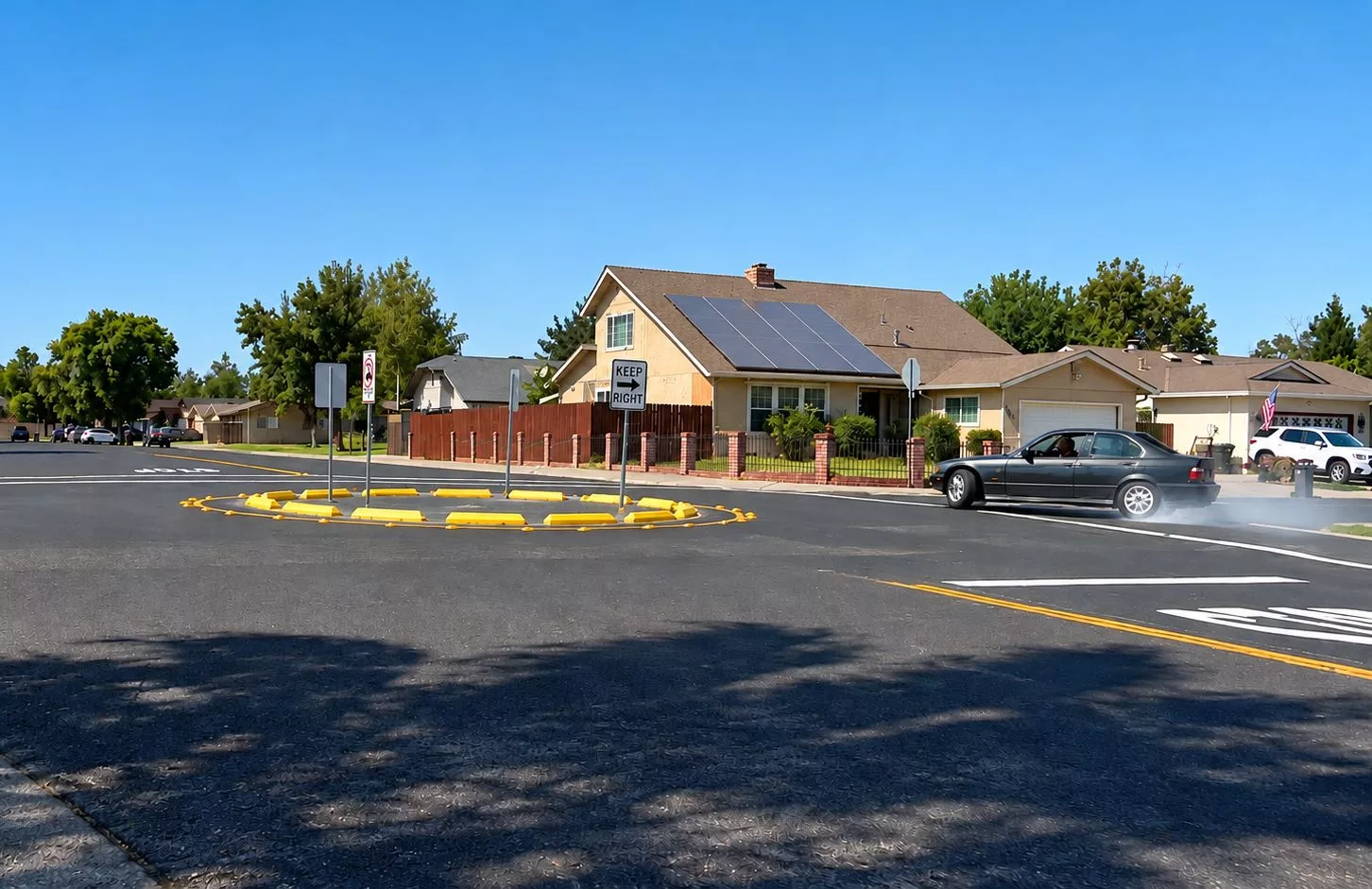
The city of Stockton, California, installed barriers at a problem intersection to stop night-time burnouts and street drifting. The idea was to break up the large open expanse of asphalt, but within days a BMW E36 was sliding sideways around the new barriers.
A wide intersection attracted night-time drivers
Residents of north Stockton had repeatedly complained about tyres screeching at night. The wide streets and large intersection gave drivers enough room for burnouts and donuts.
The city installed low barriers in a circle in the middle of the intersection, hoping to eliminate the large open area drivers had been using.
Drifters exposed the solution's weakness within four days
CBS Sacramento installed a camera at the intersection to monitor whether the barriers were working. Four days later, it recorded a matt-black BMW E36 drifting right around the barriers.
The barriers did reduce the usable space in the middle of the intersection, but their layout left a smooth driving line around them. In effect, they created a tighter circle.
This does not mean the solution is entirely useless. The barriers restrict the movement of larger numbers of cars at once and reduce the space available for bigger manoeuvres. For a single car, however, there was still enough room to drift.
Stockton has faced the problem for years
Illegal drag racing and sideshows are not new to Stockton. Local residents have previously complained about burnouts, high speeds and dangerous manoeuvres in residential areas.
California has tightened its laws in recent years, and police can seize cars involved in an offence. However, the Stockton case shows that changing an intersection's geometry alone may not be enough.
Nearby Sacramento even has a legal drifting area where drivers can pay to practise donuts and controlled slides in controlled conditions. This does not automatically solve the problem of illegal gatherings, but it at least offers an alternative to public streets.
Stockton's solution, by contrast, quickly illustrated a classic traffic management problem: an obstacle works only if its designer can anticipate how a driver will get around it.