
Volvo’s new electric truck can haul up to 80 tonnes and travel up to 420 km at a 76-tonne gross combination weight
 1/2
1/2

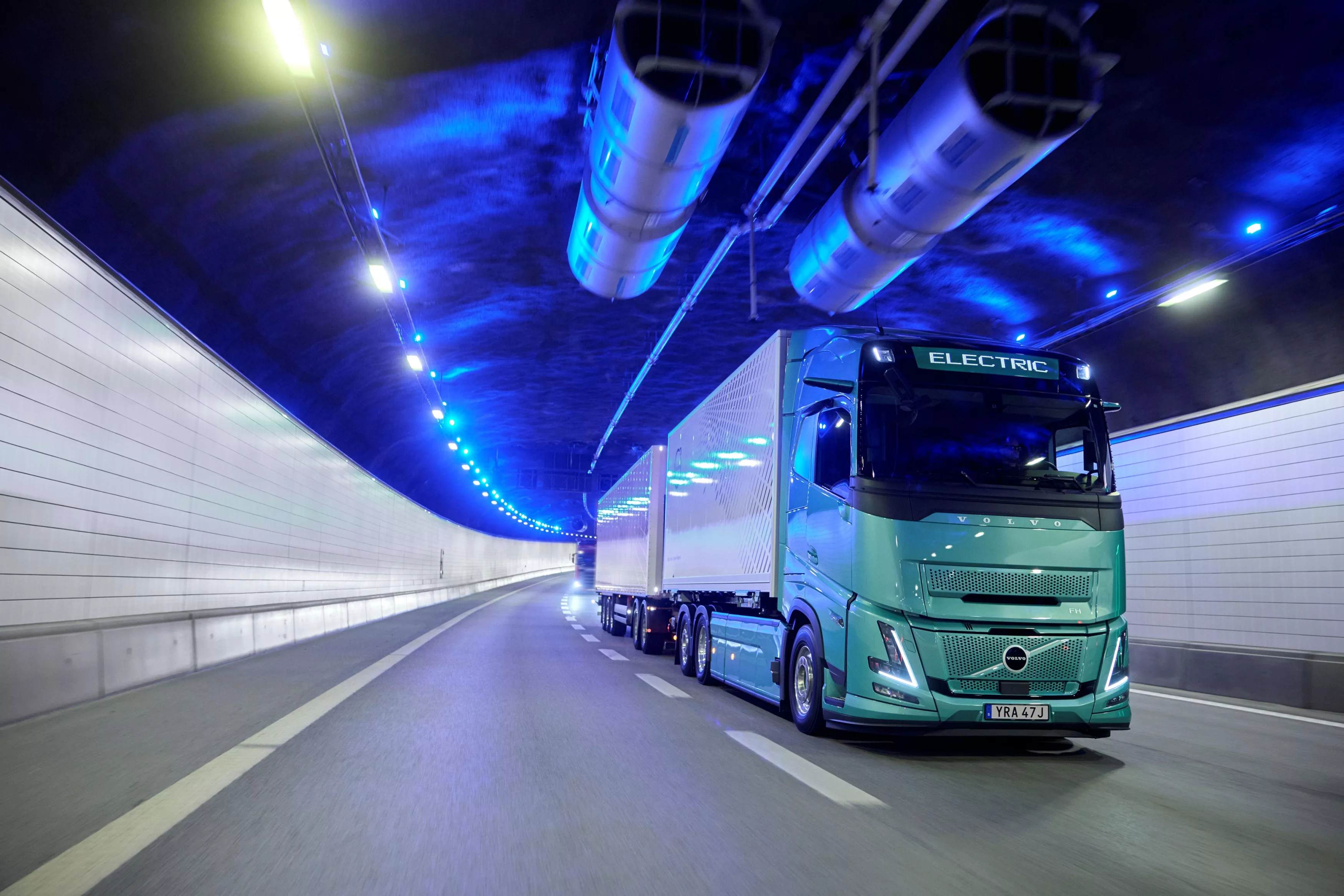
Volvo Trucks is expanding its electric truck range with a new version of the FH Electric designed to haul combinations of up to 80 tonnes. The manufacturer promises a range of up to 420 km at a gross combination weight of 76 tonnes, and up to 450 km with a 64-tonne combination.
The new model targets markets where permitted combination weights exceed standard European levels. Sales will begin in Sweden, Norway, Finland, Denmark, the Netherlands and Switzerland, with the first trucks arriving on the market in early 2027.
640 kWh battery and charging power of up to 680 kW
The new FH Electric uses the same drivetrain that Volvo introduced for its FH, FM and FMX electric trucks in April 2026.
The battery has a usable capacity of 640 kWh. The Megawatt Charging System, or MCS, supports charging power of up to 680 kW, allowing the battery to be charged from 20% to 80% in around 36 minutes. The same charge takes approximately 70 minutes using a CCS2 connection at 360 kW.
Volvo has also updated the battery management system and improved thermal insulation to increase efficiency in cold climates. This is particularly important in the Nordic countries, where low temperatures have a considerably greater impact on an electric truck’s real-world range than on that of a passenger car.
80 tonnes changes the role of the electric truck
Volvo considers the new model’s greatest advantage to be its ability to take on work that has until now been beyond electric trucks because of their limited weight capacity and range. With a 64-tonne combination, range is up to 450 km. At the 74-tonne gross combination weight permitted in Sweden and the 76-tonne limit allowed in Finland, Volvo promises up to 420 km. The maximum technical combination weight is 80 tonnes.
This places the truck in a segment where diesel has so far been essentially unavoidable. This applies particularly to timber haulage, heavier regional transport and lighter construction transport.
Hub-reduction axles improve traction in heavy haulage
With the new version, Volvo is introducing axles with hub reduction. The solution improves ground clearance beneath the axle and increases the ability to get moving with a very heavy combination.
This is beneficial, for example, in timber haulage and on construction sites, where the truck must cope not only with high weight but also with poorer road surfaces.
The eight-speed gearbox has been developed specifically for electric motors. The electric power take-off, or e-PTO, can power equipment such as refrigeration units without a separate diesel generator.
In Europe, the charging network is the key issue
Volvo’s electric truck shows that a fully electric powertrain is no longer limited to urban logistics and light regional transport. A 640 kWh battery and a range of more than 400 km at a very high gross combination weight make the electric truck usable for substantially more demanding transport operations as well.
At the same time, the bottleneck shifts from the truck to the infrastructure. MCS charging at 680 kW allows for reasonable breaks during the working day, but chargers with this level of power are still far from commonplace on Europe’s main highways.
The technology has therefore reached a point where building a 76-tonne electric truck is no longer the main problem. Ensuring that a sufficiently powerful charger is available for it at the right time is much more difficult.


