
Xiaomi recruits BMW and Porsche engineers
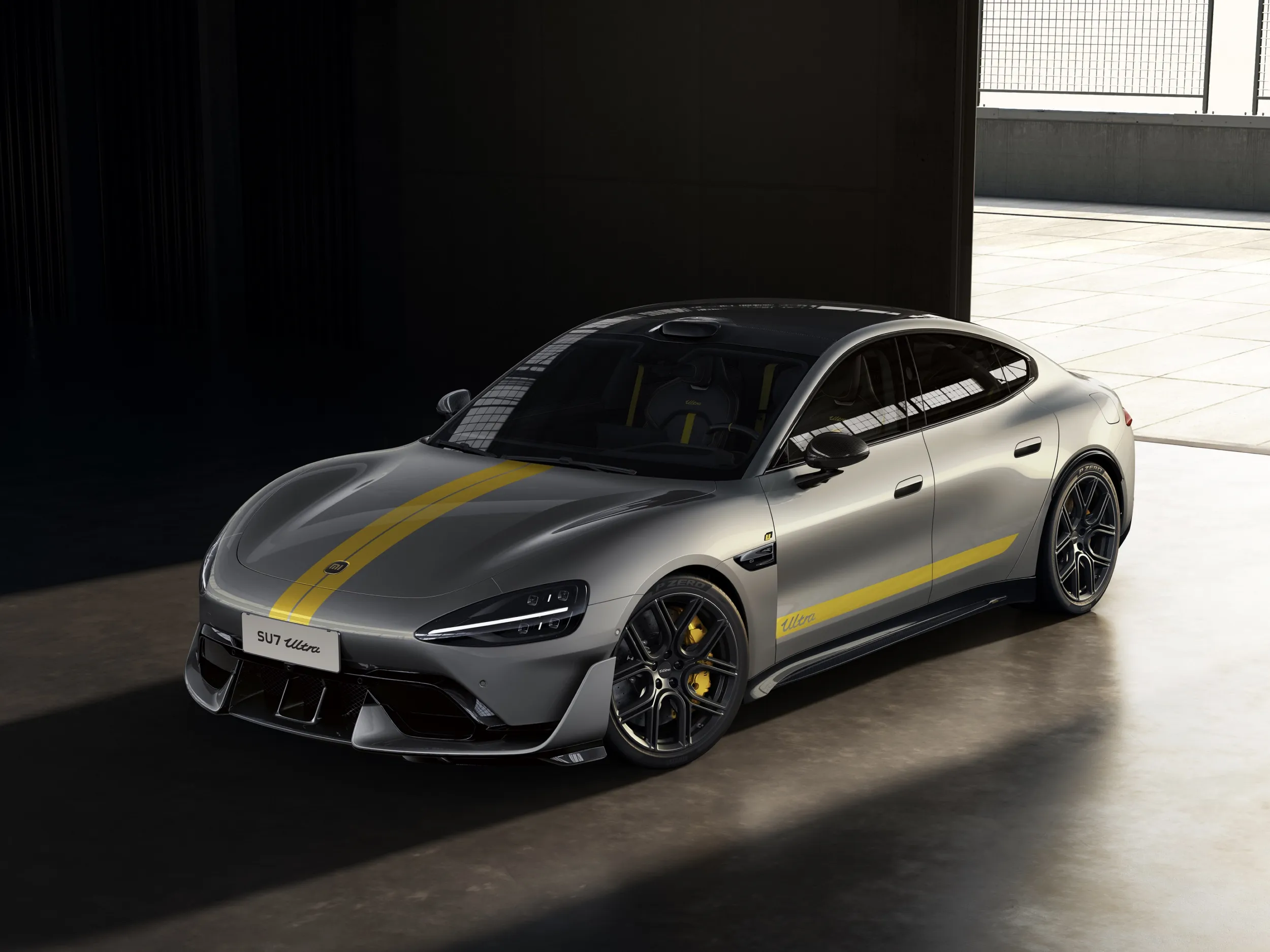
Xiaomi Auto’s European recruitment drive is not just another round of corporate hiring. It shows how Chinese car makers are moving beyond the old image of cheap production and buying the kind of expertise on which European premium brands built their advantage for decades. There is nothing inherently unethical about hiring a rival’s engineers. The line appears when experience turns into protected trade secrets.
Reuters wrote in 2025 that Xiaomi had recruited at least five senior specialists, including executives with BMW backgrounds, as it prepared to build an electric car development centre in Europe. At the same time, the company was looking for designers and vehicle dynamics engineers in Munich, while confirming plans to begin selling cars outside China in 2027.
Later reports said Xiaomi opened a European research and design centre in Munich with a team that includes specialists from BMW, Porsche, Lamborghini and Mercedes Benz. According to CarNewsChina, the centre is led by Rudolf Dittrich, who was involved in the BMW M4 GT3 project, while vehicle dynamics is overseen by Claus Dieter Groll, another former BMW specialist.
That changes the nature of Xiaomi’s car project. The company is no longer trying to enter the market simply with China’s cost advantage. It is building its own command of the European premium car vocabulary: steering feel, proportions, cabin quality, aerodynamics and the credibility of a sporting model.
Experience is not theft
Is this ethical? In principle, yes. An employee does not belong to a former employer, and an engineer, designer or executive has the right to move their career elsewhere. The European Trade Secrets Directive also draws a distinction between experience and skills honestly acquired by an employee and a protected trade secret. Using experience is not the same as handing over confidential documents, source code, production processes or private product strategies.
Problems may arise in three cases. First, when the new employer hires someone not for their ability, but for specific confidential information. Second, when an employee takes protected technical files, model data or development material with them. Third, when the move breaches competition restrictions or confidentiality agreements.
Publicly available information does not currently prove any such breach. It would therefore be wrong to call Xiaomi’s approach theft. A more accurate description is that Xiaomi is using the open labour market aggressively, the same mechanism from which European car makers benefited for decades.
Xiaomi is buying time as much as talent
Xiaomi’s biggest gain is not one particular engineer. It is a shorter development cycle. European top talent can help the company understand more quickly what a premium buyer expects: steering feel, brake pedal logic, body control, cabin material quality, noise insulation and stability at high speeds.
That matters especially in Europe, where brand trust does not come from a screen, a software stack or an acceleration figure alone. Xiaomi needs to prove that it can build not merely a fast electric car, but one that feels familiar on a German autobahn, Alpine roads and the Nürburgring.
There is a risk, of course. European engineering culture may not slide easily into China’s rapid development rhythm and constant cost pressure. If Xiaomi uses European talent only as a badge of credibility, the effect will remain shallow. If it manages to combine China’s software speed with European vehicle dynamics, the competition becomes far less comfortable for Europe’s established manufacturers.
Europe’s real problem is not Xiaomi hiring engineers
BMW, Porsche and Mercedes Benz will not lose their know how because of one recruitment campaign. Their advantage does not live only in individual people. It sits in processes, supplier networks, testing standards, brand equity and an engineering culture built over decades.
Even so, the movement of talent shows that one part of Europe’s defensive wall is starting to crack. If a Chinese manufacturer can offer an engineer more authority, a faster development cycle or a more ambitious project, the old brand aura is no longer enough. European car makers now have to compete not only as manufacturers, but as employers.
The wider backdrop makes the shift sharper. According to a survey of German automotive supply chain companies, 72 per cent plan to reduce investment in Germany and 49 per cent plan to cut jobs there. Reuters has reported that the sector faces pressure from falling orders, stronger foreign competition and the costly transition to electric cars and software.
The real issue is not that Xiaomi is hiring engineers with BMW and Porsche backgrounds. The issue is that Europe’s car industry is cutting, slowing and defending the old model while its competitors are buying speed.
Later reports said Xiaomi opened a European research and design centre in Munich with a team that includes specialists from BMW, Porsche, Lamborghini and Mercedes Benz. According to CarNewsChina, the centre is led by Rudolf Dittrich, who was involved in the BMW M4 GT3 project, while vehicle dynamics is overseen by Claus Dieter Groll, another former BMW specialist.
That changes the nature of Xiaomi’s car project. The company is no longer trying to enter the market simply with China’s cost advantage. It is building its own command of the European premium car vocabulary: steering feel, proportions, cabin quality, aerodynamics and the credibility of a sporting model.
Experience is not theft
Is this ethical? In principle, yes. An employee does not belong to a former employer, and an engineer, designer or executive has the right to move their career elsewhere. The European Trade Secrets Directive also draws a distinction between experience and skills honestly acquired by an employee and a protected trade secret. Using experience is not the same as handing over confidential documents, source code, production processes or private product strategies.
Problems may arise in three cases. First, when the new employer hires someone not for their ability, but for specific confidential information. Second, when an employee takes protected technical files, model data or development material with them. Third, when the move breaches competition restrictions or confidentiality agreements.
Publicly available information does not currently prove any such breach. It would therefore be wrong to call Xiaomi’s approach theft. A more accurate description is that Xiaomi is using the open labour market aggressively, the same mechanism from which European car makers benefited for decades.
Xiaomi is buying time as much as talent
Xiaomi’s biggest gain is not one particular engineer. It is a shorter development cycle. European top talent can help the company understand more quickly what a premium buyer expects: steering feel, brake pedal logic, body control, cabin material quality, noise insulation and stability at high speeds.
That matters especially in Europe, where brand trust does not come from a screen, a software stack or an acceleration figure alone. Xiaomi needs to prove that it can build not merely a fast electric car, but one that feels familiar on a German autobahn, Alpine roads and the Nürburgring.
There is a risk, of course. European engineering culture may not slide easily into China’s rapid development rhythm and constant cost pressure. If Xiaomi uses European talent only as a badge of credibility, the effect will remain shallow. If it manages to combine China’s software speed with European vehicle dynamics, the competition becomes far less comfortable for Europe’s established manufacturers.
Europe’s real problem is not Xiaomi hiring engineers
BMW, Porsche and Mercedes Benz will not lose their know how because of one recruitment campaign. Their advantage does not live only in individual people. It sits in processes, supplier networks, testing standards, brand equity and an engineering culture built over decades.
Even so, the movement of talent shows that one part of Europe’s defensive wall is starting to crack. If a Chinese manufacturer can offer an engineer more authority, a faster development cycle or a more ambitious project, the old brand aura is no longer enough. European car makers now have to compete not only as manufacturers, but as employers.
The wider backdrop makes the shift sharper. According to a survey of German automotive supply chain companies, 72 per cent plan to reduce investment in Germany and 49 per cent plan to cut jobs there. Reuters has reported that the sector faces pressure from falling orders, stronger foreign competition and the costly transition to electric cars and software.
The real issue is not that Xiaomi is hiring engineers with BMW and Porsche backgrounds. The issue is that Europe’s car industry is cutting, slowing and defending the old model while its competitors are buying speed.


