
BeamNG.drive arrives on PlayStation 5 with exceptionally realistic crash physics
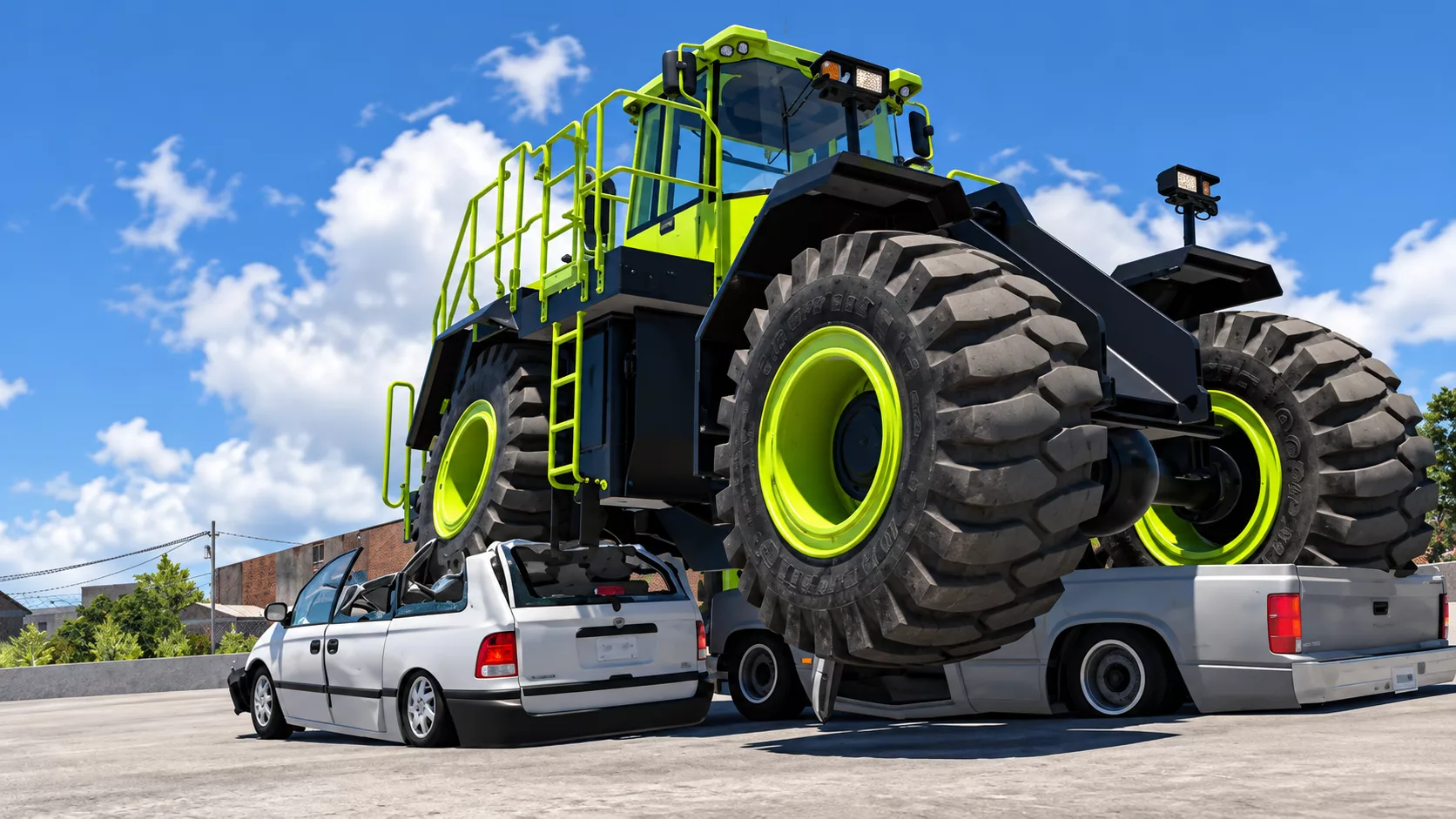
BeamNG.drive, which simulates vehicle damage with exceptional precision, arrived on PlayStation 5 on 19 October. Previously largely the preserve of PC gamers, the driving simulator runs its vehicle physics calculations 2,000 times per second, making every collision and the resulting damage unique. The developer also released a new trailer alongside the game's launch.
Collisions that obey the laws of physics
BeamNG.drive differs from conventional driving games primarily through its physics engine. While Gran Turismo 7, for example, focuses on racing and vehicle handling, BeamNG.drive also simulates vehicle structures and their behaviour under different forces in much greater detail.
The game's developer, BeamNG GmbH, explains on the official PlayStation blog that the simulator is based on soft-body physics. This models a vehicle as interconnected nodes and beams that bend, deform or break according to the loads acting on them. The physics engine performs calculations at a frequency of 2000 Hz, or 2,000 times per second.
As a result, collision damage is not limited to dented body panels and broken lights. An impact can alter the suspension geometry, damage the drivetrain or bend the car's load-bearing structure so severely that it can no longer travel in a straight line.
Importantly, the game does not use preset crash animations. The extent and nature of the damage depend on the collision speed, angle, vehicle structure and point of contact.
A thousand configurations and 12 open environments
BeamNG.drive offers around a thousand vehicle configurations, including sports cars, SUVs, pickup trucks, buses and heavy trucks. The vehicle brands are mostly fictional, but their construction and engineering mirror those of real-world vehicles.
Players can modify the engine, suspension, drivetrain, tyres and many other components. Adjustable settings include differential locks, ride height, tyre pressures and anti-roll bar stiffness. Changes directly affect how the car behaves.
The game offers 12 open driving environments, ranging from city streets and motorways to mountain roads, deserts and challenging off-road trails.
In addition to free driving, players can enter races, tackle time trials, complete transport tasks and flee the police.
The PlayStation version required extensive optimisation
Bringing BeamNG.drive to console involved more than simply adapting the existing PC game. Its complex physics model requires considerable computing power, particularly when several vehicles are moving at once.
The developers had to optimise performance, as well as the user interface and controls, to make the game comfortable to play with a standard PlayStation controller.
Update 0.40 also arrived on PC on the same day as the console version, introducing split-screen multiplayer, physically simulated vehicle occupants, a new truck and several performance improvements.
The PlayStation 5 version does have some limitations. At launch, it lacks virtual reality support, and players cannot use community-created mods. The developer wants to bring the platforms' capabilities into line in future, but has not committed to a date for these features to reach consoles.
BeamNG.drive offers a different alternative to conventional driving games
BeamNG.drive's greatest strength is not its graphics or official vehicle licences, but the detail of its vehicle physics.
Gran Turismo 7 and Forza Motorsport offer structured racing experiences, while Wreckfest focuses on racing with collisions. BeamNG.drive gives players much greater freedom to experiment with how different engineering solutions affect a car's handling and durability.
For European players, the release of the PlayStation 5 version primarily means easier access to a simulator that previously required a sufficiently powerful PC.


