
Bentley Torcal swaps V8 power for electricity and sends 653 kW to all four wheels
 1/47
1/47
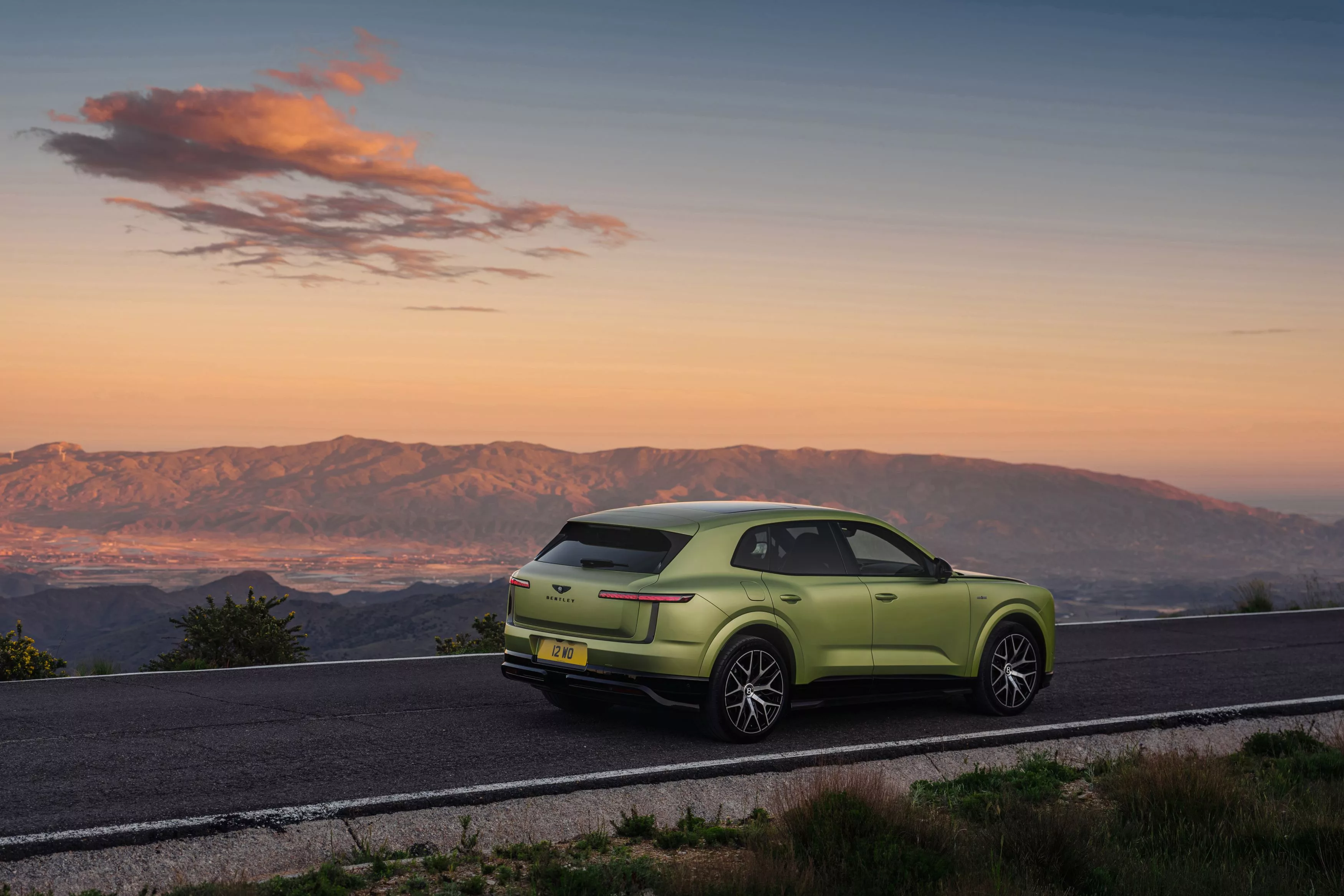
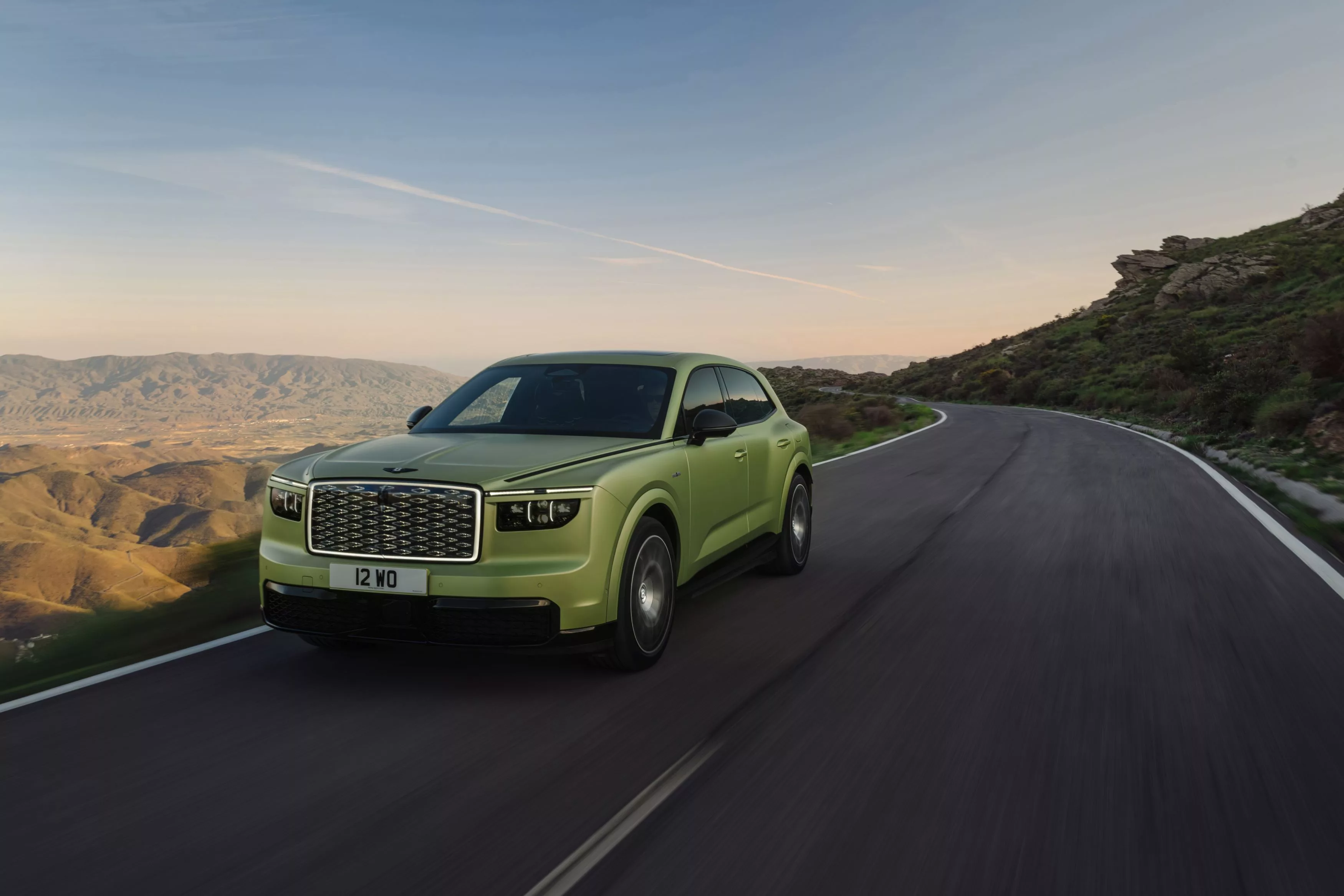
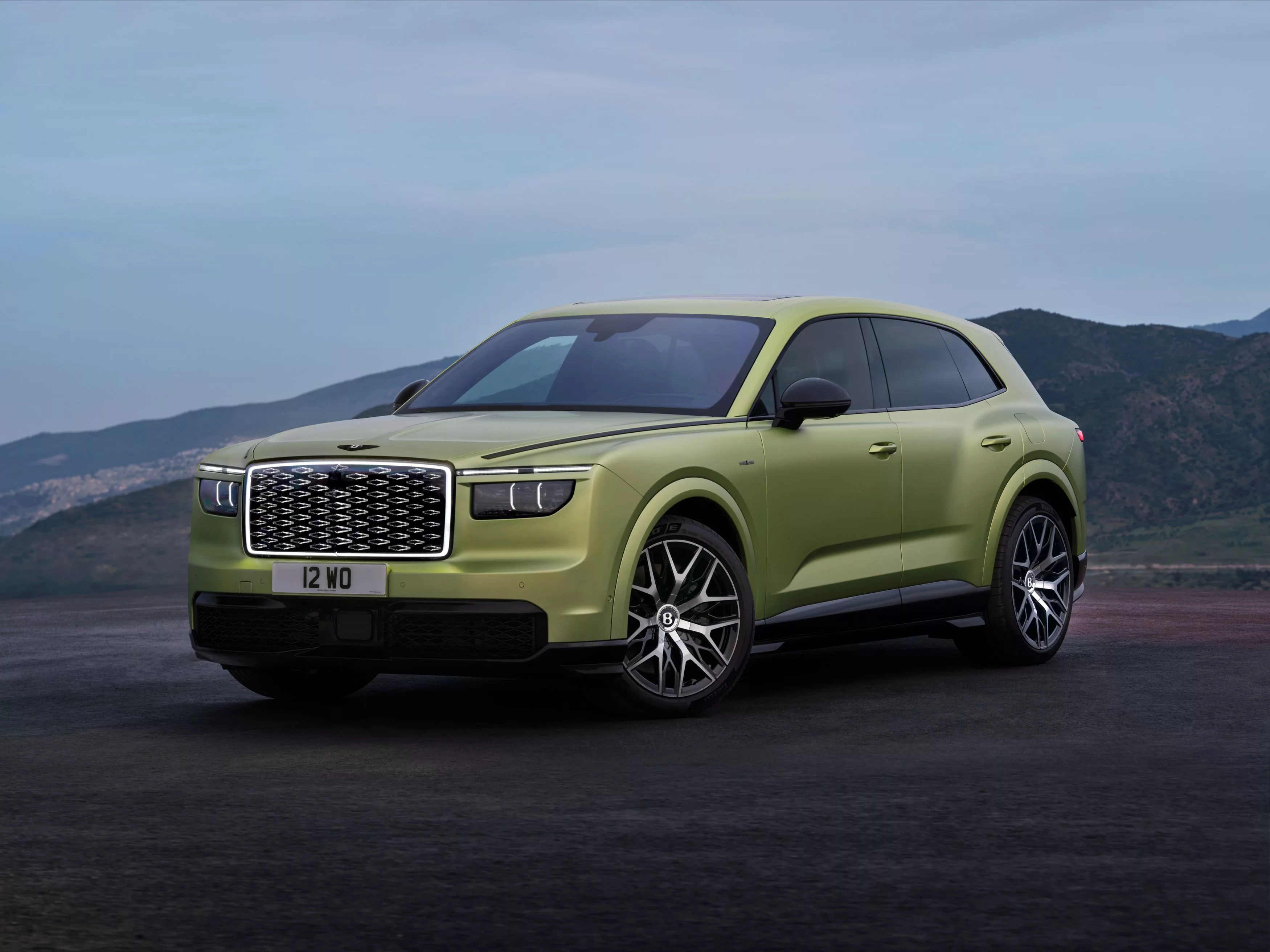
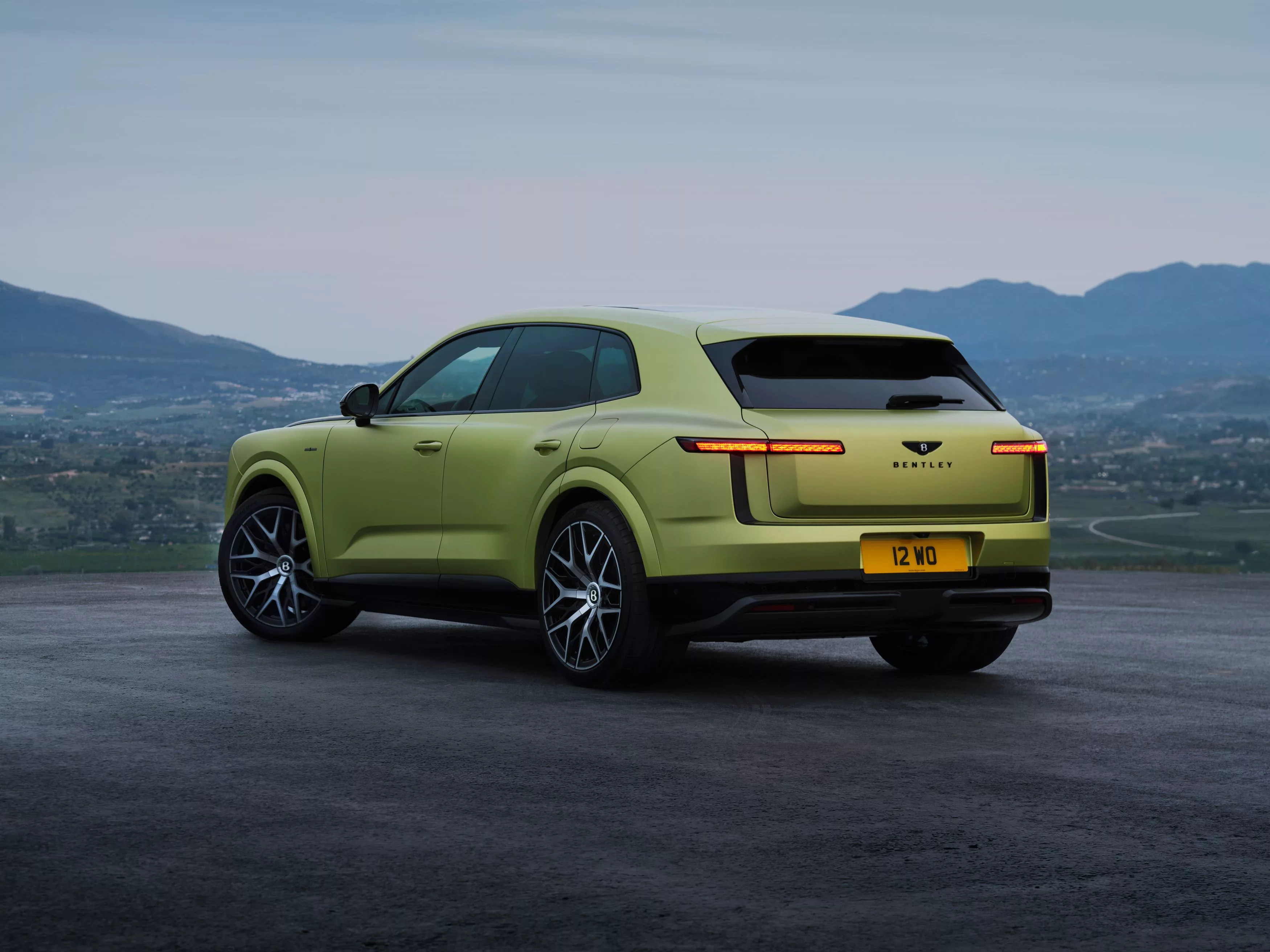
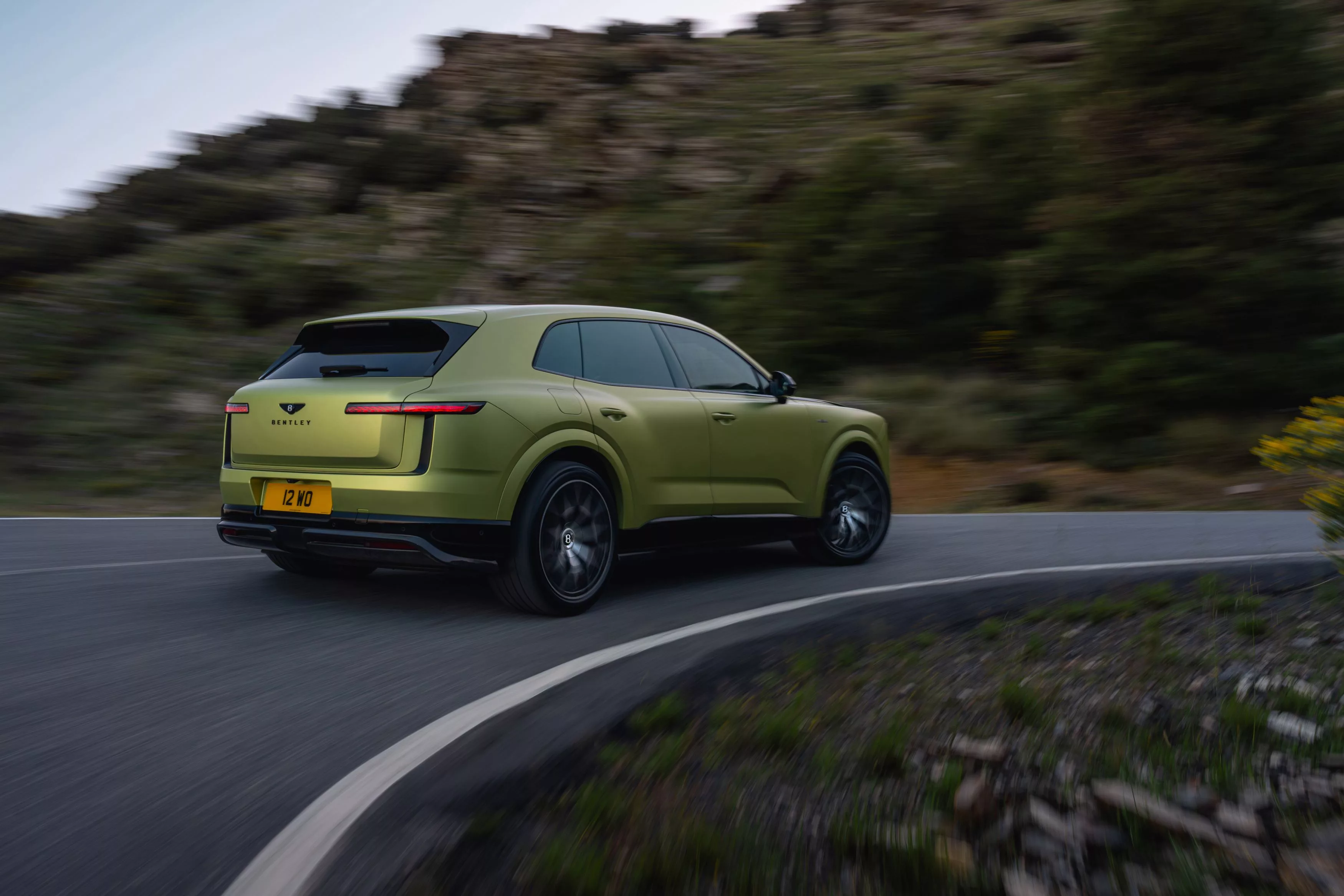
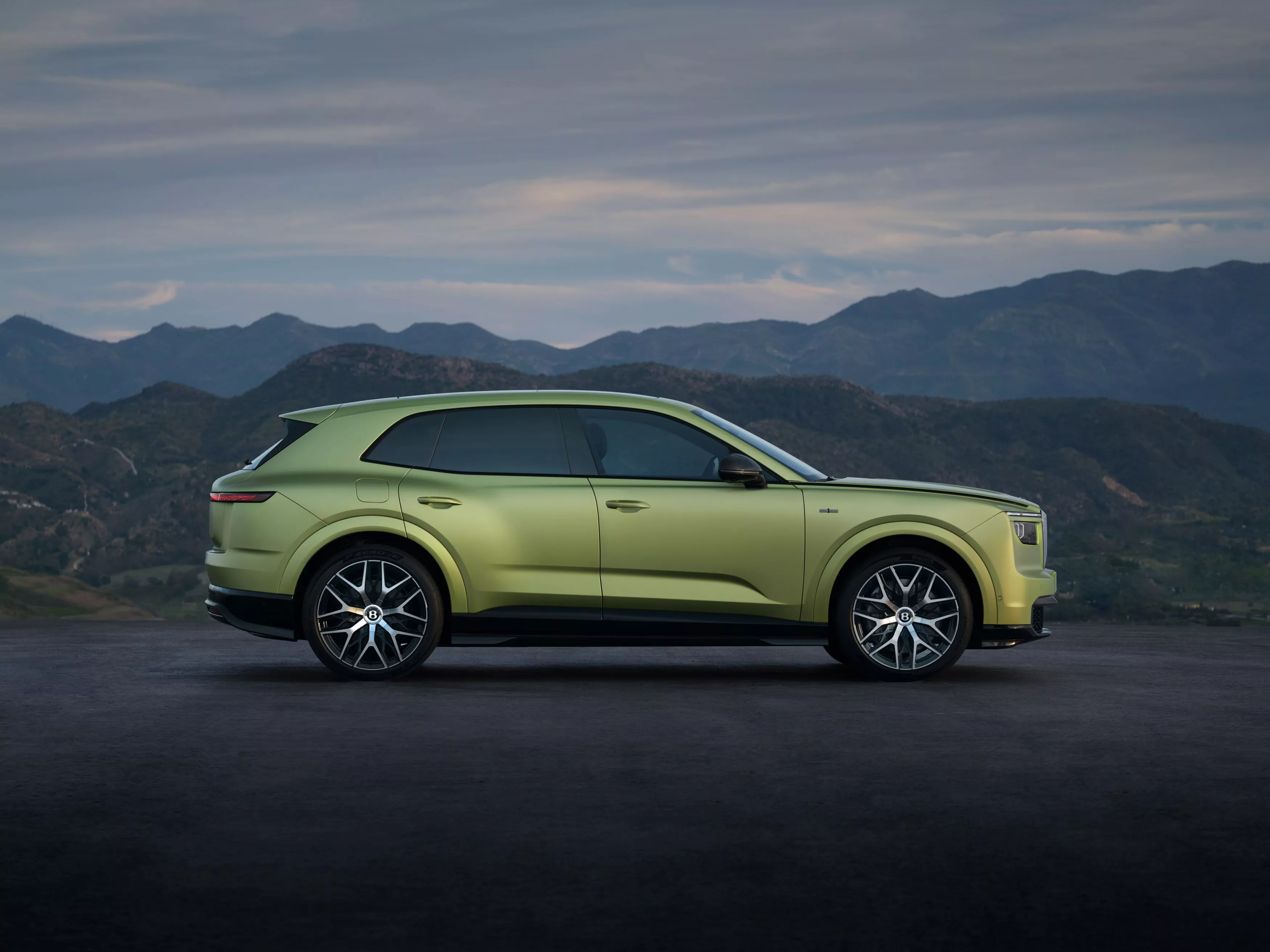
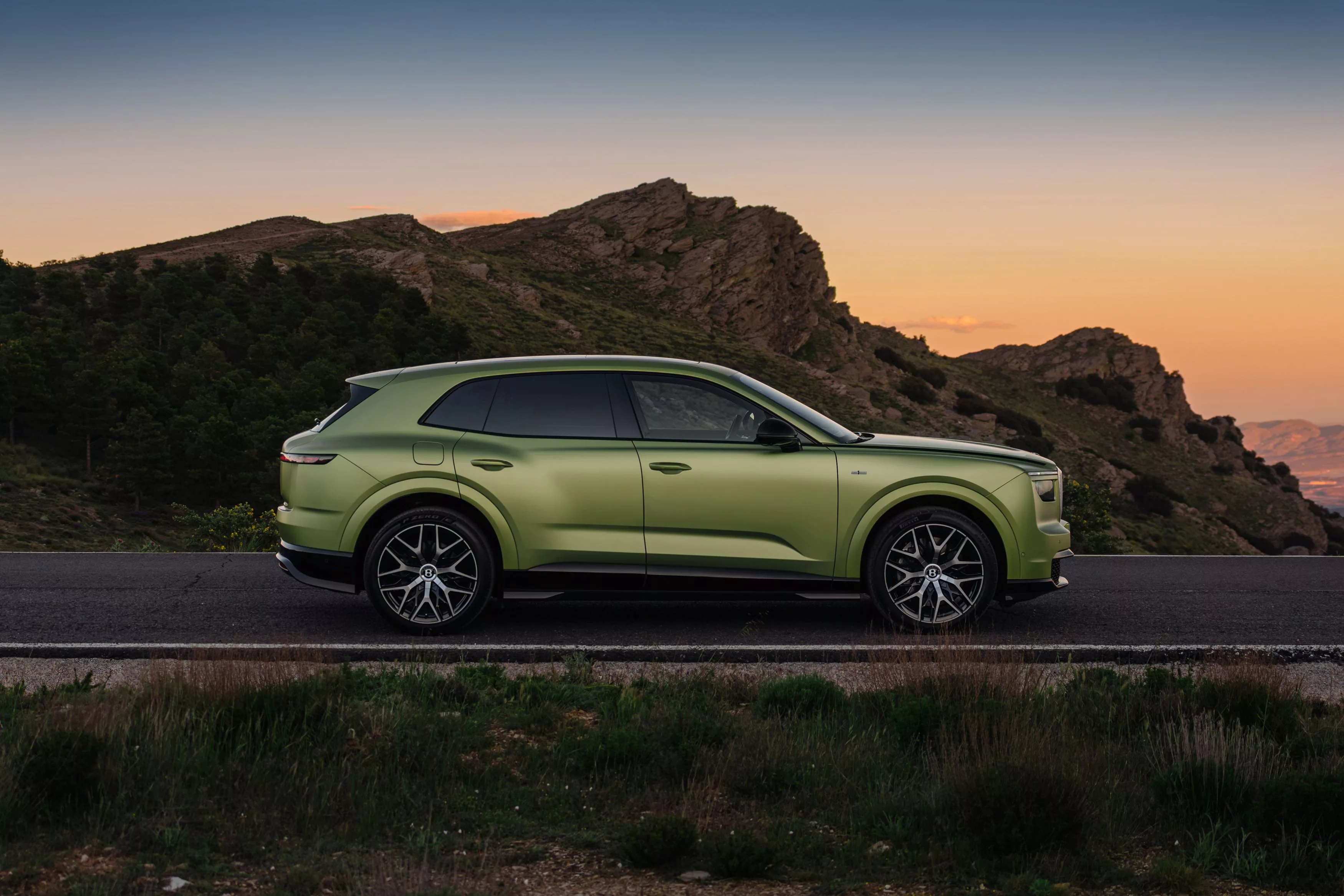
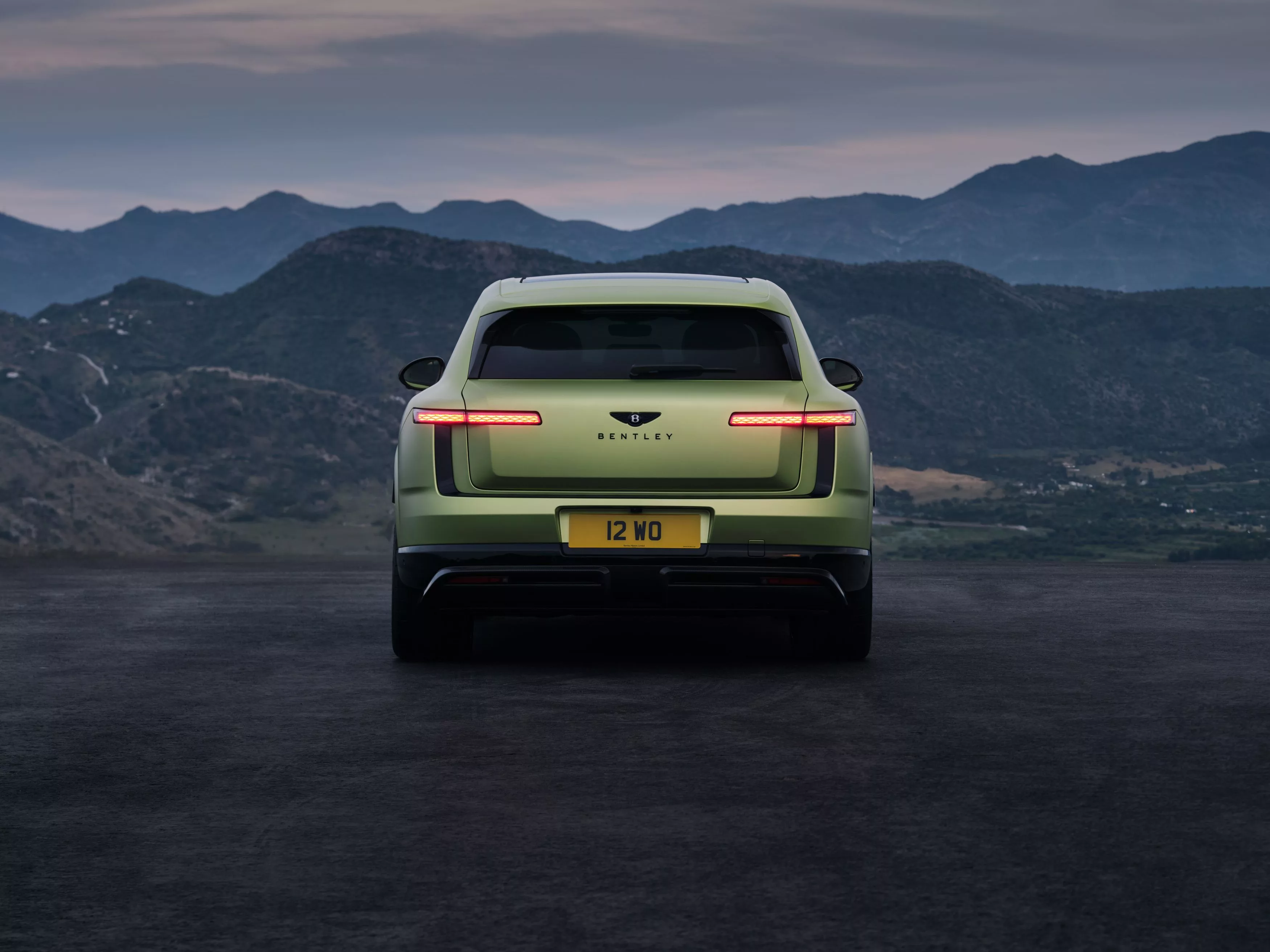
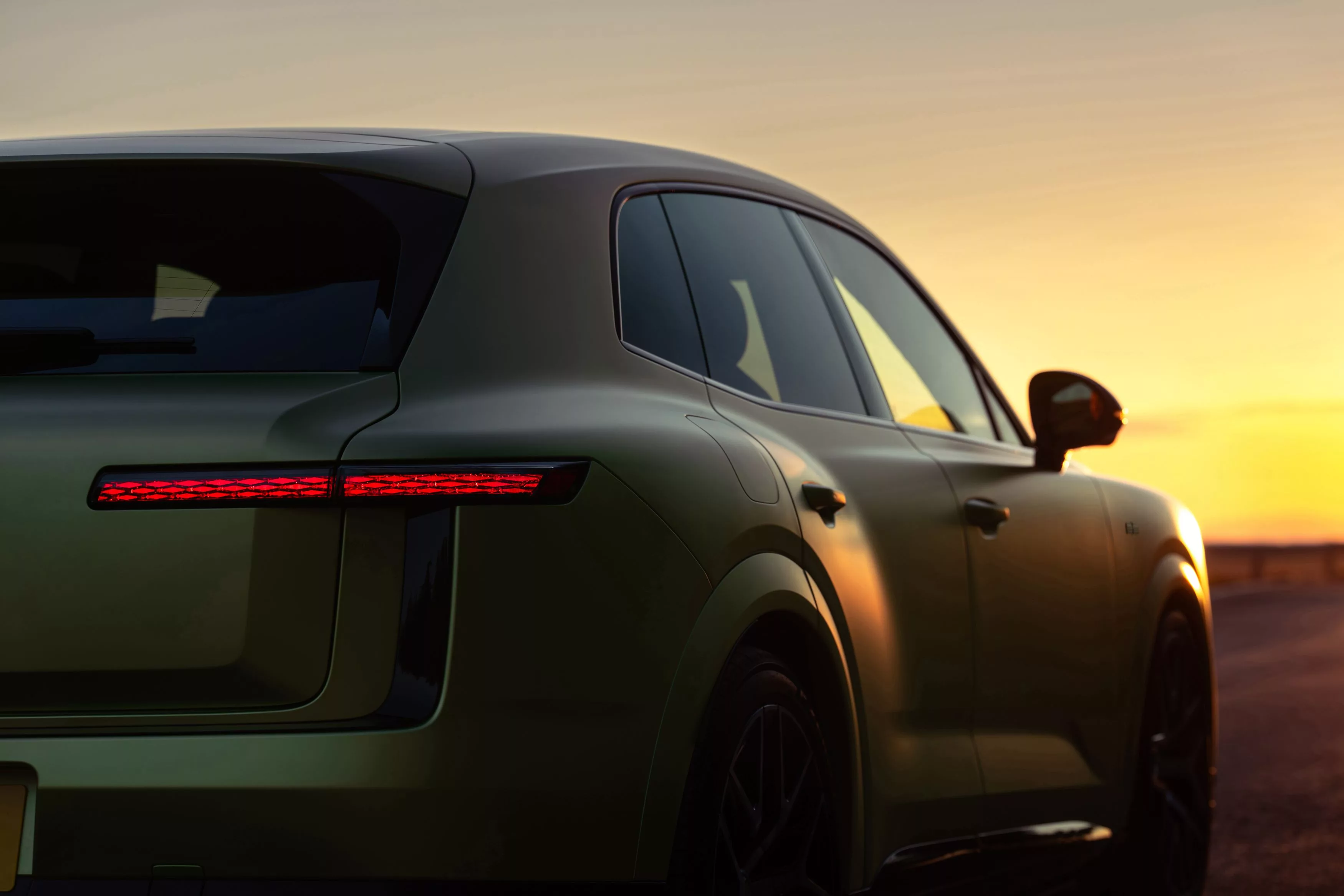
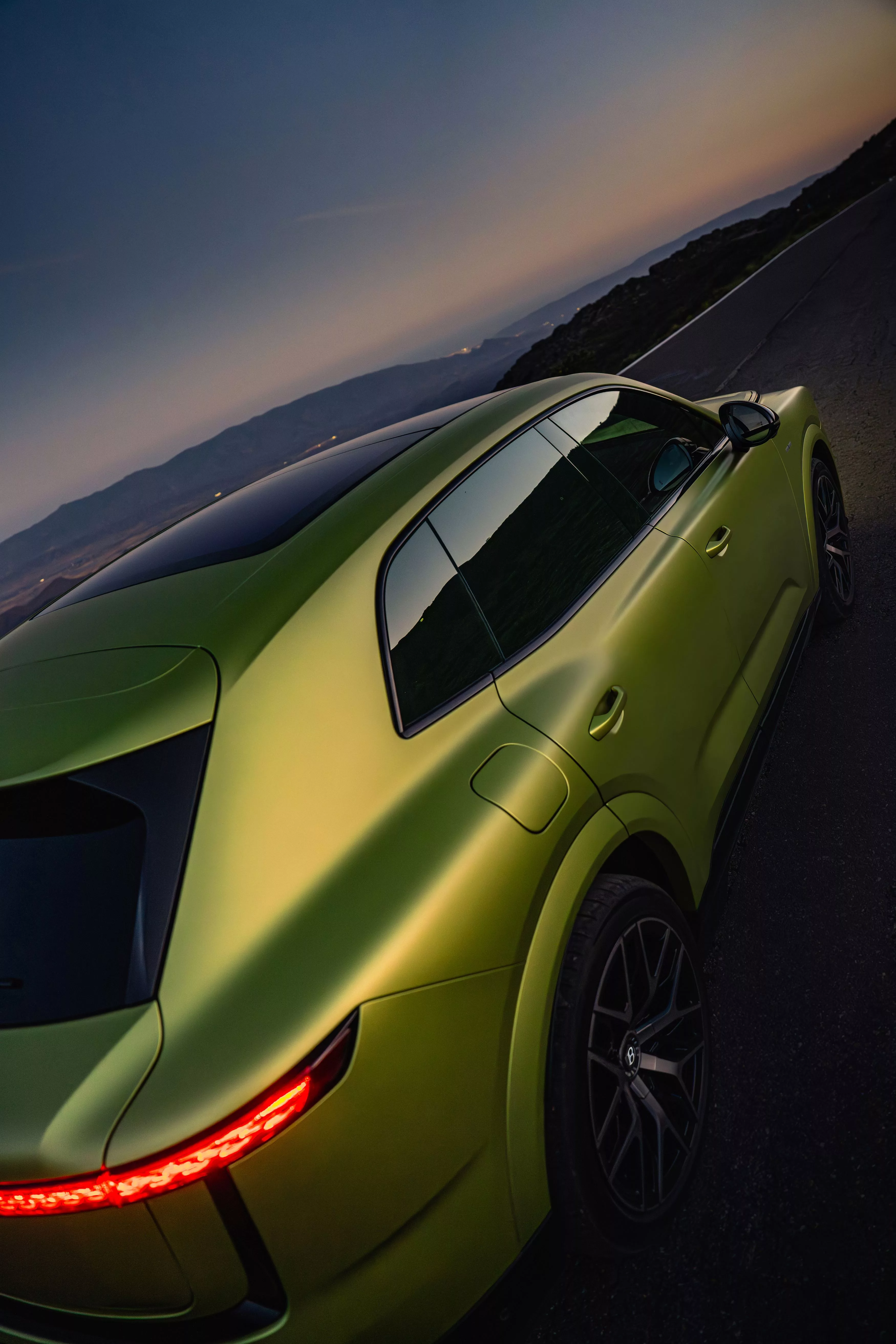
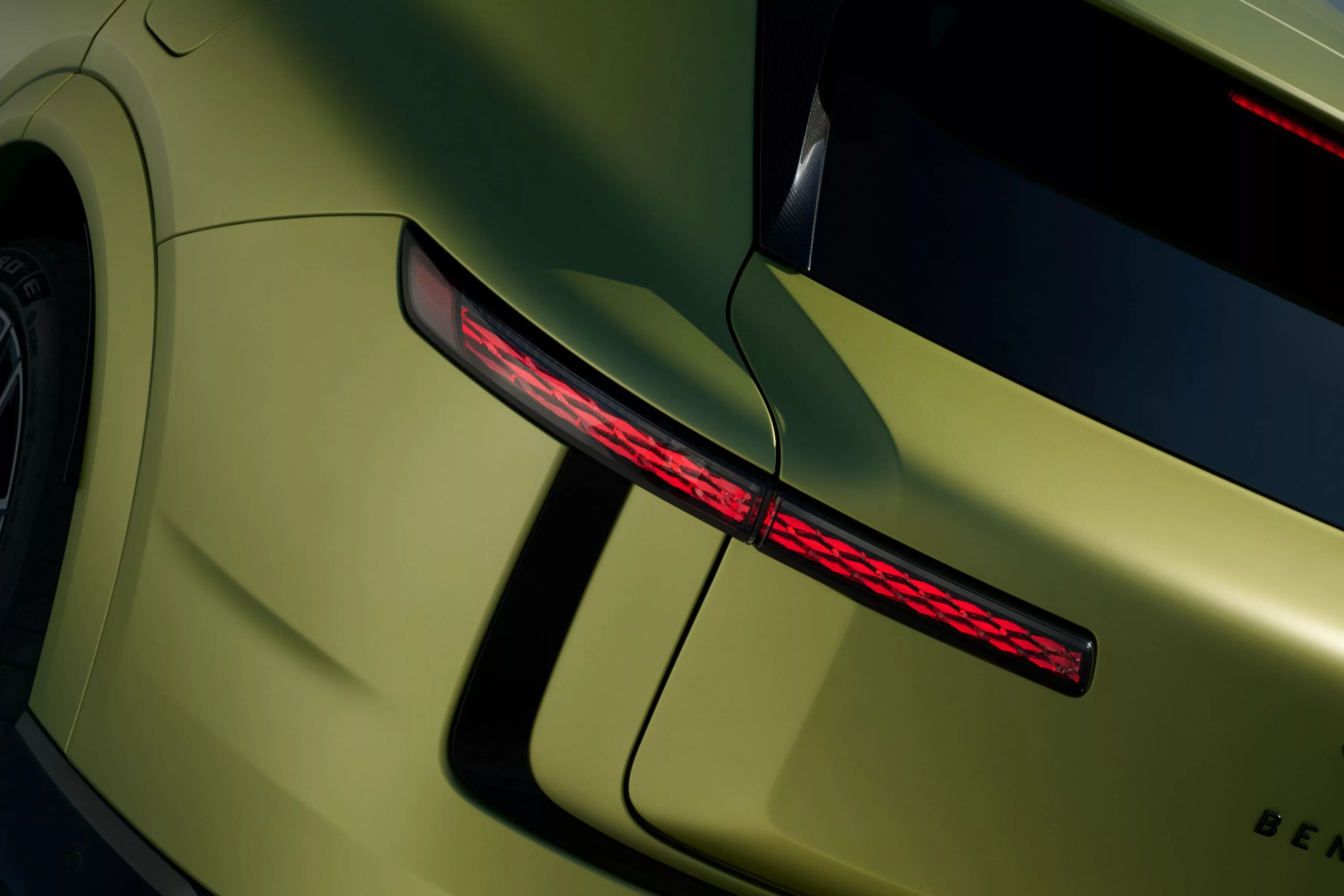
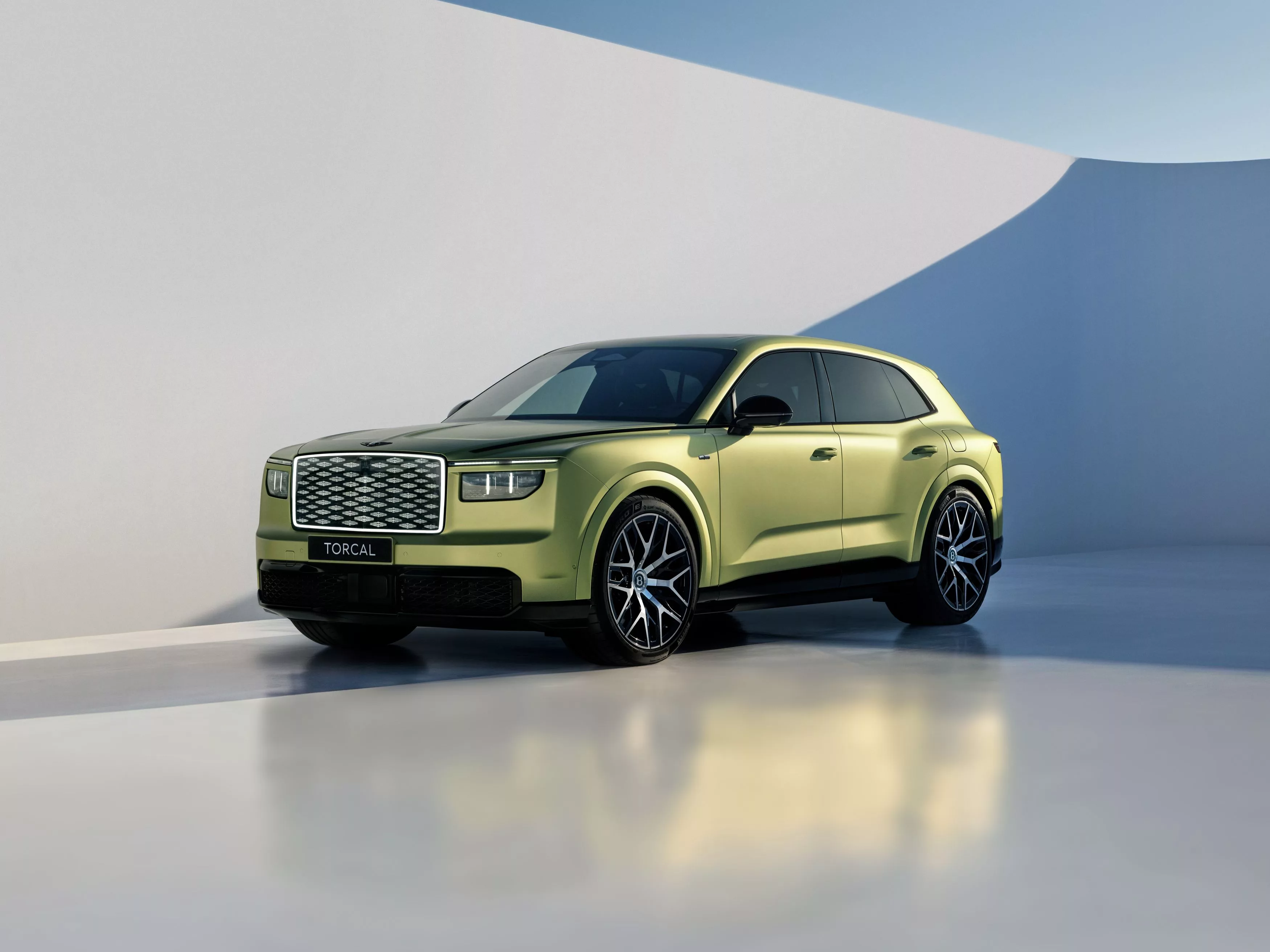
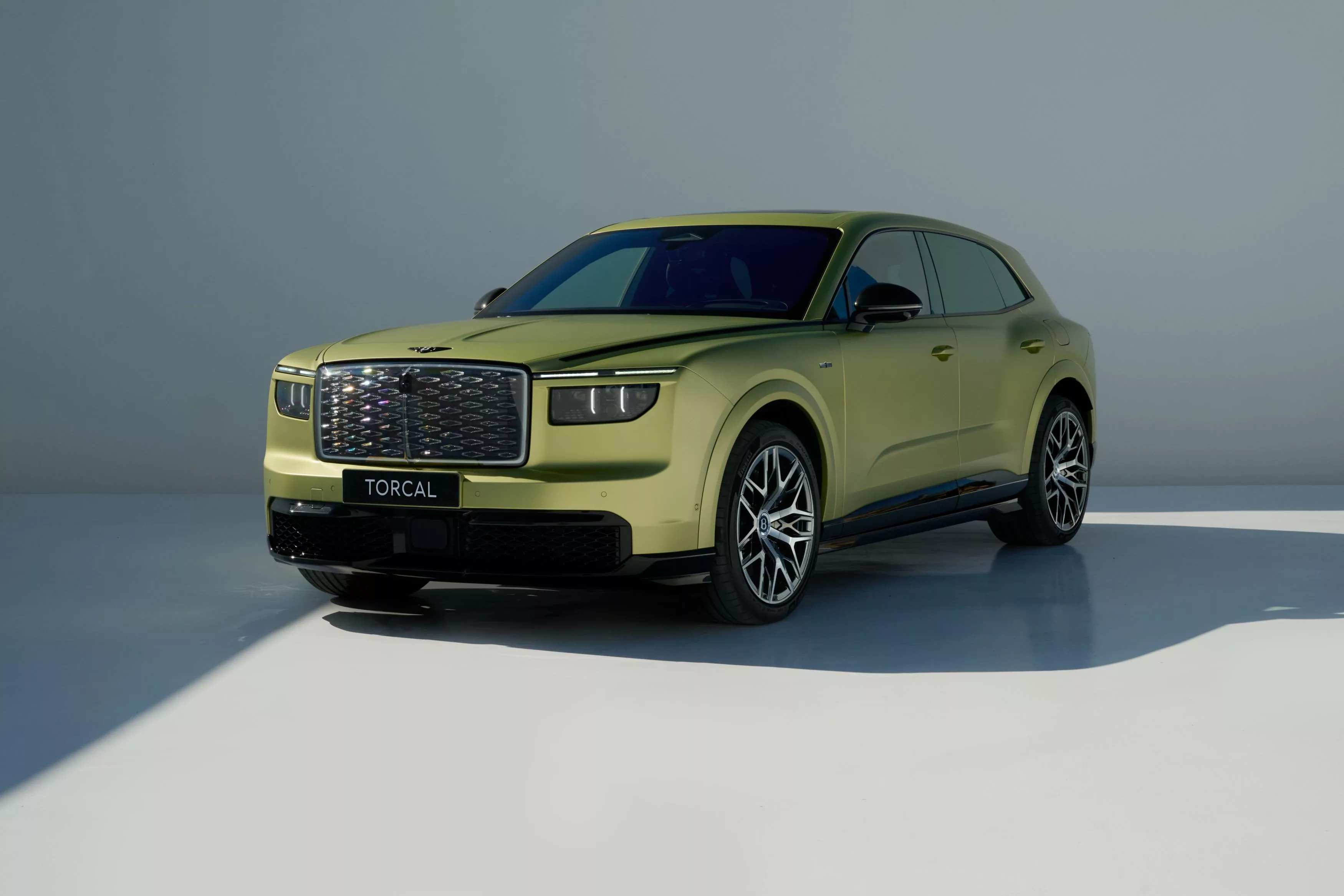
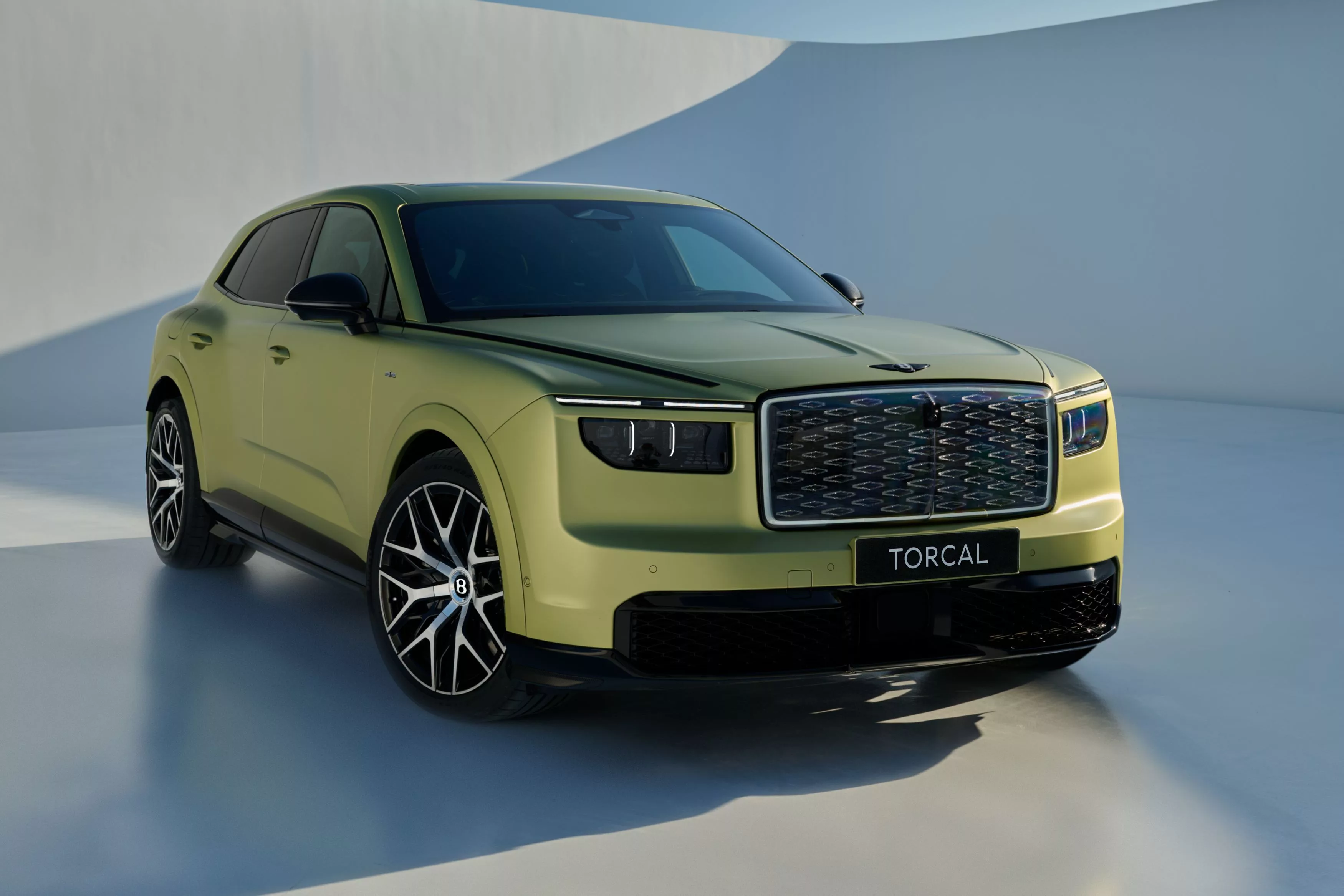
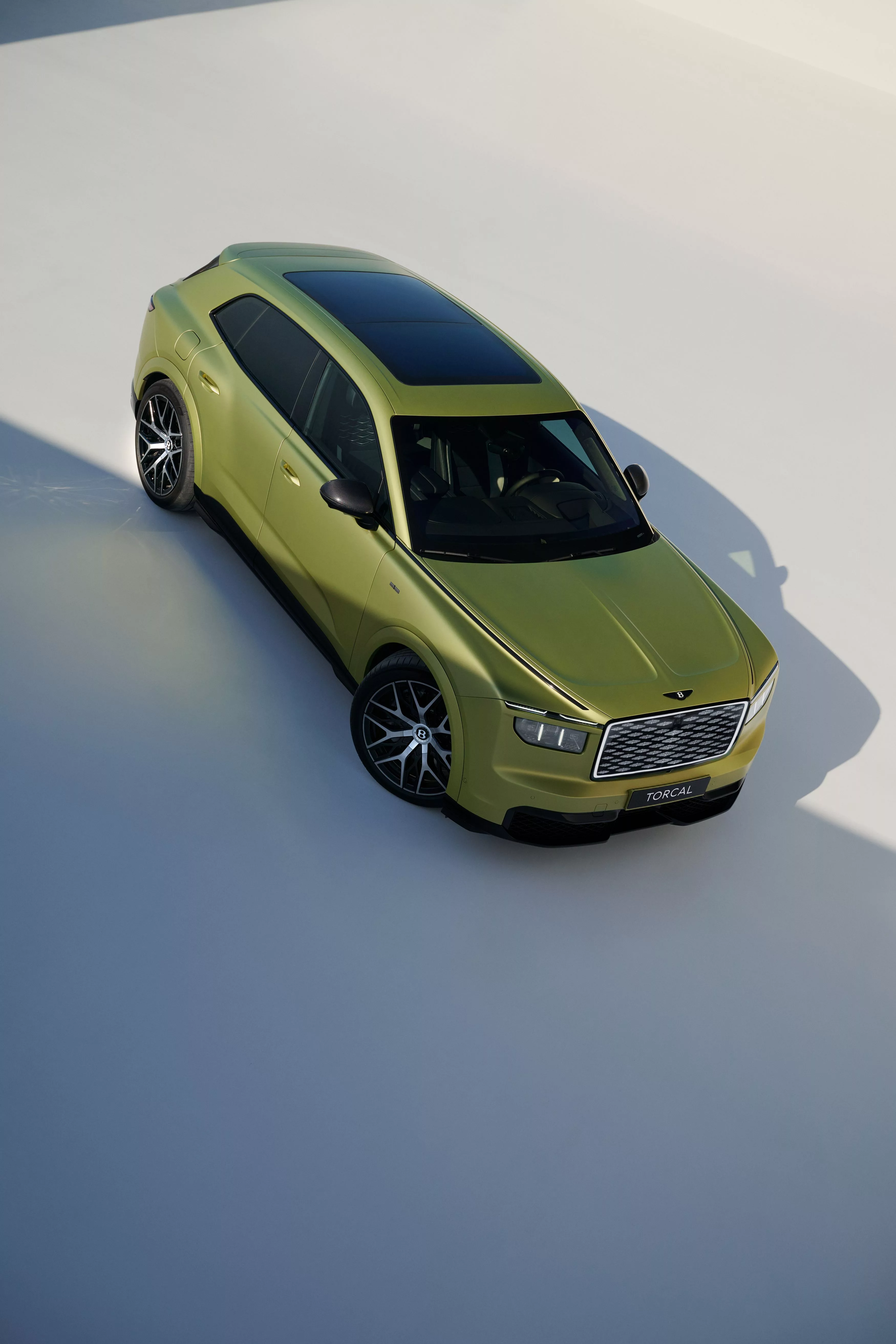
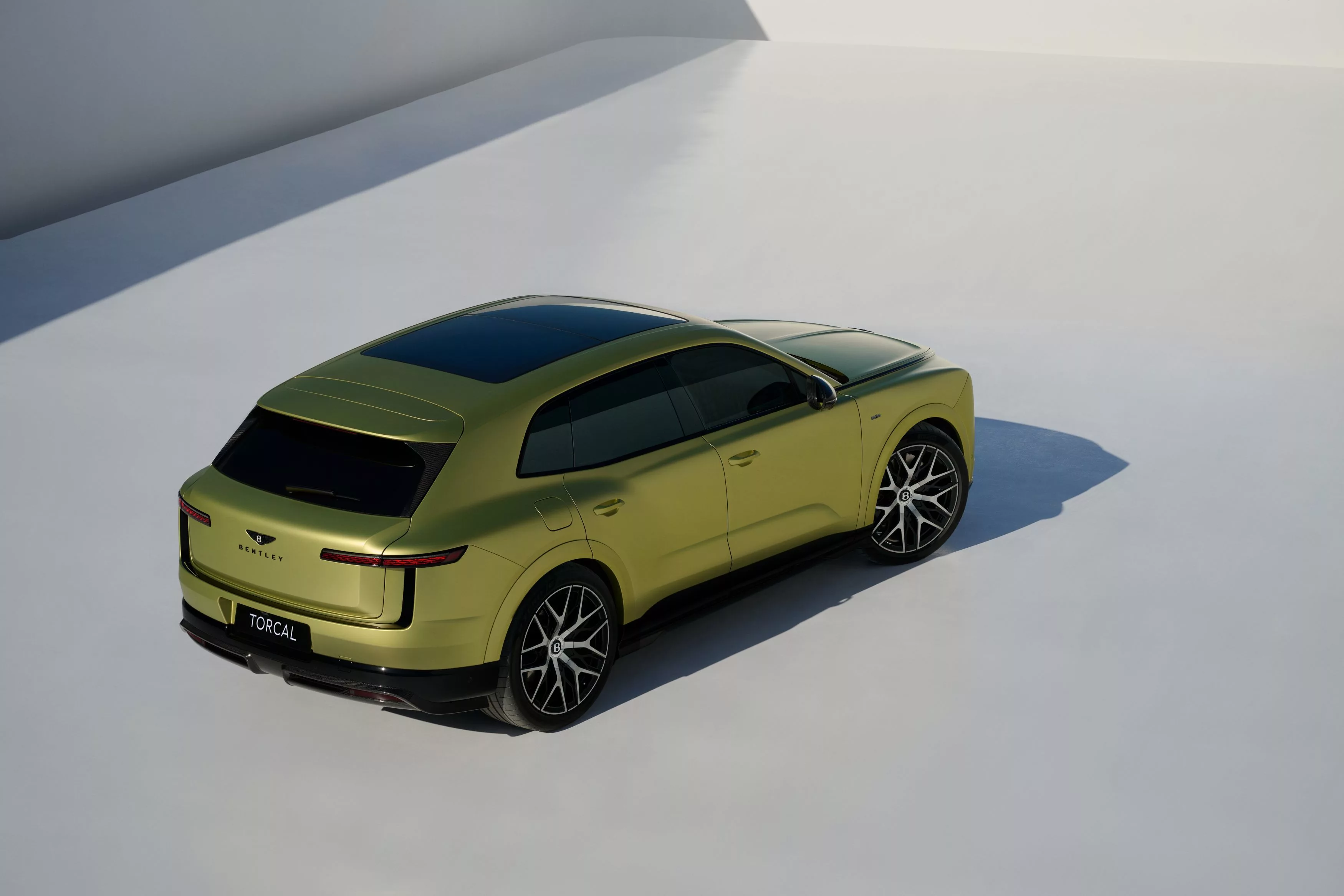
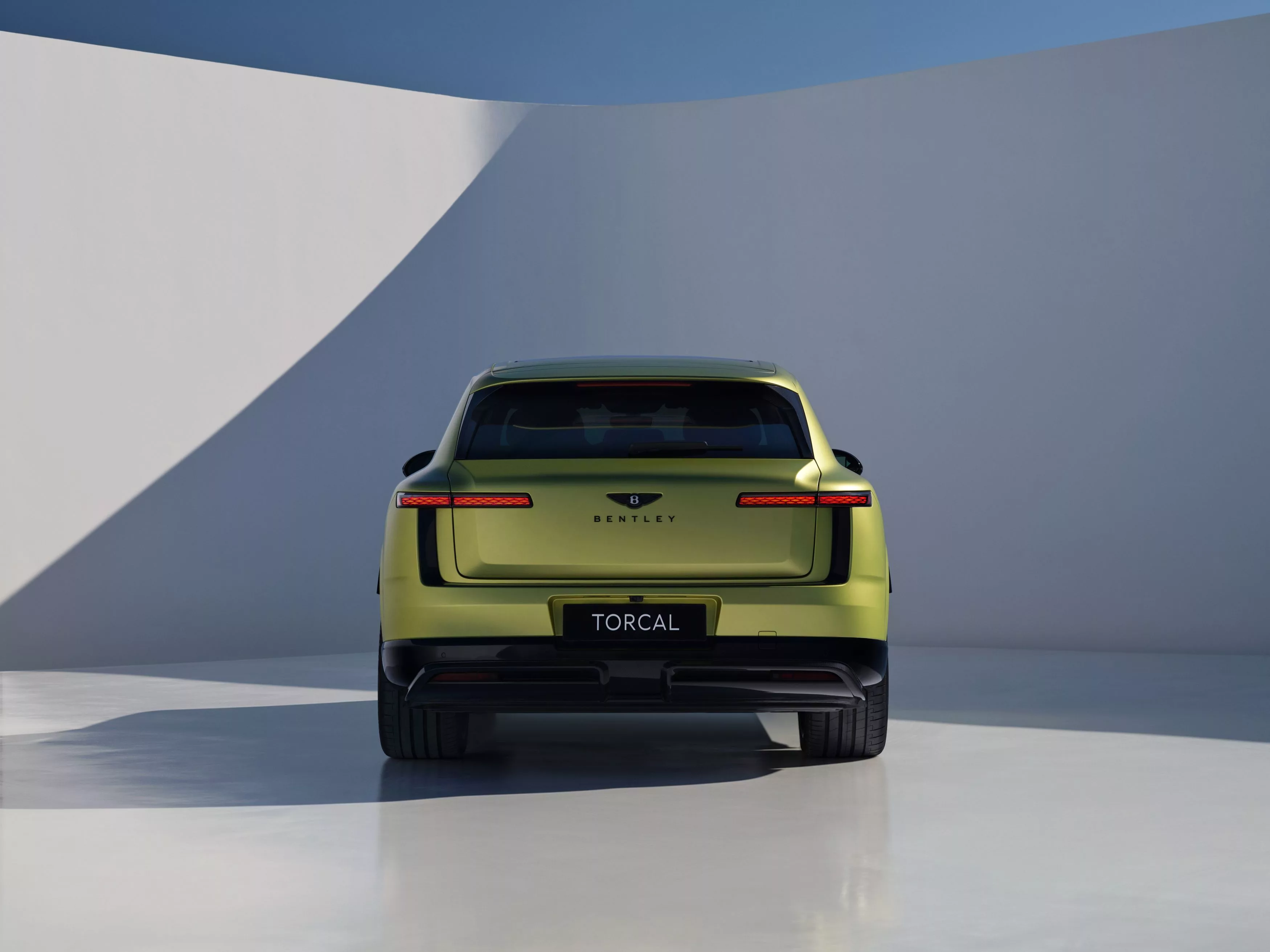
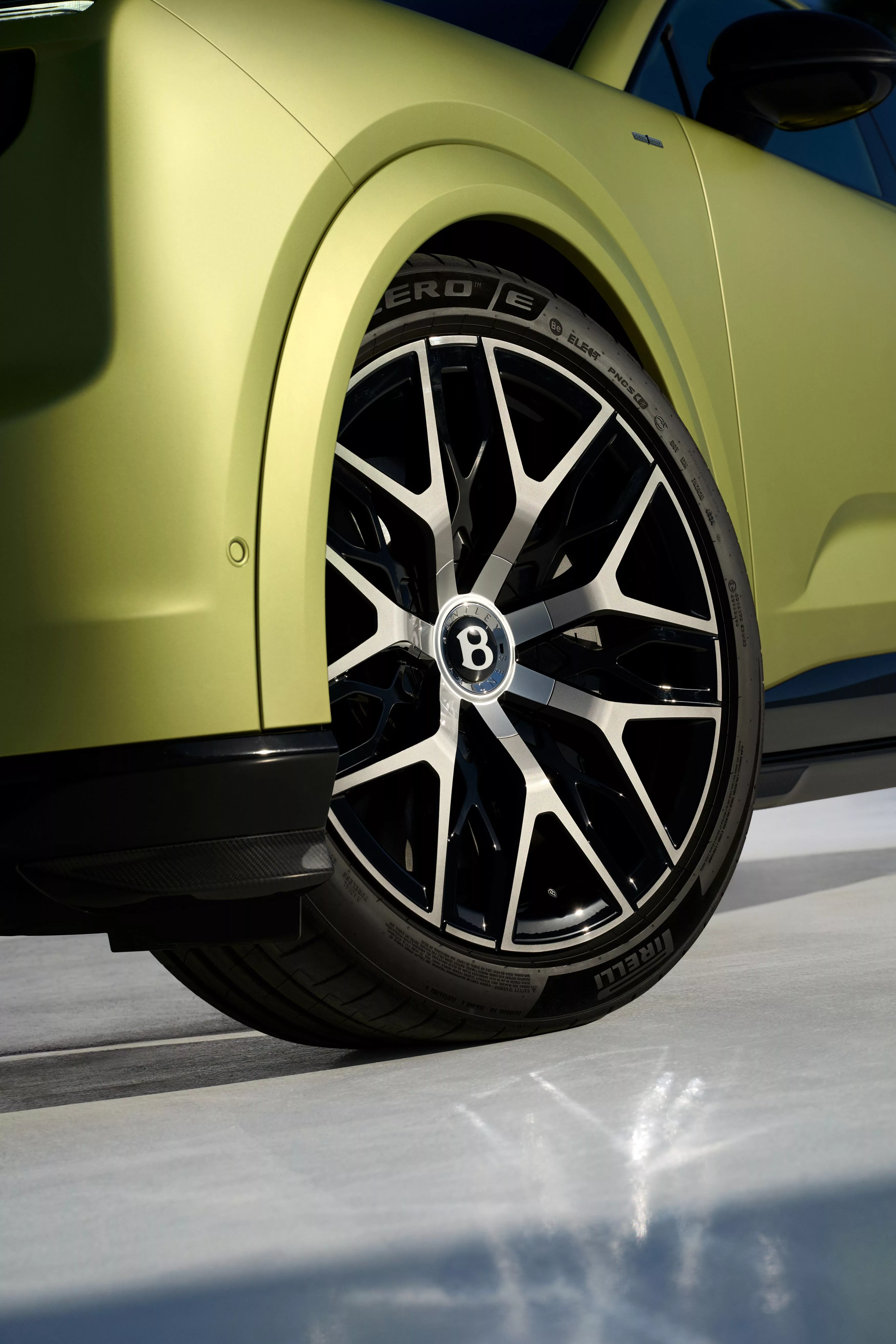
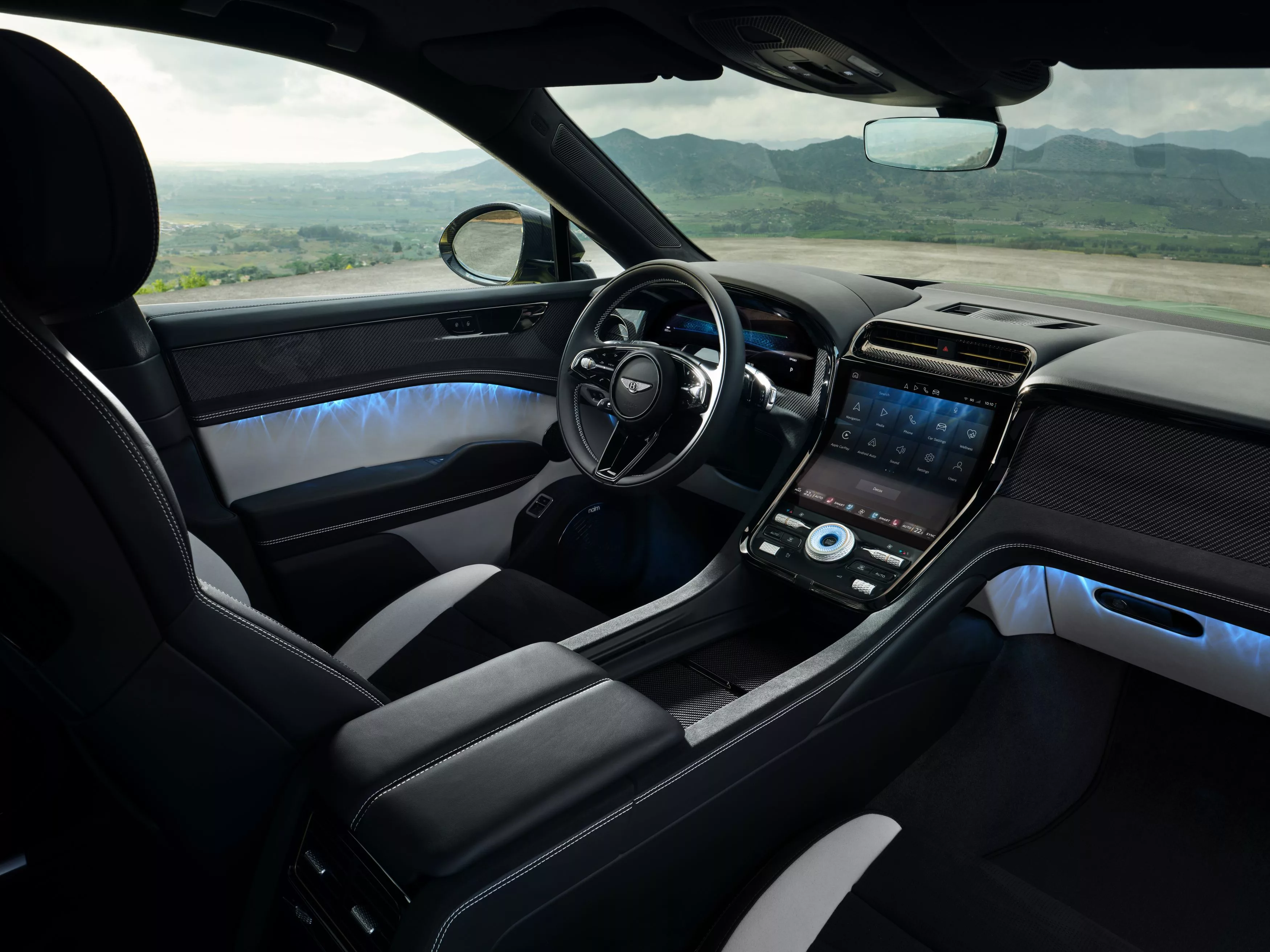
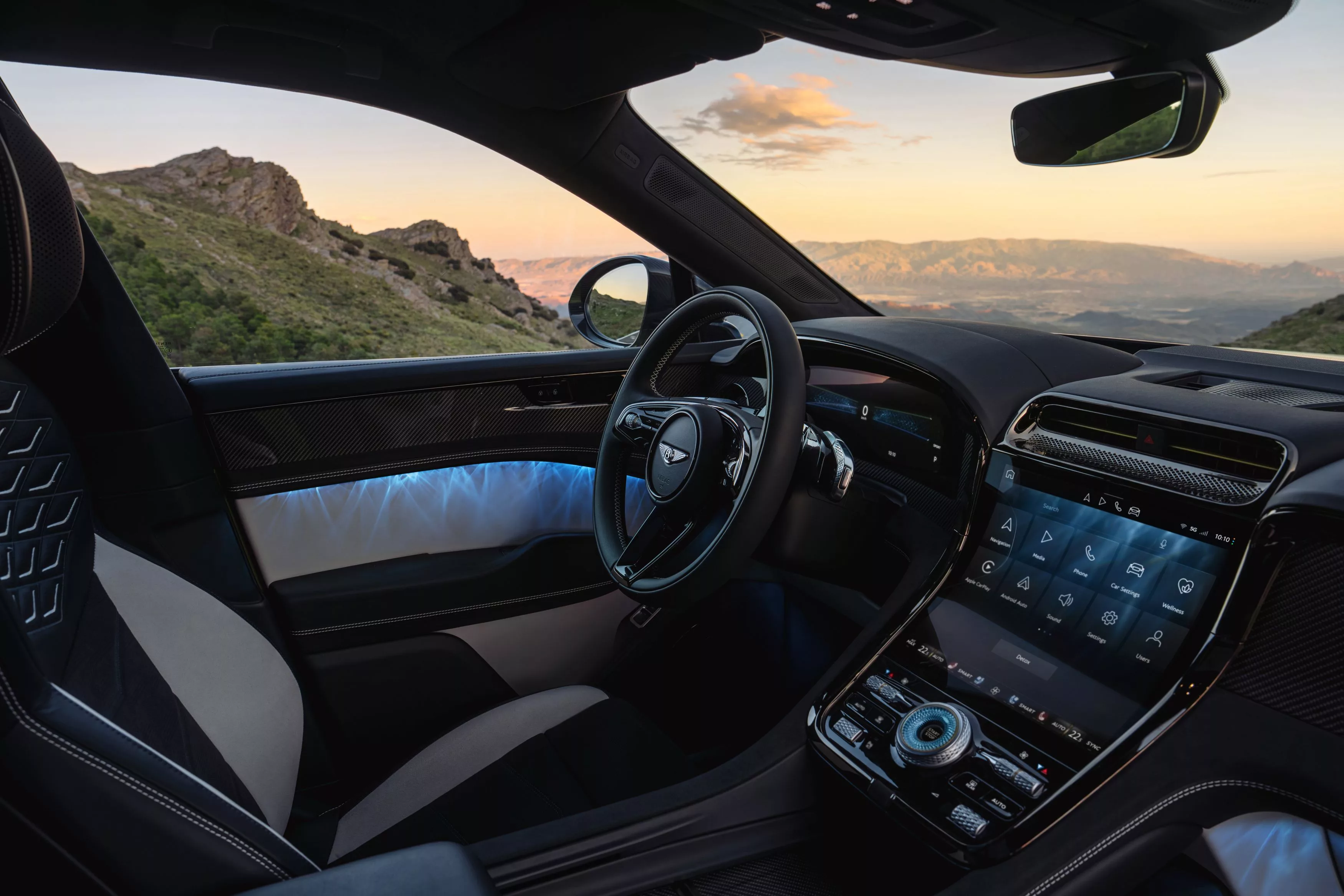
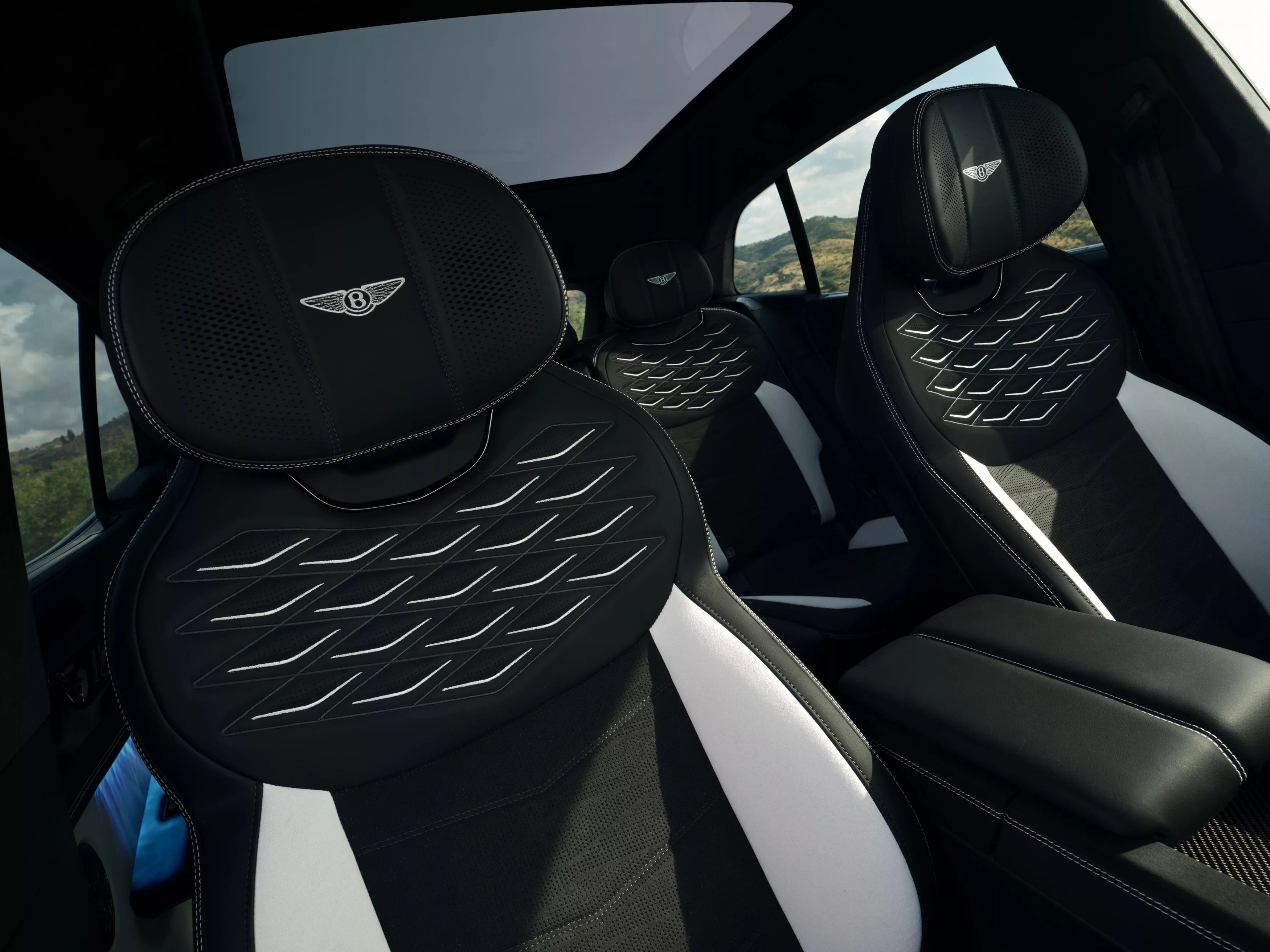
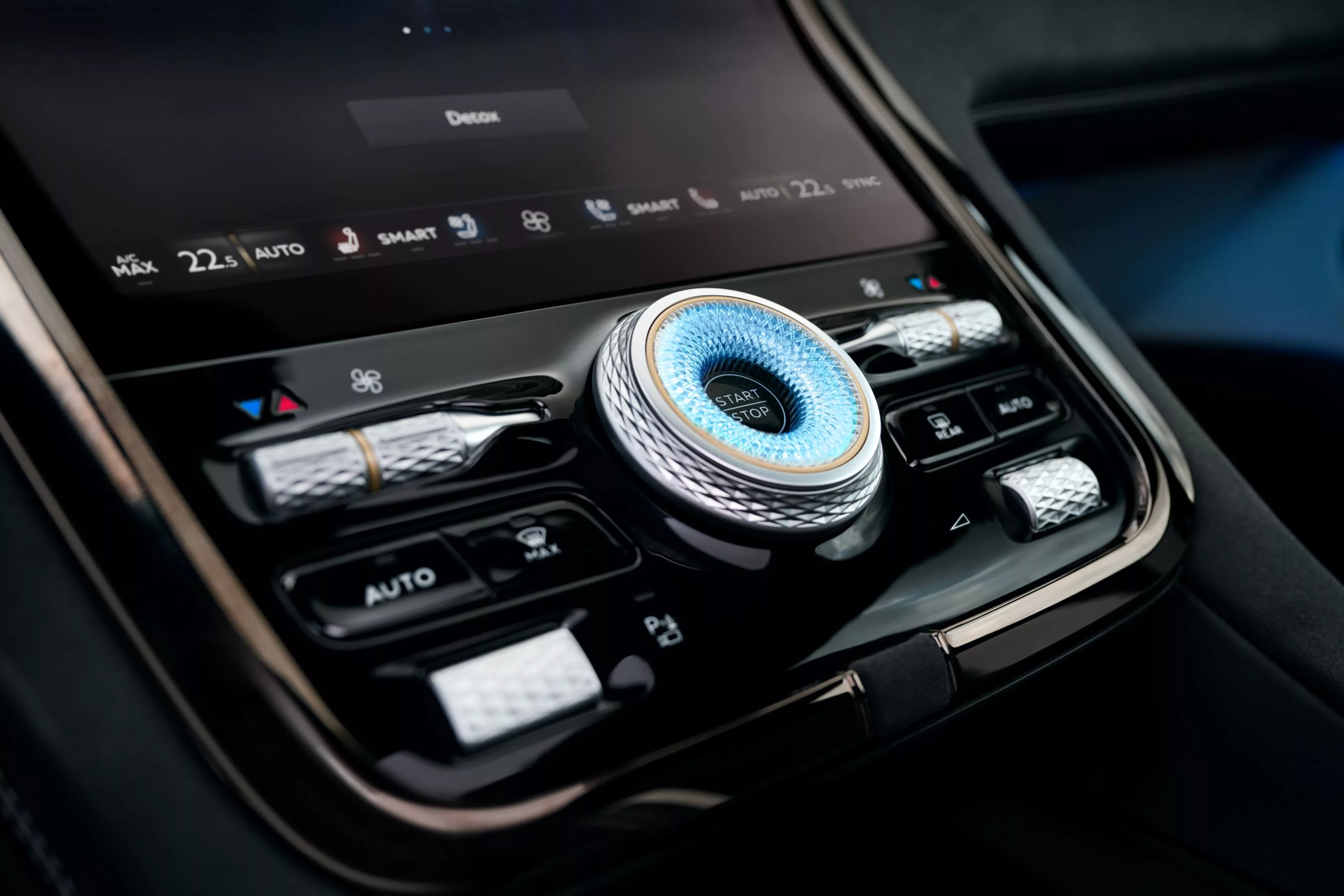
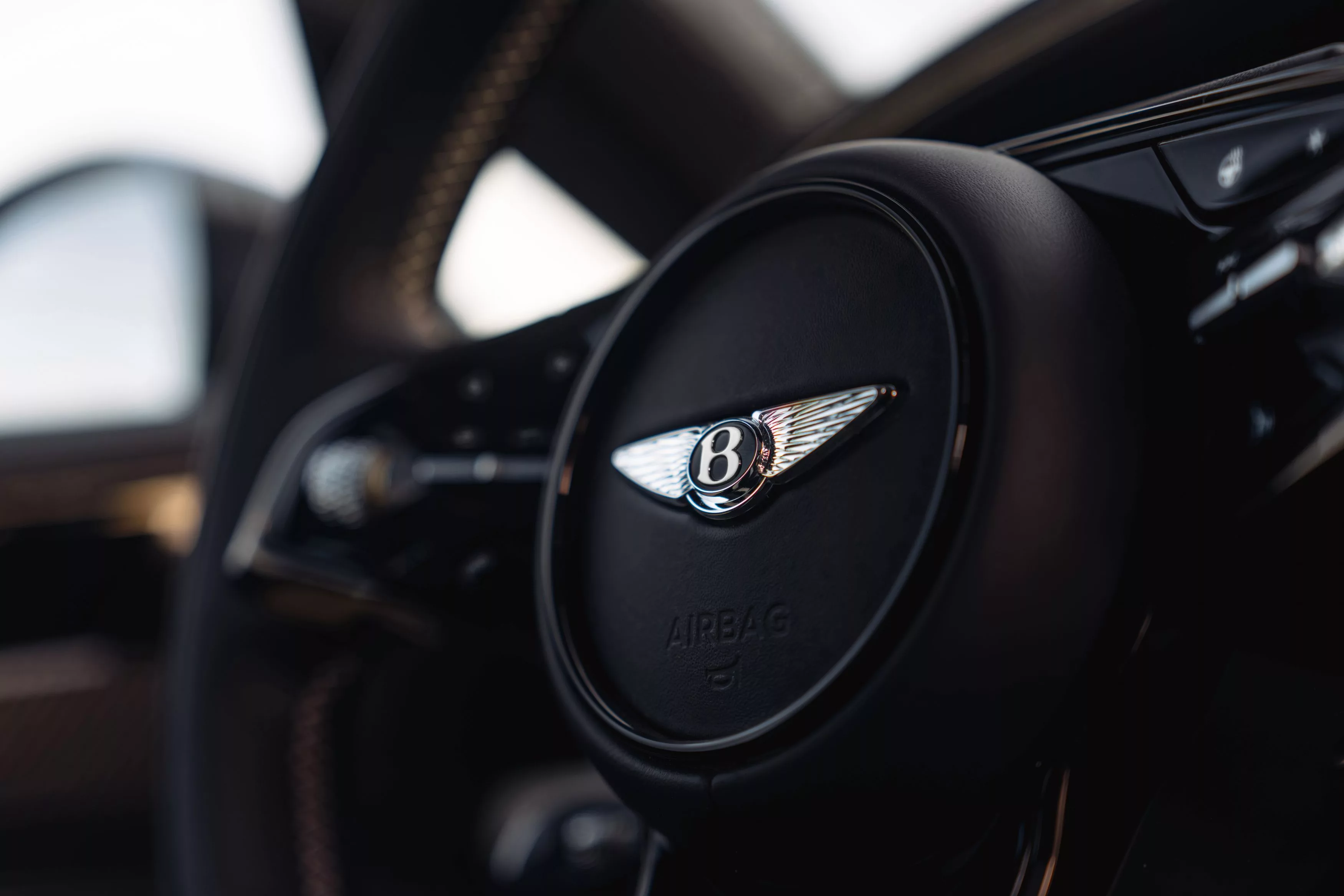
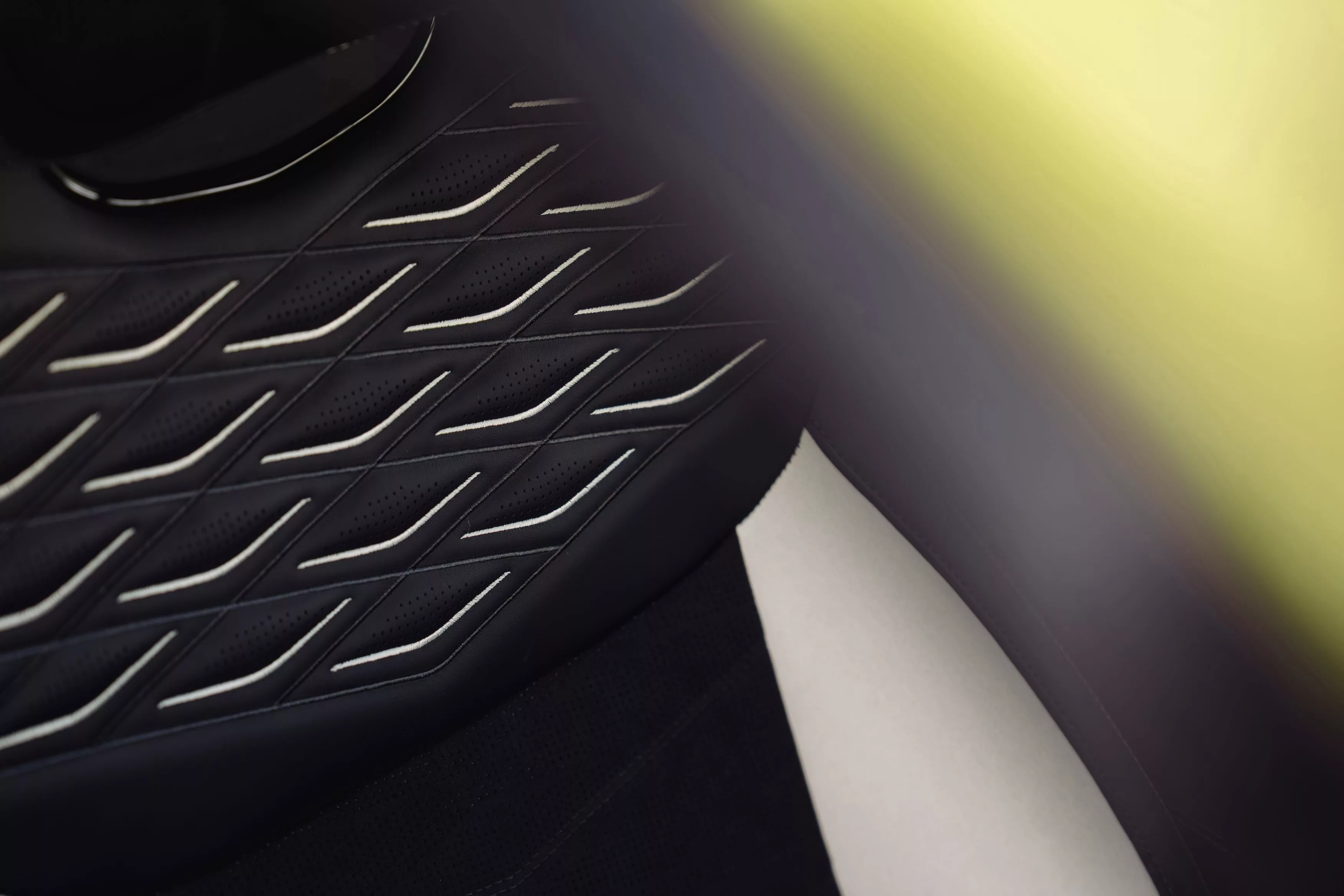
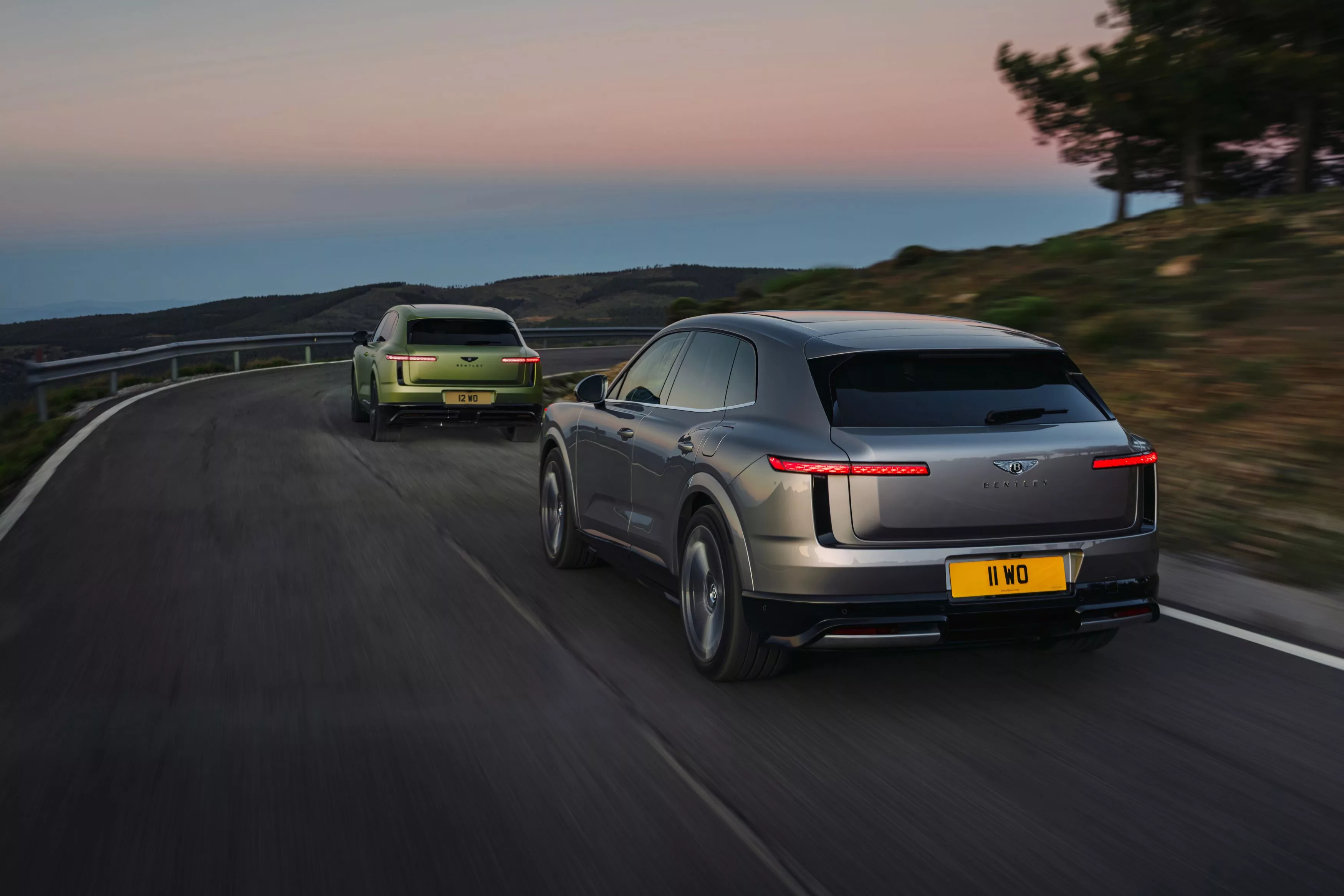
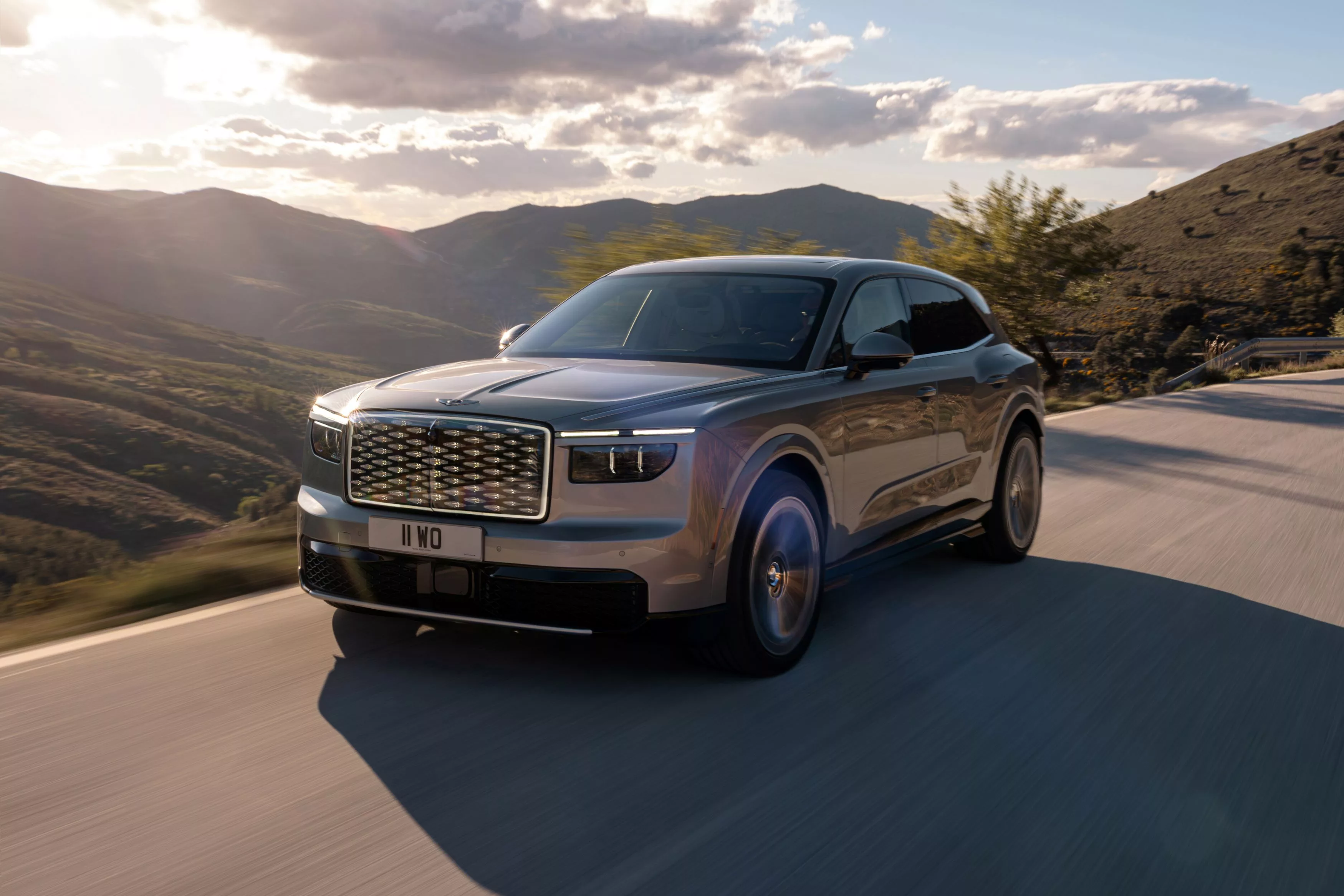
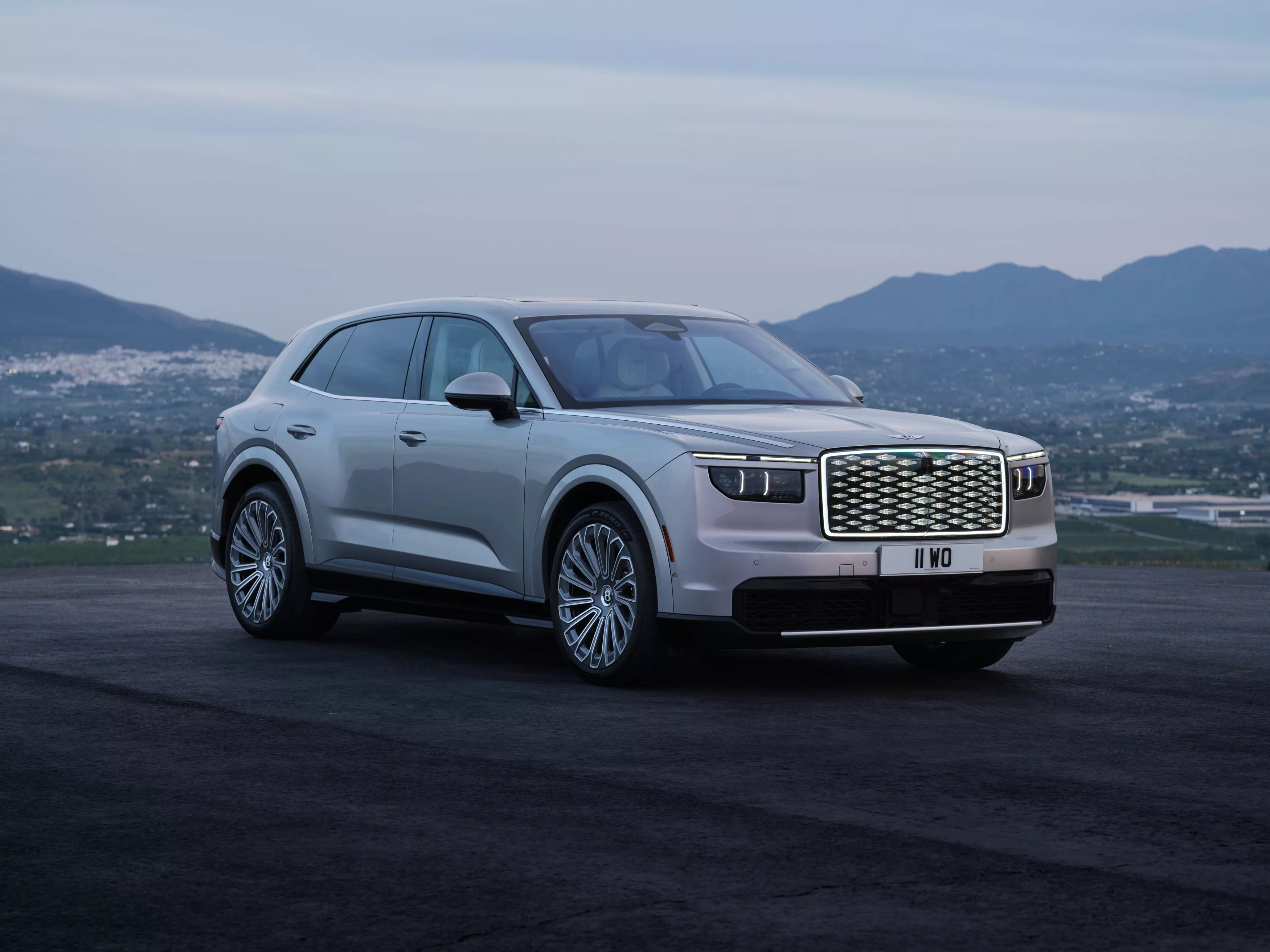
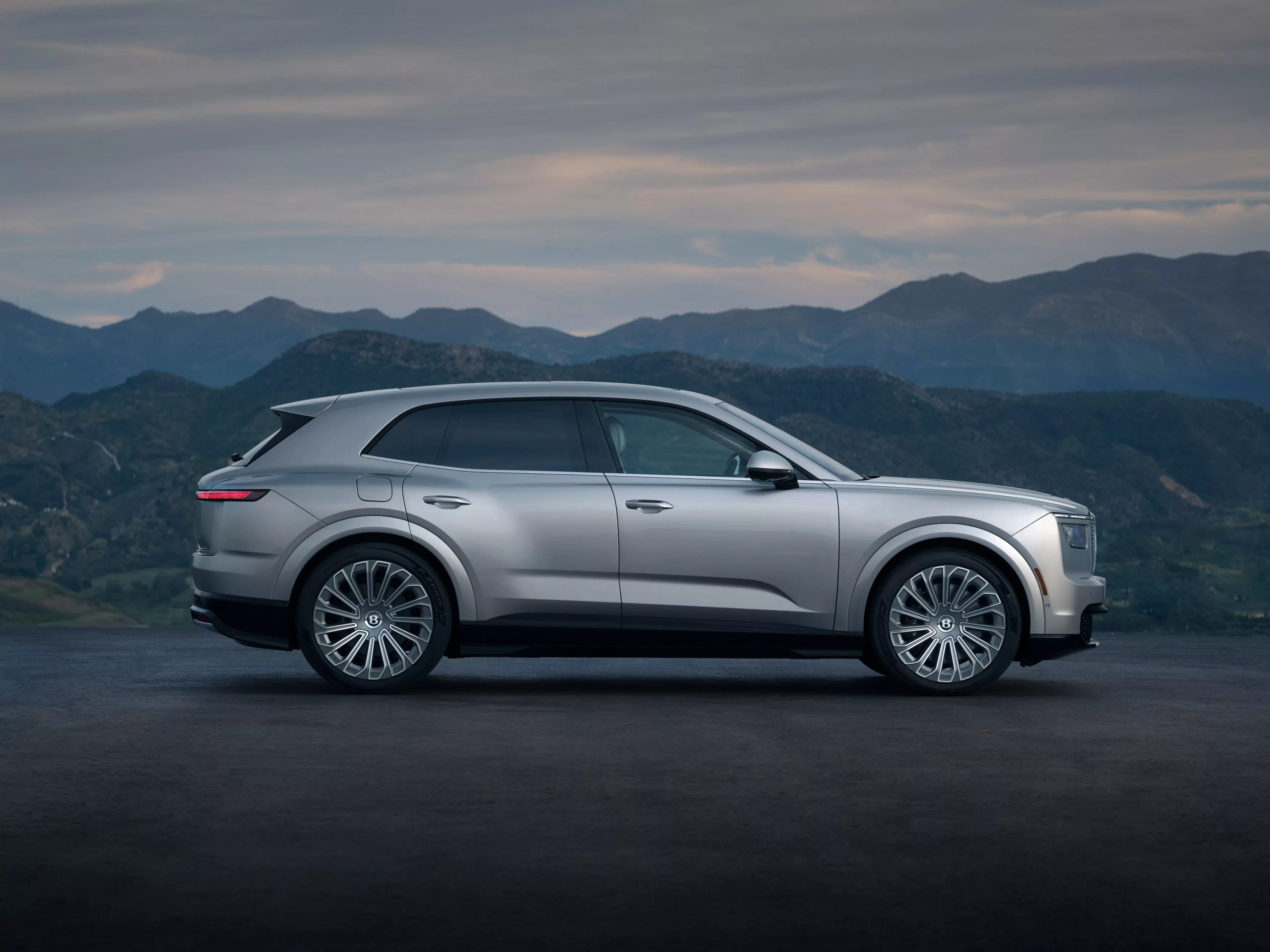
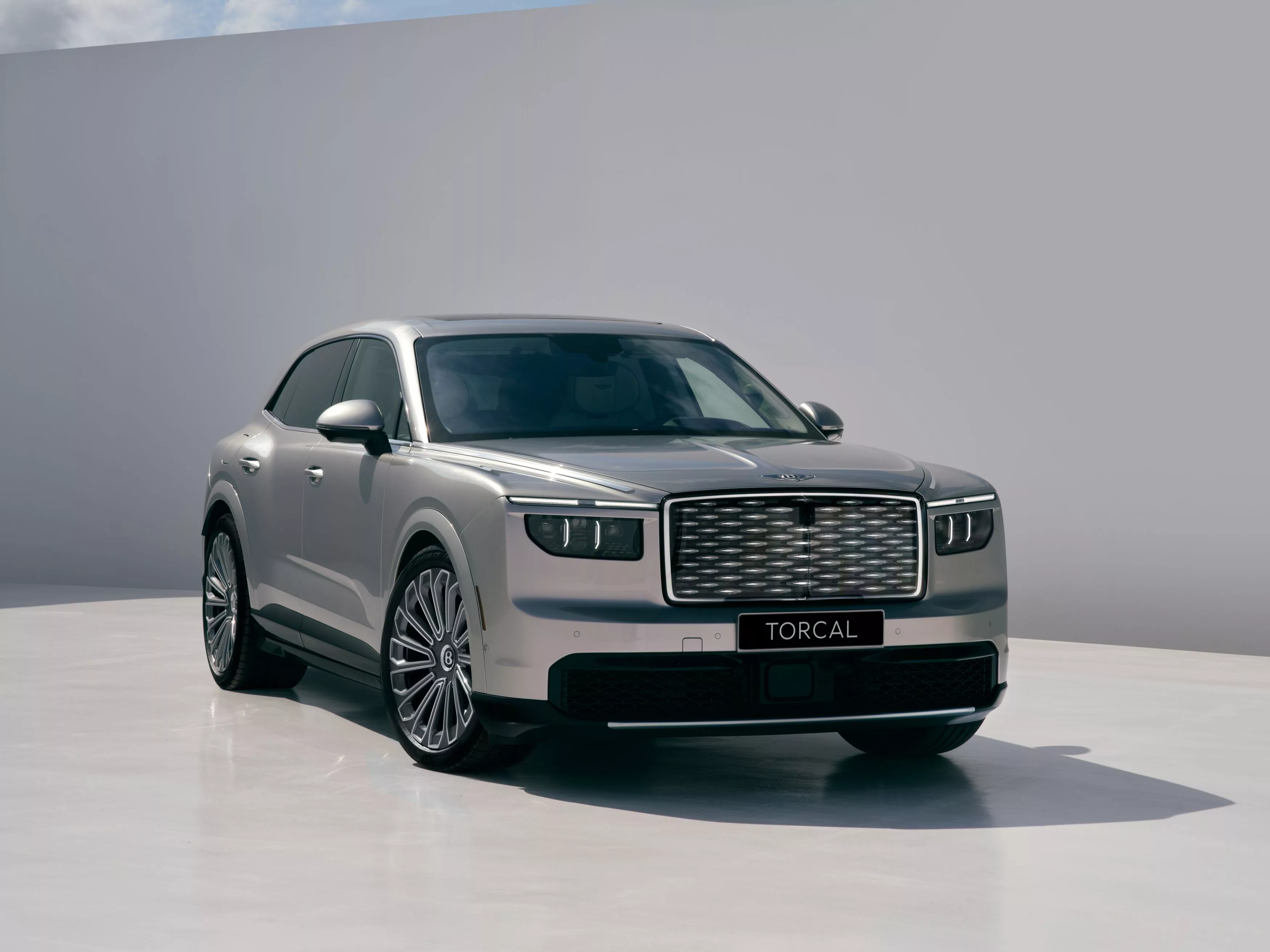
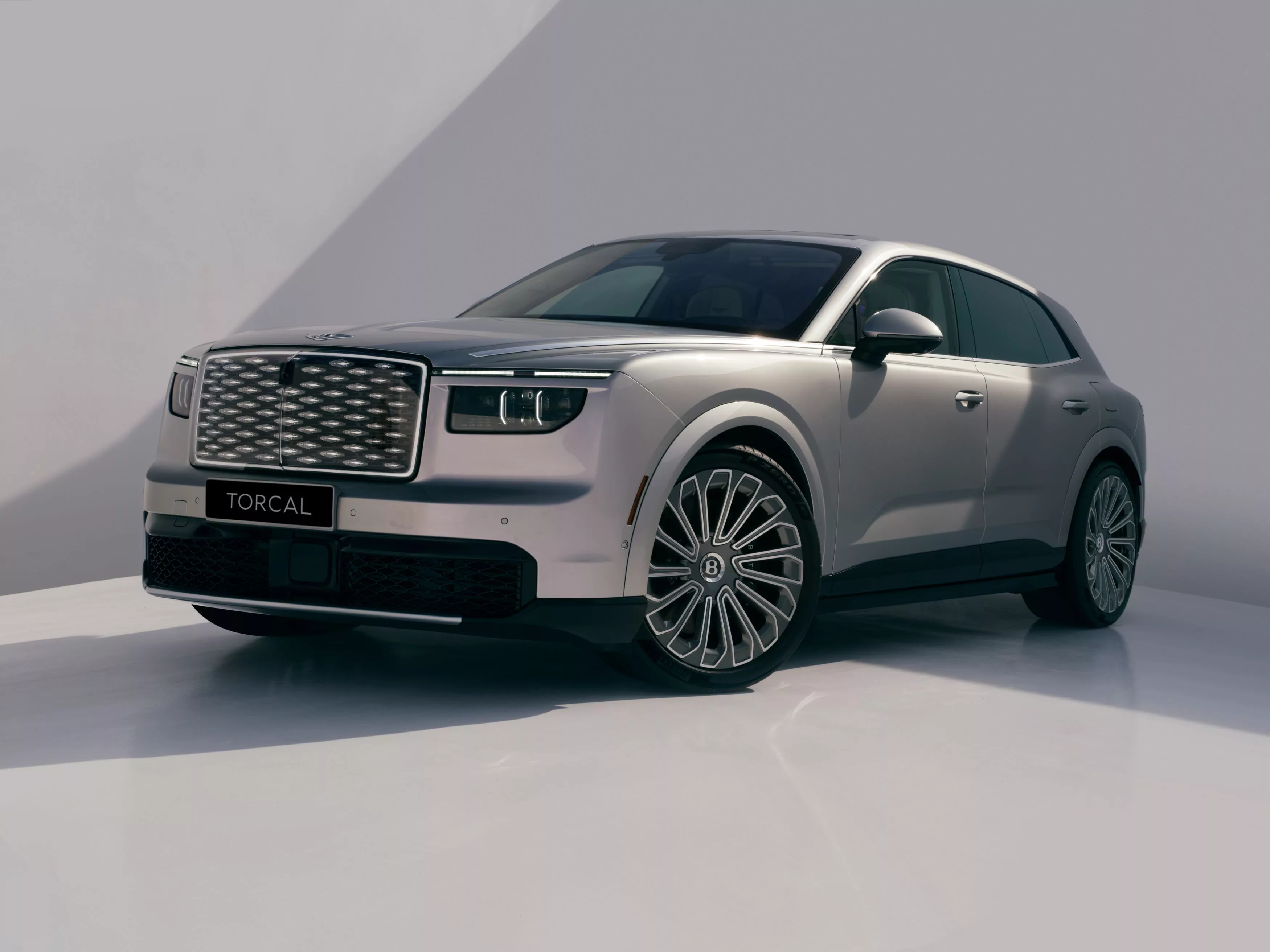
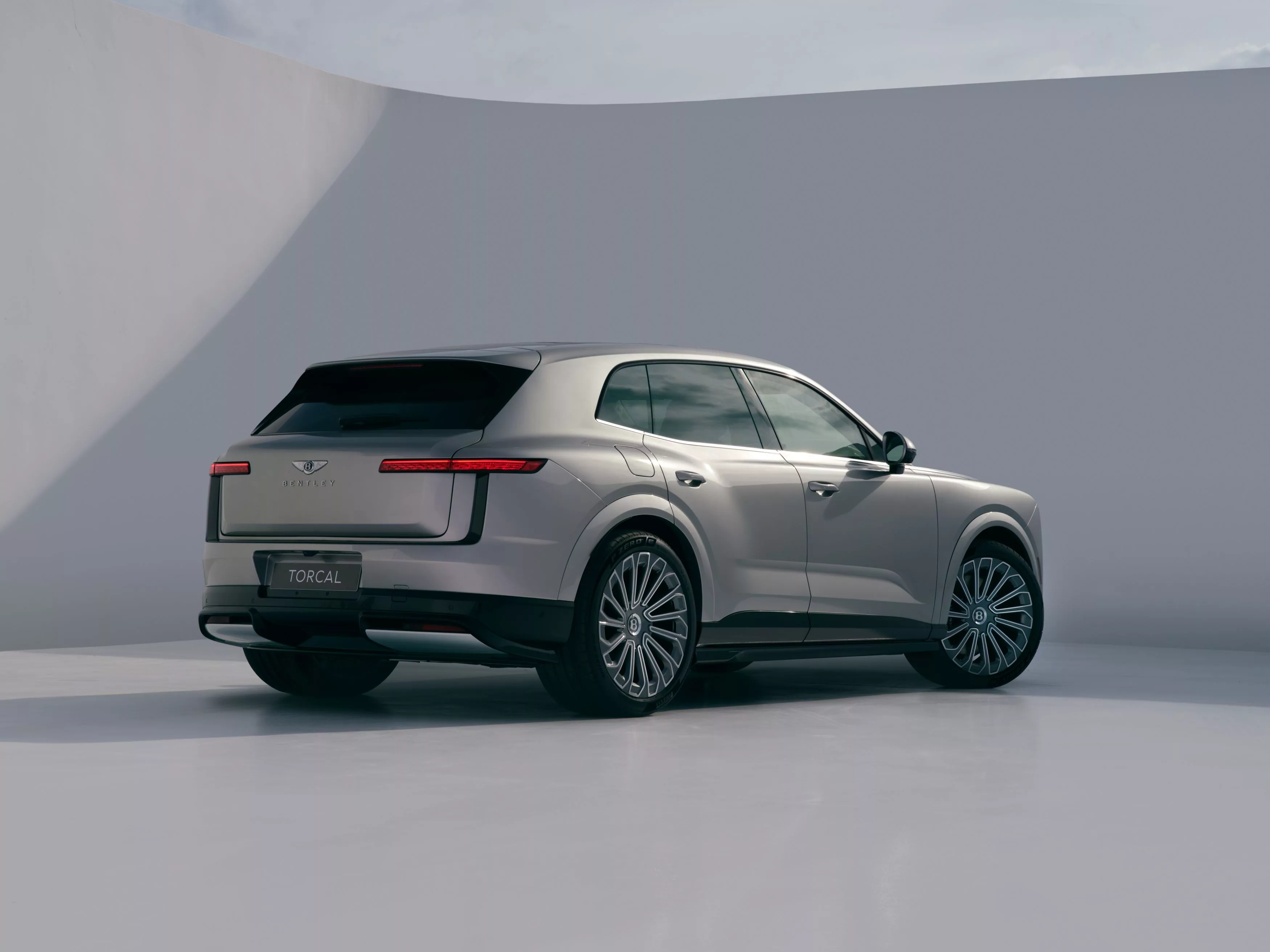
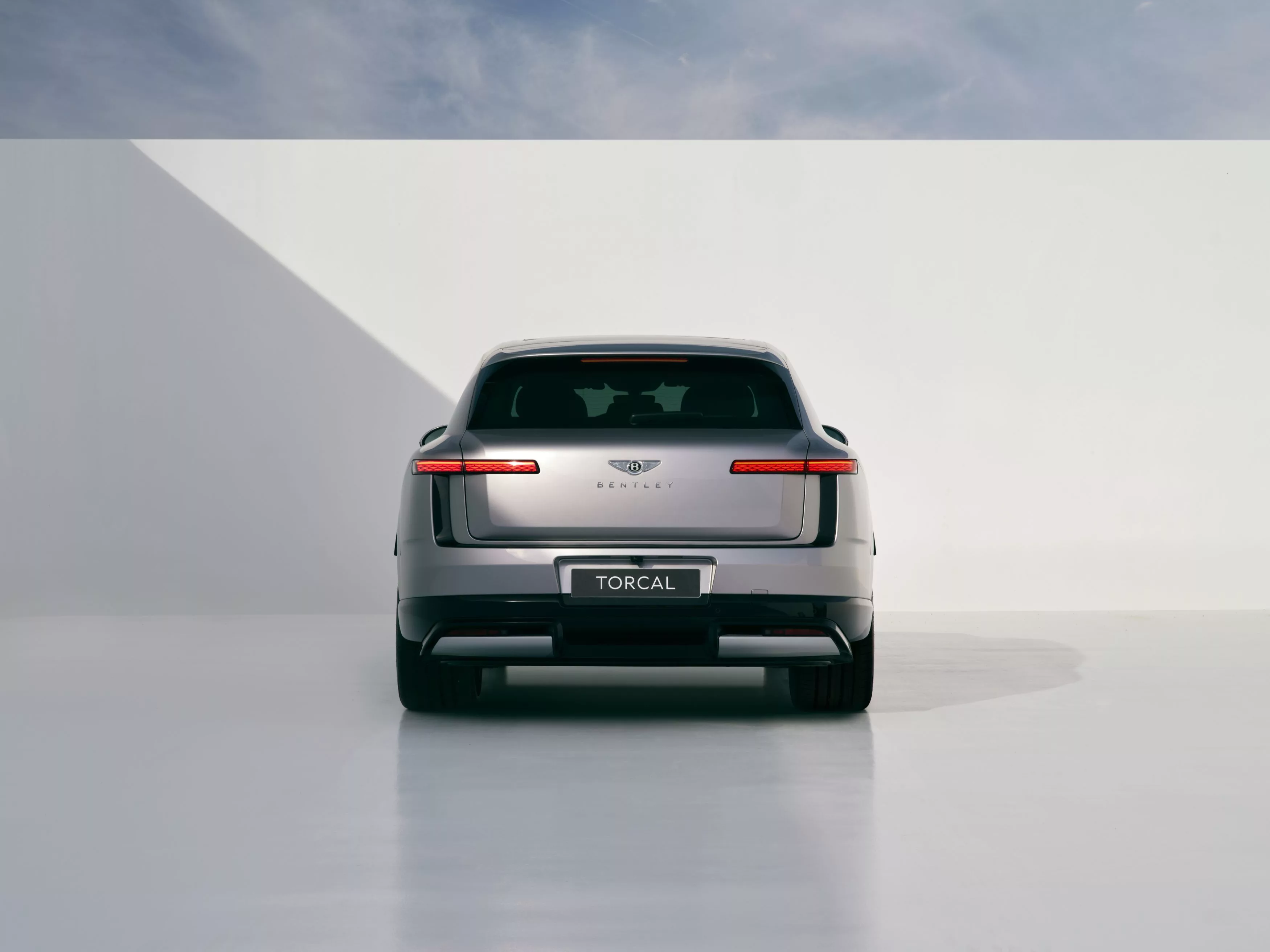
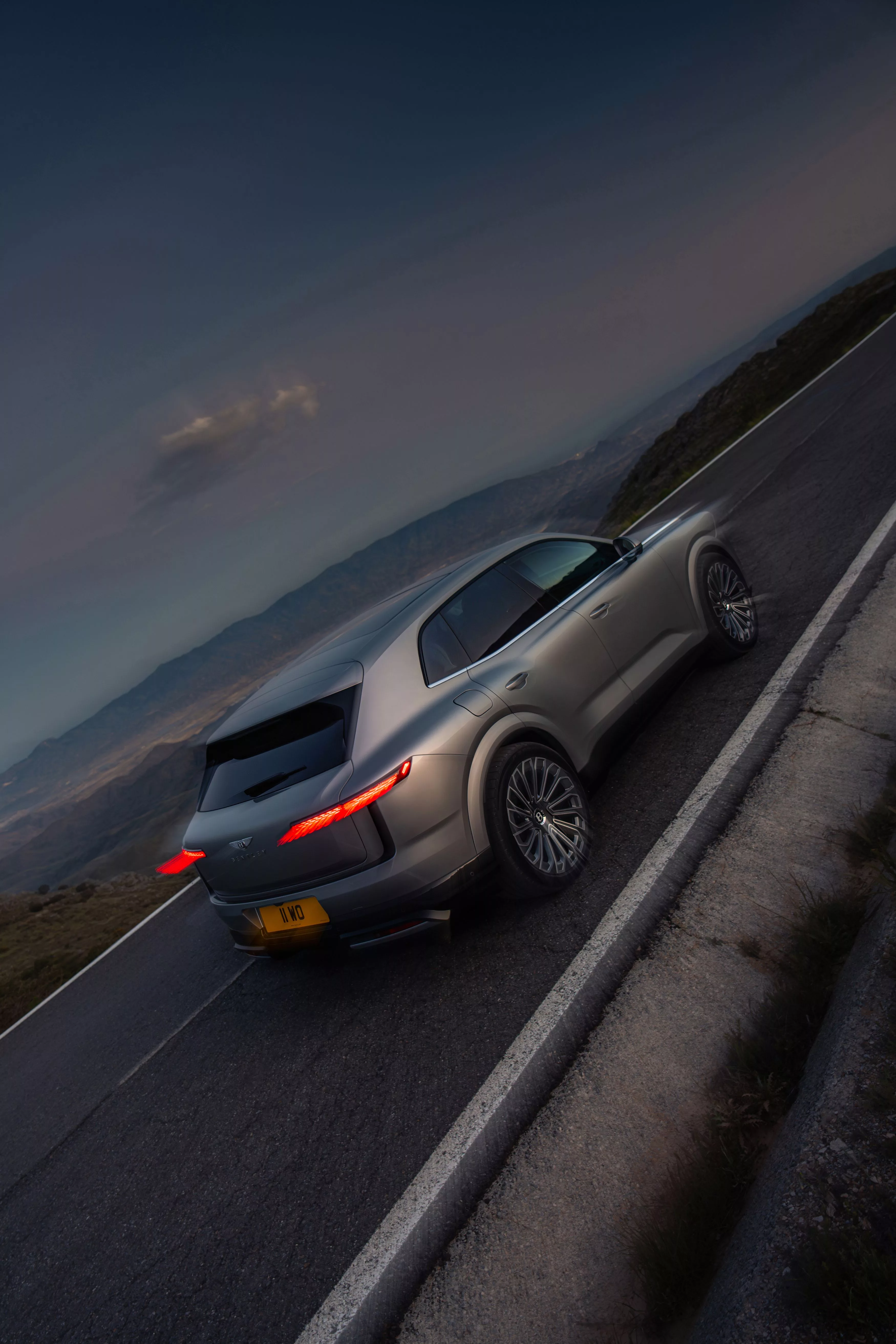
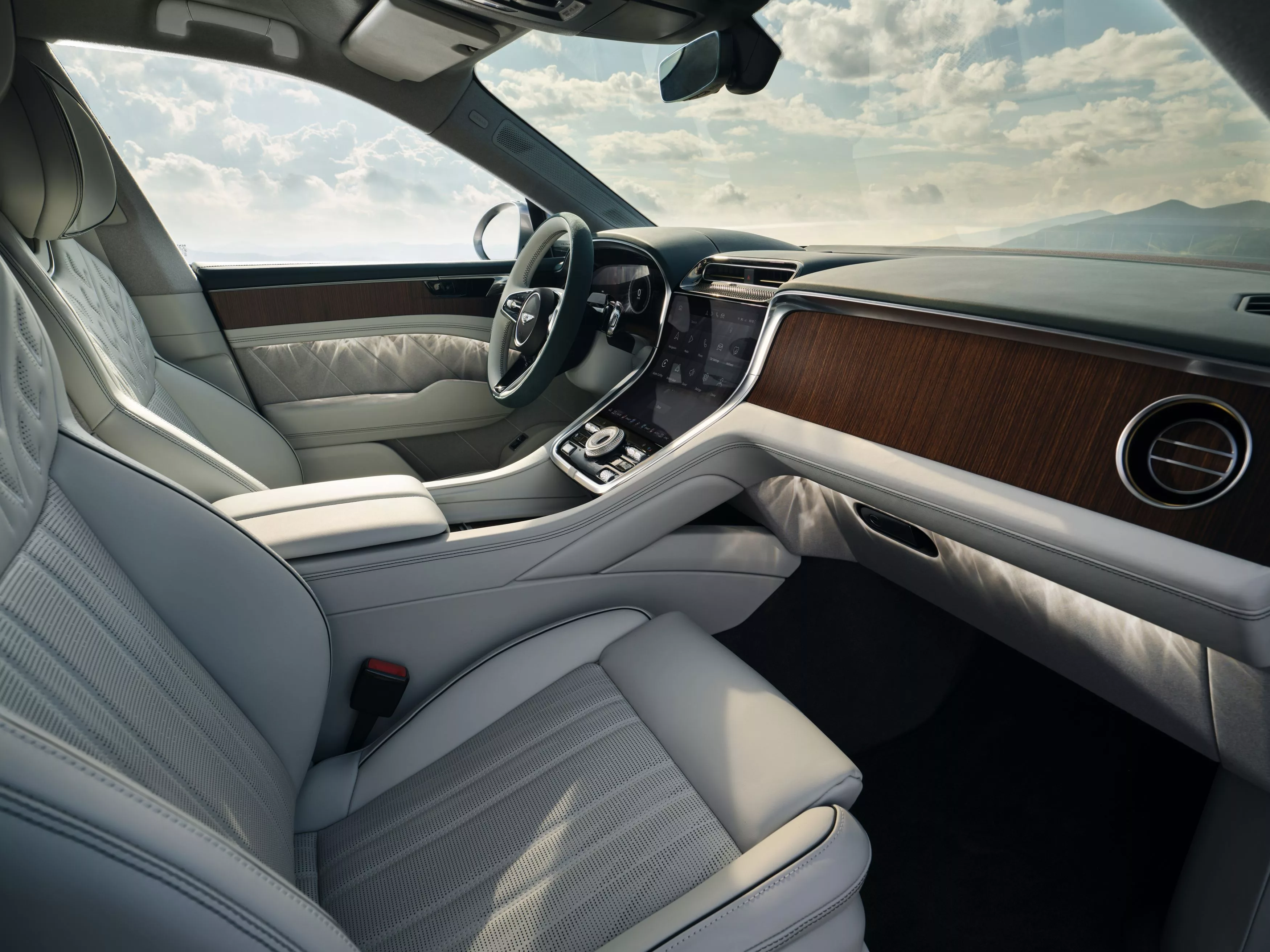
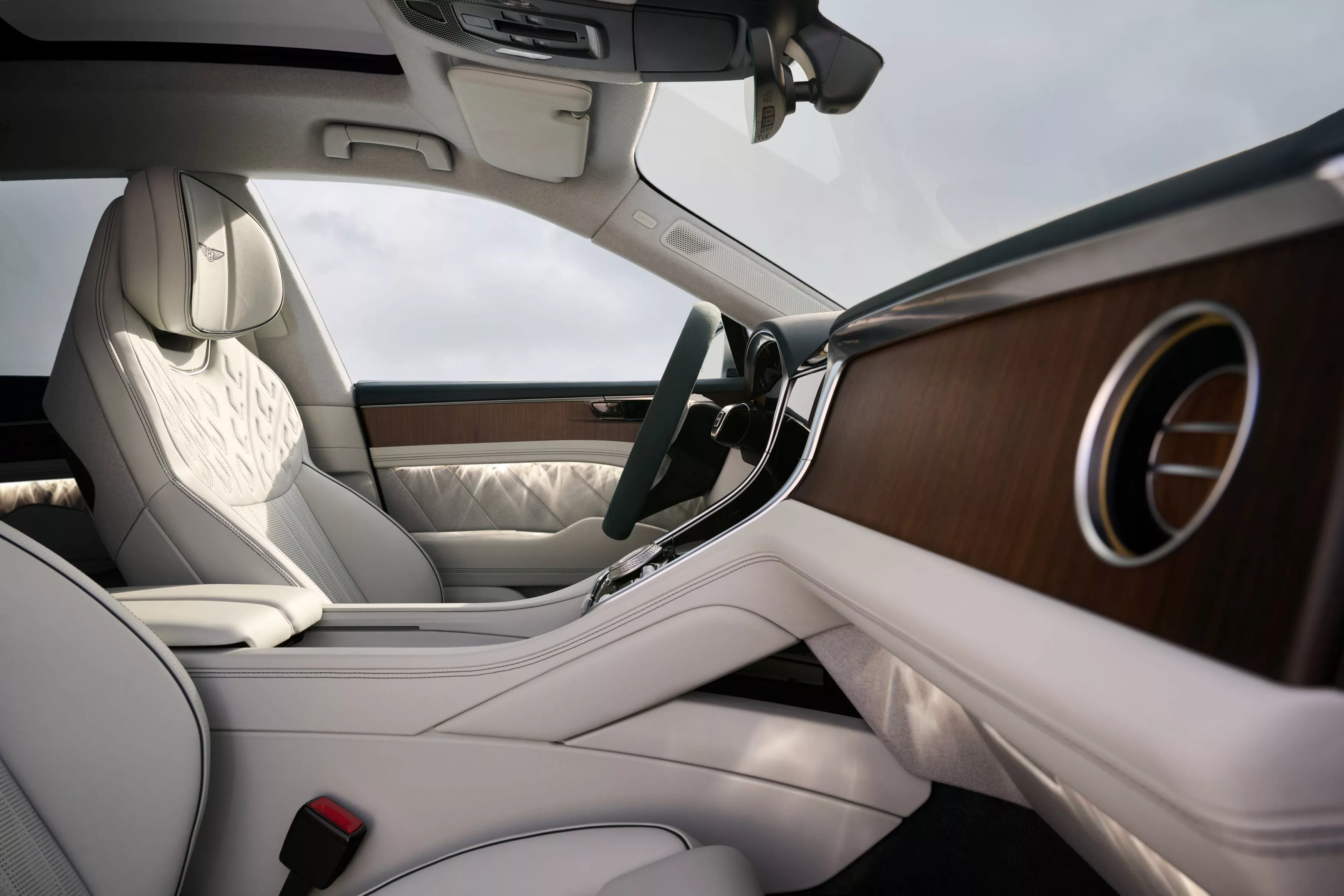
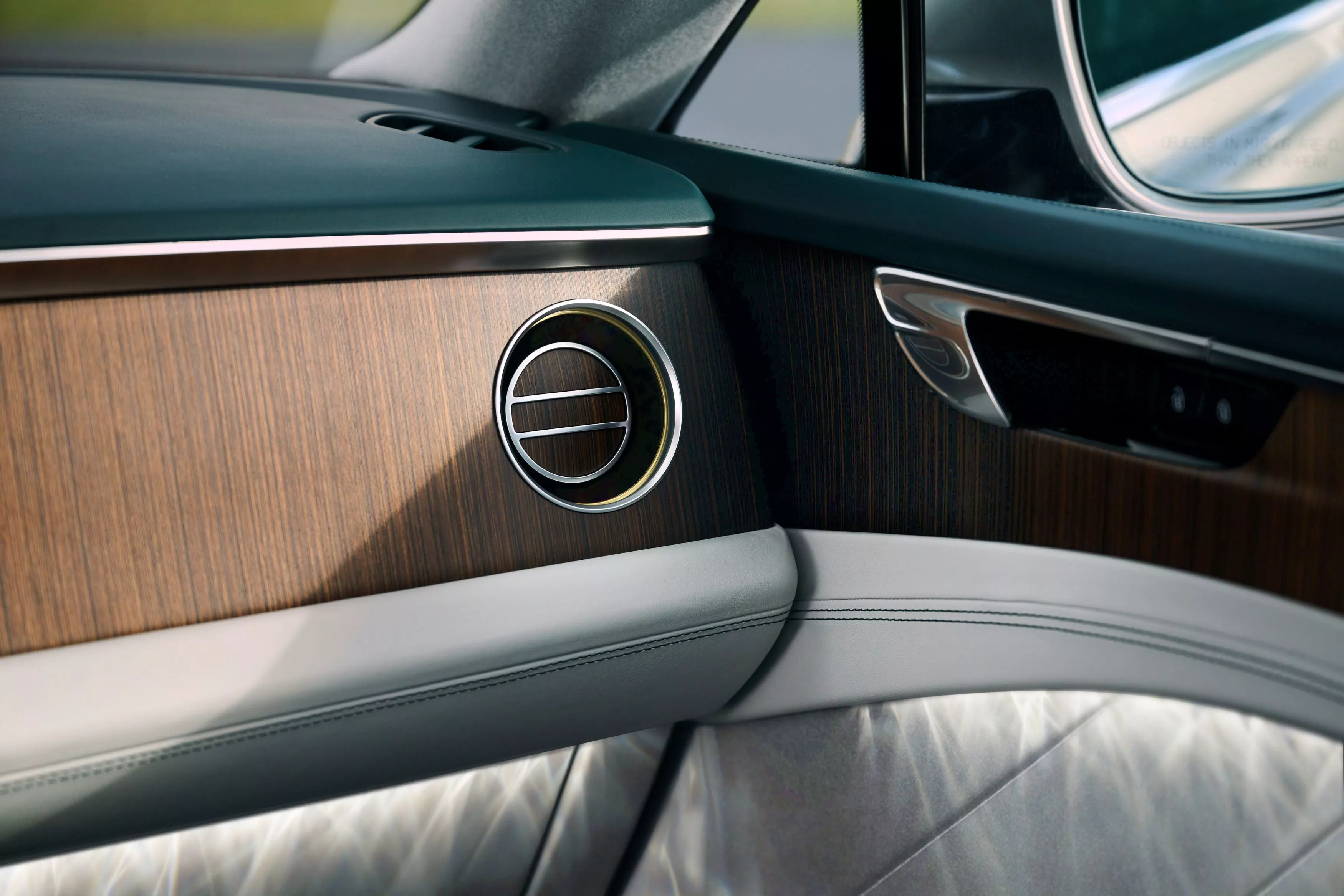
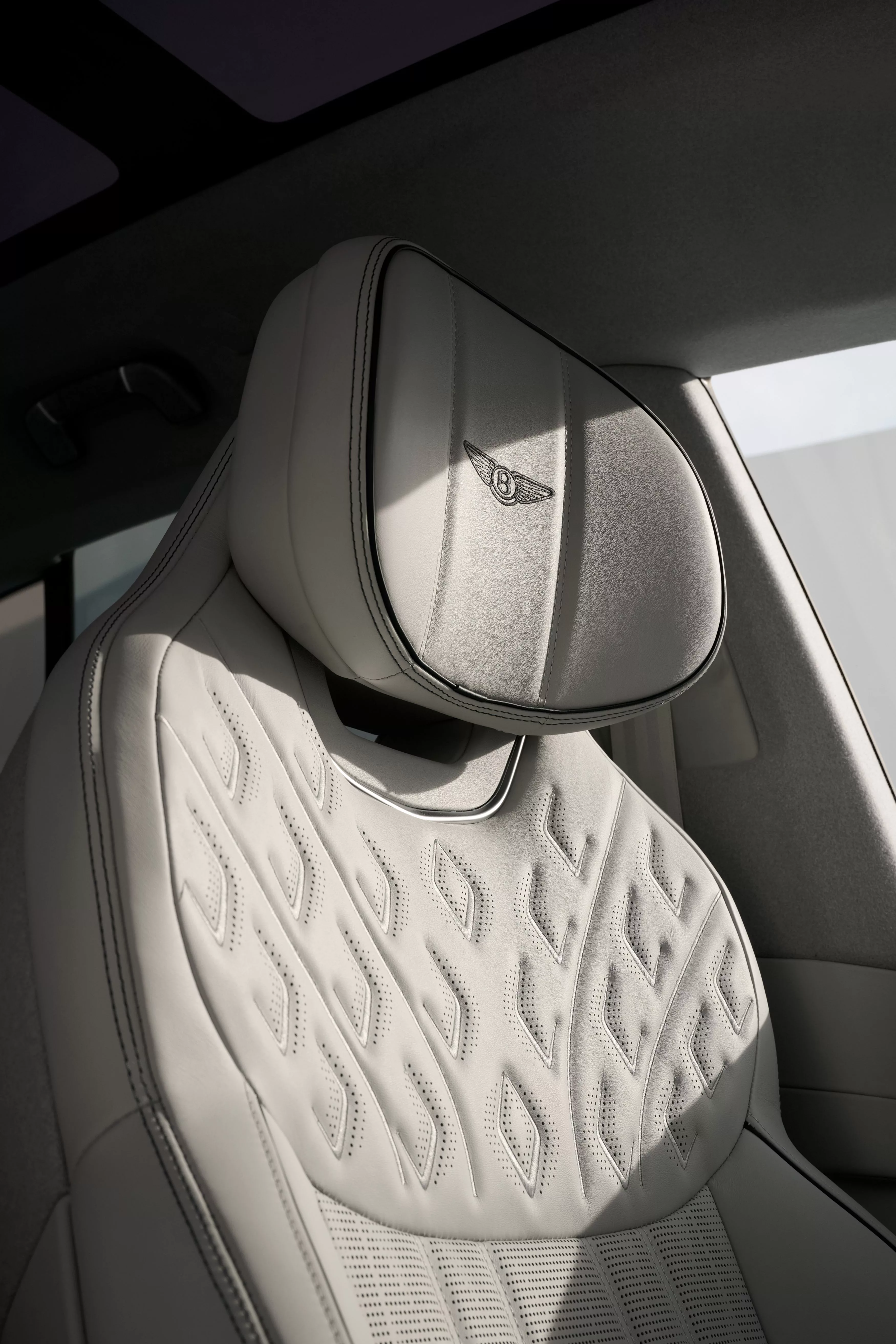
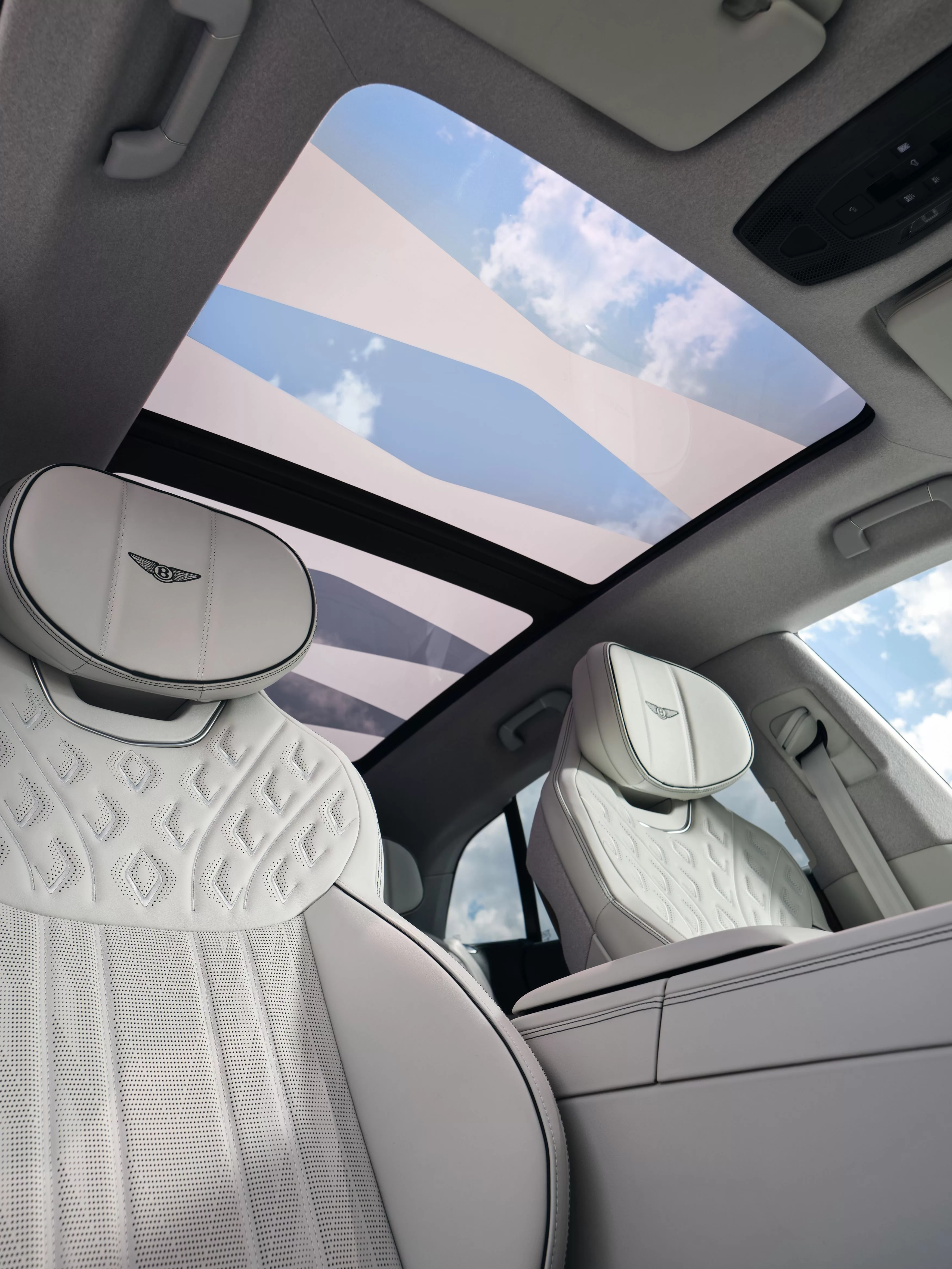
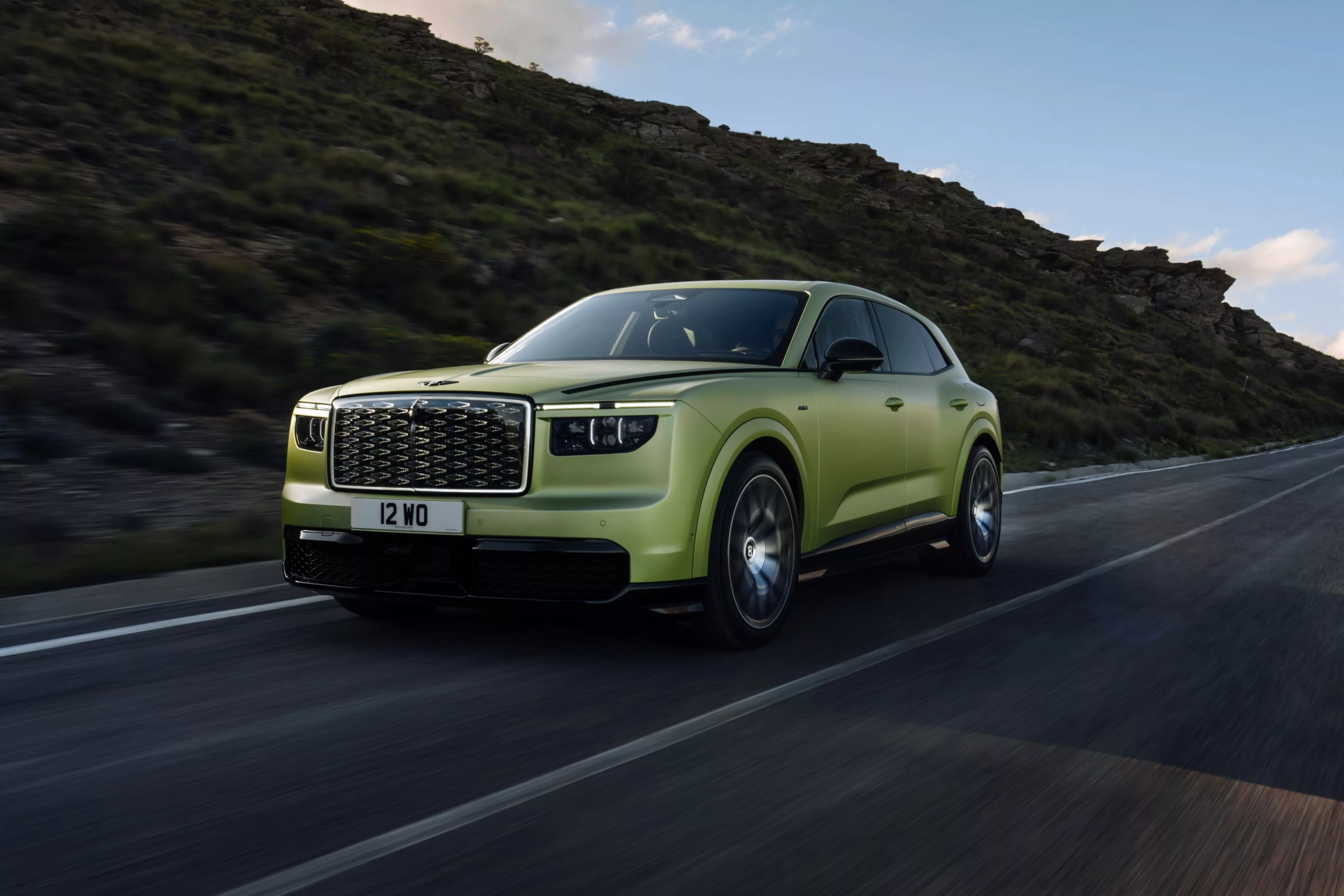
Bentley’s first production electric car is far from a modest attempt to adapt to the electric era. The new Torcal S sends 653 kW and 1,350 Nm to all four wheels, accelerates to 100 km/h in 2.9 seconds and uses a battery of around 113 kWh, with Bentley claiming a range of up to 600 km. More importantly, the Torcal is not an electric Bentayga. Bentley is making it its fourth standalone model family and its first all-new Bentley in a decade.
The Torcal will go on sale in two versions. The standard model produces 604 kW and 1,155 Nm, while the Torcal S raises those figures to 653 kW and 1,350 Nm when Launch Control is used. Bentley calls the S the most powerful production car in its history.
The electric era has therefore begun in Crewe in typically Bentley fashion: if the combustion engine has to go, it must be replaced by at least an absurd amount of power.
Torcal S reaches 100 km/h in 2.9 seconds
There is an electric motor on each axle, making the Torcal an all-wheel-drive car. The standard Torcal accelerates from 0 to 100 km/h in 3.4 seconds, and its top speed is electronically limited to 250 km/h.
The Torcal S completes the same sprint in 2.9 seconds and reaches 260 km/h. Its peak figures of 653 kW and 1,350 Nm apply when Launch Control is used. Bentley’s own model information confirms that it is the brand’s most powerful production car of all time.
Those figures are impressive, but in today’s world of electric luxury cars, 2.9 seconds is no longer a technical marvel. Extracting high power from an electric motor is relatively straightforward. For Bentley, the more difficult task is to make a luxury car that is more than five metres long and has a large battery drive like a Bentley.
Far more engineering work on the Torcal’s chassis has gone into precisely that than into chasing another acceleration record.
Active suspension takes on physics
The Torcal uses the next generation of Bentley Active Ride active suspension. Each wheel has a twin-valve damper and a separate electrically controlled hydraulic pump. The system can raise or lower each wheel individually and control body movement without conventional rigid anti-roll bars.
That matters in a heavy electric car.
Soft suspension improves comfort but allows the body to lean in corners. Stiff suspension limits roll but makes the ride more unsettled on uneven roads. The active system attempts to separate these two opposing qualities: the wheel is allowed to follow the uneven surface, while the hydraulics keep the body under control.
The Torcal also gets all-wheel steering. At low speeds, the rear wheels turn in the opposite direction to the front wheels to reduce the turning circle; at higher speeds, they turn in the same direction to improve stability.
Bentley’s ambition is quite clear: the Torcal must offer the comfort of a Flying Spur, but handling closer to that of a Continental GT. At least the marketing department has a simple task. The chassis department will have to keep dealing with the laws of physics.
600 km of range and up to 400 kW charging power
The Torcal’s battery has a capacity of approximately 113 kWh, and Bentley claims up to 600 km of WLTP range. However, the manufacturer notes on its European website that final EU27 electricity consumption and range figures are still awaiting type approval.
The electrical system uses an 800 V architecture, while DC charging power reaches up to 400 kW. With a suitable charger, charging the battery from 10 to 80 per cent should take around 16 minutes. Under ideal conditions, Bentley promises more than 240 km of additional range in 10 minutes.
It is charging power, rather than the 888 hp headline figure, that matters more in the Torcal’s technical package.
A luxury car with a 600 km range must also be able to take on energy quickly during long European motorway journeys. Its 400 kW peak charging power places the Torcal at the sharp end of current electric-car charging technology.
The Porsche connection is technically obvious
Bentley is part of the Volkswagen Group, and the Torcal does not exist in a vacuum. The car’s technical architecture is closely related to the Volkswagen Group’s PPE electric platform and, in particular, the electric Porsche Cayenne.
The similarities are no coincidence. Both use an 800 V electrical architecture, high-output dual-motor all-wheel drive, a battery of approximately 113 kWh and exceptionally rapid DC charging.
That does not make the Torcal a Porsche wearing Bentley badges.
Platform sharing allows Bentley engineers to devote resources to the areas where buyers will genuinely notice the difference: suspension tuning, noise levels, the cabin, materials, software, powertrain character and steering feel.
For the Volkswagen Group, such a division of labour simply makes sense. Developing the core technology of an 800 V luxury electric car is expensive enough. There is no good reason to reinvent the same battery, inverters and electrical architecture for every brand.
The V8 is gone, but its sound has not disappeared entirely
Bentley’s challenge with an electric car is somewhat more complicated than it is for a typical carmaker. For decades, large combustion engines were part of the brand’s identity: first the famous 6.75-litre V8, later the W12 and, more recently, V8 hybrids.
An electric motor has no such mechanical character.
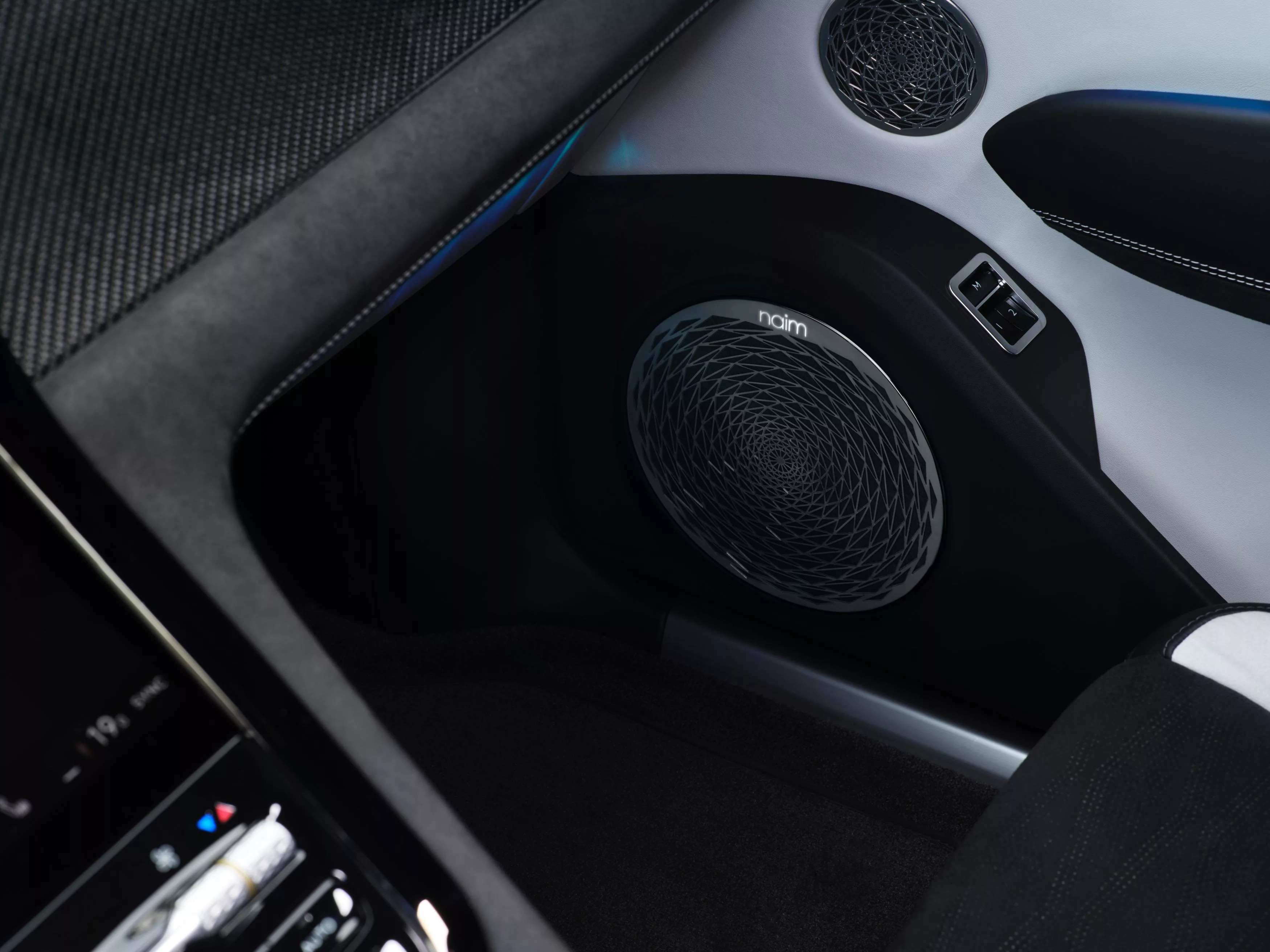
Bentley’s solution is called Dynamic Symphony. Rather than simply playing recorded V8 engine noise through the speakers, the system uses sounds recorded from real musical instruments to create a soundscape that changes with acceleration and driving modes. Bentley describes it as an attempt to carry the emotional appeal of the V8 into the electric era.
Whether a luxury car needs synthetic powertrain sound will ultimately be decided by the customer. At least Bentley has not solved the issue simply by playing an old V8 sound file through the speakers.
Bentley’s new face consists of 76 LEDs
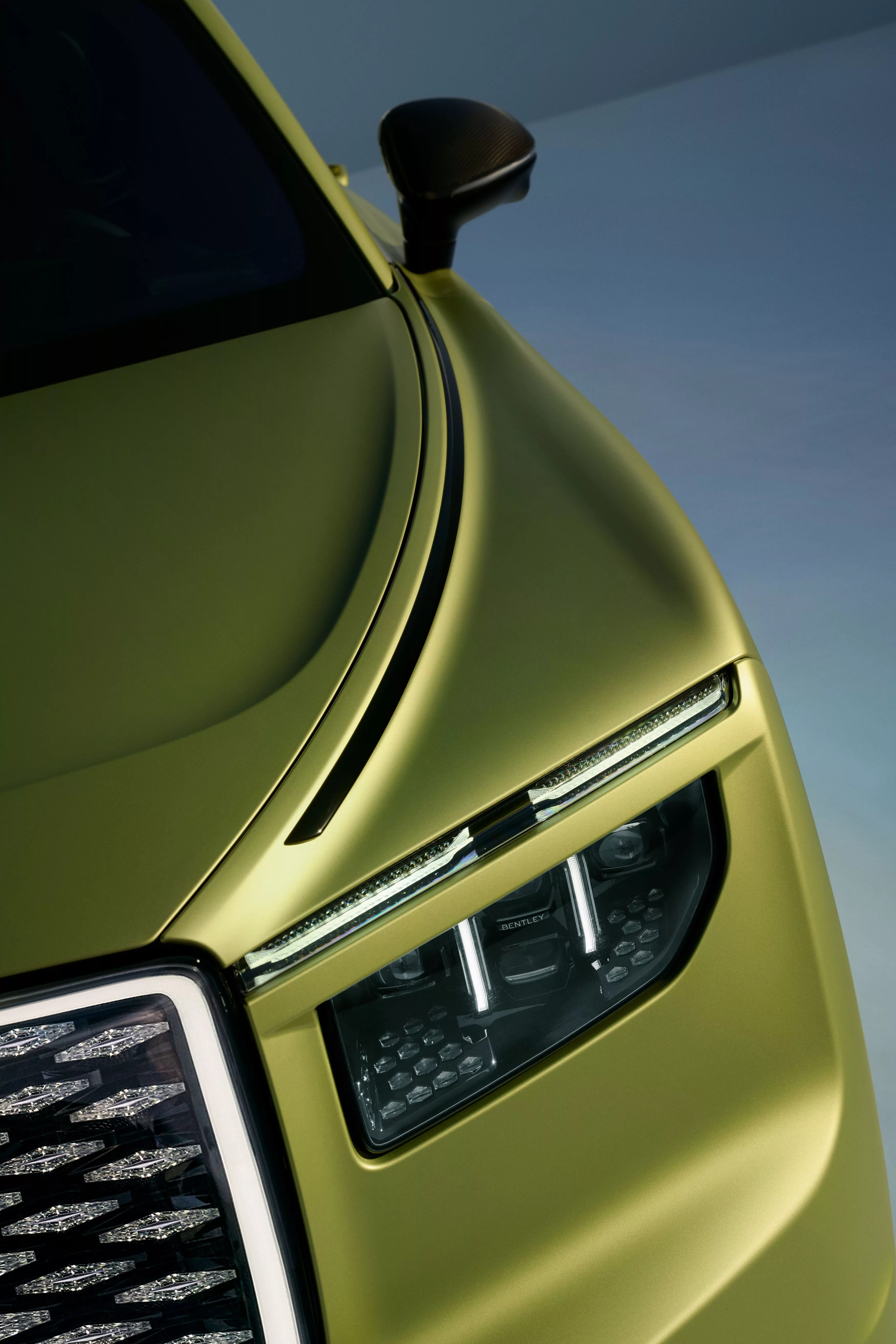
The Torcal also marks the first production application of Bentley’s new design language.
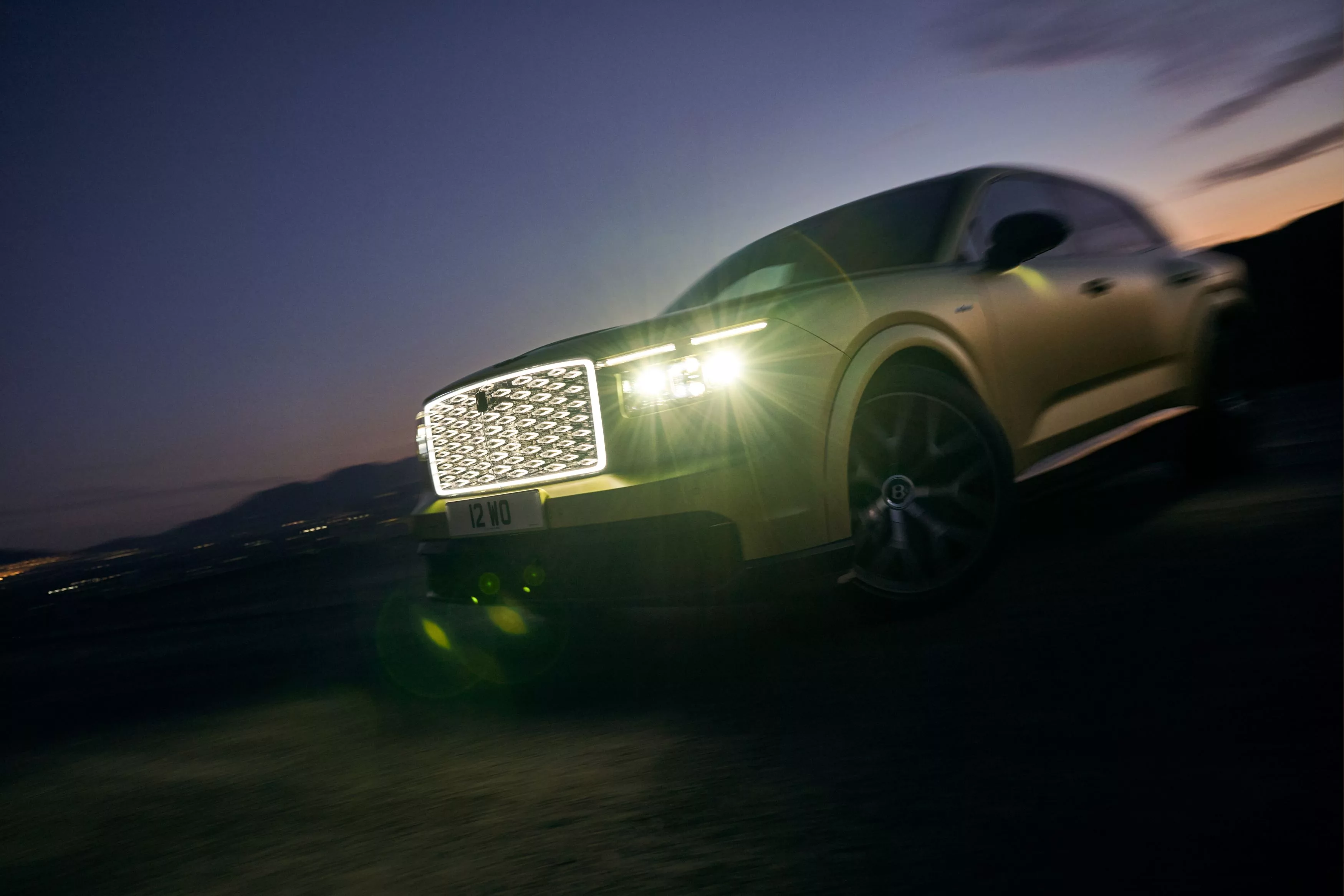
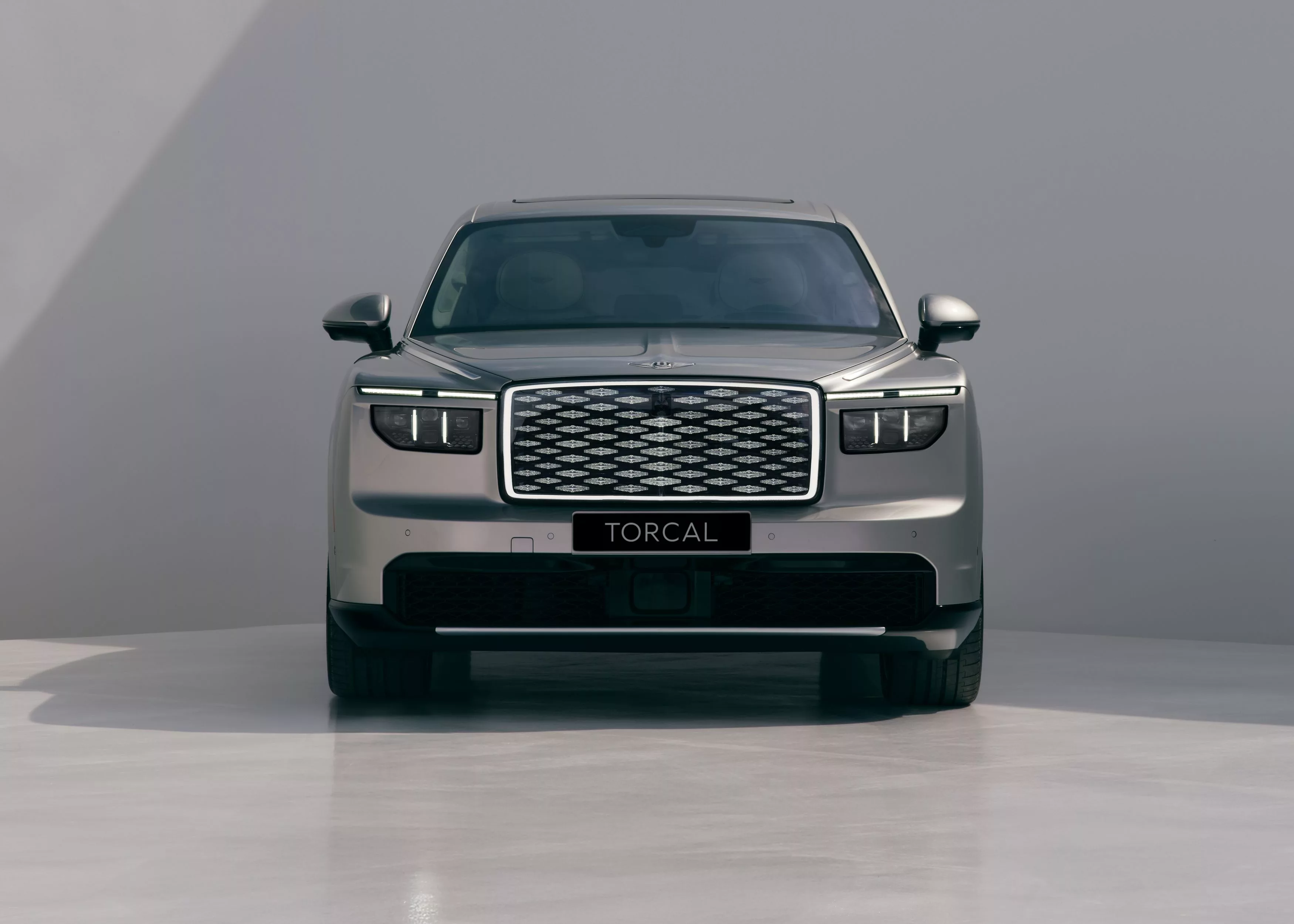
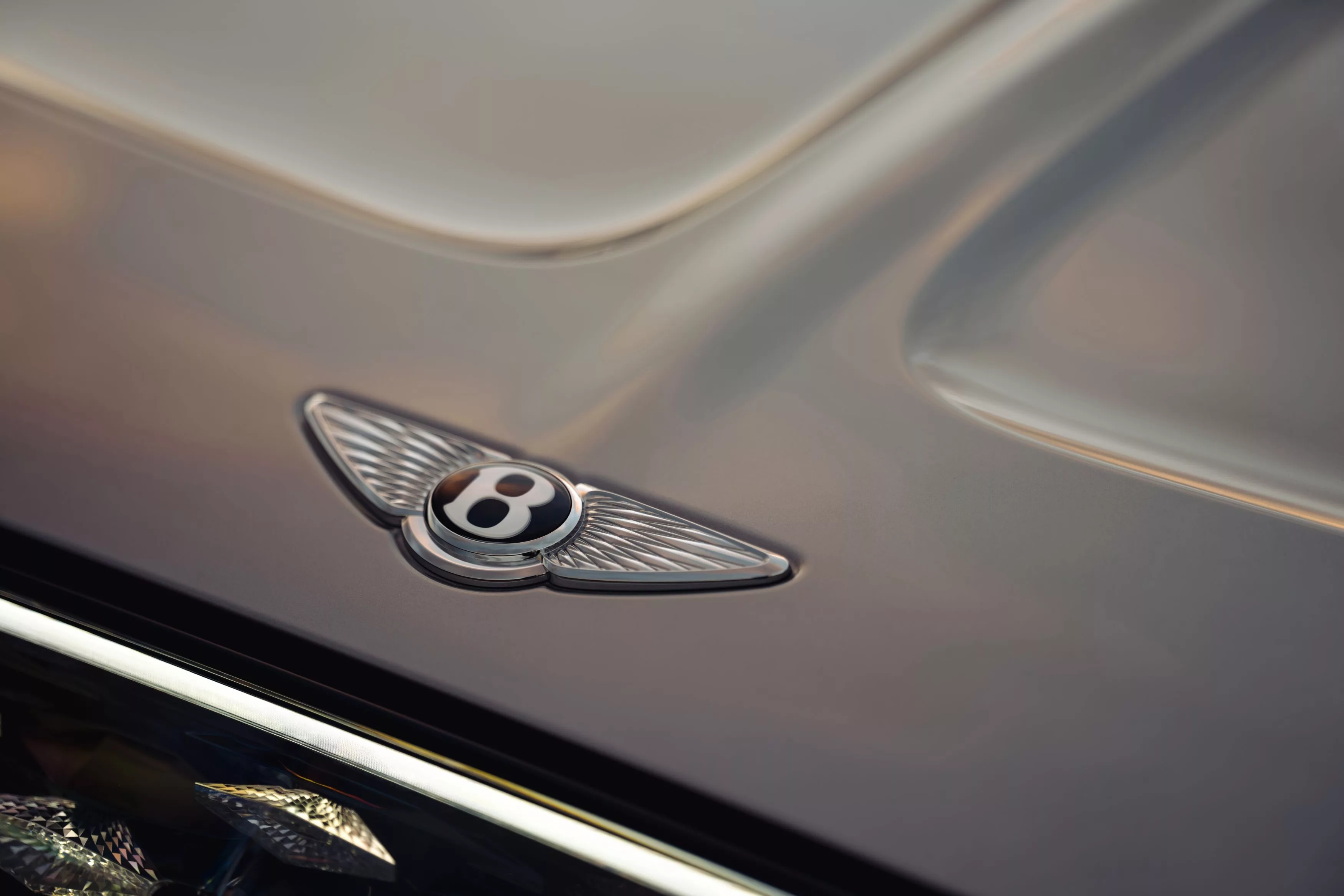
An electric car does not need a large radiator grille in the traditional sense, but Bentley is not prepared to turn its face into a smooth plastic panel. The Torcal’s so-called Floating Diamond Grille consists of 76 individually hand-installed LED light elements, which illuminate progressively when the car is unlocked.
At the same time, the car’s proportions remain deliberately Bentley-like. The Torcal is around five metres long, with a long wheelbase, muscular rear haunches and a relatively long bonnet.
The latter is an interesting design decision for an electric car. The electric powertrain would allow the nose to be made significantly shorter, but Bentley does not want to abandon the proportions customers associate with the brand.
There is nevertheless around 90 litres of storage space at the front, while the Torcal offers approximately 460 litres of luggage space at the rear.
The electric car must now prove that Bentley customers want it at all
The biggest question surrounding the Torcal is not a technical one. Electric motors producing 653 kW can be built. Charging at 400 kW can be engineered. Active suspension can at least partly disguise the effects of substantial mass. The more difficult question is whether someone spending more than €200,000 on a Bentley sees an electric powertrain as a luxury or a compromise.
That is precisely why the Torcal is an exceptionally important model for Bentley. Reuters describes its launch essentially as an attempt to determine how many of the brand’s wealthy customers want an electric car without giving up traditional Bentley character.
Bentley has already extended its electrification strategy and will continue with plug-in hybrids. The Torcal therefore does not have to replace the Bentayga, Continental GT and Flying Spur tomorrow. It must prove that an electric Bentley can justify its place alongside them.
That may prove a more difficult task than reaching 100 km/h in 2.9 seconds.


