
BYD wants four factories in Europe and is exploring the possibility of taking some over from competitors
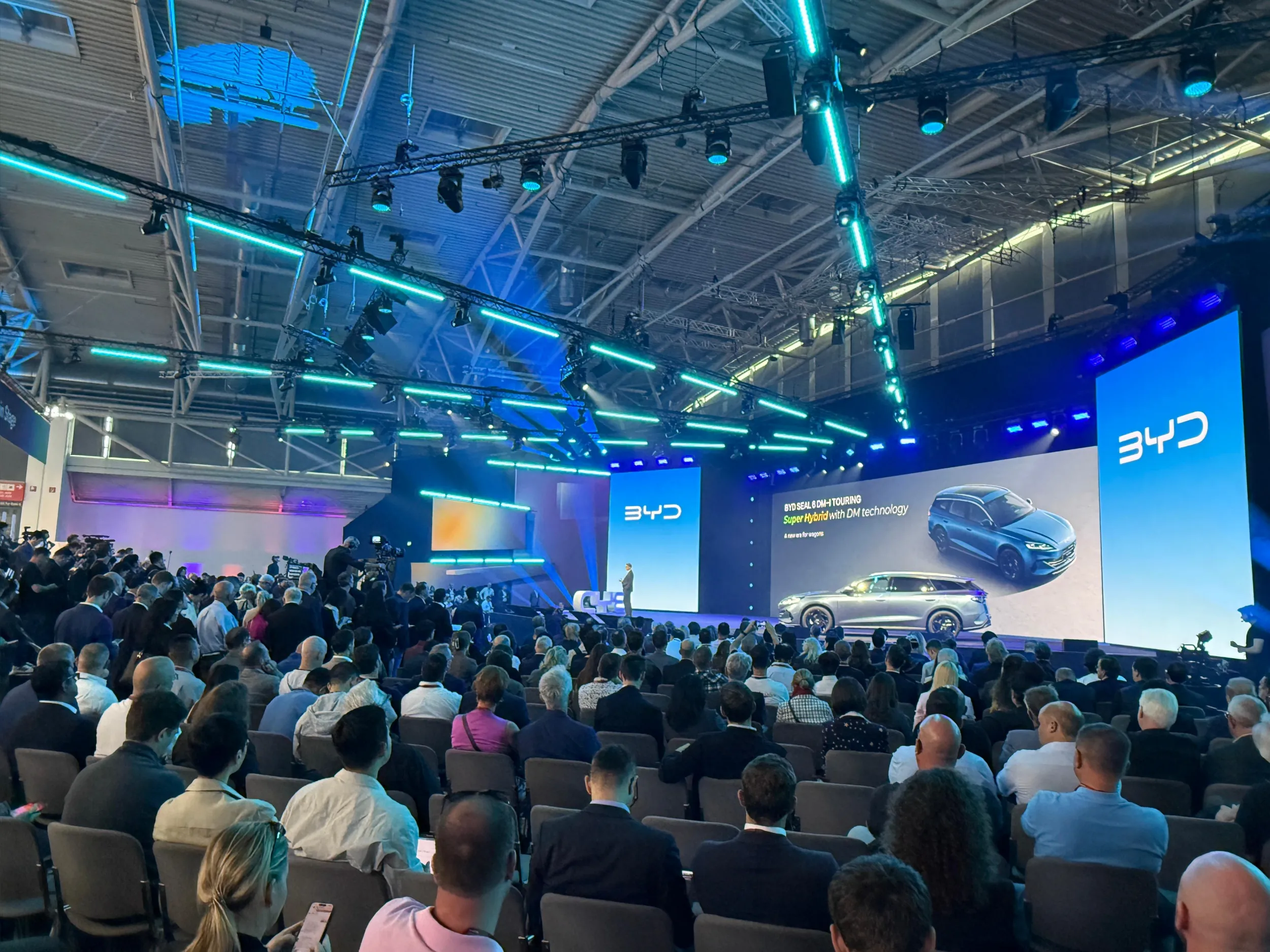
The next stage of BYD’s push into Europe is no longer just about exporting cars from China. In the longer term, the Chinese automotive giant is planning for three European car assembly plants and one battery factory. More tellingly, BYD does not necessarily want to build all of them from scratch, instead looking for existing European car plants that it could quickly acquire and retool.
BYD is looking for a factory, not a building site
BYD’s special adviser for Europe, Alfredo Altavilla, said in Turin that the company wants to select its next European production site by the end of 2026. Spain and France are among the most realistic options. Italy is currently more of a fallback option, according to Altavilla.
The reason for preferring an existing factory is simple. Building a new car plant means years of construction, obtaining permits and installing production lines. Taking over an existing plant makes it possible to start production much faster.
This makes BYD’s expansion interesting for Europe. The continent has underutilised production capacity at traditional carmakers, while Chinese brands need local factories. These two problems fit together awkwardly well.
According to Altavilla, other Chinese carmakers are also looking for European factories for the same reason. The difference with BYD is that the company prefers to own the production facilities itself.
Hungary is only the beginning
BYD’s first European passenger-car factory is in Szeged, Hungary. The company is currently launching production there, and the plant is expected to become the first major foothold in BYD’s European strategy. At the same time, an earlier plan to build a second passenger-car factory in Manisa, Turkey, has been put on hold. BYD vice-president Stella Li said as early as June that the company would focus first on Hungary and then look for a second production facility in Europe.
This changes the meaning of the four-factory plan. BYD is not talking about four new buildings, but about a European production network that would ultimately include three car assembly plants and one battery factory.
Tariffs are pushing BYD into Europe, not out of it
This is where the story becomes far more strategically important. The European Union has imposed additional anti-subsidy tariffs on electric vehicles made in China. BYD pays an additional tariff on battery-electric cars imported into the EU from China, but a car made at a European factory no longer falls into that category. The tariff may therefore reduce imports while at the same time motivating a Chinese manufacturer to become a local producer.
That is exactly what BYD is doing.
The company is no longer limiting itself to selling cars in Europe. It wants to manufacture cars and batteries here, use local labour and build ties with European suppliers. Speaking this week about the company’s truck strategy, BYD vice-president Stella Li also said the aim was to become, in effect, a “European company” in Europe.
The next question is what “made in Europe” means
Brussels is meanwhile preparing local content requirements that could make final assembly alone insufficient in the future. Altavilla directly linked the need for three car factories and a battery plant to both BYD’s sales-volume targets and European regulations.
The battery factory is particularly important here. An electric car’s battery accounts for a large share of the vehicle’s value. If BYD manufactures only the body in Europe and bolts on a battery, motor and power electronics brought in from China, a large part of the value chain will remain in China. A local battery factory would give BYD a much deeper European footprint.
This will also begin to change competition with Volkswagen, Stellantis, Renault and other European manufacturers. BYD would no longer be a cheaper importer from Shenzhen, but a local manufacturer using European factories and competing for the same workers, suppliers and investment subsidies.
BYD has reason to move quickly
Pressure in China’s domestic market is making overseas growth increasingly important for BYD. The company’s sales outside China rose 134.5 per cent year on year in August 2026, to 189,466 vehicles. In the first half of the year, BYD generated more sales revenue from overseas markets than from China for the first time.
Europe is too large and wealthy a market in this strategy for the company to limit itself simply to imports.
This is why the plan for three car factories and a battery plant is more important than another announcement of expansion by a Chinese manufacturer. BYD is preparing for a situation in which it must become part of European industry to remain in the European market.
This creates an interesting dilemma for Brussels. One aim of the tariffs on Chinese electric cars was to protect European production from Chinese state-backed competition. If Chinese companies respond by buying European factories, hiring European workers and making cars here, the boundary between the European and Chinese automotive industries becomes increasingly blurred. Tariffs can restrict BYDs made in China. A BYD made in Europe is already a much more difficult opponent.


