
Audi sues importer of Chinese AUDI models
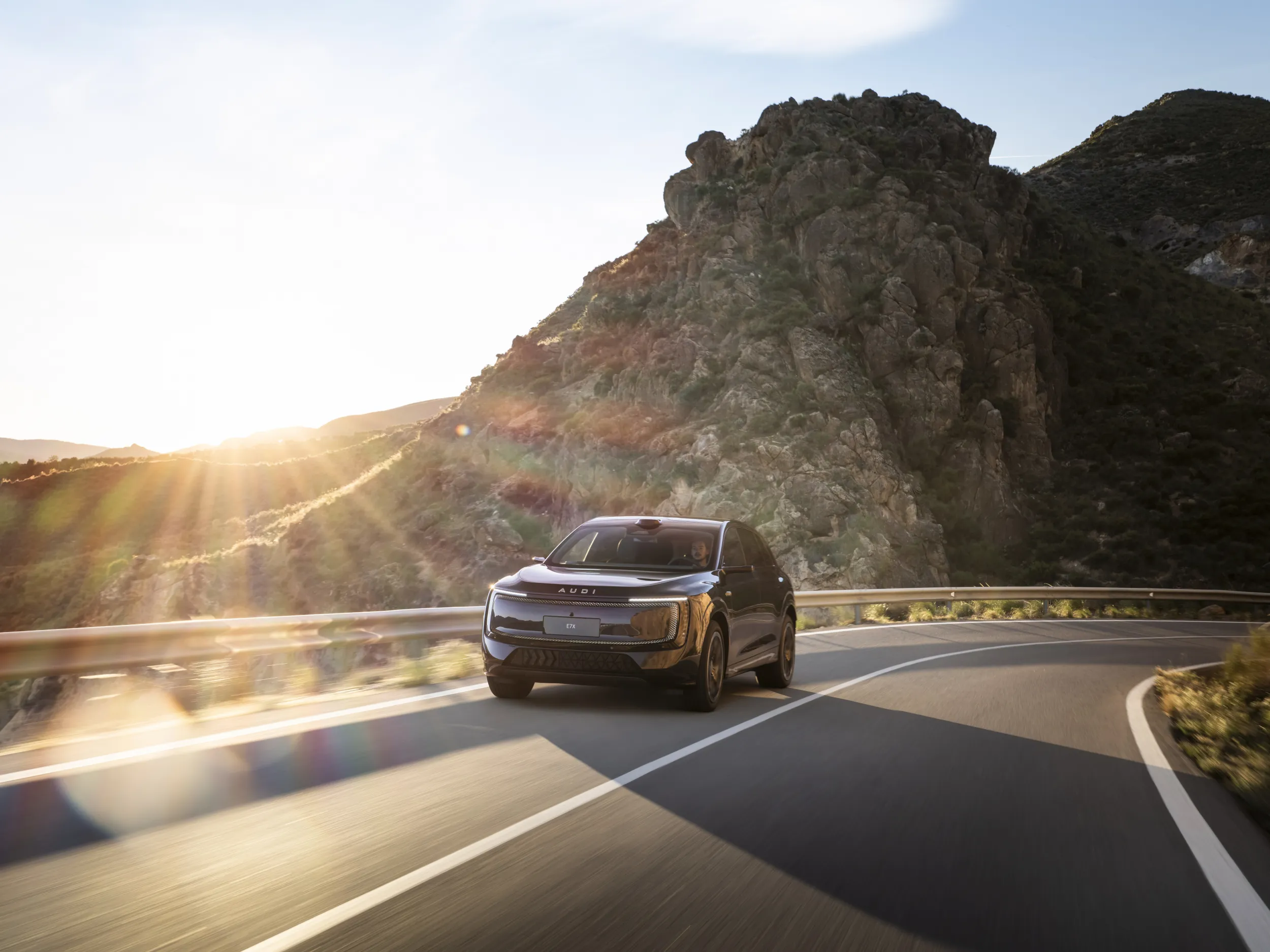
Audi has launched legal proceedings in Germany against Auto China, a company that began importing the AUDI E5 Sportback and E7X electric cars from China to Germany. The issue is rather unusual: Audi is trying to prevent cars created by Audi and SAIC from reaching Audi’s own home market.
The problem is not where the cars come from, but market boundaries. AUDI is a China-exclusive sister brand created by Audi and SAIC, whose cars bear a large AUDI inscription instead of the four rings. Audi states outright that these models were developed for Chinese customers and are not intended for sale outside China.
Auto China found a door Audi wanted to keep shut
Independent German importer Auto China began bringing the E5 Sportback and E7X in from China, offering, according to the company, homologation, registration, warranty and after-sales service. In August, both cars were openly offered for sale in Germany.
Audi responded with legal action. A company spokesperson confirmed to Automobilwoche that Audi had initiated proceedings against the importer and plans to defend its rights. The E5 and E7X have now disappeared from Auto China’s offering, although the company has not confirmed that it removed the cars at Audi’s request.
Audi’s argument is not solely about trademark control. The Chinese AUDI models are not part of Audi’s European sales and service system. An authorised Audi dealer in Europe may not have the diagnostic tools, software support, spare parts or repair procedures for these models.
A grey importer may promise a warranty and servicing, but that warranty is provided by the company itself, not necessarily Audi’s European organisation. For the customer, the difference becomes particularly important when the car needs, for example, accident repairs, a high-voltage battery component or a software service specific to the Chinese market.
The uncomfortable question is why a European wants this car
Legally, Audi’s actions are understandable. From a marketing perspective, however, the situation becomes much more interesting. The E5 Sportback is not some cheaply rebadged Chinese electric car. According to Audi’s own data, the model offers up to 579 kW, all-wheel drive and 0-100 km/h acceleration in 3.4 seconds. Its maximum range under the Chinese test cycle is up to 770 kilometres. That figure cannot, however, be compared directly with Europe’s WLTP rating.
The car uses Audi and SAIC’s Advanced Digitized Platform architecture and supports over-the-air updates for all of the vehicle’s software. This year, the E5 even won the China Car of the Year title.
The E7X applies the same formula to a large SUV. The 5.05-metre-long vehicle has a 3.06-metre wheelbase, and Audi has confirmed 300 and 500 kW powertrains. The car is built in Anting, near Shanghai, and uses software closely connected with China’s digital ecosystem.
These are therefore not Audi’s cheap side projects. They are technically ambitious electric cars that Audi considers important enough to build an entire China strategy around.
And now some Germans want to import them back home.
Chinese Audi and European Audi are starting to diverge technically
China’s electric vehicle market is moving faster than Europe’s premium segment, and local buyers expect different software, user interfaces and digital ecosystems.
Audi responded in an unusual way: rather than simply adapting the Q6 e-tron or A6 e-tron, the company created a separate brand and a separate platform with SAIC.
The strategy goes even deeper. Audi and SAIC are establishing a separate innovation and technology centre in Shanghai, and at least four new AUDI models are planned to use the next-generation ADP architecture.
In a few years, this could create a situation in which Audi’s newest digital technology debuts not in Ingolstadt or Neckarsulm, but in Shanghai.
Grey imports make that difference visible to European customers.
Audi is defending a market boundary, but the internet is making it increasingly artificial
The automotive industry has sold different models in different regions for decades. Previously, there was nothing unusual about this. A Japanese domestic-market sports car or a US pickup could reach Europe only through considerable effort by an enthusiast. China is changing the situation.
Electric cars there may use technology from the same parent company, offer more digital equipment and reach the market at a very aggressive price. Through the internet, European buyers can see all of this on the same day.
Audi can restrict such imports through the courts. It is much harder to prevent customers from asking why the 579 kW E5 Sportback is a perfectly normal AUDI in China, but is a car in Germany that Audi’s own official network does not want to service. That is the most uncomfortable part of the whole story.
AUDI was meant to help Audi compete with local electric vehicle manufacturers in China. Grey imports show that, at least in the eyes of some European customers, an Audi created for China may prove more interesting in Europe as well. Audi is therefore not just fighting an importer. The company is defending the boundary between two model worlds that are becoming increasingly different.


