
New Nissan Skyline to debut in December after just 26 months of development
 1/2
1/2
Nissan will unveil an all-new Skyline in December 2026. For the Japanese brand, this is not simply another sports saloon, but a model tasked with proving that Nissan can once again quickly develop cars with technical substance and character. CEO Ivan Espinosa calls the Skyline one of the symbols of Nissan’s rebirth.
From 55 months to 26
The most telling figure right now is not power output, but 26 months. That is how quickly Nissan developed the new Skyline. Its previous development process required around 55 months for a comparable project. Nissan began implementing its new PCS-T development model in 2024, making greater use of digital tools and artificial intelligence than before.
This matters more to Nissan than it may seem at first glance. Chinese carmakers are bringing new models to market at a pace that makes Japan’s traditional multi-year development cycle simply look slow. With the Skyline, Nissan wants to show that increasing speed does not mean becoming another anonymous software company that happens to build cars.
The Skyline is well suited to serve as a test case. The model name dates back to 1957, while the current V37 generation was launched in Japan as far back as 2014. The new car therefore represents, in effect, the first full generation change in around 13 years.
The Skyline must be a Skyline again
Nissan first showed the new Skyline in camouflaged form in April. The manufacturer placed the car in the “Heartbeat” category of its new model strategy, which includes cars intended to carry the brand’s identity and emotional value. Nissan describes the Skyline specifically as a model for the Japanese market, centred on performance, precision and driver engagement.
This is an important clarification. At least according to Nissan’s current official strategy, the Skyline is not a global mass-market model but an image-builder for the Japanese market.
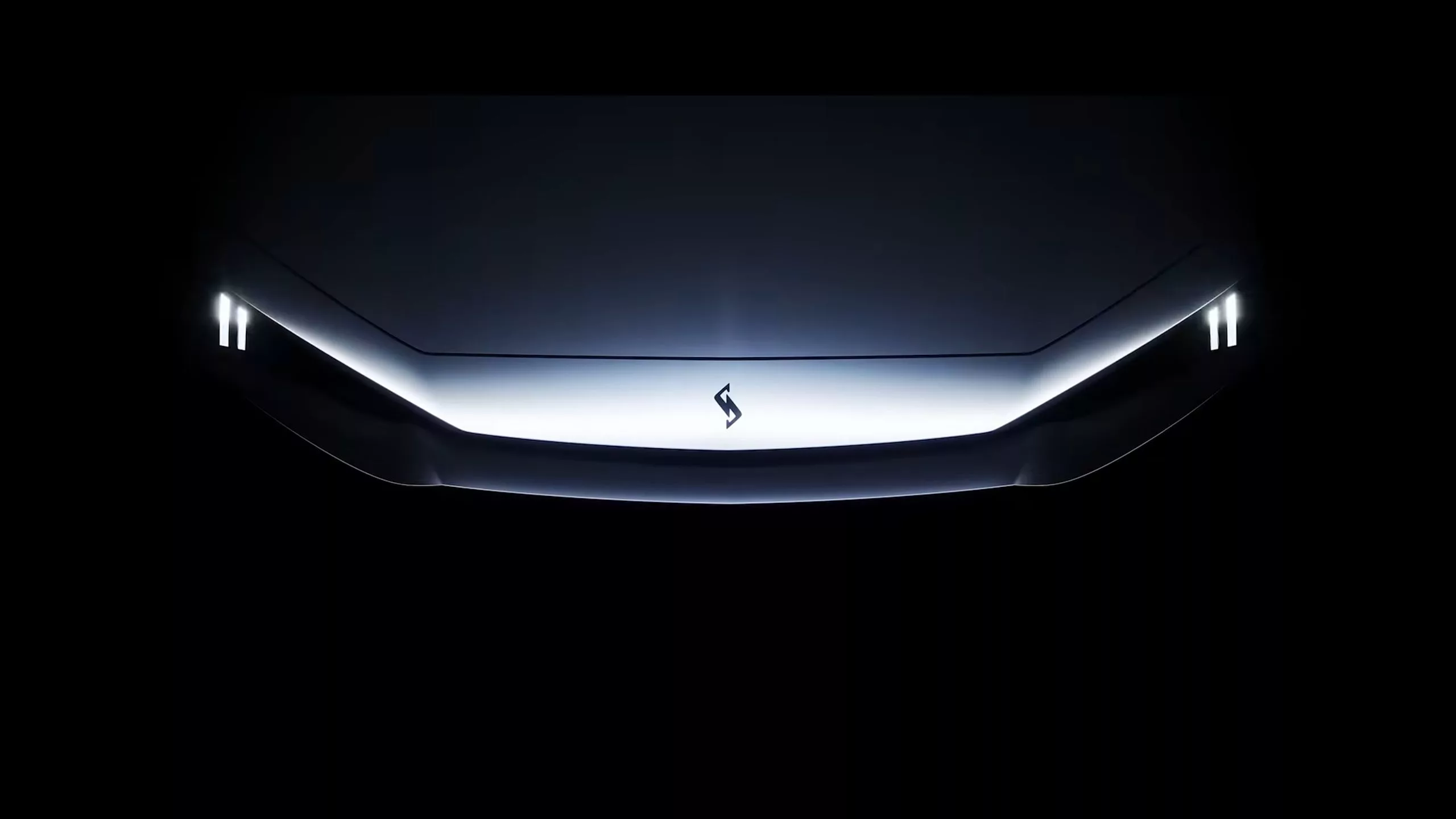
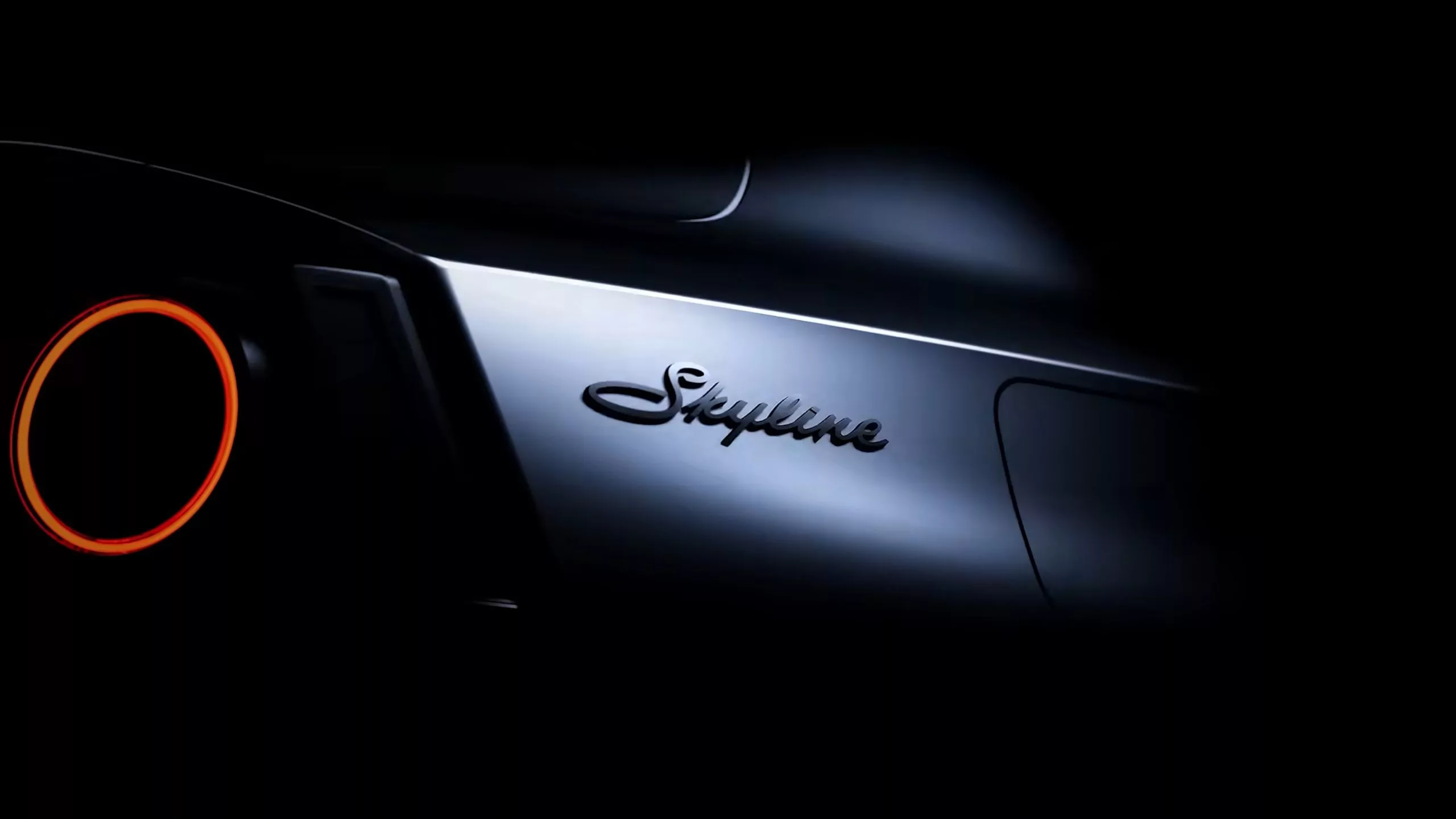
Teasers show a powerfully sculpted body and design references characteristic of the classic Skyline. The round taillight motif at the rear is especially evident, having been associated for decades with the sportier versions of the Skyline and later with the GT-R. The car’s proportions confirm that it will retain a saloon body.
In today’s SUV era, that is already a statement in itself.
A V6 seems likely, but Nissan is keeping the technical details under wraps
This is where rumours must be separated from facts. Nissan has not yet officially disclosed the new Skyline’s powertrain, output or drivetrain layout. Japanese media and the international automotive press have reported rumours of a 3.0-litre twin-turbo V6, a hybrid system, rear-wheel drive and even a six-speed manual gearbox. There has also been talk of a Nismo version. For now, these details are not technical specifications confirmed by Nissan.
However, the possibility of a V6 is not mere speculation. Nissan confirmed in April that Infiniti will receive a new performance-focused V6 saloon in the future. As the current Skyline V37 and Infiniti Q50 share technical underpinnings, the connection to the next Skyline is logical, but Nissan has yet to officially confirm to what extent the two future cars will share their technology.
If Nissan does retain the basic concept of a longitudinally mounted V6 and rear-wheel drive, while adding a manual gearbox, the Skyline would find itself in fairly rare company in today’s market. From a European perspective, its concept would compete most directly with the more powerful versions of the BMW 3 Series. Meanwhile, the Mercedes-Benz C-Class and Audi A5 are becoming increasingly electrified, while the choice of Japanese sports saloons in Europe has almost dried up.
Europe is unlikely to see the Skyline any time soon
For European buyers, however, enthusiasm should be tempered. Nissan officially calls the Skyline a Japanese “Heartbeat” model, while, for example, the new electric Juke is specifically designated as one of Europe’s core models. In the company’s strategy, Japan, the US and China lead global development, with Europe playing a smaller role.
Nissan has therefore not confirmed sales of the new Skyline in Europe.
That makes the car more symbolic here than a direct market disruptor. Nissan now needs a model that recalls a time when the company’s name meant not only the Qashqai and electric cars, but also the Z, Silvia, Skyline and GT-R. The new Skyline must do that job at a time when Chinese competitors are developing cars faster and European premium brands dominate the sports-saloon segment.
For that very reason, the 26-month development cycle may prove at least as important as the engine that ends up under the bonnet. If Nissan can create a proper driver’s car at this pace, rather than simply a car finished quickly, the Skyline will have fulfilled a far greater task than attracting nostalgic customers.


