
Carmakers want to sell the same car more than once. Are subscription features the next big fight?
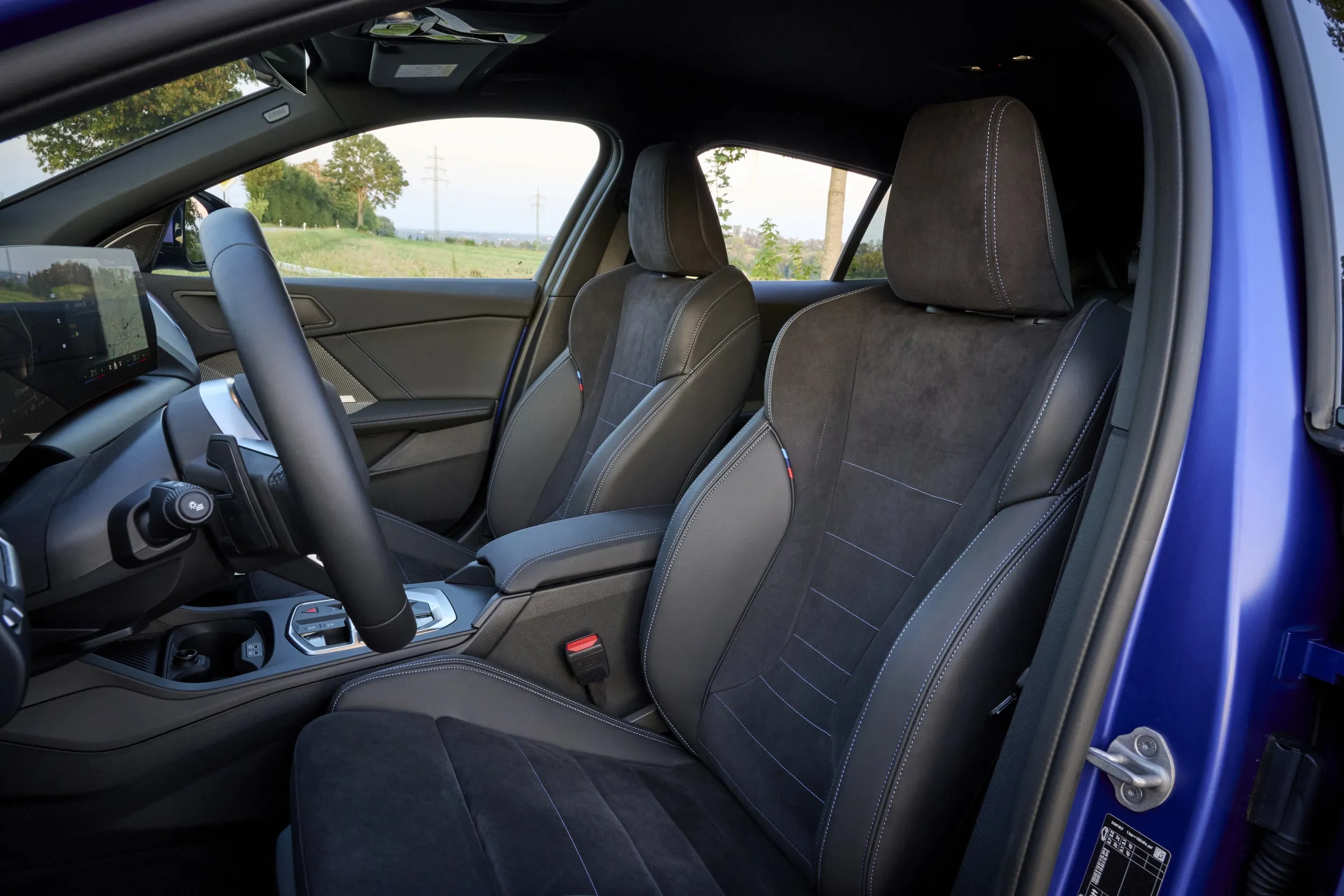
The car as a subscription service is no longer science fiction. Software defined vehicles allow manufacturers to lock functions that are physically already present, sell them later through a monthly fee or activation payment and keep earning money throughout the vehicle’s life. For buyers, the question is becoming sharper by the year: did they buy the car, or merely the right to use some of its abilities?
Physical hardware, software lock
Features on Demand, or FoD, and the software defined vehicle sound flexible and convenient in car makers’ presentations. The customer can activate a function when they need it. In reality, it often means the car leaves the factory with the right hardware already fitted, but the manufacturer only unlocks it after payment.
BMW learned that lesson the hard way. The brand faced a fierce backlash in 2022 when it began offering heated seats by subscription in some markets, at around 15 euros a month, or as a permanent activation for about 356 euros. In 2023, BMW dropped the heated seat subscription model, but kept other later activated functions through ConnectedDrive, including high beam assist and adaptive cruise control.
Mercedes showed how far software restriction can go
The Mercedes Benz EQS brought one of the most symbolic examples to the European market. The rear axle steering system is physically present, but Mercedes limited it to 4.5 degrees as standard. Customers in Germany who wanted the full 10 degree rear axle steering angle, which reduces the turning circle and makes parking much easier, had to pay about 489 euros a year.
In the US, Mercedes took the same idea even further. Acceleration Increase, offered on the EQE and EQS electric cars, unlocks more power through software. Mercedes Benz USA officially describes it as a digital extra that improves 0 to 60 mph acceleration. According to Car and Driver pricing, it cost 600 dollars (about 515 euros) a year for the EQE and 900 dollars (about 773 euros) a year for the EQS. A one time lifetime activation cost 1,950 dollars (about 1,675 euros) and 2,950 dollars (about 2,534 euros) respectively.
Technically, this is elegant. Psychologically, it is explosive. The customer can see that the motors, inverters and control units are already in the car. The manufacturer replies that it is selling software calibration, a performance level with warranty risk and a digital product that needs ongoing management.
Audi and Tesla are normalising the aftersale purchase
Audi Functions on Demand allows owners to activate features for a month, a year, several years or the full life of the car. Audi UK lists Matrix LED headlights, high beam assist, traffic sign recognition and digital light signatures as examples. Audi Ireland applies the same logic to dual zone automatic climate control, which can be chosen for one or six months, one or three years, or permanently.
Tesla is not a bystander in this game. It helped design the model. The company offers its Full Self Driving (Supervised) package in the US for 99 dollars (about 85 euros) a month and stresses that the system still requires an attentive driver. According to Reuters, Tesla ended the one time purchase option for FSD on 14 February 2026 and moved to a monthly model. Tesla’s support page also notes that some Model 3 versions could buy activation for the Cold Weather Feature or rear seat heating, provided the necessary hardware was already in the car.
The car makers’ logic is not just greed
From a manufacturer’s point of view, the business model is brutally rational. Common wiring, the same seats, the same sensors and the same control units simplify production. The factory does not need to manage dozens of small equipment variations, the supply chain becomes more stable and the assembly line moves faster. If the hardware becomes cheap enough, fitting the same part to every car may cost less than differentiating it by order.
The second motive matters even more: recurring revenue. A car is sold to its first owner once, but a digital service can be sold every month. Stellantis stated in its software strategy that it wanted to earn about 4 billion euros from software based products and subscriptions in 2026, rising to about 20 billion euros a year by 2030.
That turns the car into something closer to a balance sheet platform. The old business model ended at the point of sale. The new one begins there.
The biggest problem appears on the used car market
The sharpest pain may not come at the moment of the first purchase. The first owner leases the car for three years, activates the comforts and hands it back. The second owner buys a used car with heating elements in the seats, the correct lighting hardware in the headlights and the necessary software in the control units, yet some features may still be locked.
That breaks the traditional logic of the used car market. A well equipped car used to mean something physical and permanent. If it had leather trim, heated seats, better audio and adaptive lights, that value travelled with the vehicle to the next owner. The FoD model can turn the same car into an empty shell on the second hand market, where the buyer must start paying again for extras whose hardware is already included in the car’s price.
The end of server support makes things even more complicated. Mercedes Benz USA’s 3G network shutdown FAQ shows how connected car functions can disappear even when the hardware remains in the vehicle. Because of the 3G shutdown, older Mercedes models with the mbrace system lost access to connected services, including remote functions and stolen vehicle tracking. That was not exactly the same as locking heated seats, but it shows the risk clearly. If a car function depends on an external network, account or server, it no longer fully belongs to the car.
Buyers are angry, hackers smell a market
The more manufacturers lock physical extras through software, the more attractive the grey coding market becomes. BMW’s heated seat episode already prompted talk in 2022 of alternative unlocking solutions, with third parties offering to activate locked functions more cheaply than the manufacturer. This is not a harmless game. Such intervention can void the warranty, create a cyber security risk and leave the owner in a weak position during an insurance dispute.
Consumer anger reached lawmakers too. A New Jersey bill, S568, would ban manufacturers or dealers from charging a subscription for a feature that uses hardware already installed at the time of purchase or lease and would function after activation without ongoing cost to the manufacturer, dealer or third party. The bill makes exceptions for services such as satellite radio and in car internet, where the provider has a genuine recurring cost.
That distinction is central to common sense. A map update, cloud service, emergency call system or live traffic information may need servers and data. Heated seats, a heated steering wheel or unlocking a rear axle steering angle that already exists in the car do not require the same kind of running cost.
For European buyers, it becomes a question of trust
In Europe, the subscription model hits especially hard in the premium segment. Buyers here already pay more because emissions rules, safety requirements, VAT and equipment pricing push the final price of a new car higher. If a manufacturer adds monthly fees for comforts that are physically already fitted, the mood turns sour quickly.
This is not a fight against technology. The software defined car is unavoidable, because electric vehicles, driver assistance systems, battery preconditioning, charging planning and over the air updates all need software. The problem begins when a manufacturer uses software not to improve the car, but to artificially restrict capability that was already built.
A fair line runs through genuine ongoing cost. Cloud based navigation, constantly updated driver assistance or a data connected security service can justify a monthly fee. Unlocking a heating element, power steering function or headlight hardware already installed in the car feels like being charged twice.
The car is becoming a smartphone, but with worse consequences
The smartphone comparison sounds convenient: buy the device, subscribe to the services. With cars, the stakes are higher. A vehicle costs tens of thousands of euros, remains in use for 10 to 15 years, passes through several owners and carries safety functions that cannot be treated like a streaming app.
If car makers push too far, they may damage one of the most valuable assets of any premium brand: trust. A customer may accept an expensive option. They may accept costly servicing too. What they do not want is the feeling that they bought a 70,000 euro car and must ask the manufacturer for permission every winter to use hardware that is already sitting inside it.
Features on Demand, or FoD, and the software defined vehicle sound flexible and convenient in car makers’ presentations. The customer can activate a function when they need it. In reality, it often means the car leaves the factory with the right hardware already fitted, but the manufacturer only unlocks it after payment.
BMW learned that lesson the hard way. The brand faced a fierce backlash in 2022 when it began offering heated seats by subscription in some markets, at around 15 euros a month, or as a permanent activation for about 356 euros. In 2023, BMW dropped the heated seat subscription model, but kept other later activated functions through ConnectedDrive, including high beam assist and adaptive cruise control.
Mercedes showed how far software restriction can go
The Mercedes Benz EQS brought one of the most symbolic examples to the European market. The rear axle steering system is physically present, but Mercedes limited it to 4.5 degrees as standard. Customers in Germany who wanted the full 10 degree rear axle steering angle, which reduces the turning circle and makes parking much easier, had to pay about 489 euros a year.
In the US, Mercedes took the same idea even further. Acceleration Increase, offered on the EQE and EQS electric cars, unlocks more power through software. Mercedes Benz USA officially describes it as a digital extra that improves 0 to 60 mph acceleration. According to Car and Driver pricing, it cost 600 dollars (about 515 euros) a year for the EQE and 900 dollars (about 773 euros) a year for the EQS. A one time lifetime activation cost 1,950 dollars (about 1,675 euros) and 2,950 dollars (about 2,534 euros) respectively.
Technically, this is elegant. Psychologically, it is explosive. The customer can see that the motors, inverters and control units are already in the car. The manufacturer replies that it is selling software calibration, a performance level with warranty risk and a digital product that needs ongoing management.
Audi and Tesla are normalising the aftersale purchase
Audi Functions on Demand allows owners to activate features for a month, a year, several years or the full life of the car. Audi UK lists Matrix LED headlights, high beam assist, traffic sign recognition and digital light signatures as examples. Audi Ireland applies the same logic to dual zone automatic climate control, which can be chosen for one or six months, one or three years, or permanently.
Tesla is not a bystander in this game. It helped design the model. The company offers its Full Self Driving (Supervised) package in the US for 99 dollars (about 85 euros) a month and stresses that the system still requires an attentive driver. According to Reuters, Tesla ended the one time purchase option for FSD on 14 February 2026 and moved to a monthly model. Tesla’s support page also notes that some Model 3 versions could buy activation for the Cold Weather Feature or rear seat heating, provided the necessary hardware was already in the car.
The car makers’ logic is not just greed
From a manufacturer’s point of view, the business model is brutally rational. Common wiring, the same seats, the same sensors and the same control units simplify production. The factory does not need to manage dozens of small equipment variations, the supply chain becomes more stable and the assembly line moves faster. If the hardware becomes cheap enough, fitting the same part to every car may cost less than differentiating it by order.
The second motive matters even more: recurring revenue. A car is sold to its first owner once, but a digital service can be sold every month. Stellantis stated in its software strategy that it wanted to earn about 4 billion euros from software based products and subscriptions in 2026, rising to about 20 billion euros a year by 2030.
That turns the car into something closer to a balance sheet platform. The old business model ended at the point of sale. The new one begins there.
The biggest problem appears on the used car market
The sharpest pain may not come at the moment of the first purchase. The first owner leases the car for three years, activates the comforts and hands it back. The second owner buys a used car with heating elements in the seats, the correct lighting hardware in the headlights and the necessary software in the control units, yet some features may still be locked.
That breaks the traditional logic of the used car market. A well equipped car used to mean something physical and permanent. If it had leather trim, heated seats, better audio and adaptive lights, that value travelled with the vehicle to the next owner. The FoD model can turn the same car into an empty shell on the second hand market, where the buyer must start paying again for extras whose hardware is already included in the car’s price.
The end of server support makes things even more complicated. Mercedes Benz USA’s 3G network shutdown FAQ shows how connected car functions can disappear even when the hardware remains in the vehicle. Because of the 3G shutdown, older Mercedes models with the mbrace system lost access to connected services, including remote functions and stolen vehicle tracking. That was not exactly the same as locking heated seats, but it shows the risk clearly. If a car function depends on an external network, account or server, it no longer fully belongs to the car.
Buyers are angry, hackers smell a market
The more manufacturers lock physical extras through software, the more attractive the grey coding market becomes. BMW’s heated seat episode already prompted talk in 2022 of alternative unlocking solutions, with third parties offering to activate locked functions more cheaply than the manufacturer. This is not a harmless game. Such intervention can void the warranty, create a cyber security risk and leave the owner in a weak position during an insurance dispute.
Consumer anger reached lawmakers too. A New Jersey bill, S568, would ban manufacturers or dealers from charging a subscription for a feature that uses hardware already installed at the time of purchase or lease and would function after activation without ongoing cost to the manufacturer, dealer or third party. The bill makes exceptions for services such as satellite radio and in car internet, where the provider has a genuine recurring cost.
That distinction is central to common sense. A map update, cloud service, emergency call system or live traffic information may need servers and data. Heated seats, a heated steering wheel or unlocking a rear axle steering angle that already exists in the car do not require the same kind of running cost.
For European buyers, it becomes a question of trust
In Europe, the subscription model hits especially hard in the premium segment. Buyers here already pay more because emissions rules, safety requirements, VAT and equipment pricing push the final price of a new car higher. If a manufacturer adds monthly fees for comforts that are physically already fitted, the mood turns sour quickly.
This is not a fight against technology. The software defined car is unavoidable, because electric vehicles, driver assistance systems, battery preconditioning, charging planning and over the air updates all need software. The problem begins when a manufacturer uses software not to improve the car, but to artificially restrict capability that was already built.
A fair line runs through genuine ongoing cost. Cloud based navigation, constantly updated driver assistance or a data connected security service can justify a monthly fee. Unlocking a heating element, power steering function or headlight hardware already installed in the car feels like being charged twice.
The car is becoming a smartphone, but with worse consequences
The smartphone comparison sounds convenient: buy the device, subscribe to the services. With cars, the stakes are higher. A vehicle costs tens of thousands of euros, remains in use for 10 to 15 years, passes through several owners and carries safety functions that cannot be treated like a streaming app.
If car makers push too far, they may damage one of the most valuable assets of any premium brand: trust. A customer may accept an expensive option. They may accept costly servicing too. What they do not want is the feeling that they bought a 70,000 euro car and must ask the manufacturer for permission every winter to use hardware that is already sitting inside it.


