
China aims for electrified vehicles to capture 70% of its domestic market
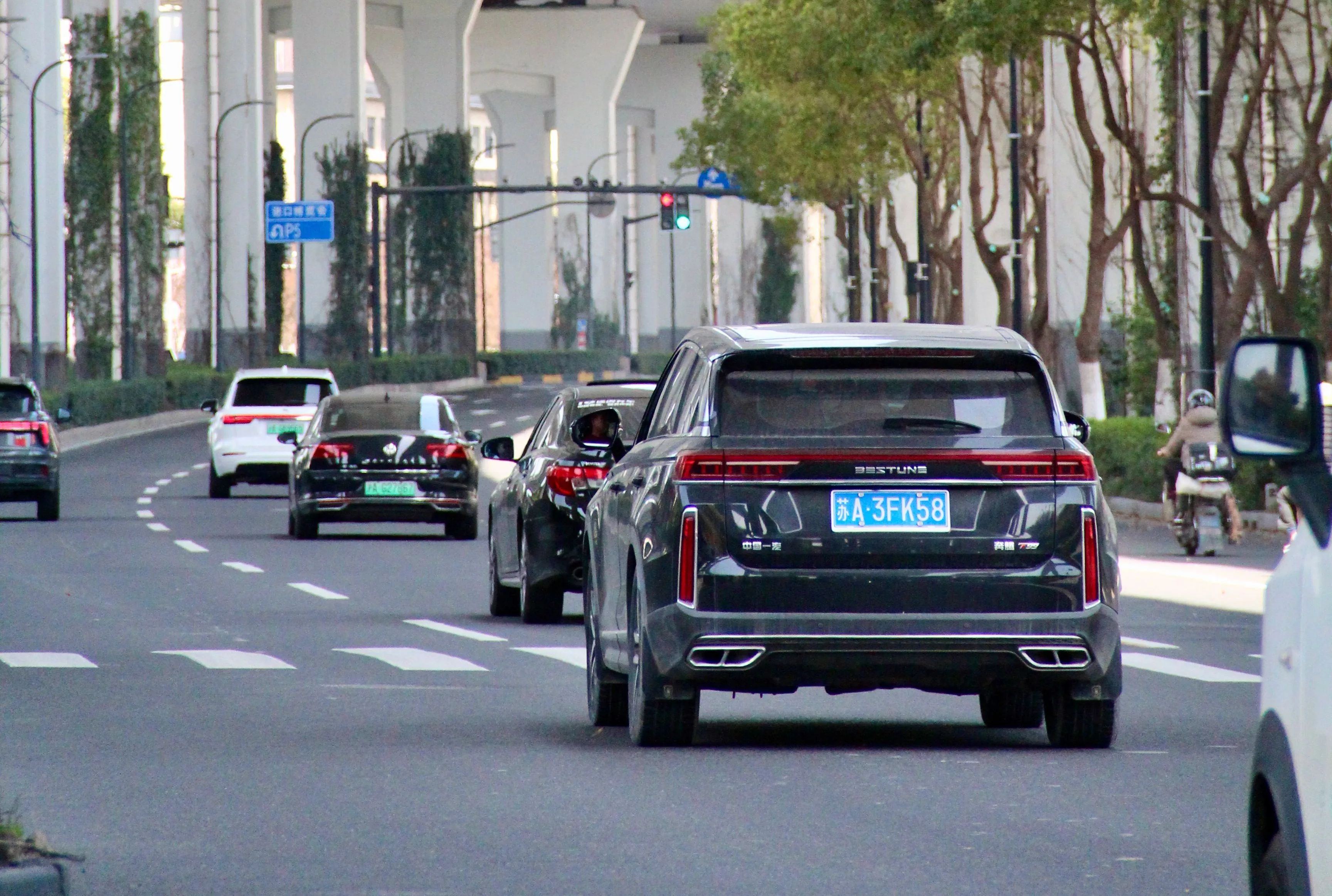
China has set a new target for 2030: 70% of new passenger cars sold in the country must fall into the NEV (New Energy Vehicles) category. More tellingly, the goal is no longer simply to increase electric-car sales. Beijing wants to improve vehicle energy consumption, drive industry consolidation and turn Chinese manufacturers into global leaders.
Seventy per cent is no longer far away
China’s Ministry of Industry and Information Technology, together with eight other government agencies, has published a development plan for the automotive industry for 2026-2030. Under the plan, NEV passenger cars must account for 70% of the market by the end of the decade, while the target for commercial vehicles is 40%.
The target is not as far-fetched as it may seem at first glance. In August 2026, NEV models already accounted for a record 60.6% of new-car sales in China. Monthly sales exceeded 1.64 million vehicles.
China therefore does not need to turn the market upside down over the next four years. The transition has largely already taken place.
Electric cars required to achieve 11.5 kWh/100 km
The development plan also sets specific energy-consumption targets for manufacturers. By 2030, the average fuel consumption of new passenger cars must fall to around 3.3 l/100 km. China has set an average energy-consumption target of around 11.5 kWh/100 km for electric passenger cars.
The latter figure is particularly aggressive. Large electric SUVs currently often consume 16-20 kWh/100 km or more on the WLTP cycle. An average of 11.5 kWh/100 km will force manufacturers to improve aerodynamics, power electronics, motors and thermal management, while keeping weight under control.
Competition in China is therefore no longer solely about who can fit the largest battery into a car’s floor. Increasingly, the key question is who can travel further with the same battery.
Autonomous driving must reach the mass market
Another major target concerns automated driving. By 2030, China wants to bring cars equipped with the relevant technology into widespread use and deploy highly automated driving systems on motorways, urban expressways and selected city streets.
This gives domestic manufacturers another competitive advantage. The battleground for Chinese cars is shifting ever faster from engines and batteries towards software, sensors and computing power.
For European manufacturers, this creates an uncomfortable situation. A Chinese competitor may arrive not only with a cheaper battery and more generous standard equipment, but also with a faster-developing driver-assistance system.
Beijing wants to end the endless price war
One of the most interesting elements of the development plan concerns production capacity. China wants to strengthen oversight of the expansion of both vehicle and battery production, while encouraging corporate mergers and restructuring. The government also wants to curb unhealthy competition for investment among local authorities.
The underlying problem is simple: too many carmakers operate in China, and an intense price war is squeezing profit margins.
The state now wants to increase not only sales volumes but also productivity. By 2030, labour productivity in the automotive industry must be 15% higher than in 2025.
In effect, the next phase is beginning: fewer weak players, higher production volumes for successful companies and greater pressure on the rest of the world.
For Europe, export pressure matters more than 70%
The electrification of China’s domestic market directly affects Europe. As the domestic market becomes saturated, factories that have grown enormously must seek sales elsewhere.
This is already happening. Chinese passenger-car exports in the first eight months of 2026 exceeded the full-year 2025 level, with growth driven largely by electric cars and plug-in hybrids. Europe is among the main export destinations.
Beijing’s 70% target is therefore not merely a matter of Chinese domestic policy. It means that the world’s largest car market will further expand battery production, electric-vehicle development capacity and software capabilities.
For European manufacturers, competition is therefore becoming increasingly uncomfortable. China is no longer preparing for the electric-car era. It has already arrived there, and over the next four years the country wants to turn that industrial lead into an export advantage.


