
Chrysler abandons premium ambitions to build affordable cars for Stellantis
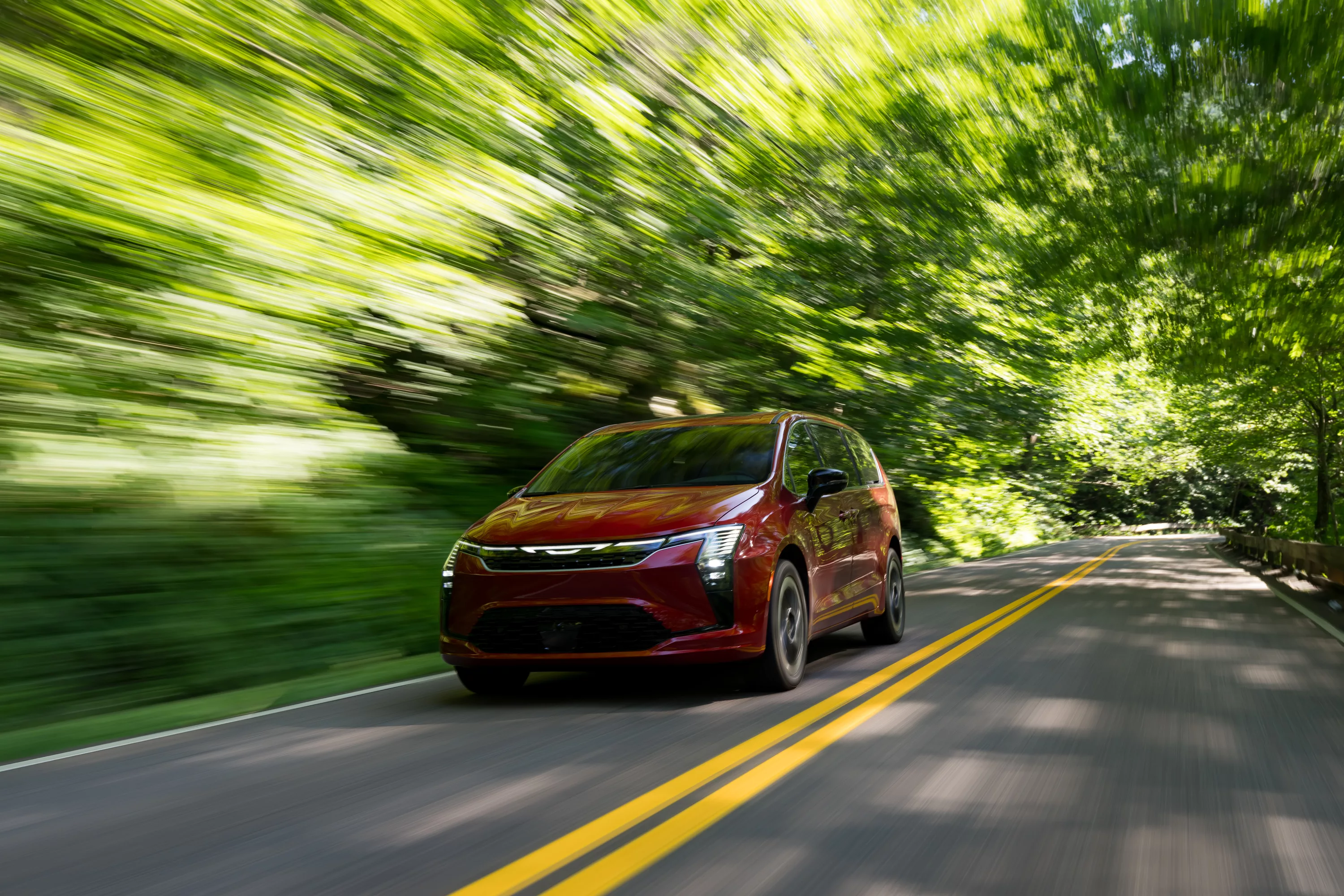
Chrysler, once an upmarket American car brand, has been given a very different role in Stellantis’s new strategy. The group wants to make the 101-year-old marque the most accessible brand in its North American line-up, adding three new crossovers alongside the Pacifica. Prices for the cheaper models are expected to start at around $25,000, or approximately €21,300.
This is not simply a case of adding a few cheaper models to Chrysler’s range. Stellantis is rebuilding the brand’s entire positioning. Jeep can focus on SUVs, Ram on pickup trucks and commercial vehicles, and Dodge on sportier models. Chrysler must target customers primarily looking for a practical, sensibly priced family car.
After years of drifting, this is at least a strategy ordinary people can understand.
A one-model-family brand gains three new crossovers
Stellantis’s North American management confirmed at its Investor Day presentation that the Pacifica will remain at the centre of Chrysler’s line-up, but the brand’s real growth must come from three new crossovers.
The first will be a mid-sized model built by Stellantis on the STLA One architecture. Two further, smaller models will use platforms already proven by the group in Europe. Stellantis says this is precisely what will allow Chrysler to enter the $25,000 to $35,000 price bracket, where American car brands are currently virtually absent.
At current exchange rates, that equates to approximately €21,300 to €29,800 before local taxes and other costs. US price lists cannot, of course, be compared directly with European ones, because US MSRPs do not include sales tax. More important is the price positioning: Chrysler must start competing at the affordable end of the market rather than trying to force another semi-premium niche between Dodge and Jeep.
Stellantis’s own reasoning is quite straightforward. A purchase decision driven by practicality must also be supported by an affordable price.
Chrysler has shrunk to almost nothing over the years
The new strategy addresses a problem that Stellantis, and FCA before it, allowed to develop. Chrysler’s model range shrank year after year until essentially only the Pacifica minivan and its cheaper Voyager version remained.
As recently as the 2000s, Chrysler sold the 300 saloon, PT Cruiser, Sebring, Crossfire and several minivans. The 300 has now been discontinued, and the brand’s entire identity rests on one ageing model family.
That is a rather embarrassing outcome for a brand founded in 1925 that was once one of the pillars of the American automotive industry.
Stellantis now says outright that Chrysler is still needed. Not to preserve a historic name, but to create clearer separation between the group’s North American brands. If Chrysler takes on the role of the conventional family car brand, Dodge, for example, does not need to dilute its range to pursue a more affordable and rational customer.
In any case, this is far more logical than trying to make every brand in the group appeal to the widest possible audience.
European technology will help keep prices down
The most interesting detail concerns the two smaller crossovers. Stellantis will not develop entirely new platforms for them from scratch in America, but will instead use existing European technology.
This gives Chrysler a very important cost advantage. Stellantis already has architectures, powertrains and components developed for Fiat, Citroën, Peugeot, Opel and other brands. Adapting them to North American requirements is cheaper than creating a completely new technical base for a brand whose sales volumes still need to be rebuilt.
According to MotorTrend, the two smaller models will be called Arrow and Arrow Cross, and their technical basis comes from Fiat’s Grizzly model family. However, Stellantis design chief Ralph Gilles stressed that Chrysler does not intend simply to stick a Fiat badge on its cars.
That distinction is important. Sharing platforms and powertrains is unavoidable in today’s automotive industry, but if Chrysler is to survive in the US, the cars must at least feel like Chryslers in their design, chassis tuning, equipment and user experience.
Otherwise, buyers simply get a European Fiat with an American accent.
The Pacifica shows Chrysler’s new face
Before the new crossovers arrive, the updated 2027 model-year Pacifica has gone on sale. Chrysler revised the car’s front end, introduced a new winged logo and streamlined the price list. The entry-level Pacifica LX costs $41,495 in the US, or around €35,300 before taxes.
There has been no technical revolution. The naturally aspirated 3.6-litre Pentastar V6 remains under the bonnet, producing 214 kW and 355 Nm. The engine is paired with a nine-speed automatic transmission. All-wheel drive remains available alongside front-wheel drive.
More importantly, the Pacifica’s new styling introduces the design language of the next generation of Chryslers. The updated winged logo, cleaner front end and influences from the Halcyon concept are expected to carry over to future crossovers.
The Pacifica nevertheless remains a valuable mainstay for Chrysler. According to Stellantis, Chrysler’s minivan family retained its position as the US segment sales leader in 2025.
An affordable Chrysler fills a large gap in America
The $25,000 to $35,000 price range is not a random choice. New-car prices in America have risen in recent years, while domestic manufacturers have removed cheaper passenger cars from their line-ups one after another.
Ford has effectively abandoned conventional passenger cars in the US apart from the Mustang. GM ended Chevrolet Malibu production. Stellantis’s own Dodge Dart and Chrysler 200 disappeared years ago. Manufacturers redirected capital towards larger SUVs and pickup trucks because they made more money from them.
The result is odd. America’s three largest automotive groups know how to sell vehicles costing $50,000, $70,000 or even $100,000, but local choice is thin at $25,000.
Filling that gap gives Chrysler a much more credible future than another attempt to turn the brand into an electric premium marque.
The electric future has been pushed into the background
Chrysler’s previous revival plan looked very different. Airflow and later Halcyon were meant to point the way towards an electric future, and the brand’s then chief Christine Feuell described electrification as a central part of Chrysler’s new identity.
The market and Stellantis management have changed direction in the meantime.
Halcyon’s design influence has not disappeared, but the new FastLane 2030 strategy prioritises sales volume, affordability and the use of existing platforms. The Pacifica plug-in hybrid was also dropped from the line-up for the 2026 model year.
That does not mean Chrysler cannot offer electric cars again in the future. It does mean, however, that an electric car is no longer the justification for the brand’s existence. First, Chrysler needs to start selling cars again.
An affordable Chrysler would be rather unnecessary in Europe
From a European perspective, Chrysler’s new strategy is paradoxical. Technically, at least some future Chryslers will be more familiar to Europeans than to Americans, because they will be based on Stellantis’s European platforms. In market-positioning terms, however, Chrysler makes little sense here.
Stellantis already has Fiat and Citroën at the more affordable end in Europe, Opel and Peugeot slightly higher up, while Jeep covers the international SUV niche. Adding Chrysler in the same price bracket would create more internal competition than new customers.
In North America, the situation is the reverse. Following Fiat’s marginalisation, Stellantis effectively lacks a conventional affordable family-car brand there. There is no point turning Jeep into a budget brand, Dodge needs a sporty identity, and Ram must remain focused on pickup trucks and commercial vehicles.
For the first time in a long while, Chrysler therefore has a very simple task: build normal cars at normal prices.
That sounds almost too modest for a rescue plan for a century-old brand. But after years of grand electric promises and a model range that had shrunk to almost nothing, dull rationality may be exactly what Chrysler needs most.


