
Hyundai to expand N range to more than seven models
 1/29
1/29
Hyundai is preparing a much bigger role for its N division. The company aims to increase annual N-model sales to more than 100,000 cars by 2030, with the range set to include more than seven N models by then. The most interesting detail concerns powertrains: Hyundai has no intention of tying the future of its performance cars exclusively to electric motors.
100,000 cars a year would transform the scale of N
Hyundai confirmed at its 2026 Investor Day that the N division is targeting annual sales of 100,000 cars by 2030. Alongside full N models, the company will introduce a new, higher-volume performance tier positioned effectively between N Line and the most focused N cars.
The specific target for model count comes from Hyundai’s 2025 strategy. Under that plan, the N range is to grow to more than seven models by 2030.
That distinction matters. Hyundai has not said that seven completely new N cars will necessarily be launched between now and 2030. The target refers to the size of the line-up at the end of the decade.
N will not become EV-only
In recent years, the division’s most visible cars have been the electric Ioniq 5 N and Ioniq 6 N. Hyundai, however, does not intend to make electric propulsion the only option for future N models.
N management has confirmed that Hyundai still sees room for combustion-engined cars as well as plug-in hybrids. EVs will remain a central part of the programme too.
That is particularly relevant in Europe. Hyundai ended sales of the i20 N and i30 N here, leaving the brand without a relatively affordable combustion-engined performance model.
It does not automatically mean the i20 N or i30 N will return. Hyundai has not officially confirmed European successors to either model. A multi-powertrain strategy does, however, leave the technical door open.
A new tier will sit between N Line and N
One of the most interesting decisions in the strategy is the creation of a higher-volume performance category. Hyundai wants to use N-division technology in cars that sit below full N models in both price and capability.
The logic is straightforward. N Line currently focuses mainly on sportier styling and relatively modest technical changes. A full N model, by contrast, receives substantial revisions to its chassis, powertrain, cooling and electronics.
There is room between the two for customers who want more performance than a regular Hyundai but do not need the track capability of an Ioniq 5 N or i30 N.
In principle, the strategy resembles what BMW does with its M Performance models and Mercedes-AMG with its less extreme variants. The flagship builds the image, while the model one rung below can deliver greater sales volume.
Hyundai is preparing a much broader model offensive
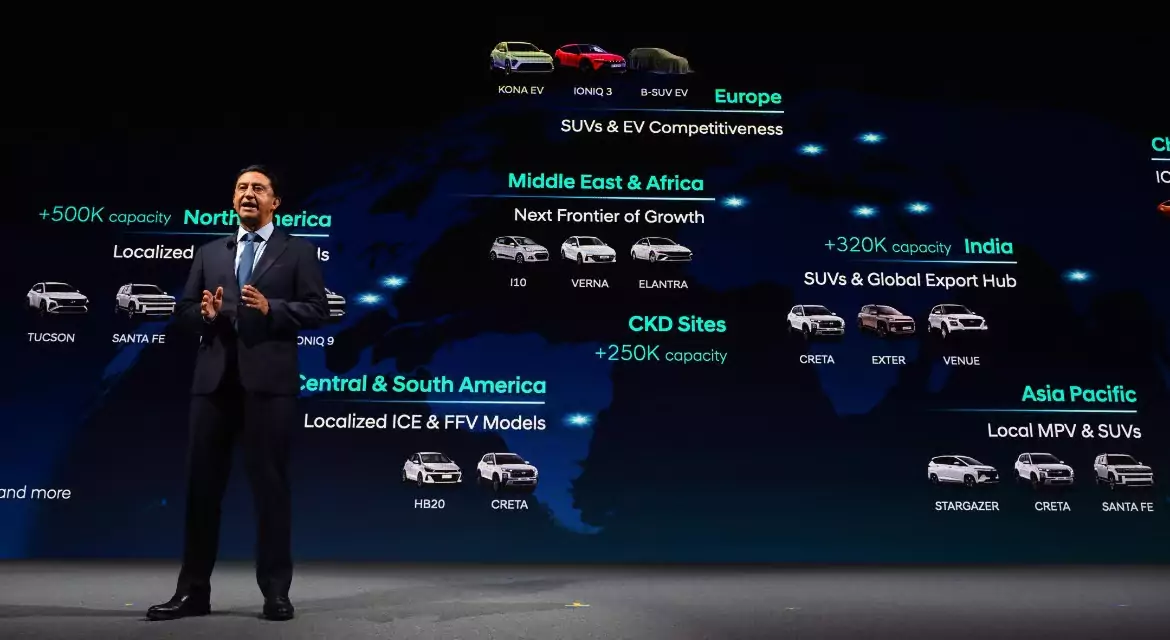
The expansion of N forms part of a wide-ranging Hyundai product programme. By 2030, the manufacturer plans to launch or substantially update more than 100 models globally. Europe will account for 41 launches or major updates.
At the same time, the powertrain mix will broaden. Hyundai is increasing the role of hybrids and plans to launch its first EREV models in the first half of 2027. In these, the wheels receive their primary propulsion from the electric drivetrain, while the combustion engine helps extend driving range.
For the N division, that means a larger technical toolbox. A future N model will not necessarily have to follow a single fixed formula.
For European enthusiasts, the type of cars matters more than the number
Hyundai N has managed to transform the image of the wider brand in a relatively short time. The i20 N and i30 N proved that Hyundai could build a convincing hot hatch. The Ioniq 5 N then showed that the company could compensate for an EV’s high weight and quiet powertrain with clever chassis engineering, cooling and driver-focused software.
Hyundai now faces a more difficult task. To reach annual sales of 100,000 cars, N has to become a much larger business, but the badge cannot afford to lose its technical credibility in the process.
That is where powertrain diversity becomes important. A large electric crossover and a lightweight combustion-engined hot hatch offer completely different driving experiences, and there are enthusiasts willing to buy both.
If Hyundai can offer more than seven N models by 2030 and spread them across electric, hybrid and combustion powertrains, N will become a considerably more serious global performance brand than it is today.
It still has a long way to go before reaching the scale of BMW M or Mercedes-AMG, but Hyundai’s ambition is clear: N is no longer meant to denote a handful of enthusiast models, but a strong product division in its own right.


