
Mazda6e earns five-star ANCAP rating, but the result is based on Euro NCAP’s testing
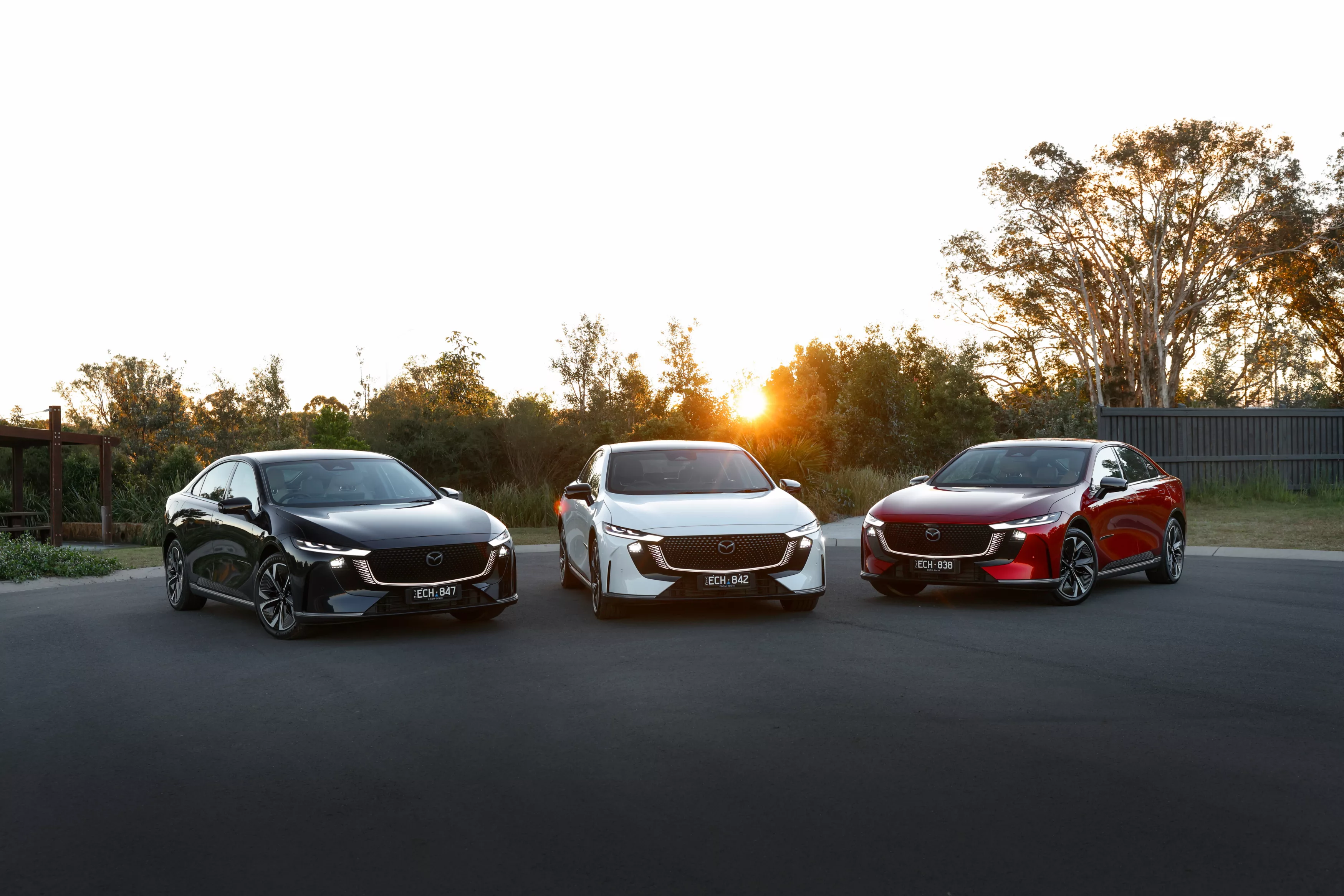
The Mazda6e has earned the maximum five-star safety rating from ANCAP in Australia and New Zealand. For European buyers, however, there is an important nuance: ANCAP did not put the car through a separate full 2026 crash-test programme. The rating was transferred from Euro NCAP’s 2025 test results and uses ANCAP’s 2023–2025 assessment criteria. That does not diminish the Mazda6e’s strong performance, but it avoids creating the impression that the car completed two independent full-scale crash-test programmes.
ANCAP confirms strong occupant protection
According to ANCAP’s official report, the Mazda6e scored 93 per cent for adult occupant protection, 93 per cent for child occupant protection, 74 per cent for vulnerable road-user protection and 79 per cent for Safety Assist. The five-star rating applies to all Mazda6e variants sold in Australia and New Zealand.
In the frontal-offset MPDB test, the passenger compartment remained stable. Protection of the driver’s chest and lower legs was rated adequate, with good protection for the other assessed body regions; the front passenger received good protection throughout. In the side-impact test, protection of all critical body areas was good and the car scored maximum points. In the oblique-pole test, protection of the driver’s chest was rated adequate, while the other critical body regions were well protected.
The Mazda6e is equipped with dual front airbags, side chest-protecting airbags, curtain airbags and a centre airbag between the front seats. Its autonomous emergency braking systems cover car-to-car, vulnerable-road-user, junction and crossing, reversing and head-on scenarios. Lane-keeping assistance, emergency lane keeping and speed-sign recognition are also standard.
Euro NCAP published its Mazda6e result in October 2025: 93 per cent for adult occupant protection, 93 per cent for child occupant protection, 74 per cent for vulnerable road users and 77 per cent for Safety Assist. ANCAP’s rating was transferred from that European test programme. The published Safety Assist percentages are not identical — ANCAP lists 79 per cent — but this does not represent a second independent set of full crash tests.
The timing also matters. ANCAP introduced a substantially revised rating framework for vehicles assessed under its 2026 criteria, while the Mazda6e carries a 2025 rating datestamp and is assessed against the 2023–2025 criteria. Its five-star result therefore should not be compared directly, score for score, with a model rated under the new 2026 methodology.
Chinese-sourced technology does not automatically mean a safety compromise
The Mazda6e is the European version of the Mazda EZ-6 sold in China. It was developed through Mazda’s long-standing partnership with Changan Automobile. Mazda says the car combines its own design, craftsmanship and Jinba-ittai driving character with Changan’s electrification and smart-cabin technologies.
That background makes the safety result strategically important for Mazda. In Europe, the five-door hatchback is 4,921 mm long and has a 2,895 mm wheelbase, putting it into contention with electric cars such as the Tesla Model 3, BYD Seal and Hyundai Ioniq 6. Five Euro NCAP stars are not an exceptional achievement in that company so much as an important baseline for competing credibly in the segment.
The Mazda6e’s appeal lies more in its overall balance. The Estonian-market version uses a 68.8 kWh LFP battery and a 190 kW rear-mounted permanent-magnet synchronous motor producing 320 Nm. It accelerates from 0 to 100 km/h in 7.6 seconds and reaches a top speed of 175 km/h. Those figures do not put it at the top of the class for straight-line performance, but Mazda is not positioning the car as an acceleration specialist.
Price and charging speed matter in Estonia
According to Mazda Estonia, the 68.8 kWh version offers up to 479 kilometres of WLTP range. It can accept up to 165 kW of DC charging power, with a 10–80 per cent charge taking around 24 minutes in suitable conditions. Mazda also says 15 minutes of charging can add up to 235 kilometres of range when the battery’s state of charge and temperature, ambient conditions and charger output are favourable.
The Mazda6e can tow a braked trailer weighing up to 1,500 kilograms. That gives it a useful practical advantage among electric passenger cars, where meaningful towing capacity is not always a given.
Mazda Estonia’s current promotional offer lists the Takumi from €38,990 and the Takumi Plus from €41,390, including local VAT; the offer applies to a limited number of vehicles in stock. At that price point, the Mazda6e must compete not only with established European, Japanese and Korean rivals but also with aggressively priced Chinese EVs.
ANCAP’s five stars do not give the Mazda6e a second independent body of crash-test evidence, but they do confirm that the Euro NCAP-based assessment is accepted for Australia and New Zealand under ANCAP’s 2023–2025 criteria. For Mazda, that matters because it demonstrates that a jointly developed EV using Changan technology can meet demanding international safety standards while remaining competitively priced.


