
Renault 5 now travels up to 430 kilometres on the same battery
 1/2117


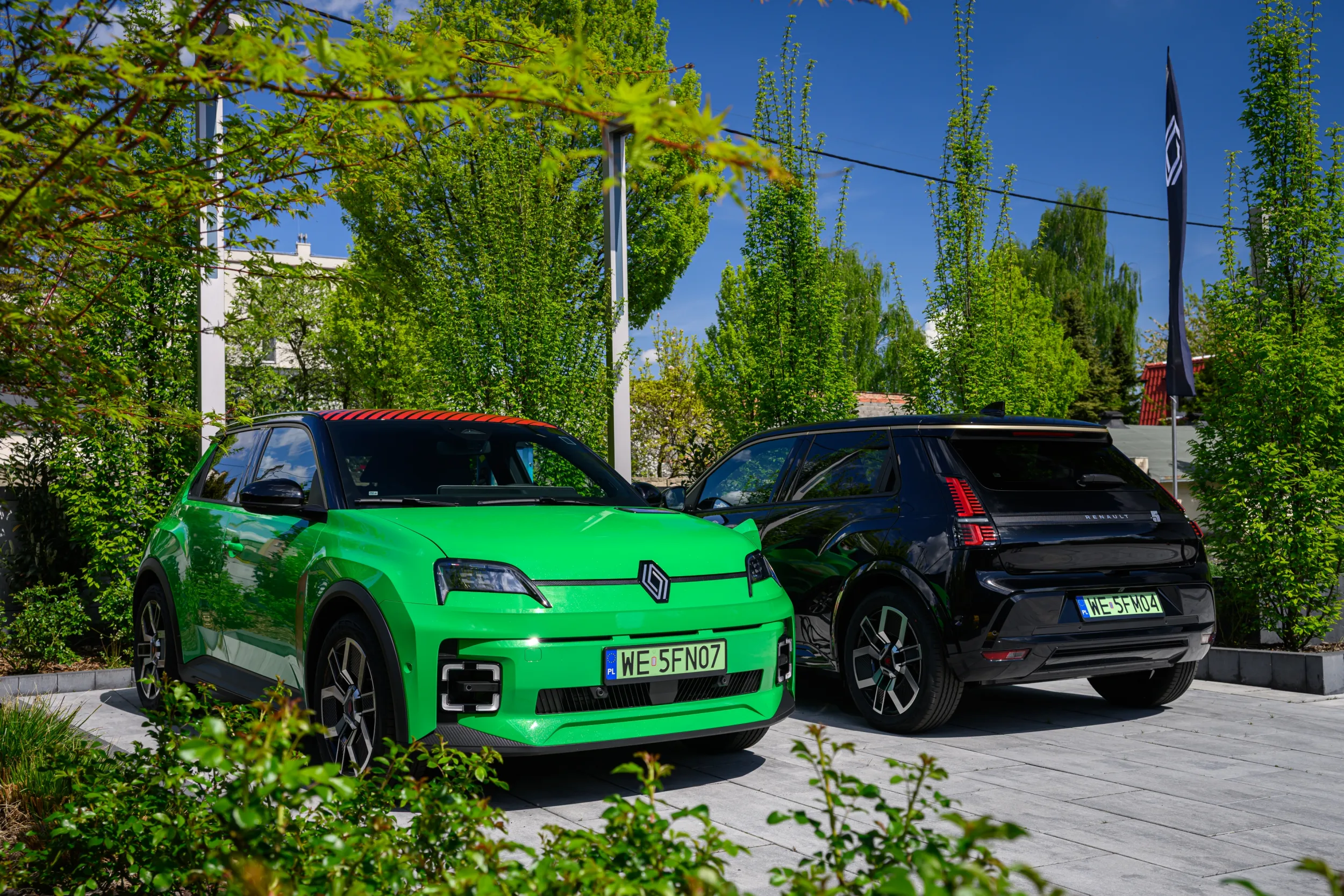
Renault has increased the maximum WLTP range of the electric 5 E-Tech Electric from 410 km to 430 km without enlarging the battery. The near-five-per-cent improvement comes from optimised aerodynamics and battery electronics. For a small EV, that is a meaningful gain because the extra kilometres do not require a larger, heavier battery.
The 52 kWh battery now delivers up to 430 kilometres
Renault has improved the efficiency of both main battery versions of the 5 E-Tech Electric. The larger 52 kWh Comfort Range battery now delivers up to 430 km on the WLTP cycle, up from 410 km. Battery capacity is unchanged.
This version is paired with a 110 kW electric motor. Renault offers the combination in Evolution, Techno, Iconic Cinq and Roland-Garros trim levels.
The additional 20 km represents an increase of roughly 4.9 per cent in the official driving range.
The smaller 40 kWh Urban Range battery sees a more modest improvement. Its WLTP range rises from 312 km to 315 km. This version uses a 90 kW electric motor.
The extra range comes from aerodynamics and electronics
Renault points to two main changes behind the increase in range. The company has improved the car’s underbody aerodynamics and fitted new door mirrors. It has also optimised the battery electronics.
That matters more in EV development than it might initially appear. One way to increase range is simply to add more battery cells, but doing so also increases weight, cost and material use. Reducing energy consumption improves range without bringing those penalties.
On the Renault 5, the effect is close to five per cent for the larger-battery version. In engineering terms, the car can now travel further on the same amount of stored energy.
A 430-kilometre range strengthens the Renault 5’s position
A 430 km WLTP range does not turn the Renault 5 into a long-distance cruiser, but it is a competitive figure for a compact electric car.
At less than four metres long, the car’s natural environment remains the city and its surroundings. The longer-range battery version nevertheless makes the model more realistic as a household’s only car.
That is why the extra 20 km matters more than the raw number might suggest. European buyers want small EVs to be affordable and compact, but they do not want those qualities to rule out the occasional longer journey.
Efficiency is becoming crucial for small EVs
Renault’s approach addresses a wider problem in Europe’s electric-car market. In a small car, the battery accounts for a particularly large share of the vehicle’s cost, and every additional kilowatt-hour adds both price and weight.
A 52 kWh battery is already a substantial energy reserve for a car the size of the Renault 5. Instead of making it larger, Renault has reduced energy losses.
Rivals will have to move in the same direction. In Europe, the Renault 5 competes with cars including the Citroën ë-C3 and Fiat Grande Panda Electric, while increasingly affordable Chinese EVs are adding further pressure.
In this class, the biggest battery is not necessarily the most important attribute. A more successful combination may be a moderately sized battery, low energy consumption, sufficient charging speed and a low purchase price.
A small update points to the next stage of EV development
This Renault 5 update is not a conventional model refresh in which the car receives a larger battery or a more powerful motor. The core hardware remains largely unchanged, but the car travels further on the energy it already carries.
Improvements like these will become increasingly important as EV technology matures. In earlier generations, manufacturers often achieved longer range by fitting larger batteries. Aerodynamics, power electronics, thermal management, tyres and software are now becoming more decisive.
Renault’s 20 km gain may not sound revolutionary, but an improvement of almost five per cent without increasing battery capacity is more meaningful from an engineering perspective than simply adding a few extra kilowatt-hours.
In the battle for affordable EVs in Europe, efficiency could become one of the next major competitive fronts. Lower energy consumption simultaneously means more range, less frequent charging and the ability to keep battery size under control.


