
Mitsubishi prepares to return to North America’s pickup market with Nissan’s help
 1/29
1/29 
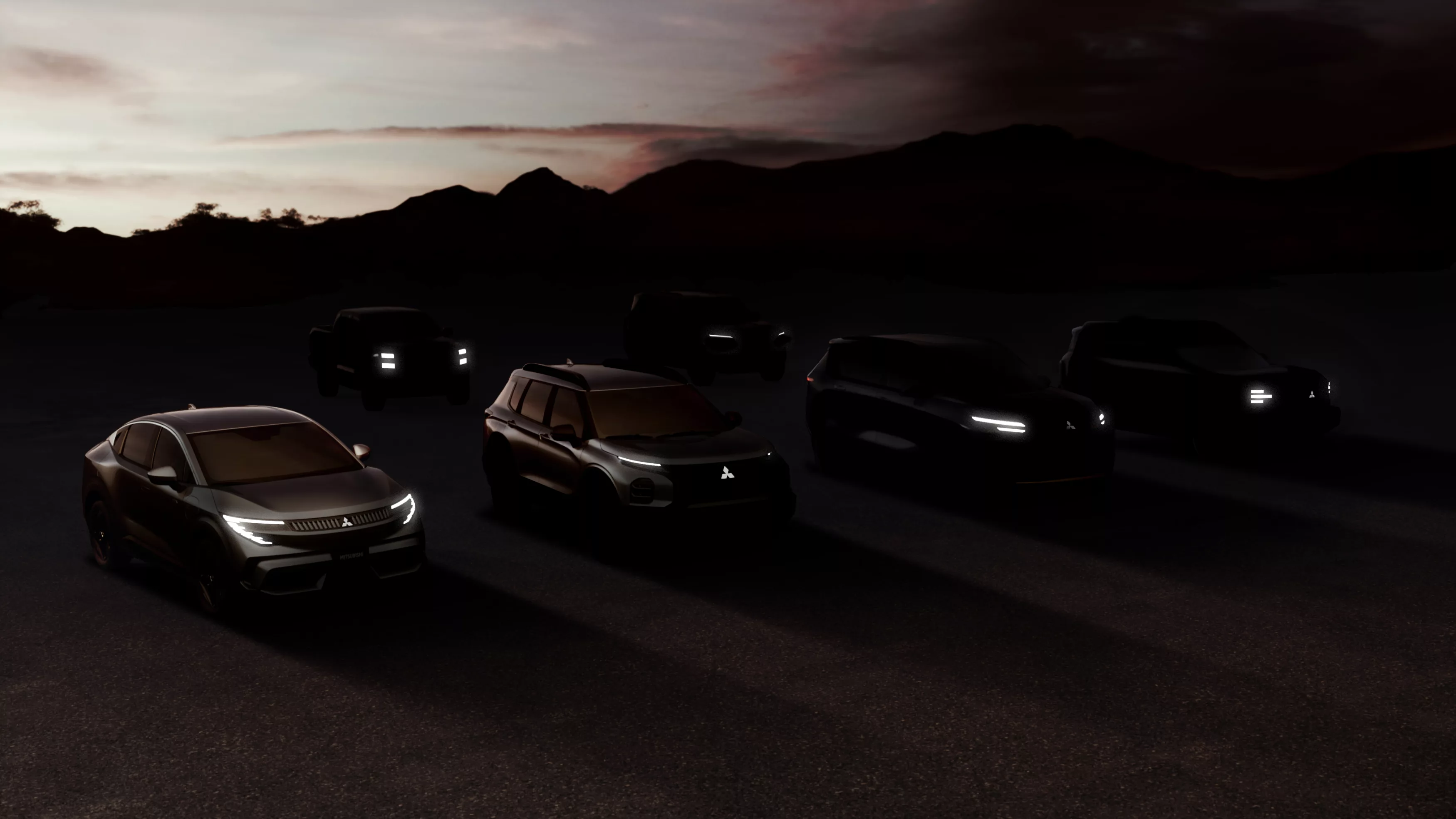
Mitsubishi wants to sell pickups in North America again after a long absence. The company’s updated Momentum 2030 strategy confirms plans to re-enter the segment in partnership with Nissan. Mitsubishi has not yet disclosed the new model’s technical details, but the pickup forms part of a much broader overhaul of its line-up.
Mitsubishi wants to expand its US range quickly
Mitsubishi Motors North America has published an update to its Momentum 2030 strategy, centred on renewing the US model range, entering new segments and increasing the number of vehicles aimed at off-road and active-lifestyle buyers.
The first new models are already known. The fully electric Eclipse Sportback will reach the US market in autumn 2026, followed in the first quarter of 2027 by a more off-road-focused version of the Outlander.
The pickup will arrive later. Mitsubishi’s wording remains cautious: the company says it “intends to return” to the North American pickup segment in collaboration with Nissan. That confirms the direction of the project, but not yet the vehicle’s exact technical specification.
A Nissan platform has not yet been officially confirmed
It is important to separate Mitsubishi’s official announcement from background reporting about the project. The company’s press release does not identify the new pickup’s platform, engine, dimensions, drivetrain layout or launch date. Nor does Mitsubishi officially state that the vehicle will necessarily be based on the current Nissan Frontier.
The only confirmed element is the partnership with Nissan. The extent to which the two vehicles will share a platform, powertrains and other components will become clear later. Such cooperation would, however, fit neatly with the long-term strategy of the Renault-Nissan-Mitsubishi Alliance, which has spent years expanding the use of shared platforms and components to spread development costs across its brands.
Mitsubishi returns to the segment after a 17-year absence
Mitsubishi’s last pickup developed for the US market was the Raider, sold from 2005 to 2009. It was not based on the Mitsubishi Triton, but was closely related to the Dodge Dakota. Using a partner’s hardware is therefore nothing entirely new in the history of Mitsubishi pickups in North America.
The competitive landscape is much tougher today. In the midsize pickup class, the Toyota Tacoma, Ford Ranger, Chevrolet Colorado, GMC Canyon and Nissan Frontier are all fighting for US buyers. Mitsubishi would therefore be returning to a segment where rivals already have strong products, established customer bases and extensive dealer networks.
Bringing Nissan into the project reduces the risk for Mitsubishi. Joint development or component sharing would allow the company to spread its investment across higher production volumes.
Nissan and Mitsubishi are already linked through pickups
Cooperation between the two Japanese manufacturers in the pickup segment is not new. Nissan and Mitsubishi already make use of each other’s manufacturing and development capabilities in different regions, while the Alliance’s broader model calls for greater sharing of platforms, factories and powertrains.
That is particularly logical for pickups. Compared with a unibody passenger car, a traditional midsize pickup requires a very different type of structure, and developing one independently demands substantial investment.
Mitsubishi itself knows the segment well through the Triton, also sold as the L200 in many markets. Nissan, meanwhile, has the Frontier and an established position in North America.
Combining the strengths of the two companies therefore makes economic sense, even if the future model’s technical recipe has yet to be revealed.
Mitsubishi is putting off-road capability back at the centre
The pickup is not an isolated project within the Momentum 2030 strategy. Mitsubishi wants to strengthen its entire North American line-up of vehicles aimed at off-road use and active lifestyles.
The more rugged Outlander variant due in early 2027 already points in that direction. Mitsubishi says the strategy reflects growing interest among US buyers in tougher, more versatile vehicles.
That approach fits Mitsubishi’s historic identity far better than the relatively narrow model range it has offered in recent years. The Pajero, Montero, L200 and the brand’s success in the Dakar Rally built much of Mitsubishi’s international reputation around four-wheel drive.
Even so, it would be premature to assume that every historic model name will return to the US. Mitsubishi has not, for example, confirmed a new Pajero or Montero for North America in this announcement.
The US project does not determine the future of Europe’s L200
From a European perspective, the North American pickup project needs to be kept separate from the Mitsubishi Triton, sold as the L200 in many markets.
Mitsubishi’s official Momentum 2030 announcement concerns North America. It does not imply that the Nissan-linked pickup will replace the L200 in Europe, or even that it will be sold in Europe at all.
The European pickup market differs sharply from the US. Emissions regulations, taxation, lower sales volumes and the declining role of diesel engines make the business case for new models increasingly difficult.
North America is the opposite. Pickups represent a large and profitable market, giving Mitsubishi a clear reason to try to regain a foothold.
For now, the most important thing is not to read more into Mitsubishi’s announcement than the company actually said. The return to the pickup segment is a strategic intention, and cooperation with Nissan is confirmed. The platform, powertrain, name, technical specifications and launch timing have not yet been made public.
That is precisely what makes the project interesting. Mitsubishi is preparing to return to a segment it left in 2009, but this time it is doing so with Alliance cooperation and as part of a much broader push to rebuild its presence in North America.


