
Euro NCAP penalises touchscreen reliance as Chinese electric cars lose safety points
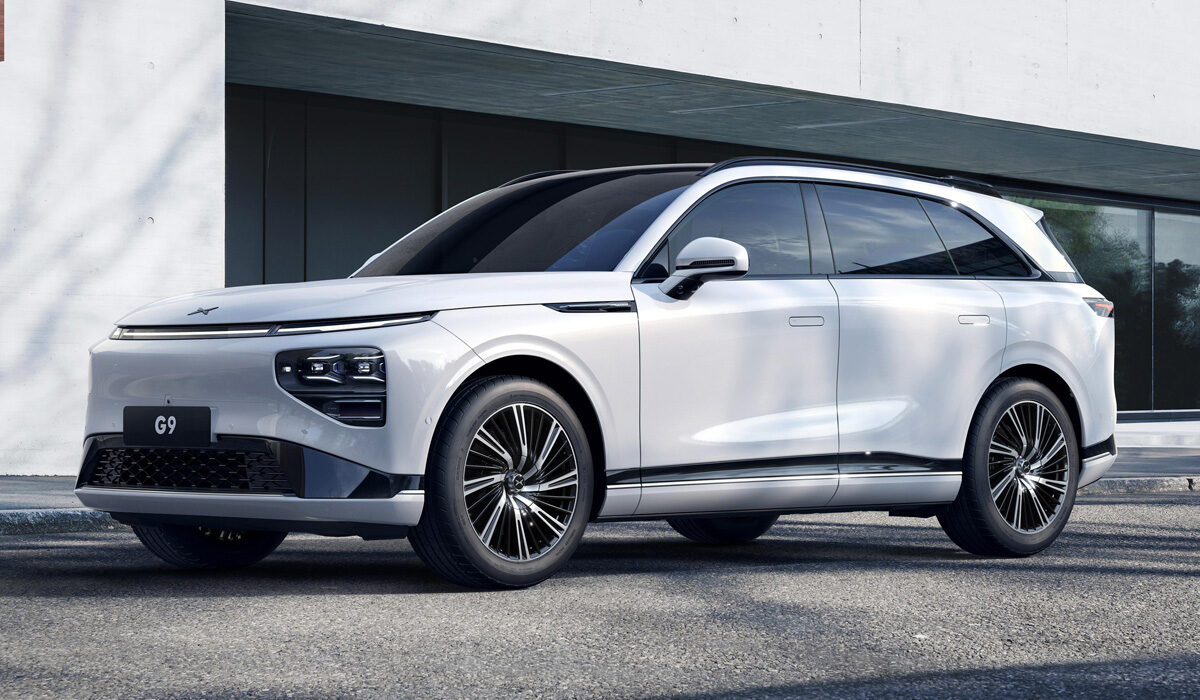
The car industry’s long-running enthusiasm for touchscreens is finally starting to backfire. Euro NCAP’s new safety tests show that controlling basic functions in several Chinese electric cars is unnecessarily complicated. The Leapmotor B05 scored zero points for ease of use of its controls, while the BMW iX3 achieved the maximum score. Yet all the Chinese models in question received five stars in the overall safety assessment.
Physical buttons earn safety points again
Euro NCAP’s 2026 assessment methodology places greater emphasis on the interaction between driver and car.
To achieve the highest rating, indicators, windscreen wipers and washers, hazard lights, the horn and the emergency call function must be operated using physical switches. Hiding them in touchscreen menus reduces the ease-of-use score.
Under the new methodology, the Audi Q7 achieved an overall controls score of 90 per cent and the maximum score for ease of use of the most important driving functions. The Kia EV2 also delivered excellent results.
The Chinese electric MPV Xpeng X9 fared considerably worse. Operation of its basic functions relies too heavily on the central touchscreen, so the car earned just 20 per cent of the available points in that assessment.
Euro NCAP stresses that physical buttons allow drivers to perform important tasks more quickly, reducing the need to look away from the road.
Leapmotor scores zero, BMW takes full marks
The new assessment criteria reveal significant differences between manufacturers. The scores for ease of use of basic controls were as follows:
BMW iX3: 100%. Audi Q7: 100% for basic functions, with an overall controls score of 90%. Cupra Raval: 80%. Geely E2: 80%. Xpeng X9: 20%. Zeekr 7GT: 20%. Aion UT: 20%. Leapmotor B05: 0%.
The Geely E2’s result is particularly telling. A car’s Chinese origins do not automatically mean poor ergonomics, and Geely shows that an affordable electric car can also be equipped with sensibly positioned physical controls.
A low controls score does not, however, mean poor crash safety. The Xpeng X9, Zeekr 7GT, Aion UT and Leapmotor B05 all earned five stars in Euro NCAP’s overall assessment.
Xpeng X9 also struggles with speed-limit recognition
The Xpeng X9’s shortcomings are not limited to touchscreen use. Traffic-sign and speed-limit recognition also caused problems during Euro NCAP’s 2000-kilometre European road test. The system could not reliably interpret conditional speed limits, such as those applying in wet weather or to lorries. There were also shortcomings in displaying the last detected speed limit. In other areas, however, the X9 performed well. Effective collision-avoidance systems and good post-crash safety performance helped it achieve the maximum overall rating of five stars.
The Audi Q7 and Kia EV2 also received five stars. Both cars’ driver-assistance systems take the driver’s attentiveness into account and adjust the intensity of warnings and interventions accordingly.
An important change of direction for Europe’s car industry
The new criteria affect all carmakers competing in the European market. Reducing the number of physical controls has helped manufacturers simplify interiors and cut costs, but Euro NCAP’s methodology now gives a clear advantage to cars whose basic functions can be operated without navigating through on-screen menus.
This is not, however, a law banning touchscreens. Euro NCAP is an independent safety-assessment organisation, and its test results primarily influence vehicle safety ratings and buyers’ choices.
It is also important to note that a car does not have to achieve the maximum score in every assessment category to earn five stars.
Euro NCAP’s message is simple: a large screen does not automatically make a car more modern or safer. If drivers have to search through menus for the right option to operate the wipers or hazard lights, engineers have gone too far at the expense of ease of use.


