
94 per cent of drivers underestimate braking distances on wet roads
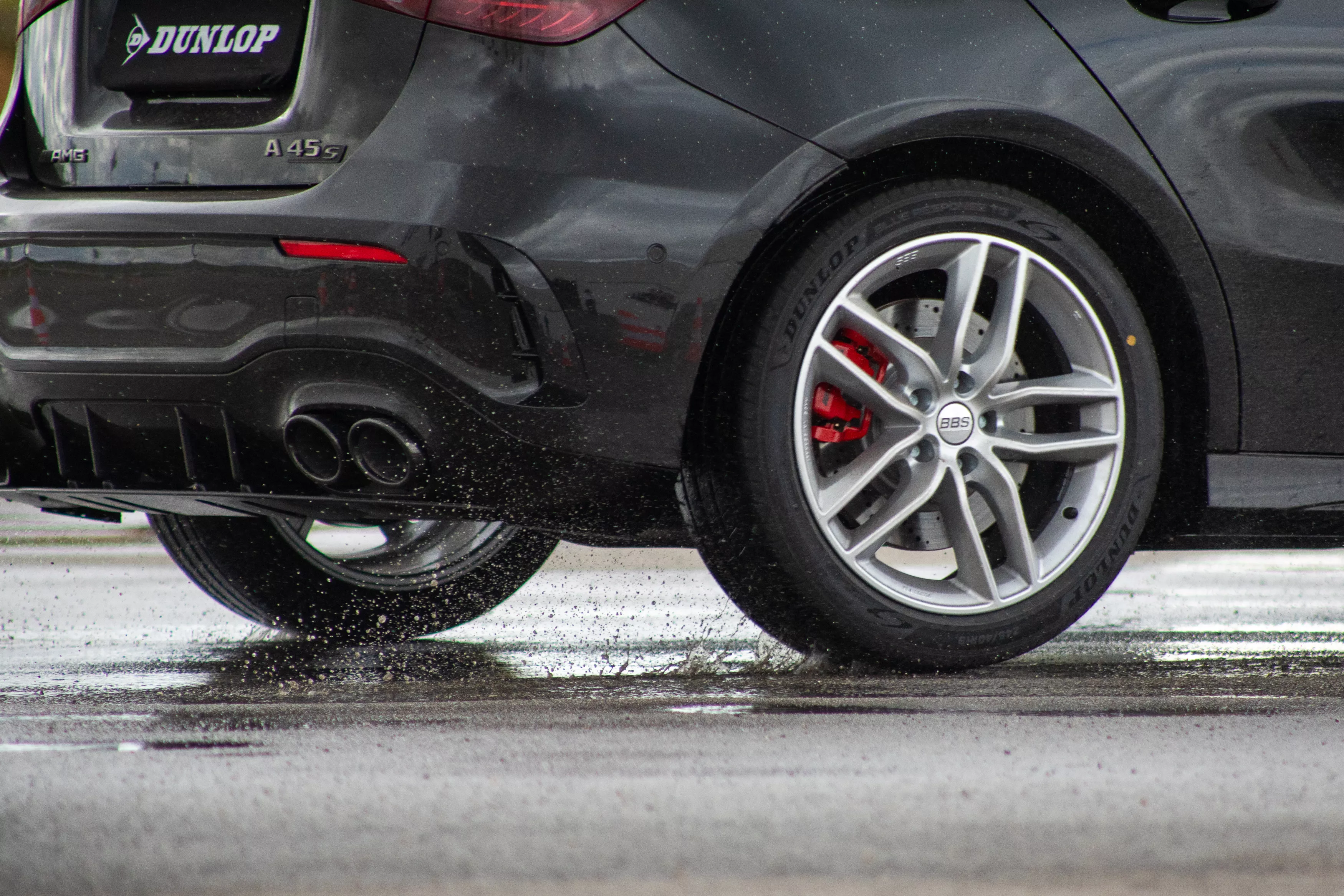
Drivers’ confidence on wet roads often exceeds their actual abilities. A study by British road safety organisation TyreSafe found that 83 per cent of road users believe they can fully control their braking distance, yet only six per cent can estimate the stopping distance on a wet motorway. As many as 94 per cent underestimate the braking risks associated with rain.
Wet tarmac leaves no room for overconfidence
Tyre manufacturer Dunlop highlighted the TyreSafe study as part of Tyre Safety Month in October. It reveals a significant gap between drivers’ assessments of their own abilities and their actual knowledge.
The problem becomes particularly acute at higher speeds. At 100 km/h, a car travels almost 28 metres in one second. If a driver reacts to a hazard one second later, another 28 metres is added to the stopping distance before braking even begins.
On wet tarmac, braking distance depends heavily on tyre condition, temperature and the road surface. Worn tyres also increase the risk of aquaplaning because the tread cannot clear water from the contact patch quickly enough.
Five skills every driver should develop
Dunlop’s technical experts recommend focusing on five principles when driving on wet roads.
Smooth driving. Steering, acceleration and braking should be as smooth as possible to avoid a sudden loss of tyre grip. A longer following distance. In rain, drivers should leave a gap of at least four seconds to the vehicle ahead. This gives them more time to react to obstacles. Watching the road surface. Wet road markings, mud, fallen leaves and water-filled ruts can significantly reduce grip. Choosing and maintaining tyres correctly. Tyre pressure, tread depth and any damage should be checked. Monitoring tyre age. Tyre compounds age even with low mileage. In adverse conditions, a tyre may need replacing after just six years. Dunlop advises against using ten-year-old tyres, regardless of tread depth.
Autumn places greater demands on tyres
According to the UK’s Met Office, the winter half-year periods in 2016–2025 had an average of 13 per cent more precipitation than those in 1961–1990. The frequency of particularly wet winter months has approximately doubled.
Rain is compounded by another important factor: low temperatures. In autumn, wet tarmac can also freeze quickly, while tyres designed for summer conditions lose some of their performance in the cold.
Although the legal minimum tread depth for passenger car tyres is 1.6 mm for summer tyres and 3 mm for winter tyres, meeting that threshold does not guarantee good grip. Particularly in heavy rain, a tyre with deeper tread can provide a significantly greater safety margin.
Dunlop’s message is simple: expensive tyres or modern electronic assistance systems alone will not keep a driver safe in the rain. The most important factors are an appropriate speed, an adequate following distance and the ability to judge how much grip the road actually offers.
Key facts 83% of drivers believe they can fully control their braking distance. 94% of road users underestimate the braking risks on wet roads. Only 6% can estimate the stopping distance on a wet motorway. Recommended following distance in rain: at least four seconds. Tyre age: check from the sixth year onwards and replace after no more than ten years.


