
Fiat revives the spirit of the Multipla with a pickup–SUV hybrid
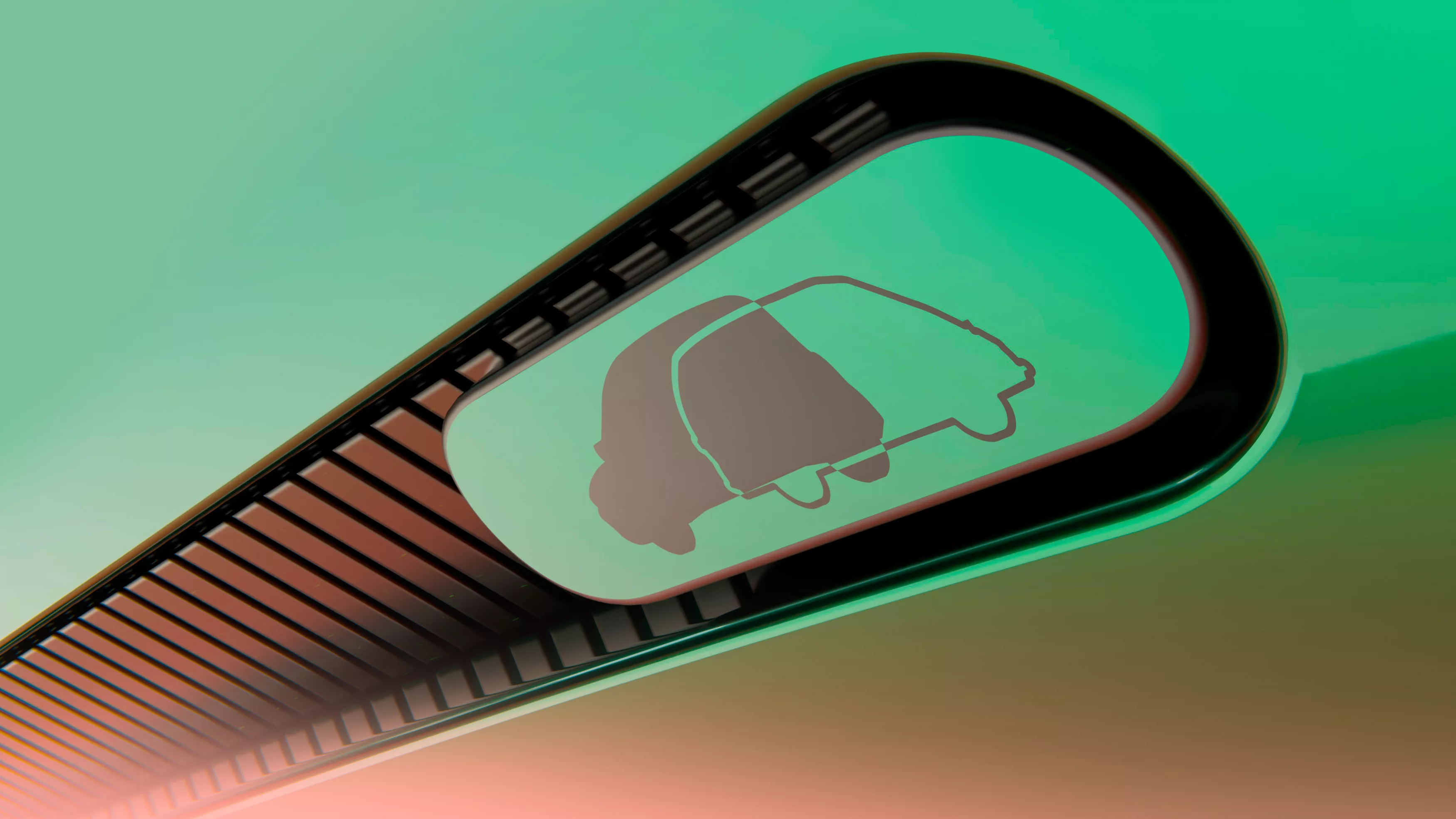
Fiat is not bringing the old Multipla back to the Paris Motor Show. It is doing something considerably stranger, and therefore more interesting. The new Multiplay is a concept designed to transform from an enclosed family car into a pickup with an open load bed in just a few steps. Its name, obsession with space and deliberate departure from convention nevertheless link it very directly to the historic Multipla.
Fiat will unveil the Multiplay at the Paris Motor Show, which opens next week. The manufacturer describes it not simply as a concept car, but as a project pointing to the development direction of future affordable family cars. According to Fiat, the Multiplay combines a pickup’s open load bed and practicality for outings with an SUV’s comfort and configurable interior. A special mechanism allows the car to switch between uses in just a few steps.
That sounds grand in marketing terms, but the idea itself follows a very Fiat-like logic. Rather than drawing yet another crossover that is slightly taller or more coupé-like, Fiat is trying to solve the space problem by changing the body itself.
The Multipla name is no coincidence
Fiat itself points to two historic cars when explaining the Multiplay’s background.
The Fiat 600 Multipla of the 1950s accommodated six people in a body just around 3.5 metres long. The Multipla introduced in 1998 pulled off the same trick differently, arranging six seats in two rows of three while remaining under four metres long.
It is the second of these that now enjoys cult status. The first-generation Multipla looked so unusual that its design tends to overshadow the car’s actual technical ingenuity. Six adults in two rows, very good visibility, a short body and a spacious interior were far more radical solutions in the late 1990s than people care to remember during today’s SUV boom.
The Multiplay attempts to repeat that idea for the 2020s. Instead of six seats, the central question becomes whether one car can serve simultaneously as a family car, a carrier for leisure equipment and a light commercial vehicle.
The line between pickup and SUV begins to blur
According to Fiat’s description, the Multiplay’s most important element is its configurable rear body section.
The manufacturer has not yet released precise construction details or technical drawings, so it is not known how Fiat will address structural rigidity, sealing and crash safety when an enclosed passenger compartment has to become an open load bed. This mechanism should be one of the main technical attractions at the Paris premiere.
If Fiat wanted to put such a solution into series production, the unitary body structure would become the most challenging part. A rear section that opens or can be removed means more reinforcement, locking mechanisms and seals. These increase weight and cost, two characteristics Fiat specifically wants to keep under control in an affordable family car.
The concept’s value may therefore lie not in the entire transformation mechanism reaching the market unchanged, but in which ideas Fiat takes from it for production cars.
Fiat says the Multiplay will inspire future models
This is where the Multiplay becomes much more important than a typical motor show attention-grabber.
Fiat officially says the concept will inspire future products that will expand the brand’s range of affordable family cars. In Paris, it will be joined by the new Grizzly and Grizzly Fastback, which will make their official debuts there.
This fits into Stellantis’s broader strategy. The group will present nine concept cars from eight brands and more than 60 production cars in Paris. Fiat will hold its press conference there on 12 October at 11.10 local time.
Fiat therefore wants to expand its family car range again at a time when traditional small vans and MPVs have largely given way to SUVs in the European market.
That leaves a real gap in the market.
Europe’s family car market has become homogeneous
The classic Multipla was born at a time when a whole host of compact MPVs competed in Europe. The Renault Scénic, Citroën Xsara Picasso, Opel Zafira and Volkswagen Touran sold the idea that a family car’s core value was space.
By now, most of that class has either disappeared or become SUVs.
This is no coincidence. A taller-bodied crossover is easier to sell, its price allows for a greater margin, and buyers associate a high seating position with safety. In terms of practicality, however, the result is not always better. Wide wheel arches, a sloping roofline and chunky plastic trim can make a car with large exterior dimensions surprisingly mediocre at using its space.
This is where Fiat could rediscover an old strength.
If the Multiplay idea reaches a production car, its most important measure should not be its 0–100 km/h time, but how many people and how much luggage it can fit into the shortest possible body.
An electric powertrain could suit this kind of car exceptionally well
Fiat has not yet disclosed the Multiplay’s powertrain or platform. There is therefore no reason to declare it an electric car or a hybrid before the Paris unveiling.
Purely from a design perspective, however, an electric powertrain would suit this space concept well. Without a long engine, gearbox and exhaust system, more cabin space can be provided between the axles and the floor can be made more level.
At the same time, a large battery is an immediate argument against it in an affordable family car. A 70 or 80 kWh battery raises cost and weight to a level that works against the Multiplay’s original idea.
The major advantage of Stellantis’s multi-energy platforms here is the ability to use several powertrains within the same model family. For this kind of car in the European market, a combination of an electric version and an electrified combustion-engined variant could be entirely logical.
For now, though, naming specific technology would be prediction, not news.
Fiat needs something precisely this strange
Fiat’s European line-up is not short of small cars or another SUV. What it lacks is a car whose reason for existing as a Fiat is immediately clear.
Historically, the brand’s best models were clever precisely in their use of space and simplicity. The Panda, 500 and Multipla did not try to beat the Germans at their own game. They had an idea of their own.
The Multiplay may work for the same reason.
If Fiat turns it into just a more rugged-looking crossover, the whole point of the Multipla reference will be lost. But if the configurable body and unusual space concept shown in Paris reach series production at least in part, Fiat could create a car with no direct equivalent in its competitors’ catalogues.
And there are astonishingly few cars like that in the European market right now.


