
Toyota takes Century global, positioning it above Lexus
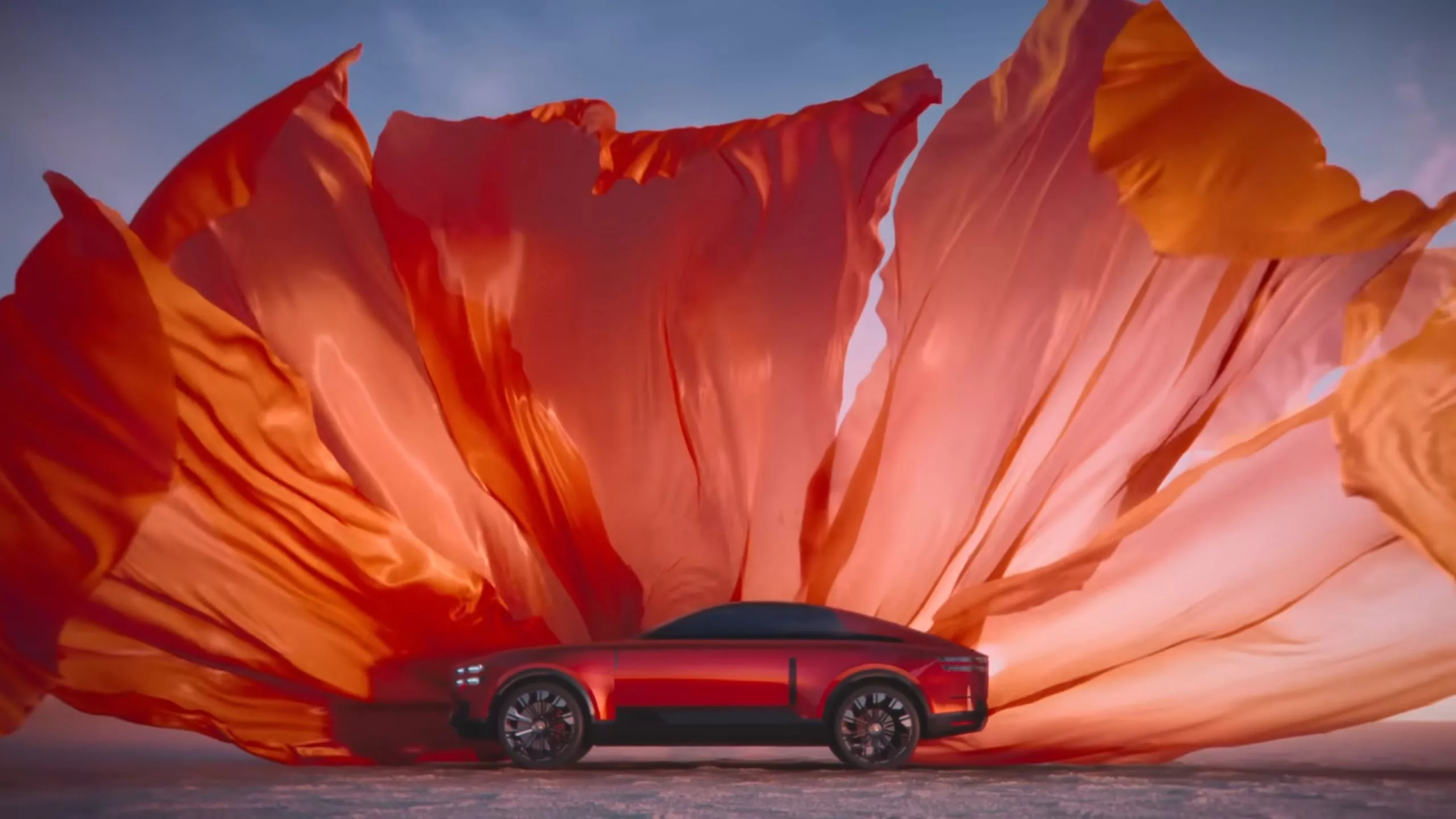
Toyota is preparing its most exclusive name for a major international expansion. Previously aimed mainly at Japan’s elite, Century is no longer simply Toyota’s flagship model but a standalone ultra-luxury brand that Toyota wants to take global. The target is no longer Lexus, but the territory occupied by Rolls-Royce, Bentley and Maybach.
Toyota chairman Akio Toyoda set out Century’s new role in fairly unequivocal terms at the 2025 Japan Mobility Show: Century must sit at the top of the Toyota group, in a class of its own, and bring Japan’s approach to luxury to the world. Toyota’s 2026 financial materials already officially treat Century as the group’s fifth brand, alongside Toyota, Lexus, GR and Daihatsu.
This changes Century’s character far more than another export programme would. Toyota is effectively creating a new luxury hierarchy in which Lexus can remain a rival to BMW, Mercedes-Benz and Audi, while Century moves another step above them.
Century is no longer a single car
The most important change is in the model range. For decades, the Century name meant a large, conservative saloon used by Japanese heads of government, senior business executives and wealthy private individuals.
In 2023, Toyota added a large, taller-bodied Century alongside the saloon, using a 3.5-litre V6 petrol engine and a plug-in hybrid system. The car is 5205 mm long, 1990 mm wide and 1805 mm high, with a wheelbase of 2950 mm and a kerb weight of 2570 kg. Toyota set its price in Japan at 25 million yen.
More important than the dimensions, however, was the message. Toyota stopped treating Century solely as a saloon and began building an entire model family around it.
At the 2025 Japan Mobility Show, the company went on to show a Century coupé concept, a sportier GRMN interpretation and Tailor Made bespoke designs. This is a fairly clear indication of a business model along the lines of Rolls-Royce Bespoke or Bentley Mulliner, where customers no longer simply choose an equipment package but effectively commission an individual car. Century’s arrival actually gives Lexus more freedom
At first glance, Century’s international expansion seems awkward for Lexus. In fact, Toyota sees it the other way round.
Toyota’s chief designer and chief branding officer Simon Humphries has said that separating Century into the ultra-luxury class frees Lexus from having to cover everything at once. Lexus can focus on the mainstream luxury car market, while Century takes on the most expensive and exclusive end. Toyota’s own strategy document explicitly describes Century as a brand positioned above Lexus.
This is essentially the same logic that places Bentley and Lamborghini above Audi within the Volkswagen group, or Rolls-Royce above BMW within the BMW group.
The difference is that Toyota did not buy Century as an established luxury brand. It is developing it from its own model name, which dates back to 1967.
Japan’s Rolls-Royce must learn to export
Century’s greatest strength, and also its problem, is its exceptionally Japanese character to date.
Rolls-Royce and Bentley have spent decades building global luxury businesses. Century’s reputation, by contrast, rests largely on Japan’s domestic market, where owners riding in the rear seats value silence, understatement and the quality of handcrafted details more than a gleaming status symbol on the bonnet.
Toyota now wants to export that set of values.
According to Akio Toyoda, Century must bring “the spirit and pride of Japan” to the world, while the company’s 2025 presentation defined the new brand through the principle of “One of One”.
This is a rather interesting contrast to today’s ultra-luxury market. China’s Maextro, Yangwang and other new high-end brands are pushing hard with enormous screens, active suspension, extravagant electric features and conspicuous technology. Century will probably try to sell something else: silence, craftsmanship, discretion and an almost ritual attention to detail.
Competition has become much fiercer
The timing is not easy for Century.
Rolls-Royce, Bentley and Mercedes-Maybach await at the traditional top end. Meanwhile, Chinese carmakers are moving rapidly upmarket and can offer technically very sophisticated cars at much lower prices. Reuters has cited BYD’s Yangwang and Maextro, which is linked to Huawei’s ecosystem, as examples of brands trying to shift the meaning of luxury away from traditional craftsmanship towards software and technological showmanship.
Century can counter with Toyota’s manufacturing quality, its exceptional reputation for reliability and the brand’s distinctive cultural character. But that alone is not enough. Buyers of cars costing €200,000 or €300,000 expect personal service, an exceptional buying experience and almost unlimited scope to personalise their cars.
That is precisely why the Tailor Made programme is at least as important as the next Century’s engine or battery.
The technology is moving in line with its luxury status
The current taller-bodied Century uses a 3.5-litre V6 plug-in hybrid system and electric E-Four Advanced all-wheel drive. Toyota does not promote the car with a sporty combined power figure, because Century’s main emphasis is on smoothness and silence, not traffic-light sprints.
This also distinguishes the model from the previous Century saloon, one of whose defining features between 1997 and 2017 was Toyota’s only production V12. The current saloon uses a 5.0-litre V8 hybrid system.
An even more interesting question is what will go under the coupé’s bonnet. Reports drawing on Japanese media have discussed a possible 6.0-litre twin-turbo V12 hybrid and combined output of around 588 kW, but Toyota has not confirmed these figures. For now, they should therefore be treated as a possible development direction, not a specification.
A V12 comeback would nevertheless make considerable sense for Century. An electrified eight- or twelve-cylinder powertrain would allow Toyota to give the brand a technical signature that Lexus no longer needs.
Century would be rare in Europe, but that is the point
Toyota has not yet published a full list of countries or a European sales plan. It is therefore not yet possible to say that Century will officially reach all the major European markets.
Turning it into a global brand does, however, make Europe a logical target region. Century’s direct rivals are based here, and there is an established clientele paying six-figure sums for the Rolls-Royce Cullinan, Bentley Bentayga and Mercedes-Maybach GLS.
Century does not need Toyota Corolla sales volumes to succeed. On the contrary, excessive volume would undermine the whole idea.
If Toyota can sell a small number of cars at exceptionally high margins and make the Century name synonymous with Japanese craftsmanship and luxury, the project could work at very low volumes. The Japanese sales target for the 2018 Century saloon was just 50 cars a month.
This is not a mass market. It is the business of status.
Toyota is doing something in the luxury-car market that few would have expected of it
Century’s global expansion is interesting above all because Toyota is not trying to make another, more expensive Lexus.
The company is building an entirely separate identity while giving Lexus more room to experiment. Toyota’s volume models remain at one end, with Lexus above them and Century at the very top.
If the plan works, Toyota will be able to compete seriously for the first time in a market where a car’s rational value is no longer the main reason to buy it.
And this is where things become particularly interesting. For decades, Toyota has mastered selling a purchase that can be justified. Century must now prove that the world’s largest carmaker can also sell something whose customers do not ask whether it makes sense at all.


