
European luxury cars still reach Russia despite sanctions, German investigation shows how
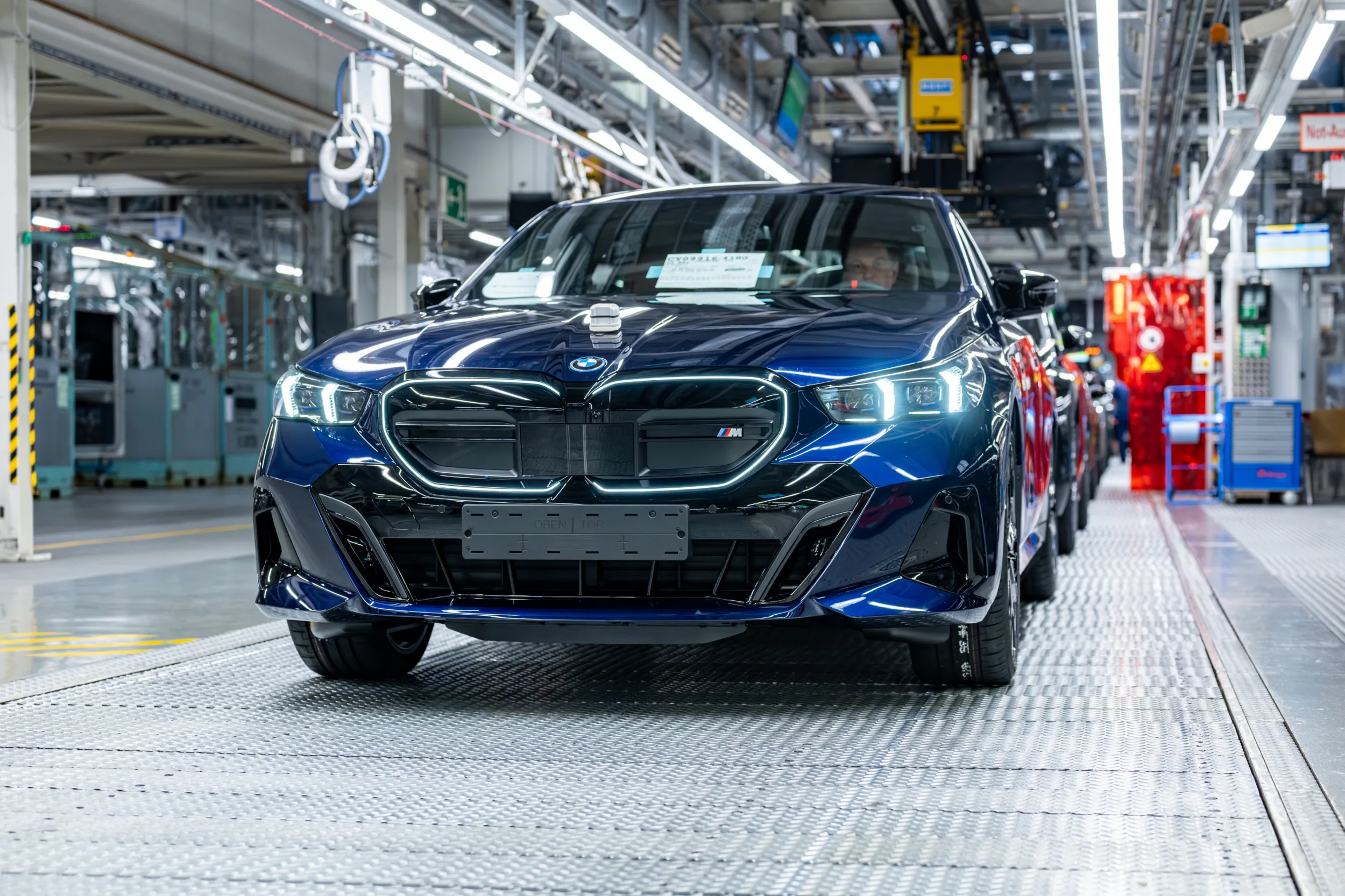
Investigators in Germany, Austria and Belgium are tracing a scheme in which two businesspeople allegedly sent 53 passenger cars and six tractor units to Russia. On paper, the vehicles were bound for Belarus, Kyrgyzstan and Georgia, but investigators suspect Russia was their real final destination. German prosecutors have frozen assets worth around €7 million to secure possible illicit proceeds.
The case is not an exception. In a separate investigation, the EU anti-fraud office OLAF identified 766 vehicles that were supposed to go to Turkey, Armenia, Georgia, Kazakhstan, Kyrgyzstan and Moldova according to the documents. However, the cars had not been imported into the stated destination countries. By tracing the vehicles individually, OLAF ultimately found them in Russia.
This is why newer models from BMW, Mercedes-Benz, Porsche and other Western brands can still be found on the streets of Moscow, St Petersburg and other major Russian cities. An automaker’s official withdrawal from Russia and the EU export ban do not mean a physical car can no longer reach Russia. There is simply now a longer, more expensive and riskier supply chain in between.
The trail of 53 cars and six tractor units led investigators to three countries
The investigation, led by the Kaiserslautern public prosecutor’s office, concerns two businesspeople in Rhineland-Palatinate and Austria. Investigators suspect that between autumn 2022 and the end of 2024, they exported 53 cars and six tractor units to Russia in breach of sanctions.
Third countries, especially Belarus, Kyrgyzstan and Georgia, were allegedly used to conceal the scheme. Authorities in Germany, Austria and Belgium carried out searches in Neustadt an der Weinstraße and Vienna on 8 September 2026.
Investigators seized two high-value cars in Germany, €85,000 in cash in Vienna, and a total of €278,000 from bank accounts in Germany, Austria and Belgium. Prosecutors also ordered an asset freeze of around €7 million to allow for the later confiscation of possible criminal proceeds. The suspects have not responded to the allegations, and their guilt has not been established in court.
The €7 million is therefore not the value of 53 confiscated cars, but the amount against which German authorities seek to secure possible unlawful proceeds.
Which cars may not be sold to Russia?
In the first months after the war began, the EU focused primarily on luxury goods. From 15 March 2022, it banned, among other things, the export to Russia of cars costing more than €50,000.
In 2023, the EU changed the rules because manipulation of customs values made the price threshold inconveniently easy to circumvent. For passenger cars with internal-combustion engines, engine displacement above 1,900cc became one of the central criteria. According to the European Commission’s explanation, the threshold was chosen to replicate the previous €50,000 criterion as closely as possible with a verifiable technical characteristic. The export ban also covers electric and hybrid cars.
This means the restriction affects a large share of Europe’s premium-car range. Two-litre and larger BMW, Mercedes-Benz, Audi and Porsche models fall into the prohibited category because of their engine displacement alone. An electric vehicle does not even need to exceed that threshold.
Not only direct exports from Germany to Russia are prohibited. The EU regulation also bans indirect exports. A car covered by sanctions therefore does not become permitted goods merely because Kyrgyzstan or Georgia is listed as the final destination on the invoice.
The key issue in the scheme is the car’s end user
A typical sanctions-evasion chain does not necessarily require smuggling in the classical sense. A car may leave the European Union with an entirely official export declaration.
For example, a company or intermediary in a third country buys a car from an EU-based dealer. The export documents name a country that is not subject to the relevant EU ban as the destination. The vehicle is then passed through a further sales chain and reaches Russia via subsequent intermediaries.
OLAF’s 2025 investigation is a specific example of such a scheme. Polish customs noticed suspicious shipments of used vehicles whose declared destination was Turkey. OLAF expanded the checks and found a network between EU exporters and importers in several third countries. Armenia, Georgia, Kazakhstan, Kyrgyzstan and Moldova appeared in the documents.
OLAF contacted the authorities in those countries and identified a decisive discrepancy: the 766 vehicles had not been imported into the declared destination countries at all. Individual tracking of the cars ultimately led to Russia. The case triggered criminal investigations in three EU member states.
This provides a much more precise picture of the sanctions-evasion mechanism than general talk of “parallel imports”. The problem is not necessarily that a company in Kyrgyzstan, for example, buys many cars from Europe and resells them a few months later. At least in the cases examined by OLAF, hundreds of cars never reached the final destination stated in the paperwork at all.
A car is difficult to hide
On the one hand, a passenger car is well suited to sanctions evasion because it can be sold through several companies and transported on a trailer through several countries. On the other hand, it is an inconveniently traceable commodity for an investigator.
Every car has a VIN. It can be linked to the factory, model, sales transactions, customs declarations, transport data, registration and later service history. OLAF was able to reconstruct the scheme involving 766 vehicles by cross-checking customs, trade and transport data and tracing the cars individually.
This also explains Germany’s increasingly aggressive use of asset restraints. If an investigator can link a specific VIN to an EU export and a later Russian registration or sale, a seemingly credible third-country transaction on paper becomes much harder to defend.
Germany has already imposed prison sentences
The current €7 million case is neither the first nor even the largest German sanctions investigation involving luxury cars.
On 2 March 2026, Würzburg Regional Court sentenced two German nationals to six and two years in prison respectively for violating Russia sanctions, with the latter sentence suspended. According to investigators, 111 luxury cars with a combined value of around €20 million reached Russia through their network. At the time of an overview published by Germany’s economics ministry in June, the judgments had not yet become final.
What makes the case far more serious than ordinary grey-market car trading is the list of buyers. According to the German economics ministry’s official overview, the cars ended up, among others, with the FSO, which is responsible for protecting the Russian president, the FSB security service and Rosneft. The court ordered the confiscation of assets worth around €20 million, while €7 million had already been seized during the investigation.
In another German investigation, Dresden customs investigators secured an asset freeze worth more than €16.5 million at the end of 2025. During the investigation, they seized seven BMW, Porsche, Audi and Mercedes-Benz cars worth a total of €595,000, in addition to cash and other assets.
These are no longer isolated enthusiasts hauling a single Mercedes-Benz across the border on a trailer. German investigations describe a professional international business.
Several corridors lead to Russia
European investigations repeatedly point to Georgia, Armenia, Kazakhstan, Kyrgyzstan, Turkey and Moldova. Belarus is added in the current German case. In its investigation, OLAF found declared importers registered in third countries through whom the goods were formally meant to leave the scope of EU sanctions.
Not all car transactions involving these countries are, of course, sanctions evasion. They have their own car markets and legitimate imports. Deals become of interest to investigators when the volumes, the buyer’s activities, the payment chain, the route or the vehicle’s later location do not fit the declared end use.
Another major channel has also emerged, one that no longer necessarily requires a car originating in Europe. In a 2026 investigation, Reuters found that cars from Western brands built in China were reaching Russia via Chinese intermediaries. Some vehicles are processed before export as used cars with virtually zero mileage. According to Autostat data used by Reuters, nearly 130,000 foreign-brand cars built in China were sold in Russia in 2025.
A newer BMW sold in Russia may therefore be a European car that passed through a re-export chain involving several intermediaries, but it may also originate from Chinese production and reach Russia from there instead.
Why can’t BMW or Mercedes-Benz simply stop it?
An automaker has fairly good control over the first sale of a new car. Resales are a different matter.
If BMW officially sells a car to a German customer, or a dealer sells it to a company that credibly states that the final destination is a permitted country, the car can move beyond the manufacturer’s direct control in the hands of subsequent owners.
EU exporters therefore have an obligation to assess the risk of sanctions evasion. Germany’s economics ministry stresses that BAFA is the central supervisory authority for export restrictions under the Russia sanctions, and that companies must themselves verify the legality of their transactions.
In car trading, this means that an unusual buyer or route requires closer attention in practice. A newly established intermediary company, a large volume of premium cars, an implausible end user or onward logistics closely linked to Russia may make an otherwise routine export transaction of interest to investigators.
Sanctions did not stop the cars; they changed their route
Germany is at the centre of this effort for a simple reason. Cars are among the country’s most important exports. In 2024, Germany exported 3.4 million new passenger cars worth €135 billion. Cars and car parts accounted for around 17% of German exports that year.
In such a flow of trade, the disappearance of a few dozen cars is not statistically noticeable. That is precisely why intermediary schemes work better than direct exports to Russia.
At the same time, detecting them is becoming increasingly systematic. OLAF did not merely check what was written on the European export declaration; it asked the declared destination countries whether the cars had actually arrived there, and then traced specific VINs.
This makes the use of a third country much less secure. Writing “Georgia” on paper does not solve an exporter’s problem if the car’s real buyer was in Russia from the outset.
The impact of sanctions should therefore be assessed soberly. They have not removed Western premium cars from Russia. They have removed the official and cheap direct route. In its place, a market of intermediaries, re-exporters and parallel importers has emerged, in which the car takes a longer detour, the price rises, and the availability of warranties, servicing and spare parts becomes more difficult.
And the larger this business becomes, the more traces it leaves behind. Germany’s new €7 million investigation, OLAF’s case involving 766 vehicles and the Würzburg criminal case involving 111 luxury cars all show the same thing: a European car may reach Russia through several countries, but a VIN is much harder to hide than the final destination on an invoice.


