
Tens of thousands of Civics risk losing a wheel
Japanese quality usually implies discipline and precision. This time, it reads like a case study in how a small supplier error can spiral into a continent wide recall.
More than 46,000 European owners of the Honda Civic now face the unsettling possibility that one of their wheels could detach while driving. Not because a mechanic failed to tighten a nut, but because of a structural flaw in certain alloy wheels supplied years ago.
A timeline that raises questions
According to official documentation, the issue first surfaced internally in July 2024, when checks in Japan revealed that a batch of alloy wheels did not meet safety standards. Instead of triggering an immediate recall, the company launched an internal investigation to determine the scope.
Only in November 2025 did the matter reach the European Commission, prompting the formal safety procedure required under EU rules. By January 2026, a recall campaign began. Notifications, however, are being issued in phases, meaning thousands of cars remain on the road before owners receive direct contact.
In cases involving suspension or wheel integrity, such delays inevitably invite scrutiny.
The supplier error behind the defect
The root cause does not lie on the assembly line in Japan, but at Italian supplier MW Italia. During installation of new equipment, a physical barrier separating inspected and uninspected wheels was removed. Components were mixed. A batch left the factory without critical steel lug seat inserts.
Those inserts matter. Without them, the steel wheel nuts press directly against the softer aluminium of the rim. Over time, vibration deforms the seating surface. The resulting play gradually loosens the nuts. In the worst case, the wheel can detach from the hub or the wheel studs can shear under load.
This is not cosmetic. It is fundamental mechanical integrity.
Which cars are affected
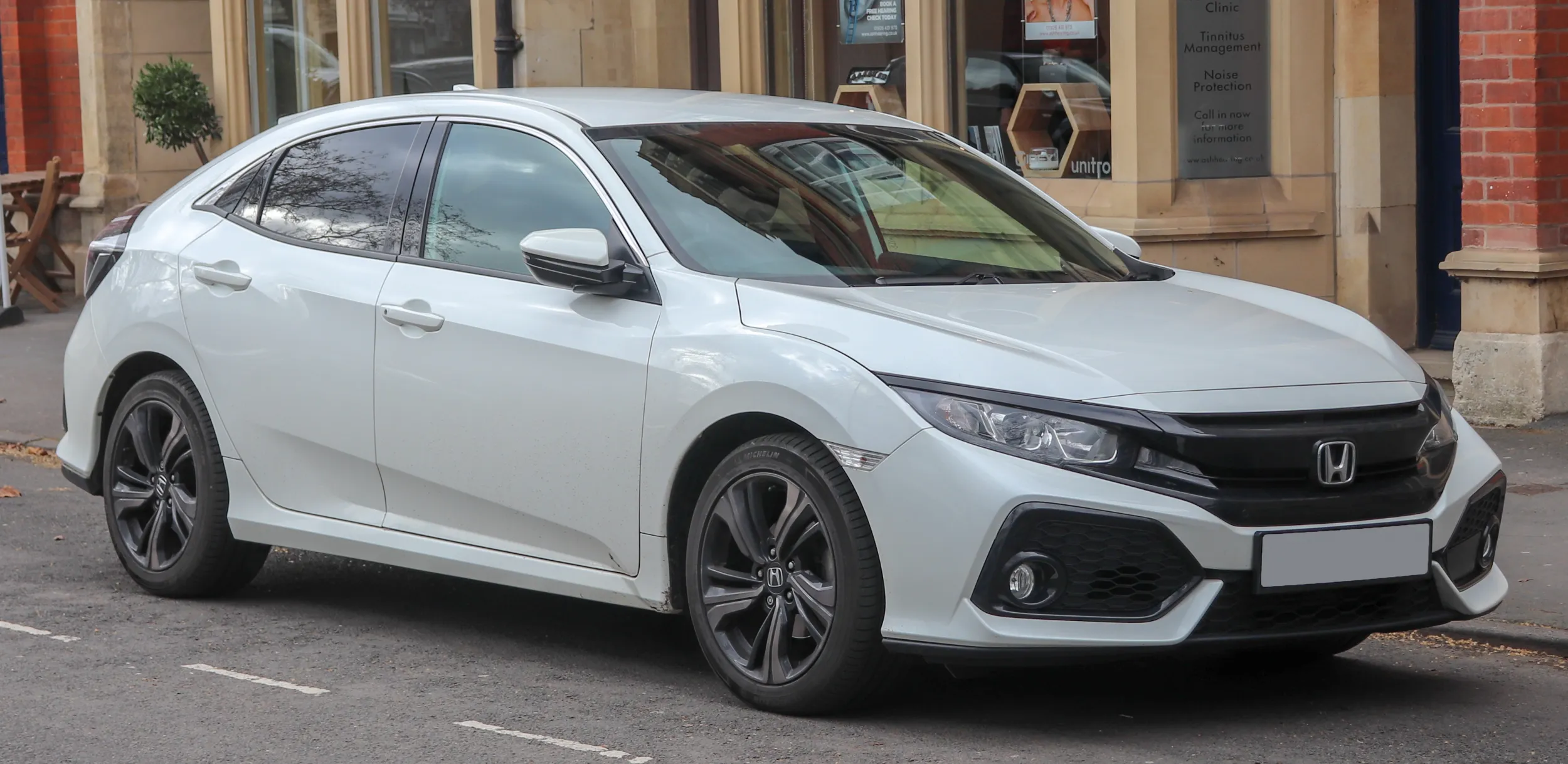
The defect does not concern every Civic. It applies specifically to 18 inch alloy wheels, either black or two tone, accessory part number 08W18 TEA 100A. These were fitted primarily to 2017 to 2021 models, both hatchback and saloon, when customers opted for a more distinctive look than the standard factory wheels.
In other words, buyers who paid extra for style now discover that aesthetics came at a hidden cost.
Drive on and wait
Honda’s interim advice suggests owners may continue driving until they receive official recall instructions. On paper, the risk remains low. In practice, some of these wheels have been in service for up to nine years. Material fatigue and repeated thermal cycles do not improve with time.
The uncomfortable reality is that a defect tied to something as fundamental as wheel retention undermines trust more deeply than most software glitches ever could.
The Civic built its reputation on durability and rational engineering. This episode does not erase decades of credibility, but it does remind buyers that even the most established names depend on every link in the supply chain holding firm.
When that link fails, the consequences can quite literally roll away.
A timeline that raises questions
According to official documentation, the issue first surfaced internally in July 2024, when checks in Japan revealed that a batch of alloy wheels did not meet safety standards. Instead of triggering an immediate recall, the company launched an internal investigation to determine the scope.
Only in November 2025 did the matter reach the European Commission, prompting the formal safety procedure required under EU rules. By January 2026, a recall campaign began. Notifications, however, are being issued in phases, meaning thousands of cars remain on the road before owners receive direct contact.
In cases involving suspension or wheel integrity, such delays inevitably invite scrutiny.
The supplier error behind the defect
The root cause does not lie on the assembly line in Japan, but at Italian supplier MW Italia. During installation of new equipment, a physical barrier separating inspected and uninspected wheels was removed. Components were mixed. A batch left the factory without critical steel lug seat inserts.
Those inserts matter. Without them, the steel wheel nuts press directly against the softer aluminium of the rim. Over time, vibration deforms the seating surface. The resulting play gradually loosens the nuts. In the worst case, the wheel can detach from the hub or the wheel studs can shear under load.
This is not cosmetic. It is fundamental mechanical integrity.
Which cars are affected
The defect does not concern every Civic. It applies specifically to 18 inch alloy wheels, either black or two tone, accessory part number 08W18 TEA 100A. These were fitted primarily to 2017 to 2021 models, both hatchback and saloon, when customers opted for a more distinctive look than the standard factory wheels.
In other words, buyers who paid extra for style now discover that aesthetics came at a hidden cost.
Drive on and wait
Honda’s interim advice suggests owners may continue driving until they receive official recall instructions. On paper, the risk remains low. In practice, some of these wheels have been in service for up to nine years. Material fatigue and repeated thermal cycles do not improve with time.
The uncomfortable reality is that a defect tied to something as fundamental as wheel retention undermines trust more deeply than most software glitches ever could.
The Civic built its reputation on durability and rational engineering. This episode does not erase decades of credibility, but it does remind buyers that even the most established names depend on every link in the supply chain holding firm.
When that link fails, the consequences can quite literally roll away.


