
German startup makes history as Spectrum becomes the first rocket to reach orbit from continental Europe
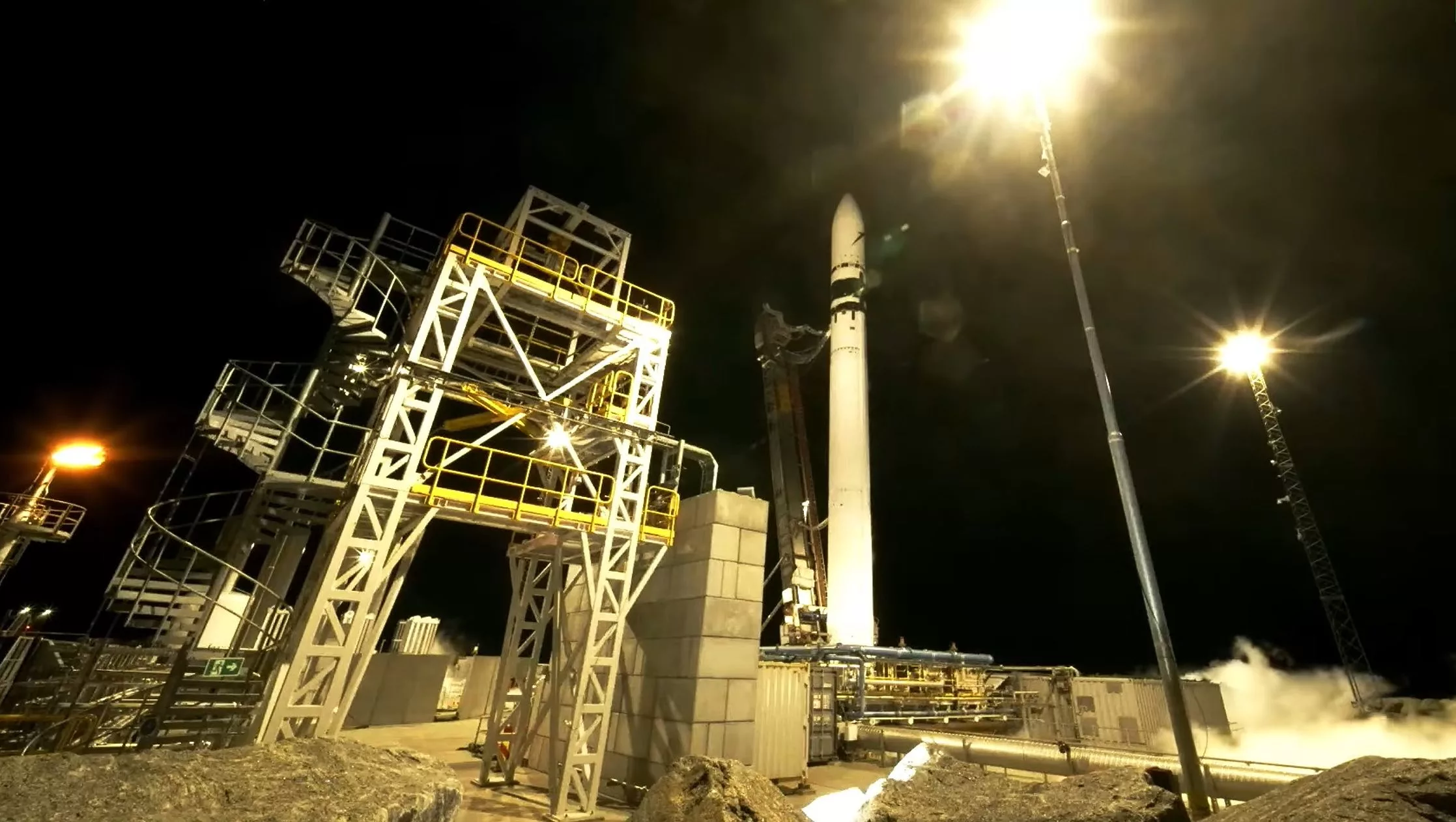
Europe’s space industry scored a small but genuinely important victory on 5 September. German company Isar Aerospace’s Spectrum launched from the Andøya spaceport in northern Norway and successfully reached low Earth orbit. It was the first successful commercial orbital rocket launch from continental Europe and only Spectrum’s second flight. The first attempt ended after around 30 seconds in 2025.
Into orbit on its second attempt
The two-stage Spectrum lifted off from Andøya at 22:12 Central European Time and reached orbit in just over seven minutes. The rocket carried five CubeSats and one technology experiment.
According to ESA, Spectrum is 28 metres tall and 2 metres wide. Its first stage is powered by 10 engines, and the rocket can carry up to 1,000 kg of payload to low Earth orbit. That places Spectrum in the launch market for small and medium-sized satellites, rather than in competition with heavy-lift launch vehicles in the Ariane 6 class.
The achievement becomes considerably more notable when its first flight is recalled. Spectrum launched from the same spaceport in March 2025, lost control after around half a minute and crashed into the sea. However, Isar recovered enough flight data to get further with its next rocket. This time, around 2,000 times further.
“First from Europe” needs a small asterisk
It is worth being cautious with the headlines here. European rockets have been sending satellites into orbit for decades. Ariane and Vega, however, launch from Europe’s spaceport in Kourou, French Guiana, South America.
Spectrum’s achievement is that it was the first successful commercial orbital launch from continental European soil. ESA also describes Isar Aerospace as the first European company to reach orbit with its own launch vehicle.
The UK also came close in 2023. Virgin Orbit’s LauncherOne took off from Cornwall beneath the wing of a Boeing 747, but a technical failure prevented the rocket from reaching orbit.
So it is not entirely accurate to say that Europe has never sent rockets into space before. The precise statement is much more interesting: a European private company can now send satellites into orbit directly from a launch site in continental Europe.
Isar wants to turn this into a business, not a record
Isar Aerospace was founded only in 2018. The company’s goal is, of course, not one historic flight but a regular launch service.
According to Reuters, the company is already building its next five rockets and aims to eventually reach as many as 40 launches per year. In addition to Andøya, Isar is developing a second launch site in Nova Scotia, Canada, where the first flights could begin in 2028.
That is a considerably more difficult task. One successful flight proves that Spectrum can reach orbit. Dozens of launches a year require low-cost production, a reliable supply chain and, above all, customers willing to entrust their multi-million-euro satellites to a relatively new rocket.
Europe needs alternatives alongside SpaceX
Spectrum’s significance extends beyond Isar Aerospace. In recent years, Europe has received a rather uncomfortable lesson in what insufficient launch capacity means.
Ariane 6 was delayed, Vega-C flew infrequently for a time, and cooperation with Russia’s Soyuz rockets ended after Russia’s invasion of Ukraine. As a result, some European satellites had to be launched into orbit on US SpaceX rockets.
The Ariane 6 situation is now improving, and Arianespace aims to reach nine to 10 launches per year by 2027. ESA is already considering a higher flight rate as demand for satellites grows.
Spectrum will not replace Ariane 6 or carry Starlink satellites by the tonne like Falcon 9. Its role is different: to offer smaller satellites a faster, more flexible European launch option.


