
Jaguar plans a taller electric SUV with Type 01 styling
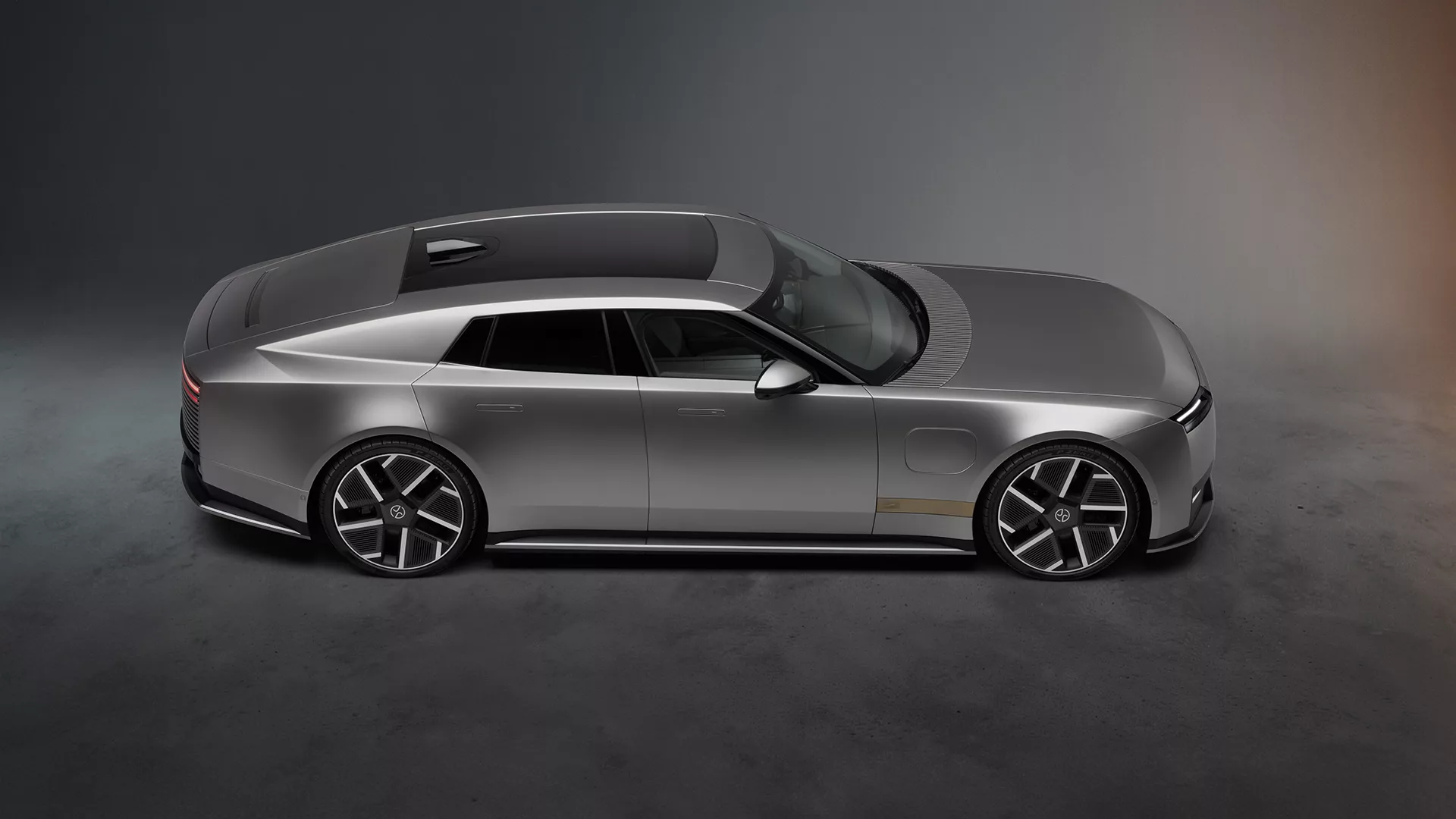
Jaguar is preparing a taller, more practical electric model to follow the Type 01, using the same JEA architecture. Rather than a conventional boxy SUV, the new car will be a crossover with a lower, sportier profile to avoid competing directly with Range Rover and Defender.
Jaguar does not want to build its own Range Rover
Jaguar boss Rawdon Glover confirmed that the next model must be more practical than the Type 01, but the company is not planning a tall, boxy SUV.
The reason is fairly simple. Range Rover and Defender already fulfil that role in JLR's line-up, and Jaguar's new strategy requires it to offer cars that are clearly distinct from them.
The next model is therefore likely to have a lower roofline, elongated proportions and the minimalist design familiar from the Type 01.
Technology will come from the Type 01
The new crossover will use the Jaguar Electric Architecture, or JEA, platform, developed specifically for Jaguar's new family of electric models.
The Type 01 uses three electric motors producing a combined 757 kW and 1365 Nm. Its traction battery has a capacity of 118 kWh, and its WLTP range reaches approximately 724 km.
Jaguar has not yet confirmed the crossover's powertrain, but the shared architecture allows it to use Type 01 technology with different power outputs and battery configurations.
The taller body is likely to mean a shorter range than the Type 01 unless battery capacity increases.
Do not expect an unveiling before 2028
Jaguar does not plan to rush its next model. According to Glover, the Type 01 must first reach customers and establish itself in the market.
Type 01 deliveries will begin in the second half of 2027, meaning the next model is likely to be unveiled in 2028.
Type 02 is currently being floated as a possible name, but Jaguar has not officially confirmed it.
Jaguar needs a more practical model
The Type 01 is a four-door GT measuring 5.2 metres long and only around 1.4 metres tall. Despite its dimensions, rear-seat space is not particularly generous. Boot capacity is 450 litres.
The crossover must improve these aspects while retaining Jaguar's new design language and sportier positioning.
In the European market, such a model would compete primarily with the Porsche Cayenne Electric, the forthcoming Mercedes-AMG electric SUV and Bentley's electric models.
Jaguar does not, however, simply need another large electric SUV. If the new model looks like a slightly taller Range Rover, the whole point of the brand's new strategy will be lost. A lower crossover derived from the Type 01 is therefore a much more logical solution for Jaguar.


