
Lexus takes the RX to the Nürburgring to sharpen its handling
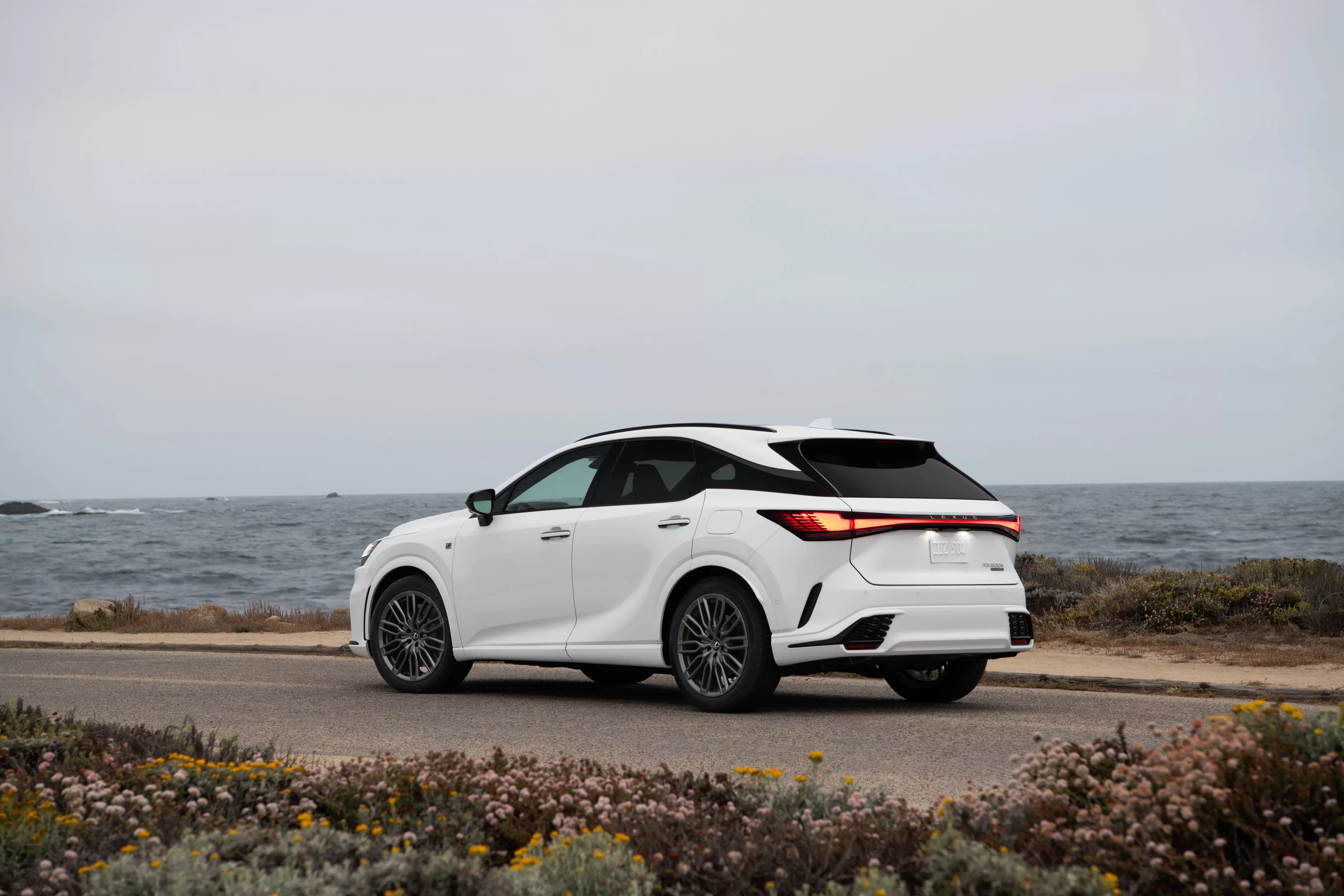
Lexus has updated the RX in a rather unusual way. Instead of new screens and cosmetic tweaks, the Japanese luxury brand took its large SUV to the Nürburgring and retuned its adaptive suspension, power steering and rear-wheel steering control. The aim sounds almost rebellious for Lexus: the RX should communicate more with its driver.
The updated RX went on sale in Japan on 30 September. Lexus has not yet confirmed when, or to what extent, the same changes will reach European cars.
The Nürburgring was more than a backdrop for a marketing photo
Lexus developed the current, fifth-generation RX on the roads of Toyota Technical Center Shimoyama from the outset. The manufacturer has now taken the RX 500h, RX 450h+ and all-wheel-drive RX 350h to Germany's Nürburgring, where the rougher, more demanding surface exposed chassis weaknesses far more ruthlessly.
Engineers revised the damping characteristics of the AVS adaptive dampers and the control of the EPS electric power steering. On versions with the DRS rear-wheel steering system, Lexus also optimised its operation. According to the manufacturer, the intended result was a more linear, natural response to driver inputs and more composed body control on poor roads.
For the RX, this is a much more substantial change than yet another new grille. At 4.89 metres long and 1.92 metres wide, the car remains fundamentally a luxurious SUV for long journeys, but Lexus wants to reduce the sense that the steering, suspension and vehicle mass are working independently of one another.
Using the Nürburgring does not, of course, mean the RX has become a track car. Rather, Lexus is using the circuit as a laboratory. Rapid elevation changes, uneven surfaces and corners of varying radii expose chassis shortcomings much faster than a smooth test track.
The RX 500h remains the technical flagship
The update does not change the basic powertrain configurations. For Europe, the most interesting remains the RX 500h Performance Hybrid, which combines a 2.4-litre turbocharged petrol engine, electric motors, a six-speed automatic transmission and DIRECT4 all-wheel drive.
In European specification, the system produces 273 kW and takes the large Lexus from 0–100 km/h in 6.2 seconds. WLTP fuel consumption is 8.0–8.3 l/100 km.
The 500h is a technically unusual but intriguing member of the RX range. For this version, Lexus dispensed with its customary hybrid e-CVT and uses a conventional six-speed automatic instead. DIRECT4 distributes drive between the front and rear axles electronically, and the car uses multi-link rear suspension. The software and chassis changes developed at the Nürburgring are most naturally suited to this version.
Red-painted brake callipers are now available as a factory option on the F SPORT Performance. They add no horsepower, but at least Lexus is not trying to sell them as a technical revolution.
The hybrid range matters more to Europe
The European RX range does not depend solely on the 500h, however. Three electrified powertrains are available in this market: the RX 350h, the RX 450h+ plug-in hybrid and the RX 500h Performance Hybrid.
The RX 350h uses a 2.5-litre naturally aspirated petrol engine and Lexus's full-hybrid system. Total system output is 184 kW, 0–100 km/h takes 7.9 seconds and WLTP fuel consumption is 6.3–6.6 l/100 km.
The RX 450h+ combines a petrol engine of the same displacement with a larger electric component and an 18.1 kWh lithium-ion battery. The European version has a total system output of 227 kW, reaches 100 km/h from rest in 6.5 seconds and has an official electric range of 67–68 kilometres, depending on configuration. Lexus quotes 86–90 km on the urban cycle.
In the European market, the 450h+ is the most technically logical RX version for those who can charge regularly. The 500h is faster and has a more interesting drivetrain, but its WLTP consumption of more than 8 l/100 km makes it fairly clear that Performance Hybrid here means performance first, rather than fuel savings.
Small changes make everyday life easier
The Japanese update also adds less dramatic improvements that owners will notice much more frequently.
All RX models receive front door glass that reduces infrared radiation. The brakes' Auto Hold function can remember the selected setting after the car is restarted. In Japan, Lexus is expanding standard equipment on the RX 350h and RX 350 to include a digital rear-view mirror and a dashcam that records both front and rear views. These were previously standard on the RX 500h and RX 450h+.
Version L also gains the White Nova Glass Flake exterior colour, while F SPORT Performance and F SPORT brake callipers can be ordered in red.
These are not reasons to immediately trade an existing RX for a newer one. The chassis retuning is much more interesting.
Lexus refines a car of exceptional importance to the brand
The RX's significance extends beyond a single model update. The first RX went on sale in North America in 1998 and helped shape the formula for the modern luxury crossover. The RX 400h of 2005 brought hybrid propulsion to the luxury car market.
The fifth-generation RX uses the GA-K architecture, a 2,850 mm wheelbase and multi-link rear suspension. Compared with the previous generation, the wheelbase grew by 60 mm, while overall length remained unchanged at 4,890 mm.
In this class, the RX must compete with European heavyweights such as the BMW X5, Mercedes-Benz GLE and Volvo XC90. Lexus has never beaten the Germans by putting on a show of sportiness. Its strengths have been hybrid propulsion, a reputation for reliability, quietness and distinctive design.
The work at the Nürburgring suggests, however, that Lexus now wants to keep chipping away at a long-standing weakness: the RX may be a very good car, but the driver has not always been the most important part of the equation.
If the new tuning reaches European cars unchanged, this could be the most valuable part of the update. Not a larger screen, more power or a new piece of trim, but a two-tonne SUV that responds to the driver's inputs a little more than a luxurious domestic appliance does.


