
New Hyundai Bayon grows larger and gains features rarely found in small cars
 1/5
1/5
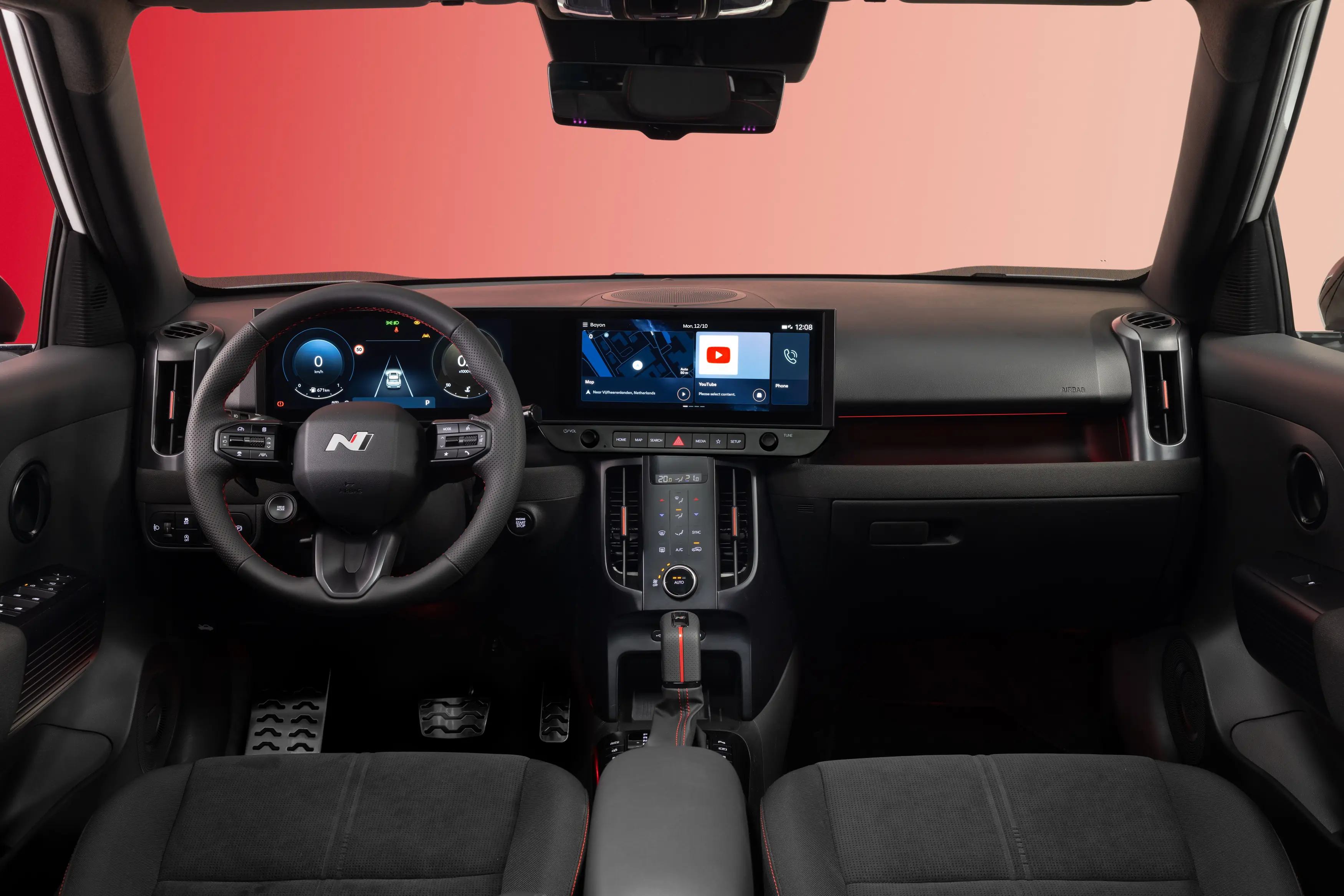
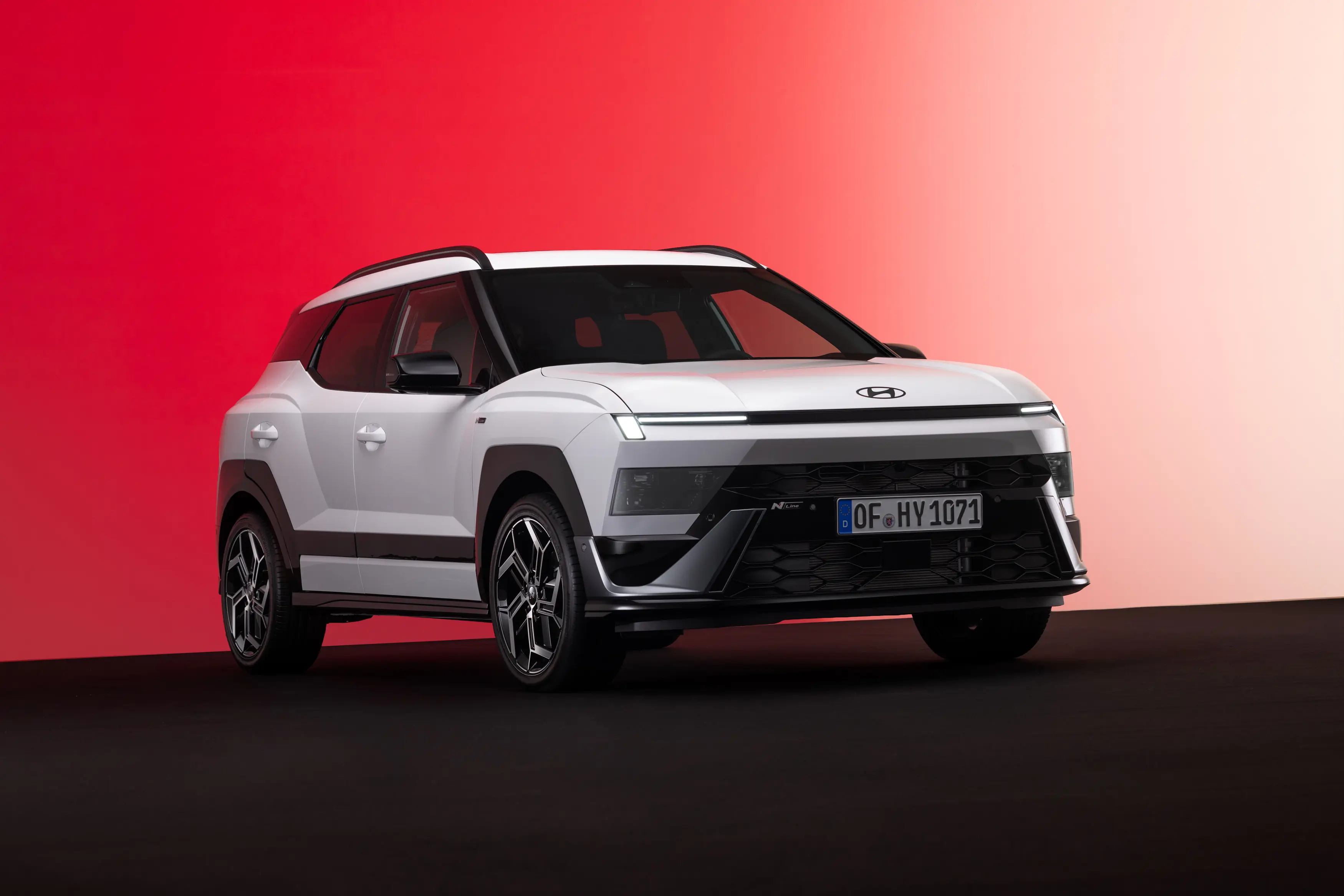
Hyundai unveiled the new-generation Bayon in Paris. Larger than its predecessor, it now offers a 440-litre boot, ventilated front seats and two 12.3-inch screens. The small SUV is aiming to move upmarket through its equipment, but the most important technical update will not arrive until 2027, when a 101 kW hybrid powertrain joins the range.
A small SUV takes on larger-car dimensions
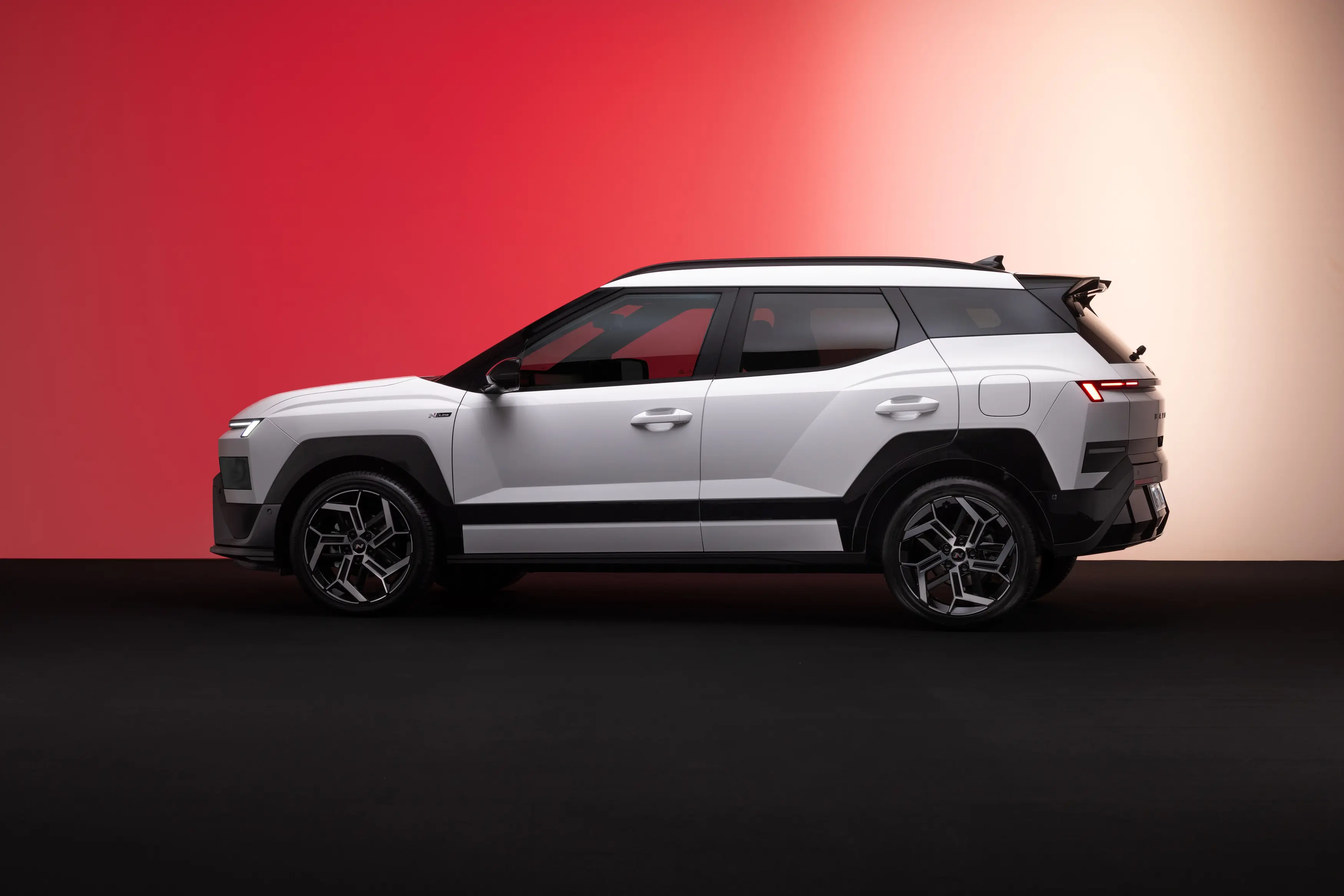
The new Bayon has grown to 4245 millimetres long and 1810 millimetres wide, with a 2600-millimetre wheelbase. Compared with its predecessor, it is 65 mm longer and 35 mm wider, while the wheelbase has increased by 20 mm.
The revised proportions are accompanied by a bolder design. Squarer wheel arches, a higher bonnet and a light bar spanning the entire front end give the Bayon a more substantial SUV appearance.
The new design language is called Art of Steel. Equipment includes alloy wheels of up to 18 inches, LED headlights and an optional black roof. Three matt body colours offer an alternative to conventional gloss finishes.
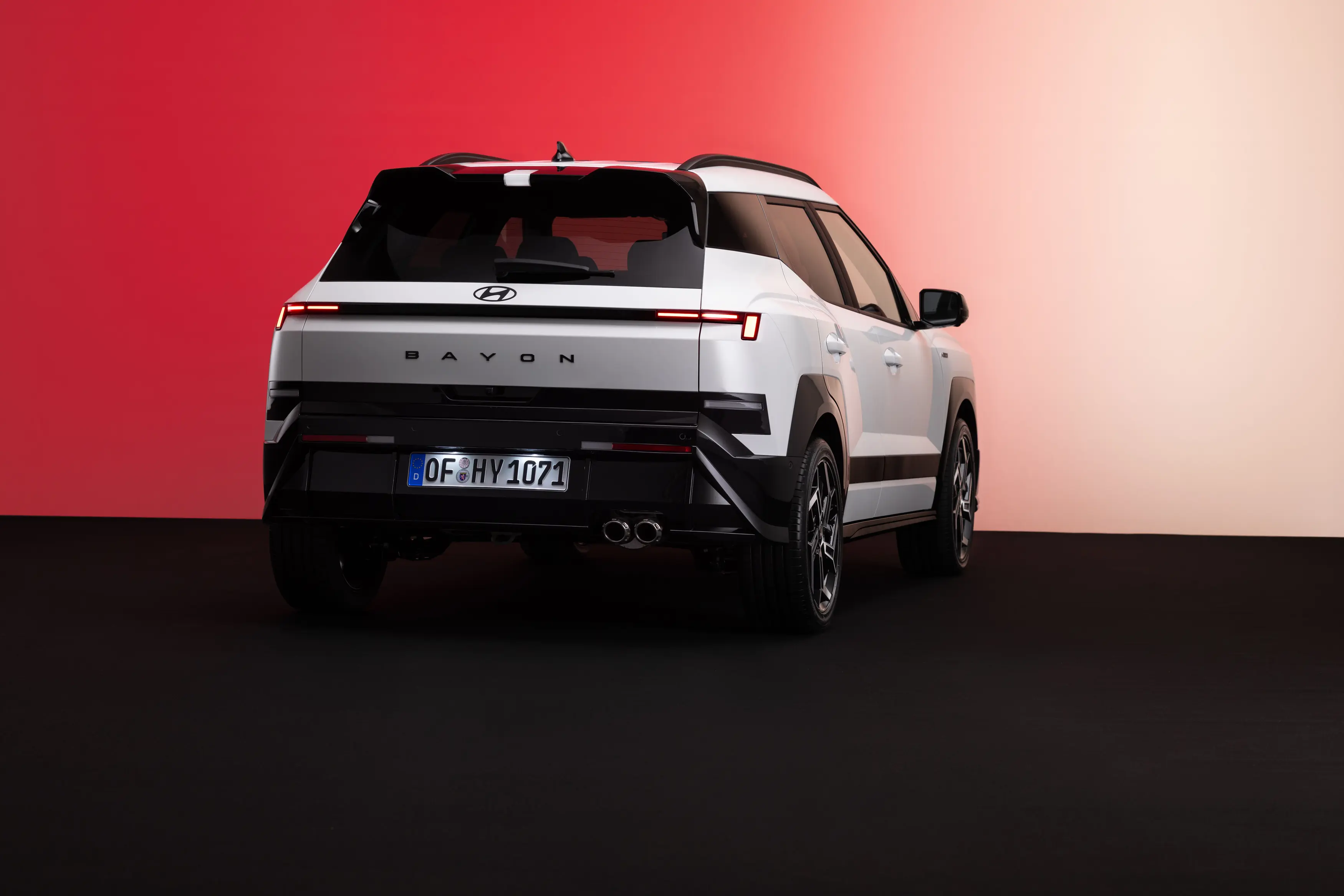
For buyers seeking a sportier look, Hyundai offers the N Line, with distinctive bumpers, 18-inch wheels, black exterior details and twin exhaust pipes.
Boot capacity grows to 440 litres
One of the new Bayon's strongest selling points is its use of space. The petrol version has a 440-litre boot, 29 litres more than its predecessor. The forthcoming hybrid will offer 397 litres, as its electrified powertrain requires additional packaging space.
The longer wheelbase improves rear passenger legroom. The rear seat backrest angle can also be adjusted, while more expensive versions feature heated rear seats, a centre armrest and separate air vents.
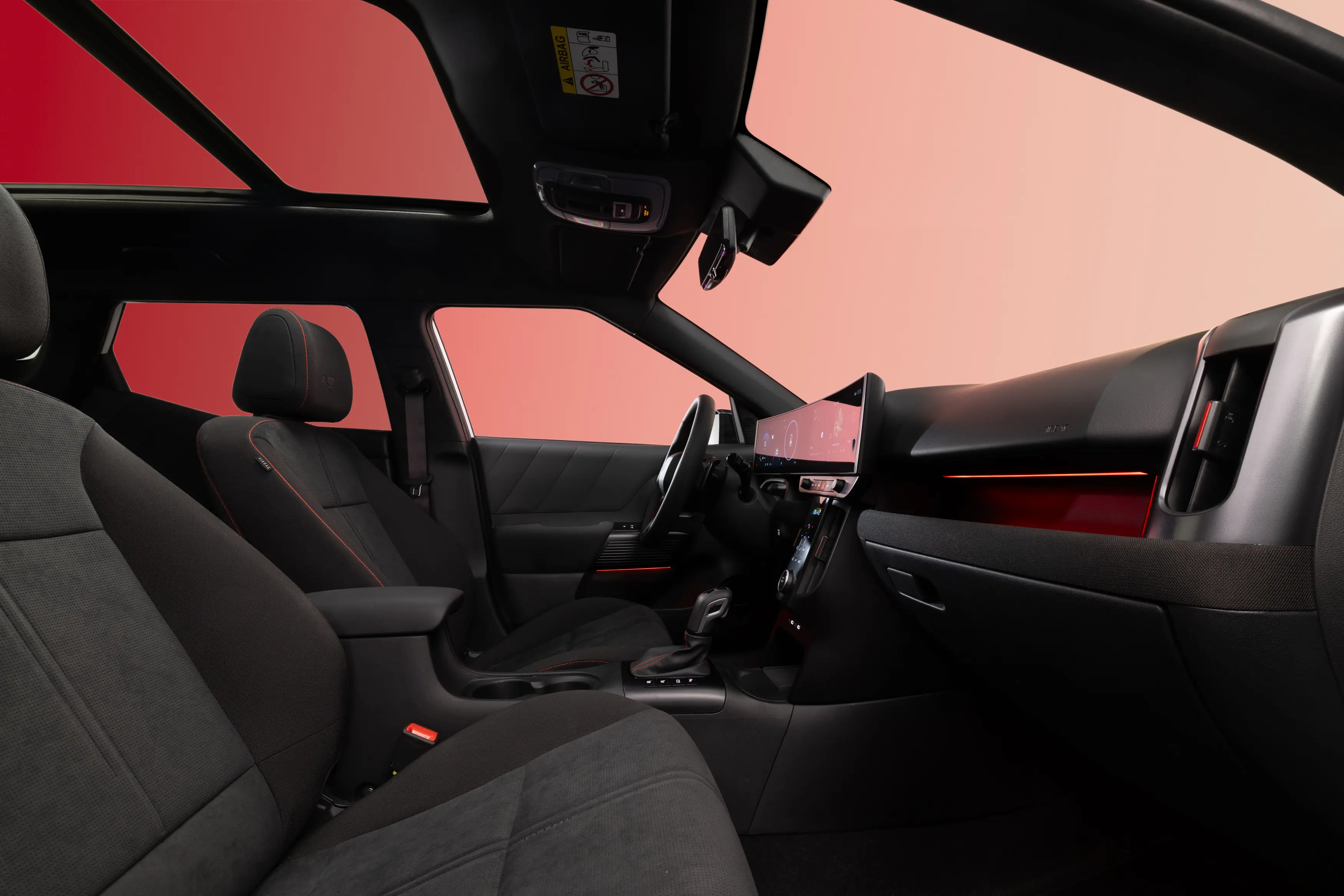
Even more surprising is the equipment rarely found in this price bracket. The Bayon can be equipped with ventilated front seats, an opening panoramic roof, dual-zone climate control and an eight-speaker Bose sound system.
The digital dashboard combines two 12.3-inch screens. Alongside wireless Apple CarPlay and Android Auto, Hyundai offers Digital Key 2, which allows users to unlock the doors and start the engine with a compatible smartphone or smartwatch.
The driver assistance systems include Highway Driving Assist 2, adaptive cruise control, a 360-degree camera system and a blind-spot camera view.
Hybrid arrives in 2027
The Bayon will initially go on sale with two 1.0-litre three-cylinder turbocharged petrol engines. The base version develops 66 kW, while the more powerful variant produces 85 kW. Both can be paired with either a six-speed manual gearbox or a seven-speed dual-clutch automatic transmission.
The petrol models have top speeds of 167–180 km/h, while acceleration from 0–100 km/h takes 10.8–14.1 seconds, depending on the version.
A full hybrid will join the range in 2027, combining a 1.6-litre direct-injection petrol engine with an electric motor and a six-speed dual-clutch transmission. Total system output reaches 101 kW.
The hybrid will feature adaptive regenerative braking, with the driver able to adjust its intensity using steering-wheel paddles.
According to Hyundai's preliminary WLTP figures, the hybrid's CO₂ emissions range from 102–113 g/km, corresponding to petrol consumption of approximately 4.5–5.0 l/100 km. The equivalent consumption figure for the petrol versions is approximately 5.9–6.6 l/100 km.
Final fuel consumption and performance figures will be confirmed after type approval.
Strong competition awaits in Europe
Hyundai is producing the new Bayon in Turkey, from where the cars will be supplied to European markets. Its main competitors include the Renault Captur, Toyota Yaris Cross, Volkswagen T-Cross and Škoda Kamiq.
The Bayon's strongest selling point may prove to be its extensive equipment. Ventilated front seats, heated rear seats and Highway Driving Assist 2 are among the features usually found in considerably more expensive cars.
The addition of a hybrid powertrain will strengthen the Bayon's position, particularly against the Toyota Yaris Cross and Renault Captur. However, price will be decisive, and Hyundai has yet to announce it.


