
Nissan takes aerodynamics into quantum computing as it targets faster EV development
Nissan and Japanese quantum software company Quemix are developing aerodynamics simulation software that splits the work between a classical computer and a future fault tolerant quantum computer. This is not a technical feature destined for the next new model. It is a development tool. Yet in the electric car era, tools like this increasingly decide how quickly a car maker can improve range, noise levels and energy use.
The quantum computer is not replacing the wind tunnel yet
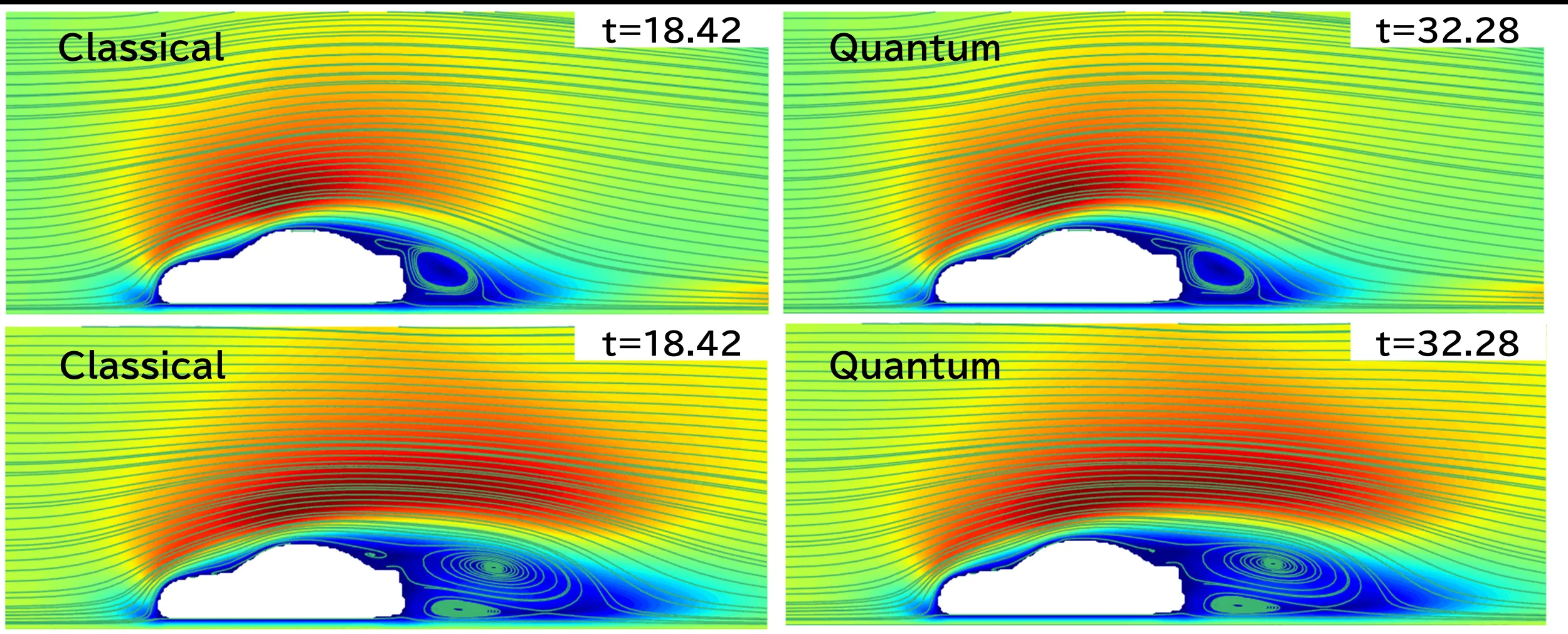
Quemix said it had begun a joint development project with Nissan to create aerodynamics analysis software that uses quantum computing. At its core sits a hybrid quantum and classical algorithm designed for future Early FTQC quantum computers, in other words, early fault tolerant machines. In a quantum simulator, the new method reproduced the results of conventional classical aerodynamics analysis with high accuracy. Nissan and Quemix also filed patent applications for the technology.
One important detail deserves a cooler reading. Nissan is not claiming that tomorrow’s Ariya, Leaf or Qashqai will be born inside a quantum computer. The companies tested the algorithm in a quantum simulator, not on a real quantum computer inside a production vehicle development process. That makes the story more sober, but not less significant. In car development, the advantage goes to the company that can calculate airflow around dozens or hundreds of body variants before spending time in the wind tunnel and money on physical prototypes.
Why aerodynamics matter more than ever in an electric car
Aerodynamics are not just about cutting drag at motorway speeds. They affect electric car range, real battery load, wind noise, cooling airflow, brake temperatures and even underbody protection. Europe adds another layer of pressure. New passenger car CO2 targets are tightening, with the European Environment Agency describing 93.6 g/km as the target for 2025 to 2029, 49.5 g/km for 2030 to 2034 and 0 g/km for 2035.
That explains why Nissan sees aerodynamics as a computing problem. Every detail of a car’s body, every mirror, wheel arch, undertray, cooling opening and trailing edge, creates turbulence in the airflow. Classical CFD, or computational fluid dynamics, gives engineers a huge amount of information, but it consumes time and computing power. Nissan’s own technical review noted back in 2022 that CFD demanded considerable resources and time, and that the company was developing a machine learning based surrogate model to learn the relationship between vehicle shape and CFD results, predicting pressure, air velocity and drag coefficient.
The new algorithm splits the job between two worlds
The Nissan and Quemix approach does not hand the entire aerodynamics problem to a quantum computer. The classical computer deals with inflow and outflow conditions, along with the parts linked to moving objects. The quantum computer takes on the core of the fluid dynamics, including stationary object boundaries. That division of labour makes sense, because early fault tolerant quantum computers will not offer unlimited computing power.
The technical stumbling block lies in boundary conditions. A simple cube or a regular grid is far easier for a quantum algorithm than a real car body, where surfaces curve, details intersect and the airflow around the wheels, underbody and rear end becomes violently complex. According to Quemix, the quantum circuits needed for those boundary conditions quickly grow too large. The new hybrid algorithm tries to untangle that bottleneck by leaving part of the dirty work to the classical computer.
Nissan is not alone in this race
Across the industry, high level development is moving in the same direction: fewer physical tests, more digital iterations. In April 2026, IBM and Dallara said their physics based AI model could assess rear diffuser variants for an LMP2 style racing car in about 10 seconds, while conventional CFD needed hours. IBM and Dallara are also exploring quantum and classical approaches in parallel, with the aim of using them later in more complex simulations.
Nissan’s advantage is that it does not treat computer simulation as a laboratory curiosity. An AMD case study described how Nissan improved crash simulation performance by 30 per cent and cut the total cost of the relevant CAE workflow by 20 per cent after moving to Microsoft Azure virtual machines powered by AMD EPYC processors. That shows how seriously Nissan treats computing power as an accelerator for vehicle development.
For buyers, the result could be a quieter and more efficient car
A quantum computer will not, by itself, make Nissan’s next electric car more appealing. But a tool like this could give engineers the ability to test more body and underbody variants, optimising airflow before an expensive physical prototype enters the picture. For European customers, the result could arrive in a very tangible form: a few per cent less energy use on the motorway, lower wind noise and longer real world electric range.
The greatest value lies in time. Electric car development moves quickly, Chinese manufacturers are pushing prices down and European regulations demand attention to every gram. If Nissan can bring quantum and classical aerodynamics software into a real development process, it could shorten testing cycles and search more aggressively for shapes that look good while cutting through the air with less energy wasted.
Technical summary
Nissan and Quemix are developing quantum and classical aerodynamics simulation software.
The system targets future Early FTQC fault tolerant quantum computers.
The classical computer calculates inflow, outflow and movement related elements, while the quantum computer handles the core fluid dynamics.
In a quantum simulator, the algorithm reproduced classical LBM aerodynamics analysis results with high accuracy.
For the European market, the biggest potential gains are lower energy use, longer electric range and faster model development.
Quemix said it had begun a joint development project with Nissan to create aerodynamics analysis software that uses quantum computing. At its core sits a hybrid quantum and classical algorithm designed for future Early FTQC quantum computers, in other words, early fault tolerant machines. In a quantum simulator, the new method reproduced the results of conventional classical aerodynamics analysis with high accuracy. Nissan and Quemix also filed patent applications for the technology.
One important detail deserves a cooler reading. Nissan is not claiming that tomorrow’s Ariya, Leaf or Qashqai will be born inside a quantum computer. The companies tested the algorithm in a quantum simulator, not on a real quantum computer inside a production vehicle development process. That makes the story more sober, but not less significant. In car development, the advantage goes to the company that can calculate airflow around dozens or hundreds of body variants before spending time in the wind tunnel and money on physical prototypes.
Why aerodynamics matter more than ever in an electric car
Aerodynamics are not just about cutting drag at motorway speeds. They affect electric car range, real battery load, wind noise, cooling airflow, brake temperatures and even underbody protection. Europe adds another layer of pressure. New passenger car CO2 targets are tightening, with the European Environment Agency describing 93.6 g/km as the target for 2025 to 2029, 49.5 g/km for 2030 to 2034 and 0 g/km for 2035.
That explains why Nissan sees aerodynamics as a computing problem. Every detail of a car’s body, every mirror, wheel arch, undertray, cooling opening and trailing edge, creates turbulence in the airflow. Classical CFD, or computational fluid dynamics, gives engineers a huge amount of information, but it consumes time and computing power. Nissan’s own technical review noted back in 2022 that CFD demanded considerable resources and time, and that the company was developing a machine learning based surrogate model to learn the relationship between vehicle shape and CFD results, predicting pressure, air velocity and drag coefficient.
The new algorithm splits the job between two worlds
The Nissan and Quemix approach does not hand the entire aerodynamics problem to a quantum computer. The classical computer deals with inflow and outflow conditions, along with the parts linked to moving objects. The quantum computer takes on the core of the fluid dynamics, including stationary object boundaries. That division of labour makes sense, because early fault tolerant quantum computers will not offer unlimited computing power.
The technical stumbling block lies in boundary conditions. A simple cube or a regular grid is far easier for a quantum algorithm than a real car body, where surfaces curve, details intersect and the airflow around the wheels, underbody and rear end becomes violently complex. According to Quemix, the quantum circuits needed for those boundary conditions quickly grow too large. The new hybrid algorithm tries to untangle that bottleneck by leaving part of the dirty work to the classical computer.
Nissan is not alone in this race
Across the industry, high level development is moving in the same direction: fewer physical tests, more digital iterations. In April 2026, IBM and Dallara said their physics based AI model could assess rear diffuser variants for an LMP2 style racing car in about 10 seconds, while conventional CFD needed hours. IBM and Dallara are also exploring quantum and classical approaches in parallel, with the aim of using them later in more complex simulations.
Nissan’s advantage is that it does not treat computer simulation as a laboratory curiosity. An AMD case study described how Nissan improved crash simulation performance by 30 per cent and cut the total cost of the relevant CAE workflow by 20 per cent after moving to Microsoft Azure virtual machines powered by AMD EPYC processors. That shows how seriously Nissan treats computing power as an accelerator for vehicle development.
For buyers, the result could be a quieter and more efficient car
A quantum computer will not, by itself, make Nissan’s next electric car more appealing. But a tool like this could give engineers the ability to test more body and underbody variants, optimising airflow before an expensive physical prototype enters the picture. For European customers, the result could arrive in a very tangible form: a few per cent less energy use on the motorway, lower wind noise and longer real world electric range.
The greatest value lies in time. Electric car development moves quickly, Chinese manufacturers are pushing prices down and European regulations demand attention to every gram. If Nissan can bring quantum and classical aerodynamics software into a real development process, it could shorten testing cycles and search more aggressively for shapes that look good while cutting through the air with less energy wasted.
Technical summary
Nissan and Quemix are developing quantum and classical aerodynamics simulation software.
The system targets future Early FTQC fault tolerant quantum computers.
The classical computer calculates inflow, outflow and movement related elements, while the quantum computer handles the core fluid dynamics.
In a quantum simulator, the algorithm reproduced classical LBM aerodynamics analysis results with high accuracy.
For the European market, the biggest potential gains are lower energy use, longer electric range and faster model development.


