
Petrol-powered Dodge Charger arrives in Britain, but its affordable price stays across the Atlantic
 1/2
1/2
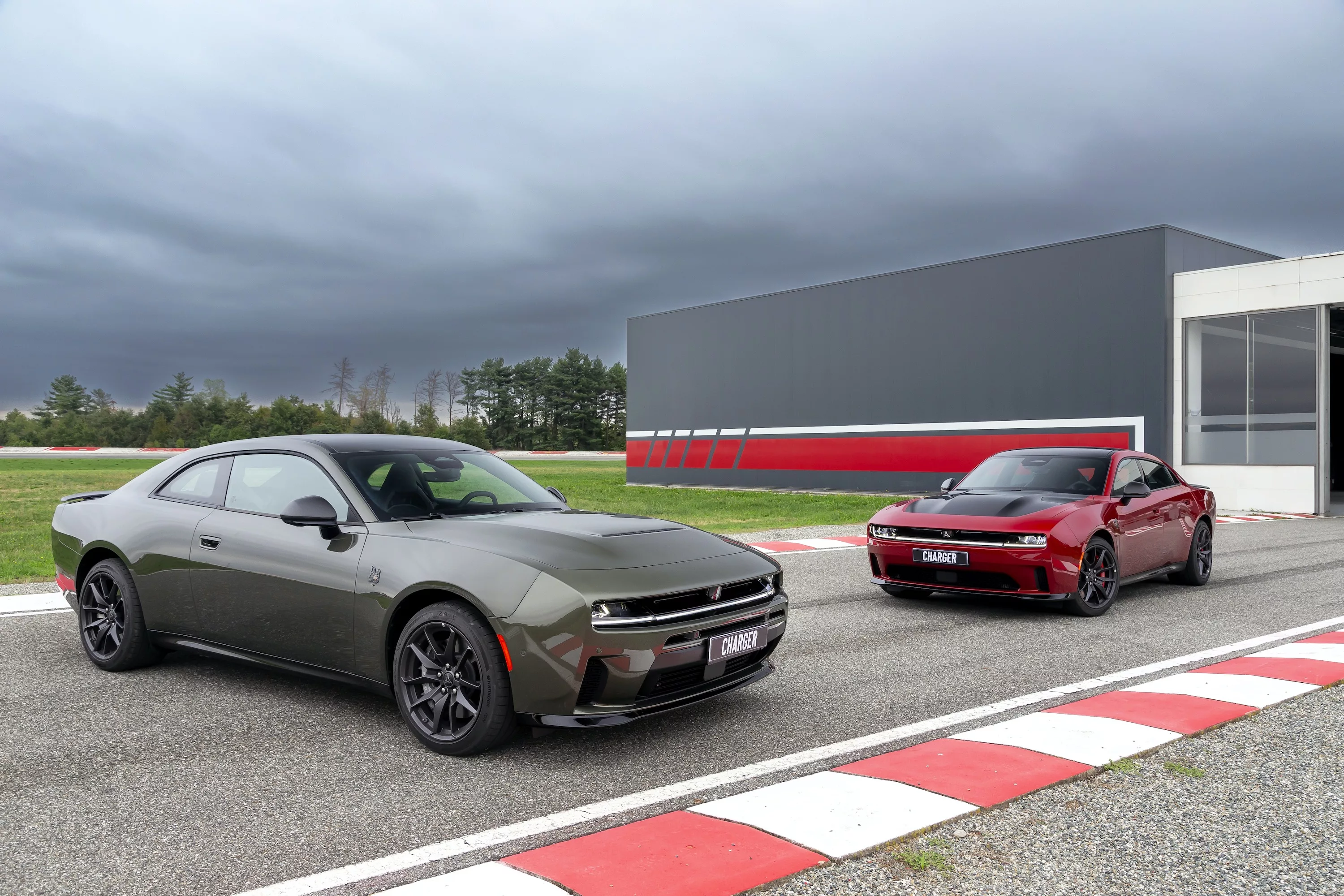
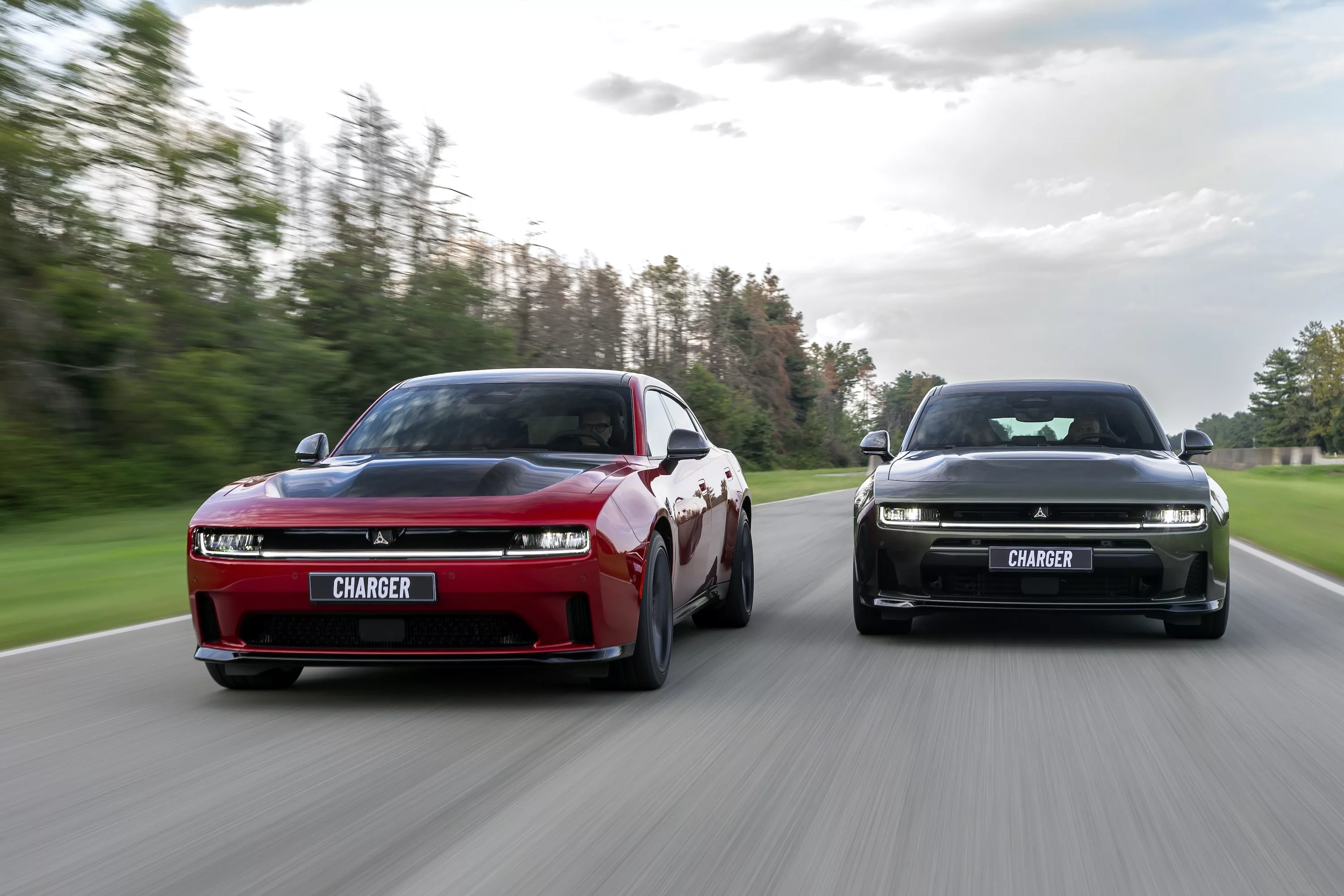
The new-generation petrol-powered Dodge Charger has officially gone on sale in Britain, but the romance of an American muscle car comes at a decidedly European price. The 309 kW Charger Sixpack R/T starts at £70,000, or approximately €80,500. The more powerful 404 kW Scat Pack costs at least £76,000, or around €87,400. British buyers must also accept left-hand drive, as no right-hand-drive Charger is produced.
This does not mark the creation of a conventional British Dodge dealer network, however, as effectively no such network exists. Official importer KW Automotive brings the Charger to Europe, while Unity Automotive sells it in Britain. The first cars will arrive in Oxford soon, and orders are already being accepted.
A 3.0-litre Hurricane replaces the V8
The biggest change lies beneath the long bonnet. The HEMI V8 that defined the previous-generation Charger's identity is gone, and the new petrol-powered Charger uses a 3.0-litre twin-turbo Hurricane straight-six.
The Sixpack R/T produces 309 kW and 634 Nm. With an eight-speed automatic transmission and all-wheel drive, it accelerates from 0–96 km/h in 4.6 seconds and reaches a top speed of approximately 270 km/h. The Scat Pack uses the same basic engine, but its High Output configuration raises power to 404 kW. In US specification, torque reaches 720 Nm and 0–96 km/h takes 3.9 seconds.
Both have all-wheel drive, but the driver can select a rear-wheel-drive mode. That is an important detail for the Charger. All-wheel drive helps a car weighing more than two tonnes put its power down, while rear-wheel drive preserves at least some of the behaviour expected of a muscle car badge. It does not bring back the V8 rumble, of course.
The price rises sharply across the Atlantic
In the US, the Charger Sixpack R/T starts at approximately $51,990, while the Scat Pack starts at $56,990. In Britain, Unity charges £70,000 and £76,000 respectively for the same versions. Simply comparing the dollar and pound figures gives a misleading picture, however.
American car prices are usually quoted before local sales taxes, while British retail prices include VAT. A car destined for Europe also goes through a specialist importer and requires type approval suitable for the local market, logistics and after-sales support.
So the Charger in Britain is not simply “the same car at almost twice the price”. Nevertheless, much of one of the Charger's historical strengths disappears: in America, buyers get a great deal of engine and performance for relatively reasonable money, while in Europe the same car becomes a niche product. At around €80,000, the competition starts to look very serious.
The Mustang makes life difficult for the Charger
The most obvious comparison is the Ford Mustang GT. The Mustang still uses a 5.0-litre naturally aspirated V8 and, unlike the Charger, is available in Britain with right-hand drive. The Charger counters with greater practicality, all-wheel drive and a more powerful straight-six, but selling a twin-turbo six-cylinder engine against a V8 to a traditional muscle car buyer is a difficult task.
The Charger is also enormous.
The two-door car measures 5248 millimetres long and 2030 millimetres wide, with a wheelbase of 3074 millimetres. Kerb weight is around 2.1 tonnes.
A narrow European back road is hardly the natural habitat of a 2.03-metre-wide, left-hand-drive coupé. Dodge makes little attempt to hide that. The Charger is built to American proportions, and European buyers must adapt to the car, rather than the other way round.
The vast body does offer something in return, though. The Charger has a practical, large tailgate, and folding the rear seats increases luggage capacity to 1064 litres. The four-door version can also be ordered in Europe.
The electric Daytona is coming too
Petrol is not the new Charger's only power source. The STLA Large architecture allows Dodge to build the same model family with both combustion engines and all-electric powertrains. The electric Charger Daytona uses a 100.5 kWh battery and two electric motors. The Daytona R/T produces 394 kW, while the Scat Pack delivers 493 kW. The latter accelerates from 0–96 km/h in around 3.3 seconds.
That creates an unusual choice in Europe. Buyers can have a futuristic electric muscle car equipped by Dodge with an artificial Fratzonic sound system, or a petrol-powered Charger that no longer has a V8.
For purists, neither quite follows the old recipe.
Technically, however, the Hurricane is far more than a stopgap replacement engine. Outputs of 404 kW and 720 Nm are serious figures for a three-litre straight-six, and the Scat Pack outperforms many versions of the previous-generation Charger. The question is more about character than power.
The Charger makes more sense in continental Europe
The strangest feature of the British version is its left-hand drive. Dodge currently has no plans for a right-hand-drive Charger, so British buyers must pay at least £70,000 for a car whose driver sits on the wrong side for local traffic.
Continental Europe has no such problem.
The Charger reaches European markets through KW Automotive, rather than Stellantis's conventional sales network. That limits sales volumes, but suits the car's character rather well. The Charger will not be fighting the BMW 4 Series for a place in the sales charts here. With these dimensions, this engine and this price, it remains a deliberately niche product.
From a European perspective, the new Charger's greatest value lies in freedom of choice. At a time when high-performance models are rapidly moving towards electric and plug-in hybrid power, Dodge brings Europe a 3.0-litre twin-turbo straight-six, 404 kW and the ability to switch from all-wheel drive to rear-wheel drive.
The V8 is gone, and so is the low American price. At least Dodge has not yet decided that the Charger name should be worn by a two-tonne, four-cylinder SUV.


