
Rimac planned a flying electric hypercar before the Tesla Roadster
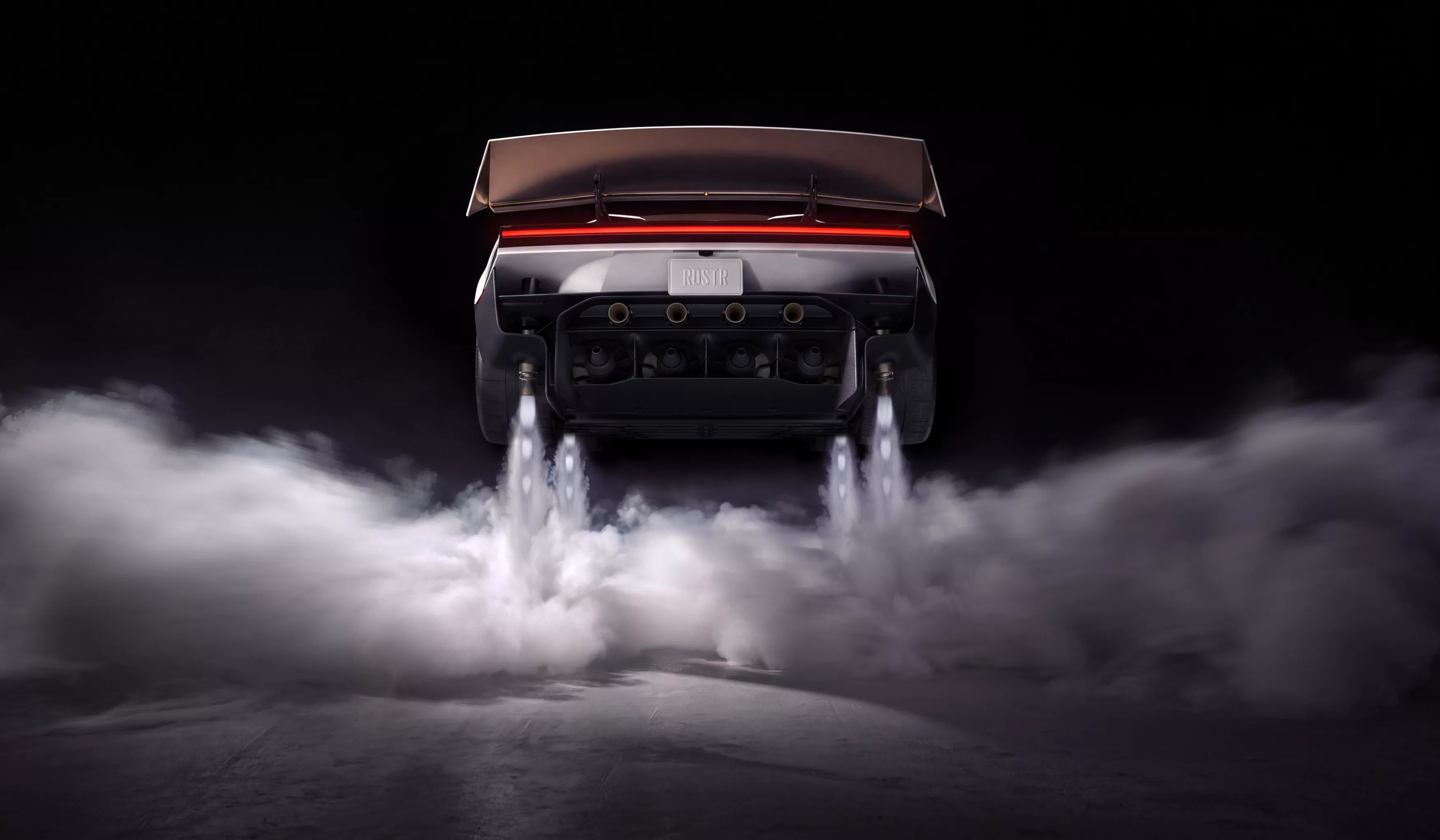
The jet thrusters and brief lift-off demonstrated at the unveiling of Tesla’s new Roadster are not nearly as new as Elon Musk would like to suggest. Rimac founder Mate Rimac revealed that his company explored similar solutions six years ago. The Croatian company abandoned the project in favour of developing the Bugatti Tourbillon.
Mate Rimac shared internal correspondence from 2019 and development materials from 2020 on social media. These showed that Rimac explored both fan-generated downforce and cold-gas thrusters. The aim was to overcome the limits imposed by conventional tyre grip.
Sub-second acceleration and the ability to lift off
The first idea dated back to 2019, when Rimac investigated fan-generated downforce. Such a system sucks air from beneath the car, increasing tyre grip even at low speeds. A similar principle was used by the Brabham BT46B Formula One car as early as 1978, and later by the electric McMurtry Spéirling.
A year later, Rimac began investigating cold-gas thrusters. The proposed system would have used compressed-gas tanks to generate additional thrust independently of tyre grip.
The target for a potential Nevera successor was to accelerate from 0–96 km/h in less than a second and make short flights. This was, however, a development concept rather than a capability confirmed by testing.
Bugatti’s V16 took priority
According to Rimac, the ambitious project was left unfinished because the company began developing the successor to the Bugatti Chiron. The Tourbillon’s 8.3-litre naturally aspirated V16 and hybrid powertrain demanded so many resources that developing several exceptionally complex programmes simultaneously was not sensible.
The choice proved technically interesting. While Tesla is looking to space technology for additional Roadster performance, Bugatti is betting on a traditional internal combustion engine supported by electric motors.
The Tesla Roadster has already demonstrated aerial manoeuvring using jet thrusters. Tesla plans to start production in 2028, but the durability, safety and suitability for road use of such systems have yet to be proven.
In the European hypercar market, Rimac’s decision illustrates the clash between two different development paths. One seeks to overcome physical limitations through active systems; the other combines traditional engine design with electric performance.
Rimac does not regret abandoning the project and does not see Tesla’s achievement as a rival’s victory. In his view, such technologies make the automotive industry more exciting. At the same time, the story shows that coming up with an extraordinary idea is one thing, while turning it into a reliable production car is quite another.


