
Russian style carmaking, Volga returns with Chinese hardware
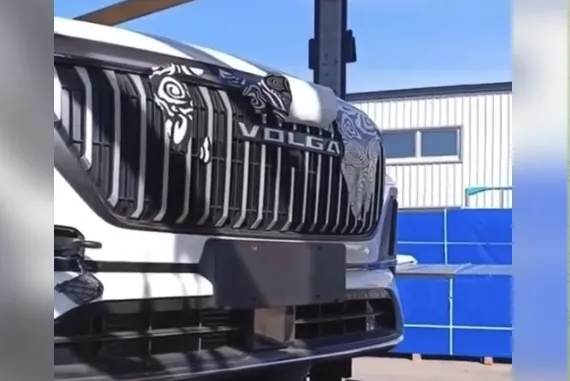
Since the start of the war, Russia has discovered a novel way to revive its domestic car industry. Import a nearly complete vehicle from China, finish the assembly locally, apply a familiar badge and a fresh VIN, and present the result as a newly developed national model.
That formula now rolls off the production line in Nizhny Novgorod, where the reborn Volga looks less like a genetic breakthrough and more like skilful make up. While European manufacturers wrestle with emissions targets and software glitches, Russia solved its industrial dilemma with disarming pragmatism. It borrowed three ready made models from Changan, attached the traditional deer emblem and announced the renaissance of a national icon.
This is not long term product development. It is survival strategy in isolation, where identity arrives bundled with blueprints and supply chains.
One engine for all
Unlike the original Volgas, which at least attempted a measure of engineering individuality in their era, the new line up rests on strict standardisation. All three models share the same core specification.
Under the bonnet sits a 1.5 litre turbocharged petrol engine producing 188 hp and up to 300 Nm of torque. A seven speed dual clutch automatic transmission sends power exclusively to the front wheels. There is no all wheel drive, no local drivetrain innovation, just proven Chinese components repackaged for a different audience.
Three faces, one origin
The Volga C40 sedan is based on the Changan Raeton Plus. At 4.8 metres in length, it targets the business class segment left exposed after the departure of models such as the Toyota Camry and Kia K5 from the Russian market.
The Volga K30 mirrors the Changan Oshan X5 Plus. A shorter wheelbase and sharper styling aim at younger buyers who value screen real estate more than suspension travel.
Then there is the Volga K40, derived from the Changan Uni-Z. Here the pitch revolves around space and a so called premium experience, delivered through soft touch plastics and synthetic leather already familiar to Chinese domestic customers.
Production takes place on the grounds of the GAZ plant. The project itself is managed by Production Management Automobile, which signed a licensing agreement with Changan. The logic is straightforward. With Western brands gone, a vast vacuum opened up in the market.
A shortcut instead of billions
Developing an all new platform from scratch would require billions of euros and close to a decade of work. Russia chose a shortcut. The Chinese partner supplies technology and major components. The Russian side adds limited localisation, currently little more than grille design tweaks and translated software interfaces.
The result strengthens China’s grip on a region once dominated by German and Japanese engineering.
For European consumers, the new Volga remains an exotic curiosity. Even for those nostalgic about a grandfather’s GAZ-24 Volga, the latest models offer nothing beyond what an average Chinese car already provides under badges such as MG Motor or BYD.
Warranty coverage and spare parts availability outside Russia are effectively non existent. Pricing is expected to start at around €25,000 when converted from roubles, placing these cars against established Western models and modern electric alternatives.
In that context, the deer badge becomes less a symbol of industrial rebirth and more a reminder that in today’s car business, sovereignty can be assembled from a crate.
This is not long term product development. It is survival strategy in isolation, where identity arrives bundled with blueprints and supply chains.
One engine for all
Unlike the original Volgas, which at least attempted a measure of engineering individuality in their era, the new line up rests on strict standardisation. All three models share the same core specification.
Under the bonnet sits a 1.5 litre turbocharged petrol engine producing 188 hp and up to 300 Nm of torque. A seven speed dual clutch automatic transmission sends power exclusively to the front wheels. There is no all wheel drive, no local drivetrain innovation, just proven Chinese components repackaged for a different audience.
Three faces, one origin
The Volga C40 sedan is based on the Changan Raeton Plus. At 4.8 metres in length, it targets the business class segment left exposed after the departure of models such as the Toyota Camry and Kia K5 from the Russian market.
The Volga K30 mirrors the Changan Oshan X5 Plus. A shorter wheelbase and sharper styling aim at younger buyers who value screen real estate more than suspension travel.
Then there is the Volga K40, derived from the Changan Uni-Z. Here the pitch revolves around space and a so called premium experience, delivered through soft touch plastics and synthetic leather already familiar to Chinese domestic customers.
Production takes place on the grounds of the GAZ plant. The project itself is managed by Production Management Automobile, which signed a licensing agreement with Changan. The logic is straightforward. With Western brands gone, a vast vacuum opened up in the market.
A shortcut instead of billions
Developing an all new platform from scratch would require billions of euros and close to a decade of work. Russia chose a shortcut. The Chinese partner supplies technology and major components. The Russian side adds limited localisation, currently little more than grille design tweaks and translated software interfaces.
The result strengthens China’s grip on a region once dominated by German and Japanese engineering.
For European consumers, the new Volga remains an exotic curiosity. Even for those nostalgic about a grandfather’s GAZ-24 Volga, the latest models offer nothing beyond what an average Chinese car already provides under badges such as MG Motor or BYD.
Warranty coverage and spare parts availability outside Russia are effectively non existent. Pricing is expected to start at around €25,000 when converted from roubles, placing these cars against established Western models and modern electric alternatives.
In that context, the deer badge becomes less a symbol of industrial rebirth and more a reminder that in today’s car business, sovereignty can be assembled from a crate.


