
Singapore researchers extend solid state battery life, but the electric car breakthrough still needs several steps
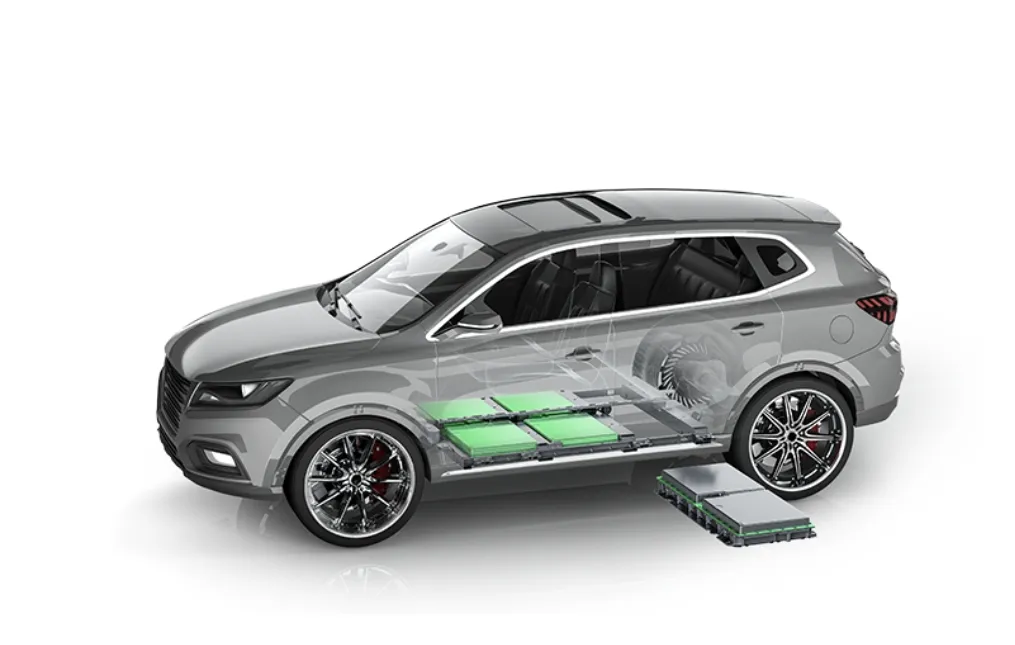
One of the great promises of the sodium ion battery is cheaper, geopolitically simpler energy storage. Researchers at the National University of Singapore added low cost graphitic carbon nitride to a solid polymer electrolyte and produced a battery that resisted dendrites more effectively, moved ions faster and retained 95 percent of its capacity after 500 cycles in laboratory testing. That sounds like electric car news. For now, the work looks more immediately relevant to stationary battery storage.
The solution attacks two old sodium battery weaknesses
Sodium is not a newcomer in battery chemistry, but solid electrolyte versions have struggled with two persistent problems. Sodium ions move too slowly through the polymer, while the sodium metal anode can grow dendrites during charging. These needle like structures can pierce the cell and cause a short circuit.
A team from the National University of Singapore’s College of Design and Engineering published its work in Advanced Functional Materials. The researchers added graphitic carbon nitride, or GCN, to an electrolyte based on polyethylene oxide and a sodium salt. The material is made by heating urea in air to 550 °C, forming sheets about 2 nm thick.
Inside the electrolyte, GCN does two useful things at once. First, it breaks up the rigid crystalline regions of the polymer and creates more amorphous zones, where sodium ions can move more freely. Second, nitrogen rich surface sites help separate sodium ions from the salt’s counter ions, raising the sodium ion transference number from 0.19 to 0.51. Ionic conductivity at 55 °C more than doubled.
Slowing dendrites matters most
A sodium metal anode offers strong theoretical energy density, but metal deposits unevenly during charging. That is where dendrites begin to grow, threatening the cell from the inside.
The GCN composite electrolyte proved three times stronger than the original polymer. More importantly, it helped form a protective sodium based inorganic layer on the anode surface, guiding more even metal deposition. In a comparison test, the unchanged polymer electrolyte short circuited after 250 hours at a current density of 0.1 mA per cm². The GCN electrolyte ran for 1000 hours at the same load and for more than 2000 hours at 0.2 mA per cm².
At the same current density, the test showed roughly a fourfold improvement in battery life. Under tougher loading, it passed 2000 hours. That matters because dendrite resistance says more about the practical safety of a solid metal battery than any single headline power figure.
The complete cell showed solid cycle life
The researchers also built a complete solid electrolyte cell, using a carbon coated zinc doped sodium vanadium phosphate cathode and a sodium metal anode. At a 0.5C charge and discharge rate, the cell retained 95 percent of its capacity after 500 cycles, while Coulombic efficiency reached about 99.97 percent. In simple terms, 1C means charging a battery in roughly one hour, while 2C means about half an hour.
To demonstrate mechanical safety, the team also made a single layer pouch cell that powered an LED while folded, unfolded and cut. That does not prove readiness for an electric car battery pack, but it does show why solid electrolytes offer a safety advantage over liquid electrolyte cells.
This is not yet a CATL rival for electric cars
For the car industry, this result needs to be judged against what is already moving towards production, not against a laboratory ideal. CATL’s Naxtra sodium ion battery is heading towards series production use with Changan, and CATL gives the cell energy density as up to 175 Wh per kg. In a cell to pack layout, that could allow more than 400 km of range, with a future target of 500 to 600 km. It is not, however, a solid electrolyte sodium metal battery.
The Singapore work plays a different game. Its strength is not maximum driving range, at least not yet. It is safety, lower cost raw materials and the possibility of reducing dependence on lithium. The major limitation remains operating temperature. The strongest result came at 55 °C, while the next target is stable operation at 45 °C. A European electric car battery has to work across a much wider climate window, not only in a warm laboratory setting.
Europe may feel the impact first in storage, not performance EVs
Europe needs cheap, safe batteries with lower raw material risk most urgently in grid storage and solar park storage. In those applications, energy per kilogram matters less than price, fire safety, cycle life and maintenance cost. That is the niche where a solid electrolyte sodium battery could start putting pressure on LFP batteries.
In electric cars, sodium chemistry is likely to appear first in cheaper city cars, commercial vehicles and models for colder climates, where price and temperature tolerance can outweigh lower energy density. Premium EVs and long range models will remain the territory of high energy lithium chemistries for the next few years.
Technical snapshot
Electrolyte: a solid polymer electrolyte based on polyethylene oxide and sodium salt, with 2 nm GCN sheets added.
Ion transport: ionic conductivity more than doubled at 55 °C, while the sodium ion transference number rose from 0.19 to 0.51.
Dendrite resistance: the composite electrolyte ran for 1000 hours at 0.1 mA per cm² and more than 2000 hours at 0.2 mA per cm².
Complete cell: 95 percent capacity retention after 500 cycles at 0.5C, with Coulombic efficiency of about 99.97 percent.
Main limitation: the technology still needs lower operating temperatures and larger format prototypes.
The breakthrough is real, but so is the gap between a clever laboratory cell and a battery pack that survives years of charging, frost, heat and impatient drivers.
Sodium is not a newcomer in battery chemistry, but solid electrolyte versions have struggled with two persistent problems. Sodium ions move too slowly through the polymer, while the sodium metal anode can grow dendrites during charging. These needle like structures can pierce the cell and cause a short circuit.
A team from the National University of Singapore’s College of Design and Engineering published its work in Advanced Functional Materials. The researchers added graphitic carbon nitride, or GCN, to an electrolyte based on polyethylene oxide and a sodium salt. The material is made by heating urea in air to 550 °C, forming sheets about 2 nm thick.
Inside the electrolyte, GCN does two useful things at once. First, it breaks up the rigid crystalline regions of the polymer and creates more amorphous zones, where sodium ions can move more freely. Second, nitrogen rich surface sites help separate sodium ions from the salt’s counter ions, raising the sodium ion transference number from 0.19 to 0.51. Ionic conductivity at 55 °C more than doubled.
Slowing dendrites matters most
A sodium metal anode offers strong theoretical energy density, but metal deposits unevenly during charging. That is where dendrites begin to grow, threatening the cell from the inside.
The GCN composite electrolyte proved three times stronger than the original polymer. More importantly, it helped form a protective sodium based inorganic layer on the anode surface, guiding more even metal deposition. In a comparison test, the unchanged polymer electrolyte short circuited after 250 hours at a current density of 0.1 mA per cm². The GCN electrolyte ran for 1000 hours at the same load and for more than 2000 hours at 0.2 mA per cm².
At the same current density, the test showed roughly a fourfold improvement in battery life. Under tougher loading, it passed 2000 hours. That matters because dendrite resistance says more about the practical safety of a solid metal battery than any single headline power figure.
The complete cell showed solid cycle life
The researchers also built a complete solid electrolyte cell, using a carbon coated zinc doped sodium vanadium phosphate cathode and a sodium metal anode. At a 0.5C charge and discharge rate, the cell retained 95 percent of its capacity after 500 cycles, while Coulombic efficiency reached about 99.97 percent. In simple terms, 1C means charging a battery in roughly one hour, while 2C means about half an hour.
To demonstrate mechanical safety, the team also made a single layer pouch cell that powered an LED while folded, unfolded and cut. That does not prove readiness for an electric car battery pack, but it does show why solid electrolytes offer a safety advantage over liquid electrolyte cells.
This is not yet a CATL rival for electric cars
For the car industry, this result needs to be judged against what is already moving towards production, not against a laboratory ideal. CATL’s Naxtra sodium ion battery is heading towards series production use with Changan, and CATL gives the cell energy density as up to 175 Wh per kg. In a cell to pack layout, that could allow more than 400 km of range, with a future target of 500 to 600 km. It is not, however, a solid electrolyte sodium metal battery.
The Singapore work plays a different game. Its strength is not maximum driving range, at least not yet. It is safety, lower cost raw materials and the possibility of reducing dependence on lithium. The major limitation remains operating temperature. The strongest result came at 55 °C, while the next target is stable operation at 45 °C. A European electric car battery has to work across a much wider climate window, not only in a warm laboratory setting.
Europe may feel the impact first in storage, not performance EVs
Europe needs cheap, safe batteries with lower raw material risk most urgently in grid storage and solar park storage. In those applications, energy per kilogram matters less than price, fire safety, cycle life and maintenance cost. That is the niche where a solid electrolyte sodium battery could start putting pressure on LFP batteries.
In electric cars, sodium chemistry is likely to appear first in cheaper city cars, commercial vehicles and models for colder climates, where price and temperature tolerance can outweigh lower energy density. Premium EVs and long range models will remain the territory of high energy lithium chemistries for the next few years.
Technical snapshot
Electrolyte: a solid polymer electrolyte based on polyethylene oxide and sodium salt, with 2 nm GCN sheets added.
Ion transport: ionic conductivity more than doubled at 55 °C, while the sodium ion transference number rose from 0.19 to 0.51.
Dendrite resistance: the composite electrolyte ran for 1000 hours at 0.1 mA per cm² and more than 2000 hours at 0.2 mA per cm².
Complete cell: 95 percent capacity retention after 500 cycles at 0.5C, with Coulombic efficiency of about 99.97 percent.
Main limitation: the technology still needs lower operating temperatures and larger format prototypes.
The breakthrough is real, but so is the gap between a clever laboratory cell and a battery pack that survives years of charging, frost, heat and impatient drivers.


